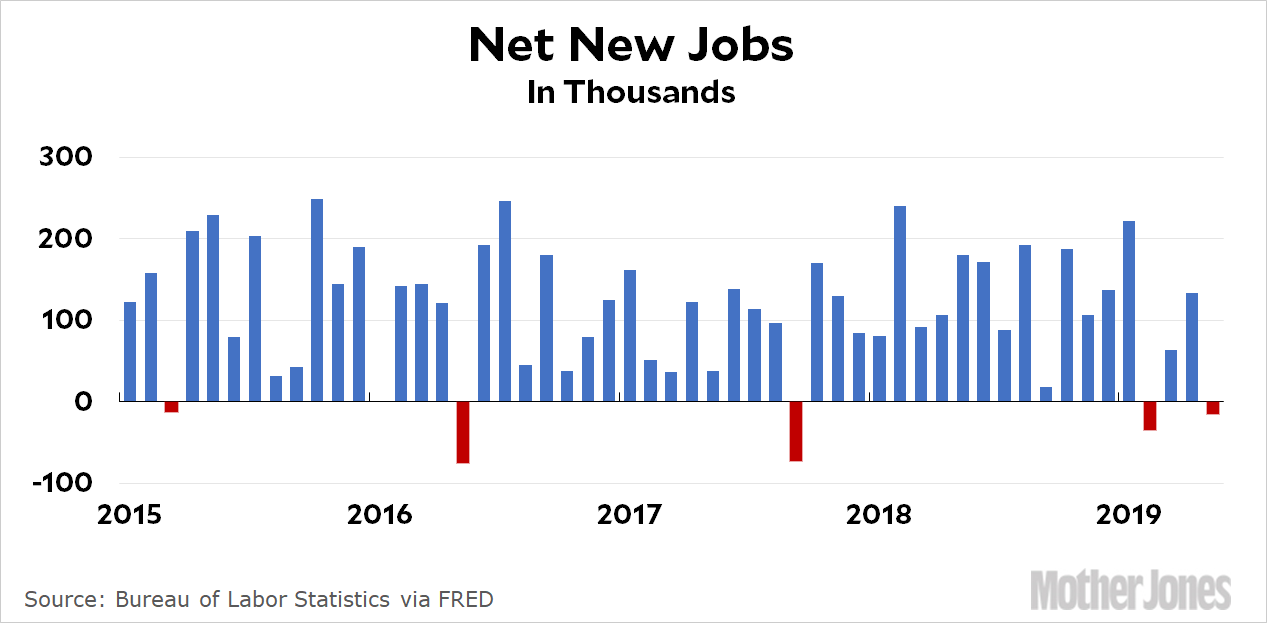
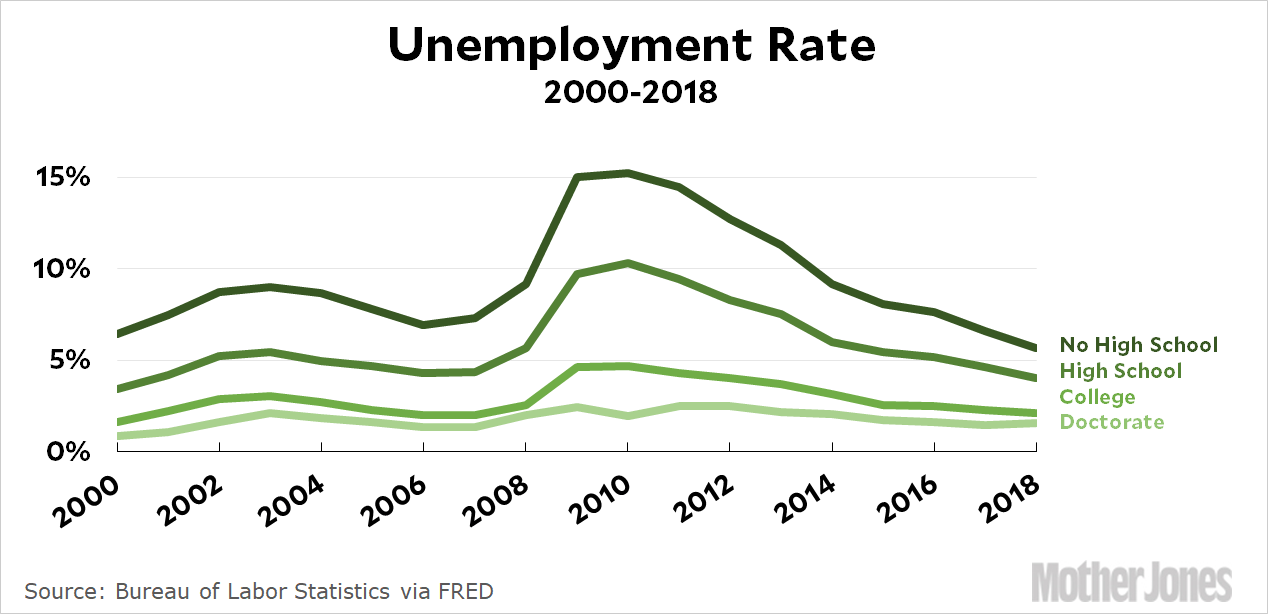
The American economy gained 75,000 jobs last month. We need 90,000 new jobs just to keep up with population growth, which means that net job growth clocked in at a terrible -15,000 jobs. At the same time, the March and April numbers were revised downward by 75,000 jobs. The headline unemployment rate remained at 3.6 percent.
There was brighter news on the earnings side. Wages of production and nonsupervisory workers increased at an annualized rate of about 3.8 percent. Adjusted for inflation, that’s an increase of nearly 2 percent. Not bad. On the other hand, hours worked was down, so net weekly wages were down about 2 percent (adjusted for inflation).
All in all, this is a pretty weak report, and it continues the fairly weak jobs numbers we’ve seen since the beginning of the year. Is this because our 10-year expansion is finally running out of steam? Or because of Donald Trump’s trade war? Or is it just a blip? Stay tuned.
Whenever I write something optimistic, I hear about it on Twitter. Trump is a menace to democracy! Don’t make people complacent about it! But I don’t traffic in either optimism or pessimism. I try to deal in reality. So read Roxane Gay first and then let’s take a short hop through some good news.
I’m not happy about Mitch McConnell’s conservative judge-a-thon, but the judiciary is still working fine. In the past couple of years, judges have blocked Trump’s attempt to reprogram funds for his border wall; blocked Trump’s attempt to restrict contraceptives; blocked Trump’s abortion “gag rule”; blocked Trump’s attempt to make asylum-seekers wait in Mexico; blocked Trump’s attempt to kill DACA; blocked Trump’s Muslim ban; blocked Trump’s attempt to kick Haitians out of the country; and blocked Trump’s attempt to stop Democrats from issuing subpoenas to his bankers. Not all of these decisions are final or permanent, but they suggest that the judiciary remains a bulwark against presidential overreach.
Despite Trump’s tariffs, international trade increased in 2017 and again in 2018. The Mueller investigation was finished without hindrance and Mueller’s report was released to the public shortly after it was finished. In its aftermath, Democrats resisted the urge to dive into kangaroo court impeachment proceedings and instead began misconduct hearings carefully and judiciously, as they should. Thanks to #MeToo, Al Franken was forced out of the Senate after a series of sexual misconduct allegations, something that would have been inconceivable as recently as the year before it happened. Violent crime has dropped by half over the past couple of decades, and after a brief pause it dropped again in 2017 and then again in the first half of 2018. Criminal justice and mass incarceration are finally getting the attention they deserve. In Alabama—Alabama!—a lunatic theocrat was defeated in a Senate election. Abortion is under siege, as it always is, but after half a century Roe v. Wade remains the law of the land and the abortion rate is half what it was in 1980.
And there’s more. The headline unemployment rate is at its lowest rate in half a century and the long-term unemployment rate is lower than it was at the height of the housing bubble. Household earnings are up about $8,000 over the past five years. Blue-collar wages have increased by more than $1 per hour. The poverty rate has dropped for three straight years and is now lower than at any time aside from the peak of the dotcom boom. Despite the best efforts of Republicans, Obamacare continues to provide health coverage for nearly 20 million additional people compared to a decade ago. Among teens, cigarette smoking is down; alcohol use is down; other drug use is down; teen pregnancy is down; and arrests are down. The US economy is the most robust in the world. About 700,000 new citizens are naturalized every year, up from 100,000 in 1980. Same-sex marriage is legal in all 50 states. And on a personal note, there’s been a huge surge in new treatments for multiple myeloma, which means that I will probably be blathering on your computer for many years to come.
My message here is simple. If you cherry pick all the bad stuff that’s happened in the past few years, you can make a case for being pretty discouraged. If you cherry pick all the good stuff, you can make a case that everything is fine. The real reality is somewhere in-between. So if you feel like being discouraged, don’t let me get in your way. But there’s always good and bad in the world, and there’s no reason to insist otherwise.
Except for climate change, where we’re still on track to commit planetary suicide and no one is truly taking it seriously. That’s just a pure nightmare.
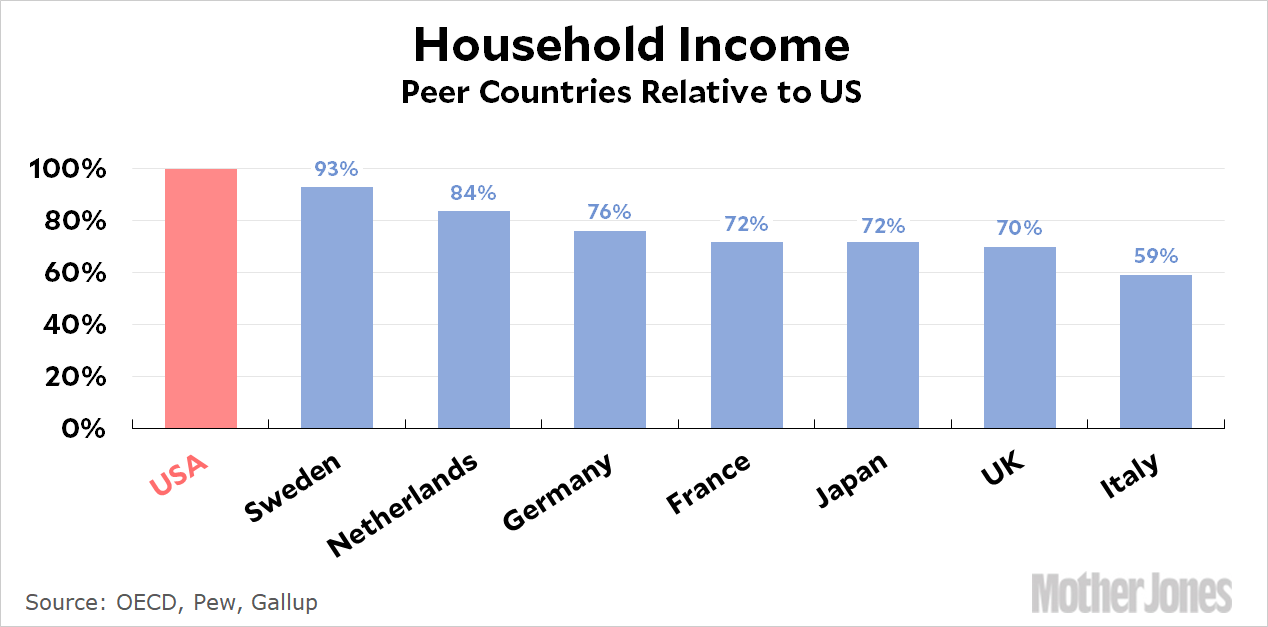
Earlier today I posted a chart showing average household income in the US vs. other developed countries. Several people understandably wanted to see this chart with median incomes instead of means, since high income inequality can artificially increase means even if middle-class families are struggling.
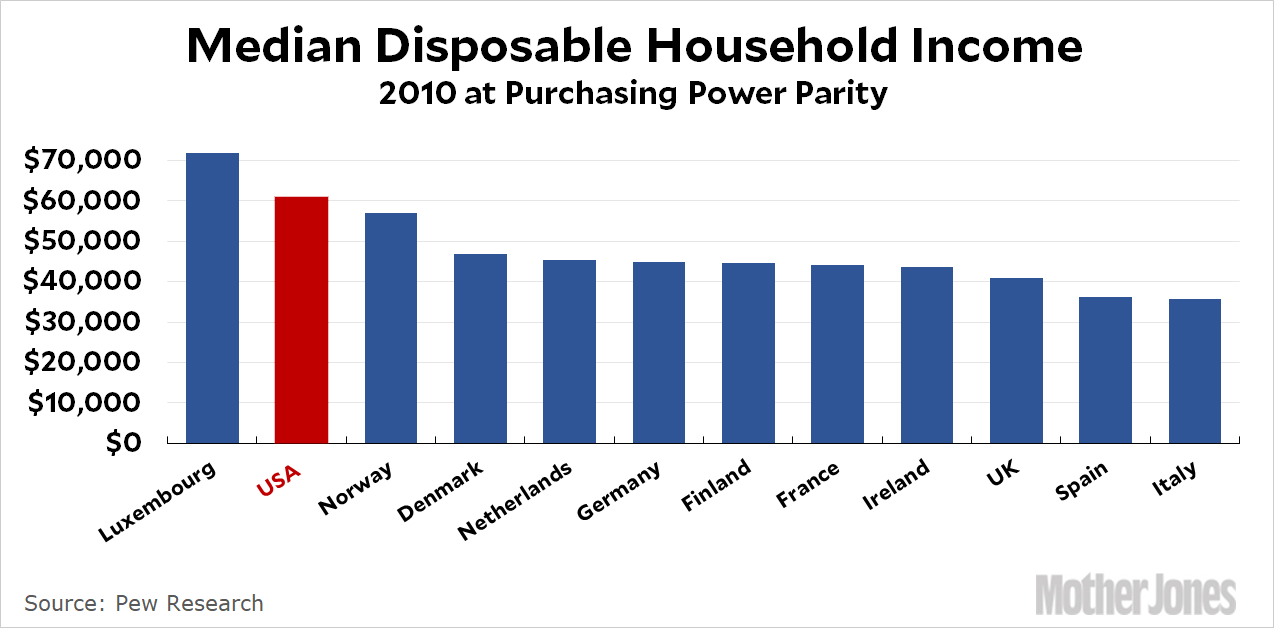
Unfortunately, a reliable measure of median incomes that’s consistent between countries is hard to come by. Here are a couple that I could find. The first one is from Pew Research:
According to Pew, median household income in America is 34 percent higher than the Netherlands; 36 percent higher than Germany; 38 percent higher than France; 49 percent higher than the UK; and 71 percent higher than Italy.
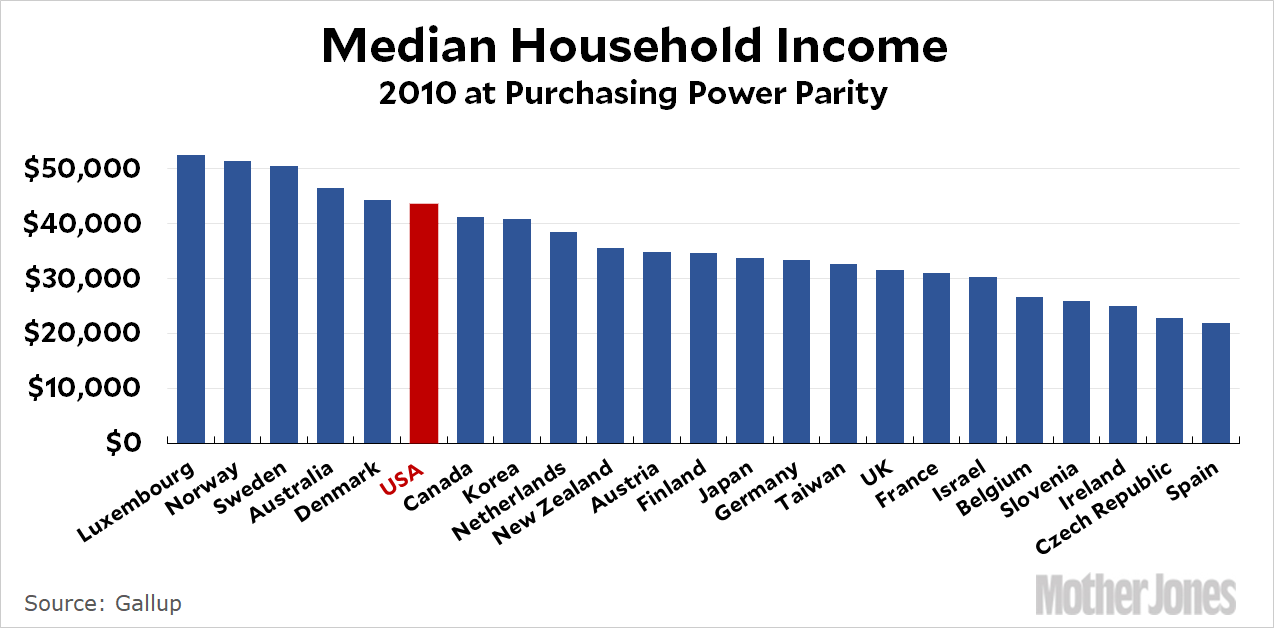
However, this is disposable income, which means income after taxes. This makes other countries look poorer since they have higher tax rates, but the flip side—that households get plenty of services in return for all those taxes—doesn’t get counted. This makes it a difficult metric to use. Here’s another one, based on survey data from Gallup:
According to Gallup, median household income in America is 13 percent higher than the Netherlands; 31 percent higher than Germany; 38 percent higher than the UK; and 40 percent higher than France.
However, this survey pegs the median household income in the US at $43,000 in 2010, which is far lower than Census Bureau figure (about $50,000). So how accurate is it? It’s hard to say.
So it’s tricky. At the same time, even if the absolute numbers vary quite a bit, there’s fairly broad agreement about how countries compare to each other. If you average the three different measures (OECD, Gallup, and Pew), middle-class household income in the US is higher than every other comparable country:
In honor of the 75th anniversary of D-Day, here’s our local bald eagle looking both fierce and vigilant at our little zoo. I’ll tell you one thing, those bald eagles make cats look energetic. I circled around the zoo for an hour or two, and every time I got to the bald eagle enclosure he was in exactly the same place. I don’t think he moved a muscle the entire time I was there.
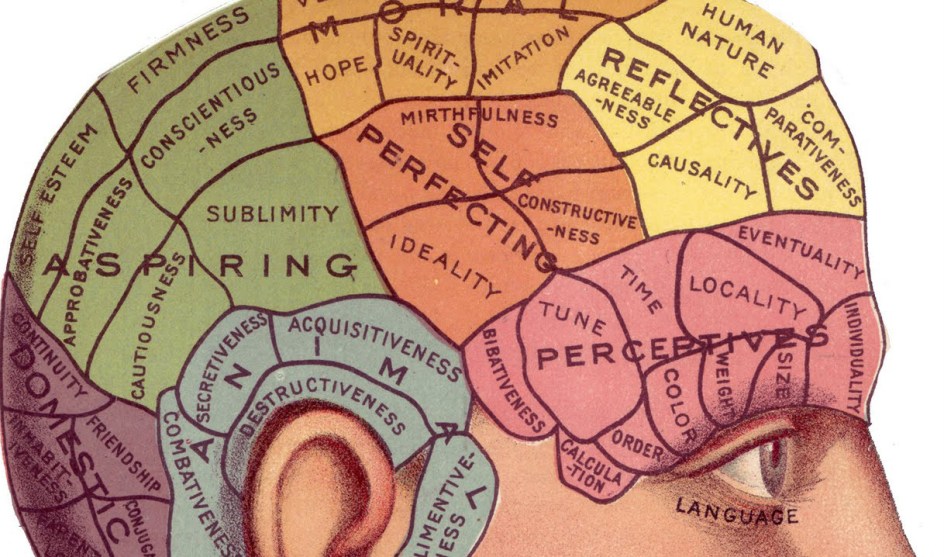
This popped into my Twitter timeline via Cory Doctorow:
When I teach about phrenology in the context of racist Victorian justifications for colonization, students often stare at me as though I’ve lost it, certain that no one could ever have been that stupid. Turns out people are still that stupid today. https://t.co/5YLsJsy28E
This is wildly unfair. The clickbait was powerful enough to make me read the article—a review of Superior: The Return of Race Science—and it turns out that the authors:
Mention in one place that researchers can “correctly classify human skulls into black and white Americans with about 80% accuracy, using only two variables.” This is done in a section about whether race has biological roots or is purely a social construct.
Mention in another place—1,500 words later—that blacks and whites, on average, score about 10-15 points differently on IQ tests. This is done to refute a statement implying that the IQ gap might not really exist.¹
These two things aren’t related to each other in any way, and the authors don’t defend or apologize for phrenology or anything like it in any way whatsoever. The word “skull” is in their piece, but not in a way that has anything to do with intelligence.
This all reminds me of just how eager I am for neurobiologists to get better at figuring out the genetic basis of cognitive behavior. My read of the evidence is that the black-white IQ gap is almost certainly accounted for by environmental differences. But lots of people don’t believe that, and I suspect that even many liberals are privately unsure about it. The only way this will ever be put to rest is for geneticists to definitively locate the nexus of genes that account for the various cognitive abilities which, in aggregate, we call “intelligence.” Once that’s done, and no important racial differences are found, maybe we can finally get around to admitting the obvious and then doing something about it.
¹The gap in test scores is unquestionably real. The only question is what accounts for it.
This is just Hollywood. In reality, radioactivity kills ants, and that's a good thing.Warner Brothers
On Monday I had dinner with a friend who insisted that nuclear needed to be a big part of any climate change plan. We just had to get smart about how to build nuclear power plants. I didn’t disagree, but reminded him that the big problem with nuclear has always been radioactive waste. After 70 years, we still don’t have any great ideas about how to handle that.
The U.S. government on Wednesday will reclassify some of the nation’s most dangerous radioactive waste to lower its threat level, outraging critics who say the move would make it cheaper and easier to walk away from cleaning up nuclear weapons production sites in Washington state, Idaho and South Carolina. The U.S. Department of Energy said labeling some high-level waste as low level will save $40 billion in cleanup costs across the nation’s entire nuclear weapons complex.
….The waste is housed at the Savannah River Plant in South Carolina, the Idaho National Laboratory and Hanford Nuclear Reservation in Washington state….The new rules would allow the Energy Department to eventually abandon storage tanks containing more than 100 million gallons (378 million liters) of radioactive waste in the three states, according to the Natural Resources Defense Council.
That’s the answer for weapons-grade nuclear waste, but what about the stuff from power plants? That’s even easier: just reclassify it as agricultural waste and compost it. Liberals, with all their yammering about “policy” and “plans” and “safety” would never have thought of this. Only the Trumpies, who came to office promising to disrupt the tired old bureaucracy with insights gained from building golf courses, could have come up with this. Huzzah!
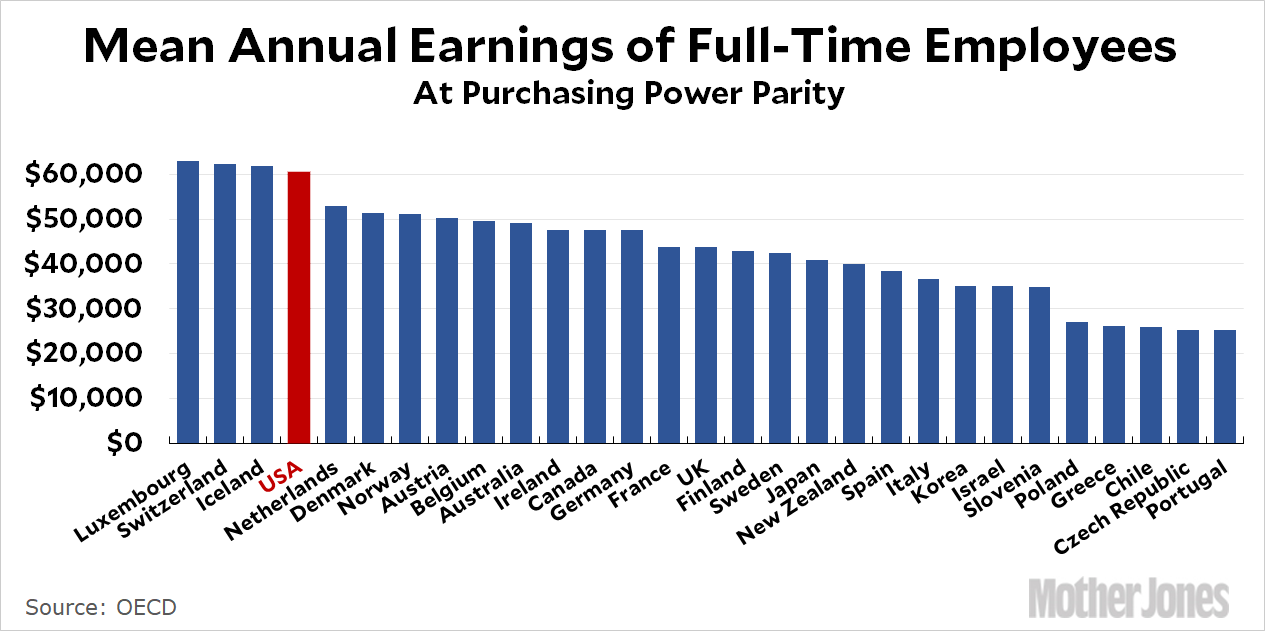
With Donald Trump overseas, I’m feeling in an international mood. First off, here are average earnings in America compared to other developed countries:
As you can see, the top four countries on this list are in a class by themselves, and all of them are quite small except for the US. Among largeish countries, average income in the US is 14 percent higher than the Netherlands; 27 percent higher than Germany; 38 percent higher than France and the UK; 42 percent higher than Sweden; and 65 percent higher than Italy.
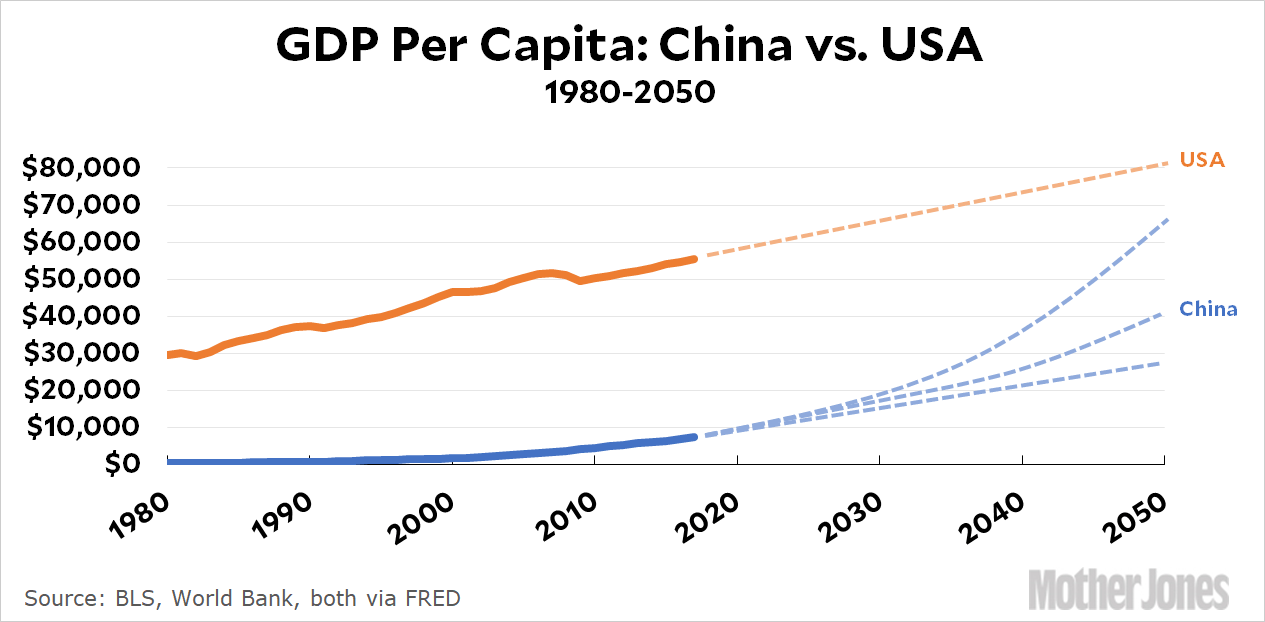
And speaking of how rich we are, I mentioned a few days ago that I was less scared of China than most people because I think their demographic problems are going to slow them down before long. In fact, they already have: China’s growth rate has gone from 10-13 percent per year in the 90s and aughts to 8 percent per year and then 6 percent per year in the teens. The chart below shows just how unlikely it is for them to catch up to us anytime soon:
In the middle growth scenario, China is still only half as rich as us even by 2050. Today, they simply aren’t in our ballpark even after three decades of miraculous growth, and they’ll probably stay that way for the rest of our lifetimes.
We have plenty of problems, but I continue to maintain that no area of the world is in better shape than we are. We’re rich now, and we’re positioned to grow faster and stay richer than just about anyplace bigger than a city state. If you disagree, I’d like to know who you’re betting on.
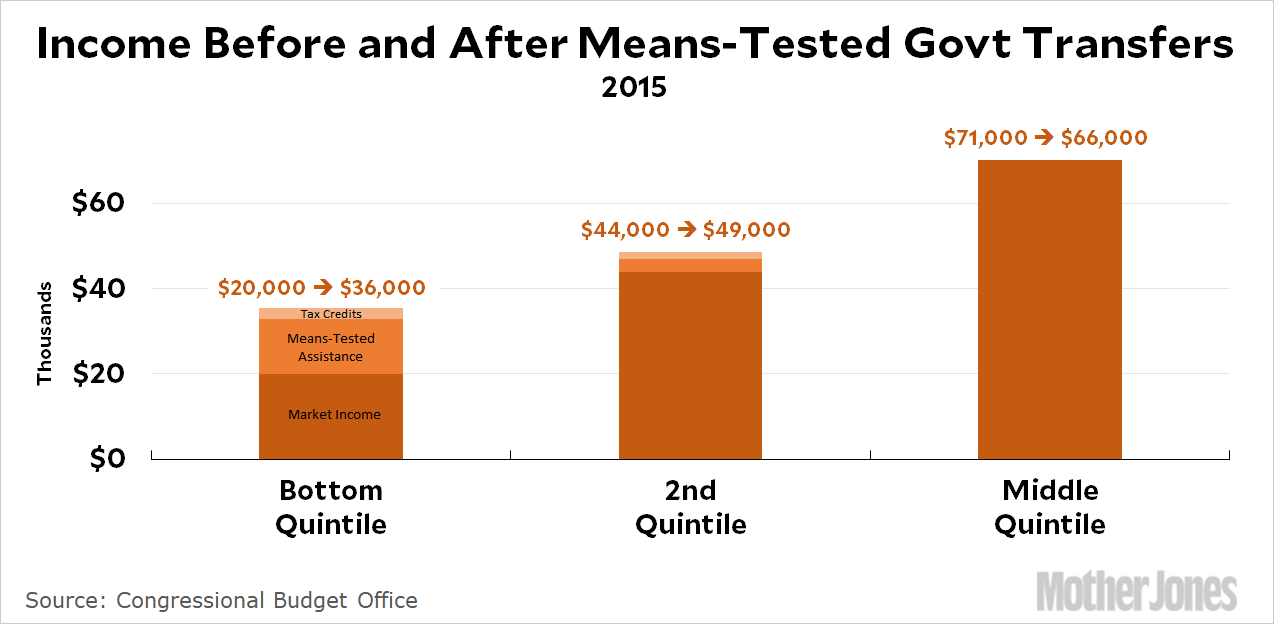
As an old saw says, we’ve been fighting the war on poverty for half a century and poverty won. But is that true?
The poorest households have an average market income of $20,000. After means-tested assistance programs and tax credits are included, their income is $36,000. Working-class families see an increase from $44,000 to $49,000. Income groups above that are net losers, paying more in taxes than they receive in benefits.
We could do a lot more, but it looks to me as if poverty has taken a serious beating—and this doesn’t even count Social Security and Medicare, which have taken millions of seniors out of poverty. So why does it often seem as if poverty won the war? I can think of a few reasons:
It’s still around. This has not been the kind of unconditional surrender that Americans love. It’s a grinding effort that goes on forever, and on city streets poverty can often appear to be worse than ever.
It’s too complicated. Yes, a lot of money gets disbursed, but it’s broken up into dozens of programs that all require separate applications; have to be renewed constantly; and yo-yo around depending on the vagaries of income and congressional largesse. Even the recipients of government assistance probably don’t realize how much help they’re actually getting.
Medicaid. A fair amount of means-tested assistance comes in the form of Medicaid and CHIP, which doesn’t actually put money in anyone’s pocket or buy anyone’s dinner.
It helps the wrong people. There are plenty of folks who think of money going to blacks and Hispanics as little better than flushed down the drain. Needless to say, conservatives do their best to encourage this view.
Life is still hard for a lot of people, but don’t be overly pessimistic about how much we’ve accomplished. Poverty will never be completely eradicated, but we’ve done a helluva lot to put it on the run.
Sunset over the Blue Ridge Mountains. This was taken about ten miles north of Blowing Rock, where I stayed on my third night of traveling the Blue Ridge Parkway. The subtle shading of the mountains is beautiful, and it’s worth viewing on a high-resolution monitor if you have one. (Tablets are great. A 4K monitor is good too.)
May 8, 2019 — Carroll Gap, Blue Ridge Parkway, North Carolina
And we respect that! But maybe you’re of a mind to support our work directly instead? We have until December 31 to raise the last $400,000 we need to keep our nonprofit newsroom running at full strength into 2026. Will you make a gift today?
We noticed you have an ad blocker on. Can you pitch in a few bucks to help fund Mother Jones' investigative journalism?
Billionaires own the media,
but they don’t own us.
At Mother Jones we know these aren’t conventional times, and they require unconventional coverage. That’s what deliver every day: fierce, independent journalism you can’t find elsewhere. Perhaps never in the history of our country has that been more necessary than now. But we can’t do it without reader support—your support. Please chip in today.
Billionaires own the media,
but they don’t own us.
At Mother Jones we know these aren’t conventional times, and they require unconventional coverage. That’s what deliver every day: fierce, independent journalism you can’t find elsewhere. Perhaps never in the history of our country has that been more necessary than now. But we can’t do it without reader support—your support. Please chip in today.