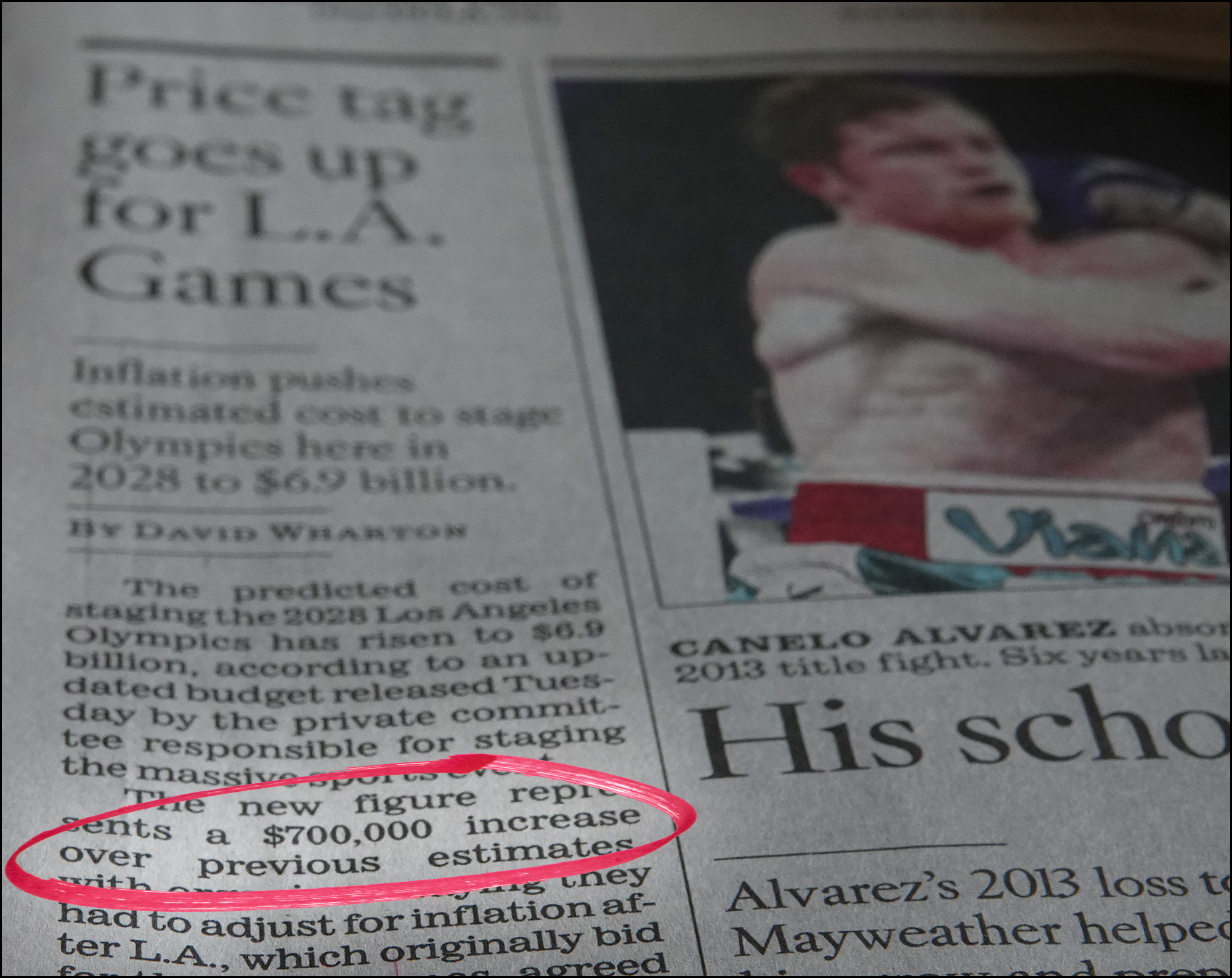
The predicted cost of staging the 2028 Los Angeles Olympics has risen to $6.9 billion, according to an updated budget released Tuesday by the private committee responsible for staging the massive sports event. The new figure represents a $700 million increase over previous estimates, with organizers saying they had to adjust for inflation after L.A., which originally bid for the 2024 Games, agreed to wait four more years.
OK, I get how $700 million can turn into $700 billion or vice versa, but how does it turn into $700,000? There’s no indication in the story that there’s even been a correction, let alone an explanation of how the mistake happened. Weird. But I suppose it doesn’t matter. By the time 2028 rolls around, I’ll bet that the difference between $700,000 and $700 million will seem kind of quaint.
I don’t get it. After many years I still don’t understand the whole Uber model. I mean, it’s basically to lose money on each transaction but to make it up in volume. Sure, whatever, but they already have enormous volume and they’re still losing money on each ride. When do they start charging market prices?
One option is to go the classic monopolist route that Amazon follows: charge low prices to build market share and then destroy what’s left of your competition. Then raise prices. But what are the odds that Uber can do that?
As for robot cars, I really don’t get that. If and when technology gets to the point that driverless cars become reality, Uber will certainly have no monopoly over it. Just the opposite. Everybody will have it. So how is that supposed to save the company?
They don’t even own the cars, so they can’t turn them into rolling billboards or something. So what’s their play? I’m just mystified by the whole thing.
Just four days into Joe Biden’s presidential bid, the former vice president has quickly sought to define his campaign as a one-on-one battle between him and President Trump, rather than a contest with more than a dozen other Democrats vying for the party’s nomination. The general-election-style feud escalated further Monday as Biden kicked off his first campaign rally here in Pittsburgh by taunting Trump over labor issues — part of an overt appeal to blue-collar voters that immediately drew Trump’s ire. Biden’s remarks, in which he accused Trump of ignoring America’s middle-class in favor of the rich.
How serious is Biden about labor issues? I can’t say, which is why I wish Sherrod Brown had entered the race. There’s no question where he stands on unions.
A couple of days ago, a bunch of Democratic candidates attended the SEIU/CAP forum. After reading a few tweets from attendees, I was surprised that no one had mentioned card check, a way of making it easier for unions to organize. I asked about this, and apparently it was true: the subject hadn’t come up. This isn’t because anyone there was opposed to it. Most (all?) of the Democratic candidates support it. But it just wasn’t important enough to mention.
That’s surprising, and a little discouraging. Some time ago I wrote a magazine piece about the long decline of the labor movement and concluded with this:
The heart and soul of liberalism is economic egalitarianism. Without it, Wall Street will continue to extract ever vaster sums from the American economy, the middle class will continue to stagnate, and the left will continue to lack the powerful political and cultural energy necessary for a sustained period of liberal reform. For this to change, America needs a countervailing power as big, crude, and uncompromising as organized labor used to be.
But what?
Over the past 40 years, the American left has built an enormous institutional infrastructure dedicated to mobilizing money, votes, and public opinion on social issues, and this has paid off with huge strides in civil rights, feminism, gay rights, environmental policy, and more. But the past two years have demonstrated that that isn’t enough. If the left ever wants to regain the vigor that powered earlier eras of liberal reform, it needs to rebuild the infrastructure of economic populism that we’ve ignored for too long. Figuring out how to do that is the central task of the new decade.
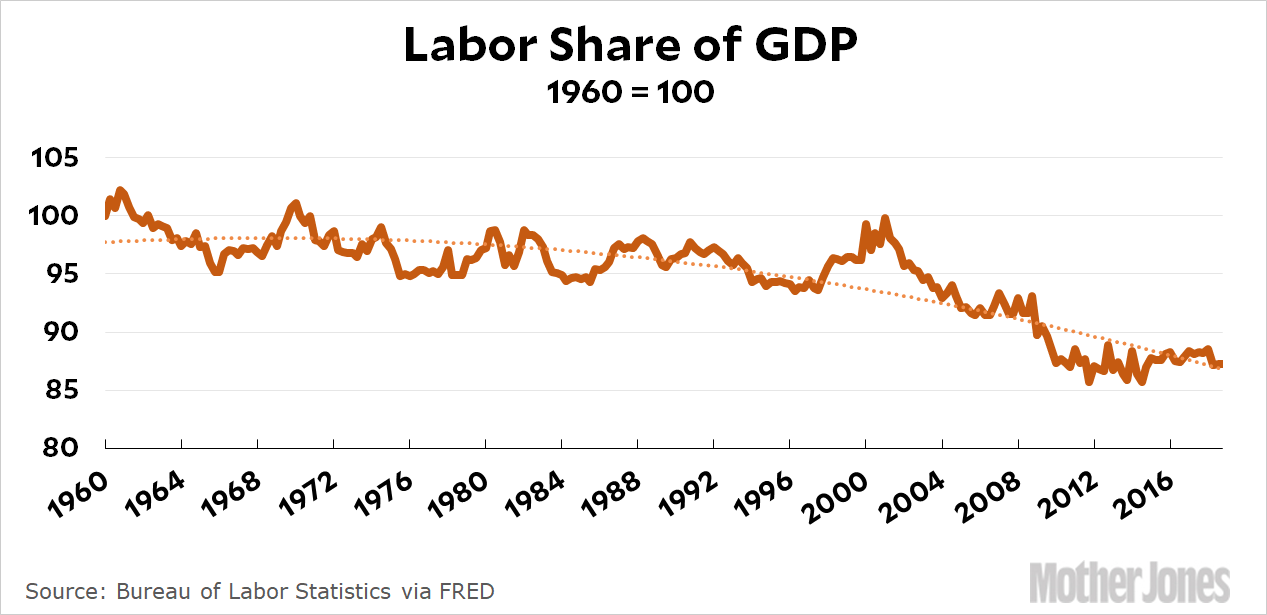
That was eight years ago, and since then nothing has taken the place that labor used to occupy on the left. Nor is anything on the horizon. But the decline of labor unions is at the heart of stagnating middle-class incomes and growing income inequality. Here’s the key chart:
In the last 60 years, as private-sector unions disintegrated, labor’s share of national income dropped and dropped and dropped. There was a brief recovery during the dotcom boom, but that was quickly put paid. The Great Recession did even further damage, and by 2019 labor’s share had dropped by 13 percent since 1960. That amounts to about $700 billion in lost wages, or roughly $6,000 per working family.
Why did this happen? Because it could. Without unions to push back, owners of capital took a bigger share for themselves and there was no one to stop them. Nor was this any kind of accident. Throughout the entire postwar era, there is nothing—not abortion, not tax cuts, not opposition to social welfare—that Republicans have been more united and aggressive about than destroying unions. This is because the business class that supports Republicans knows perfectly well that unions are their core problem. You have to kill them off before you can get your tax cuts or your stock buybacks or your executive compensation that’s 300x the average worker.
If you want to know if someone supports the middle class, one question will do the job: do you want labor unions to regain their power? If you don’t, then like Donald Trump, you’re just faking it. Granted, it’s a scary thought for some liberals, too, since a re-empowered labor movement means that a bunch of blue-collar workers would have real power of their own and start calling a lot of the shots on the left. But what other way is there to break the power of corporations and the right?
Here in Southern California, the word of the day is mustard. Evil, invasive black mustard. The hills are covered in the stuff, and although it’s kind of pretty it poses big problems. The first is that it pushes out native plants and takes over entire fields. The second is that in another month or two it will all die, leaving terrific fuel for wildfires. We would love to get rid of the stuff, but there’s no easy way to do it.
In the meantime, here are pictures of a local hill covered in mustard. I chose it because it has a nearby palm tree, which gives it a very California touch. The bottom two pictures give an idea of what it looks like close up.
April 3, 2019 — Orange, CaliforniaApril 3, 2019 — Orange, CaliforniaApril 20, 2019 — Laguna Coast Wilderness Park, Orange County, CaliforniaMarch 29, 2019 — Black Star Canyon, Orange County, California
Over at Vox, Aditi Shikrant takes on the question of why custom picture framing is so expensive. I’m curious about that myself. But she goes off the rails here:
The perception that custom framing is too pricey is also a symptom of a different reality: Millennial consumers — long past their poster-hanging days — have less money than previous generations. Young adults are decorating homes and apartments with more budget-friendly art.
We really need to stop this. It’s just not true:
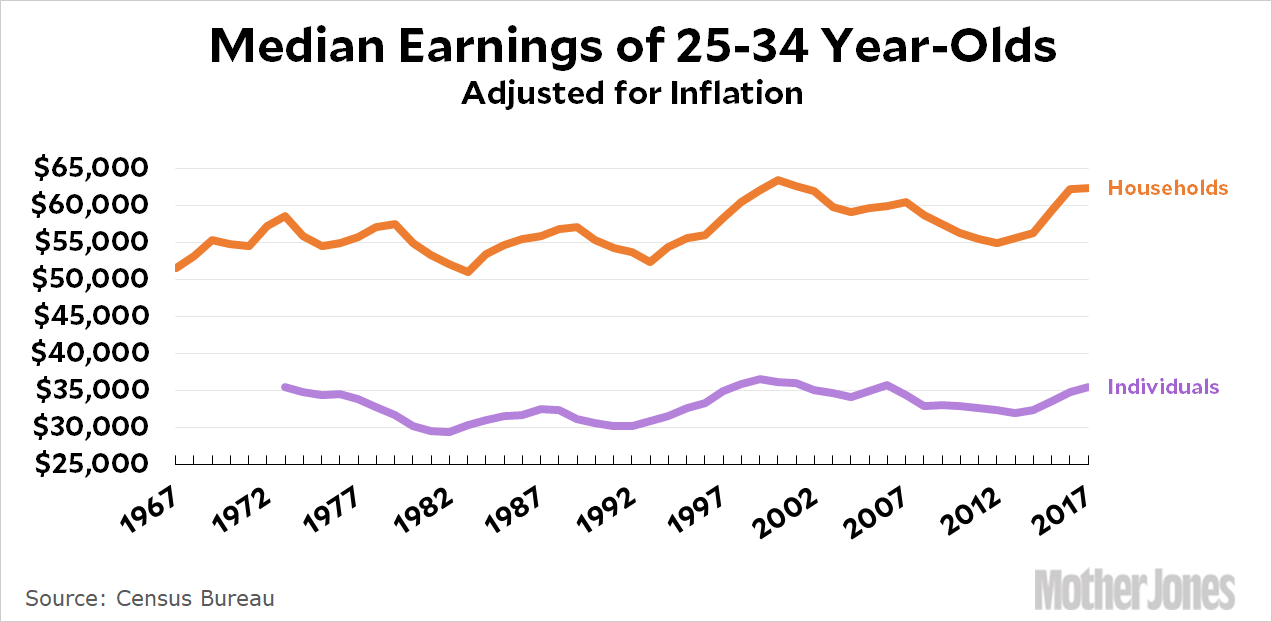
Millennial incomes are no lower than previous generations. Nor, generally speaking, are millennials more in debt,less likely to own a home, or less likely to spend money. You can pick out a few small differences depending on how you cherry pick years and which generations you compare to, but millennials right now are roughly as well off as young people in previous generations and their spending habits are pretty similar too.
This hasn’t always been true, of course. Millennials were hit pretty hard by the Great Recession. But a decade of recovery has put millennials in roughly the same financial position as Gen Xers and boomers when they were young.
Millennials have pretty clearly struggled harder in certain ways compared to previous generations—college debt is an obvious example—but it’s time to stop pretending that in 2019 they’re all poor little mice who spend money more frugally than their parents. The evidence just doesn’t back that up.
POSTSCRIPT: By the way, custom framing is apparently expensive because, in addition to the obvious labor costs, frame shops have to keep lots and lots of different options in inventory.
Just a quick note on something I’ve been doing for the past few weeks. I’m not sure how many of you have noticed, but I’m experimenting with refusing to repeat lies—especially Donald Trump’s—when I respond to them.
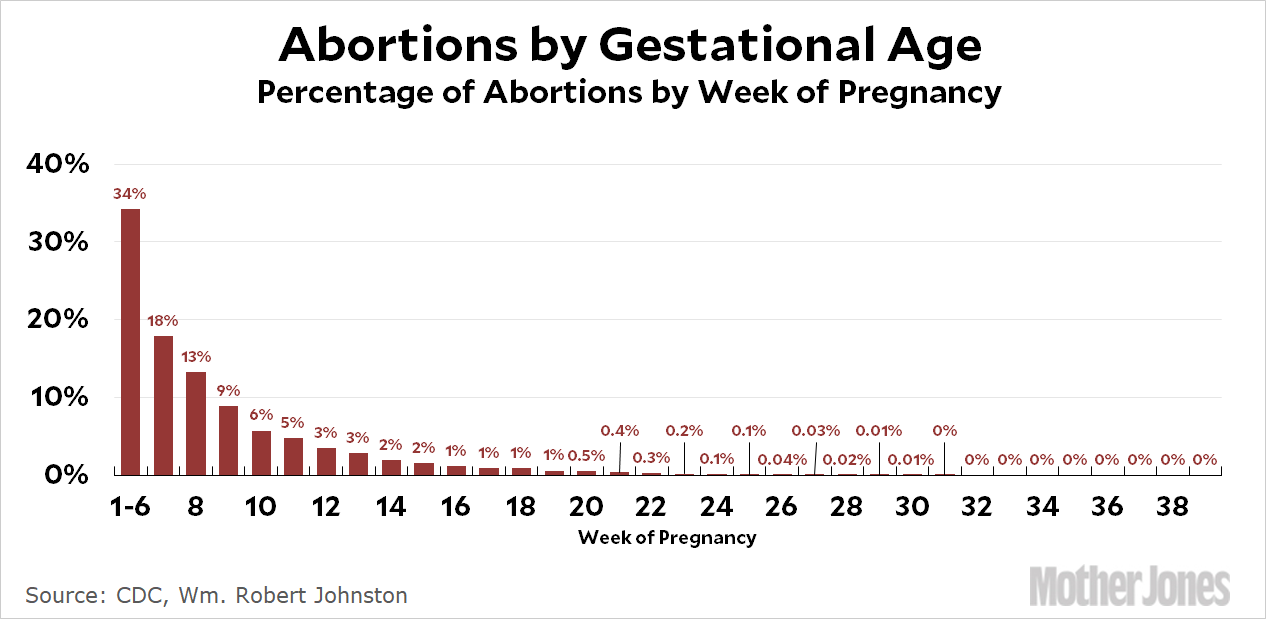
This morning, for example, I posted a chart showing the number of abortions by week of pregnancy. Obviously I didn’t do this out of the blue. I did it in response to Trump’s absurd statement at a Wisconsin rally that Democrats favor infanticide: “The baby is born, the mother meets with the doctor, they take care of the baby, they wrap the baby beautifully, and then the doctor and the mother determine whether or not they will execute the baby.” This, of course, is Trump’s hyperbolic version of the right-wing’s general notion that liberals favor abortion right up to the moment of birth.
The truth is that although many liberals prefer to see no non-medical restrictions on abortion, 91 percent of all abortions are performed in the first trimester and something like 99.9 percent of abortions are performed in the first two trimesters.
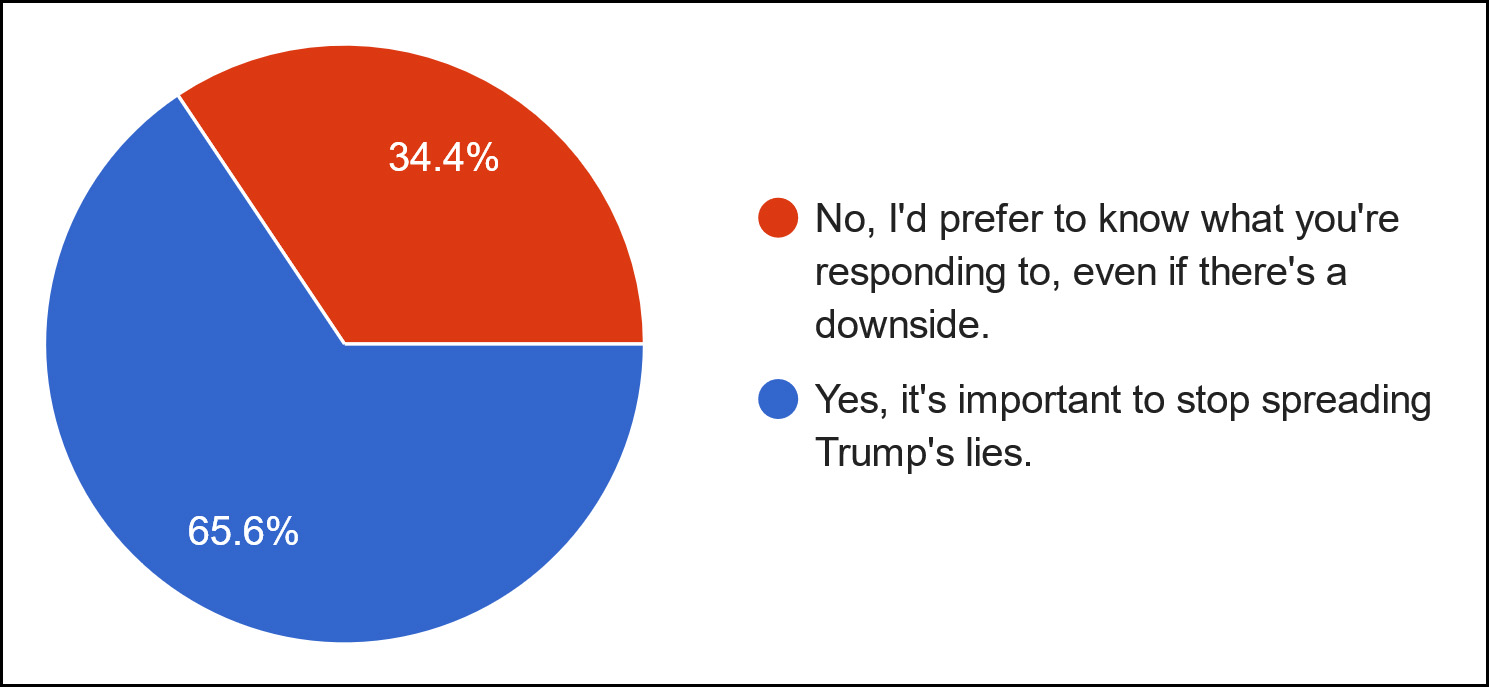
Question: what do you all think of this experiment? Should I keep refusing to give lies more attention? Or would you prefer to know exactly which lies I’m responding to?
UPDATE: And here’s the response to my mini-survey:
Wisconsin is known as “America’s Dairyland,” but the milk makers who gave the state its moniker are vanishing, falling prey to a variety of impediments, including President Trump and his global trade war. Over the past two years, nearly 1,200 of the state’s dairy farms have stopped milking cows and so far this year, another 212 have disappeared, with many shifting production to beef or vegetables.
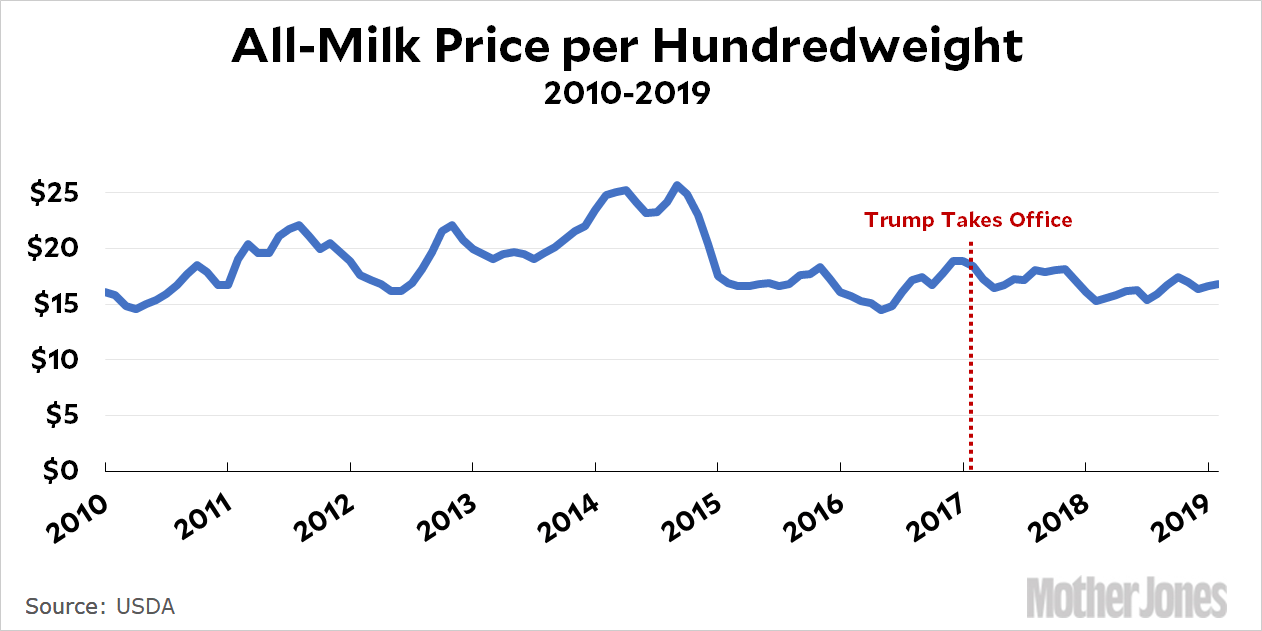
….The fate of Wisconsin’s farmers is a high-stakes political predicament for Mr. Trump, who narrowly won the pivotal swing state in 2016 and hopes to keep it red in 2020….Mr. Trump’s trade approach has pushed many of Wisconsin’s already struggling dairy farmers to the edge. Milk prices have fallen nearly 40 percent over the past five years….That has coincided with Mr. Trump’s sweeping tariffs on foreign steel and aluminum, which were intended to help American manufacturers but have set off retaliatory tariffs from Mexico, Canada, Europe and China on American dairy products. Most painful for Wisconsin’s dairy farmers has been a 25 percent tariff that Mexico placed on American cheese, which is made with a significant volume of the state’s milk production.
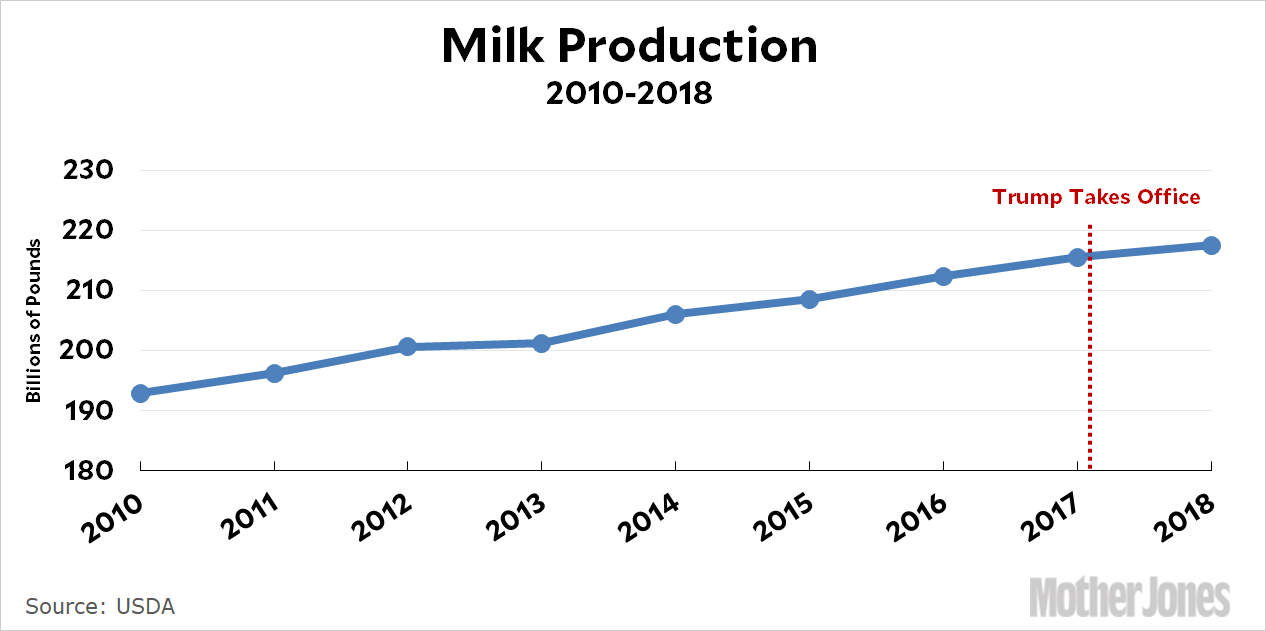
Dean Baker complains that the story never mentions the rise in the value of the dollar over the past five years, and that’s fair enough. But I have a different complaint: the story is innumerate. Let’s take a look at national figures for dairy production and exports. Here’s production of milk:
Here’s the price of milk:
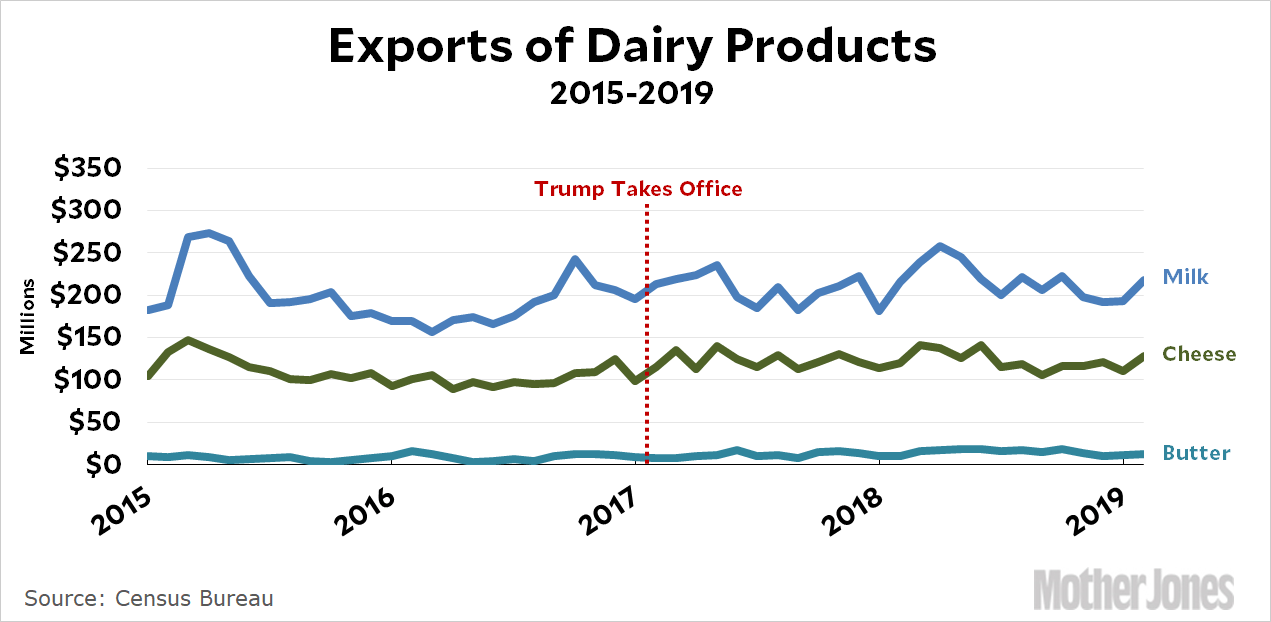
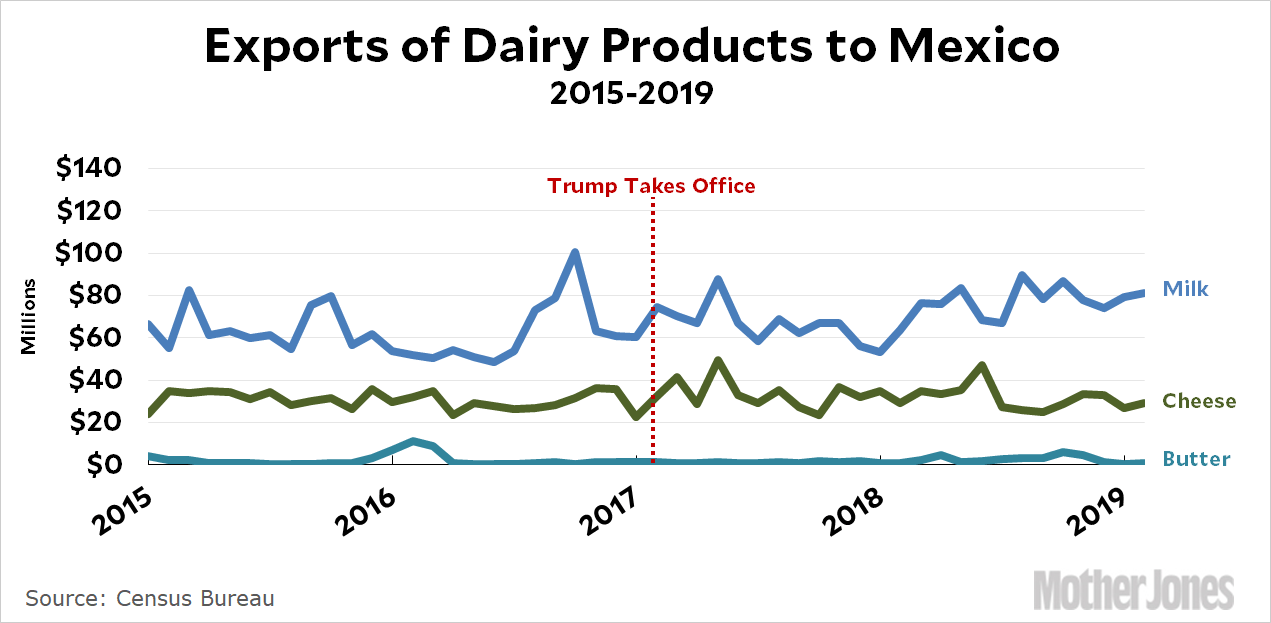
And here are exports of dairy products:
It’s true that milk prices have fallen 40 percent “over the past five years,” but that’s seriously misleading. There was something of a milk bubble from 2012-2014, which burst suddenly in the second half of 2014. The price of milk fell 40 percent in the second half of 2014—five years ago—but has been flat ever since.
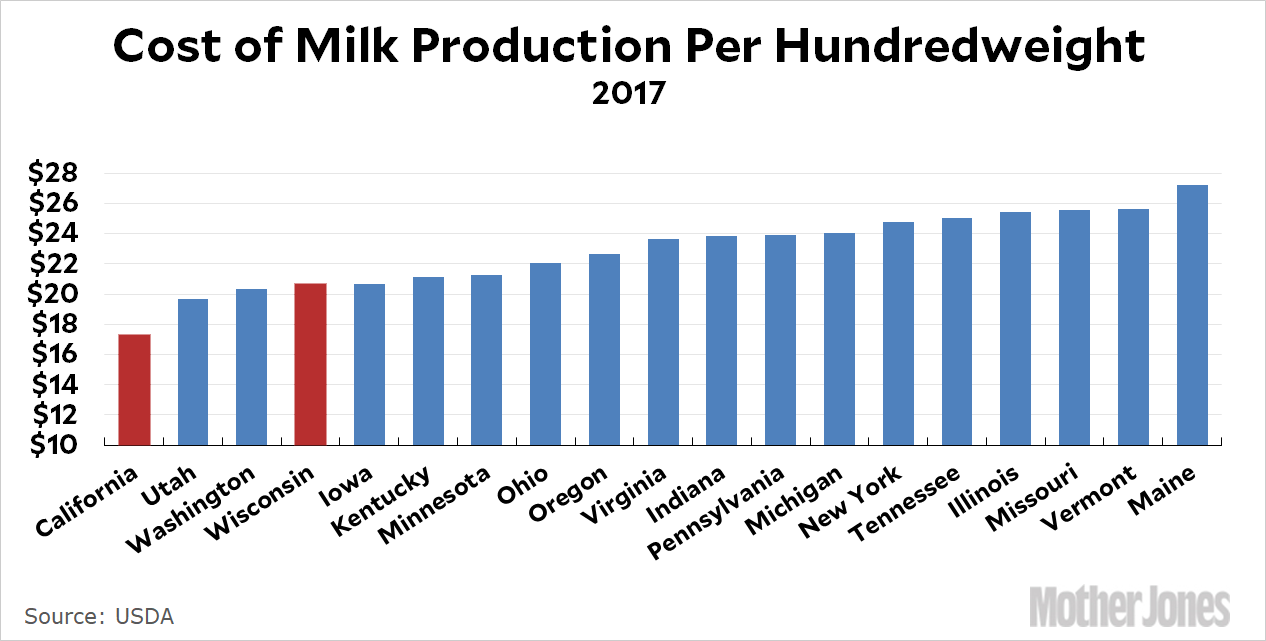
Both total exports and exports to Mexico have been flat too for the past few years. In particular, neither production, nor price, nor export trends have changed even slightly during Donald Trump’s presidency. There may well be industry-wide trends that have reduced the cost of milk production, but my guess is that Wisconsin’s real problem isn’t Trump’s tariffs. It’s California:
California is the low-cost producer of milk in the United States, and it’s driving everyone else out of business. But I guess that’s not a very sexy story.
Since it’s been in the news lately, this chart shows our best estimates of when abortions are performed in the US. According to the CDC, 91 percent of all abortions are performed in the first trimester and 98.7 percent of abortions are performed during the first 20 weeks. Using state data, it’s possible to roughly estimate the percentage of abortions performed in weeks 21-30. Above that, no records are kept, but the numbers are so tiny that they register as 0.00 percent.
Note that above 13 weeks abortions are reported in gestational ranges, i.e., 14-15 weeks, 16-17 weeks, etc. I have interpolated these into figures for single weeks.
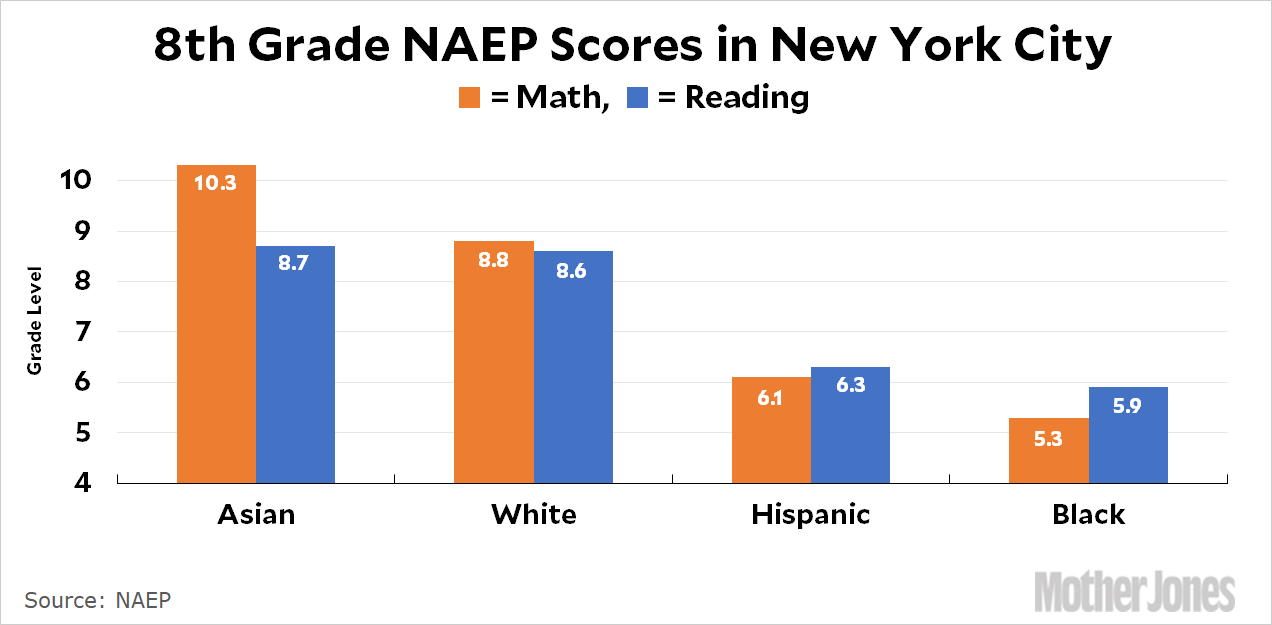
Today the New York Times features another story about the city’s eight “elite” high schools and the fact that they admit hardly any black or Hispanic students. However, despite all the blathering about “test prep” being the big reason for this, the real reason is obvious: black and Hispanic students are way behind Asian and white students. Here are the “gold standard” NAEP scores for 8th grade New Yorkers:
I’ve converted the raw scale scores into grade levels using the national average as 8th grade level and 10 points representing one grade level. I did this because the raw scores are sort of meaningless to most people and I wanted to make it dramatically clear just how big the gaps are. Keep in mind that this is not just 8th grade, before most kids have had years of intensive test prep, but it’s the NAEP, which no one studies for. Test prep might make a difference on these scores, but no one thinks it’s more than a half a grade level or so. This is the big problem that New York City (and the rest of the country) need to address.
But beyond that, I’m curious about something: why is eight a sacred number? When New York City kids go to college, they’ll have a huge variety of schools to choose from. The top students will get into Harvard. The next level will get into UCLA or the University of Michigan. The next level will get into UC Riverside. The level below that will get into Cal State Long Beach. And then there will be the kids who go to a community college.
Why not have similar levels in New York City? It might not be practical for smaller school districts, but New York could do it. Nor is this the dreaded “tracking.” The eight elites would remain the Harvards of the school district, but another eight would be the UCLAs and another eight the UC Riversides. They’d all be academic high schools oriented toward college prep, and the admission criteria could be either the current test or something else.
In fact, doesn’t New York City already have something like this? I don’t mean the specialized schools for dance or music, but the general high schools with admissions criteria. How selective are they? How well do they serve black and Hispanic kids? Why are the eight elites, which serve less than 5 percent of New York’s students, such an obsessive focus? As important as they are, the next five percent, and the next ten percent after that, are probably at least as important. Why don’t we have a little more focus on them?
Over at New York, Sarah Jones criticizes Elizabeth Warren’s plan to reduce maternal mortality among black mothers, which relies on penalizing hospitals with high mortality rates. I think Jones is right about that: taking money away from hospitals that are already probably struggling for resources doesn’t make sense. What makes better sense is to look to California for guidance: in the past decade it’s cut maternal mortality in half thanks to the efforts of the California Maternal Quality Care Collaborative. What they do is surprisingly simple: figure out the major causes of maternal death, focus on how to prevent them, and then get hospitals obsessed about having those treatments ready for every delivery.
Warren is right to identify implicit bias as a major contributing factor to rates of death for black mothers. As ProPublica reported in 2017, black women in wealthy neighborhoods — where hospitals are likely to be well-funded, high-quality institutions – are still much more likely to die from pregnancy complications. In 2014, black Americans comprised a mere 4 percent of the nation’s physician workforce, and medical school doesn’t root out racism from the psyches of their white colleagues.
I wondered if this was true. The problem is that it’s nearly impossible to figure out. We already know that the black maternal death rate nationally is far higher than the white rate, but if we want to know why it’s higher we have to search for differences among subgroups that might provide an explanation. Basically, we need to break out the data in some way that allows us to compare, say, each state’s maternal death rate to its racial attitudes. Unfortunately, we can’t do that. There are only about 700 maternal deaths in the US each year, and if you slice and dice this by state and race you end up with lots of tiny sample sizes even if you use multiple years of data.¹
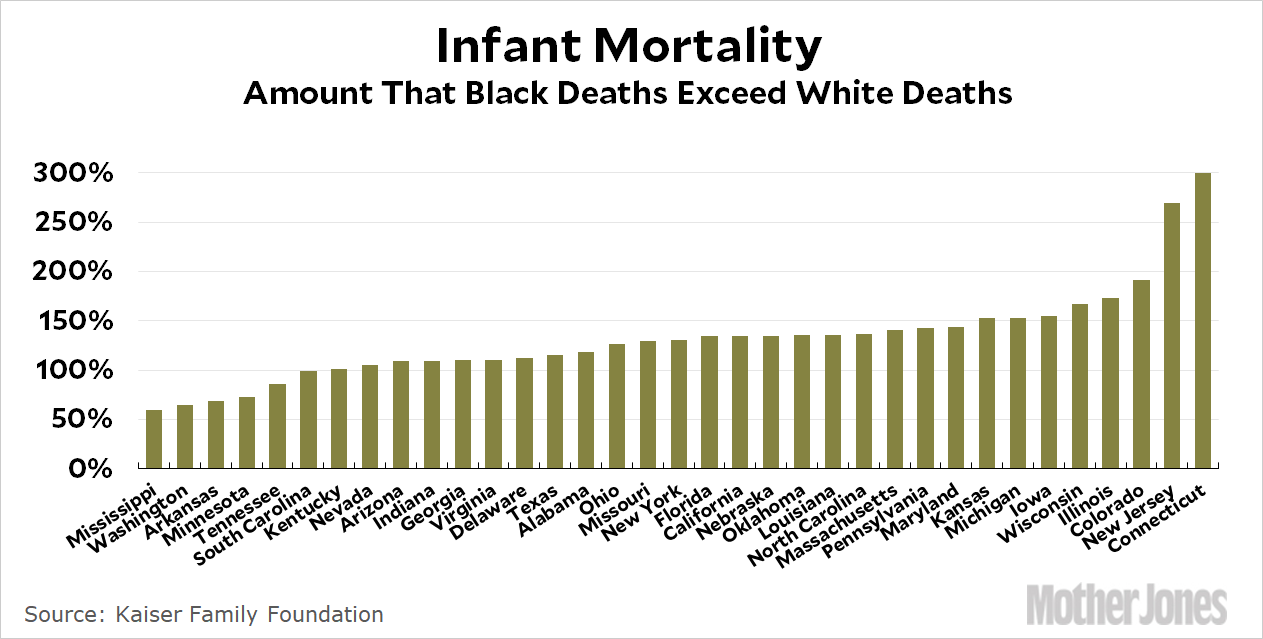
But it occurred to me that I could look at infant mortality instead, which happens in far higher numbers. A quick check confirmed that at a state level it correlates pretty well with maternal mortality—not perfectly, but with such small sample sizes that’s hardly to be expected. First, then, here is the infant mortality rate by state:
At first glance this doesn’t seem to support the idea that implicit racism among doctors is at fault. At the left are the states with the lowest rate of excess black deaths relative to white deaths. It includes states like Mississippi, Arkansas, and South Carolina—not places that we typically associate with liberal racial attititudes.
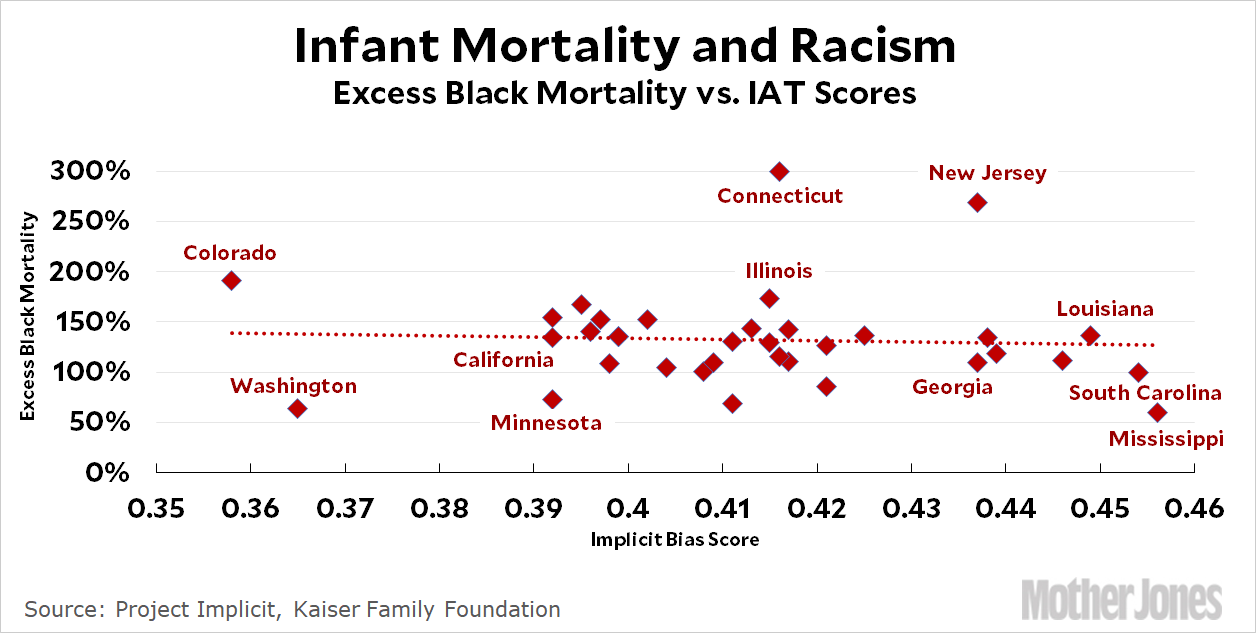
So let’s take a closer look. What happens if we compare the numbers above with state averages on the Implicit Association Test, which is supposed to measure racial bias even if it’s unconscious? Here you go:
There’s nothing there. The trendline is basically flat and has a lousy correlation coefficient. The states on the far right are both poor and racist, but black infant mortality relative to white is no worse than states on the left, which are both richer and less racist.
Now, there are loads of problems with all this. First there’s my assumption that racial differences in infant mortality are a good proxy for racial differences in maternal mortality. There’s the assumption that the IAT is a good test of bias, which is far from certain. There’s the lack of any controls for things like education, access to insurance, and so forth.
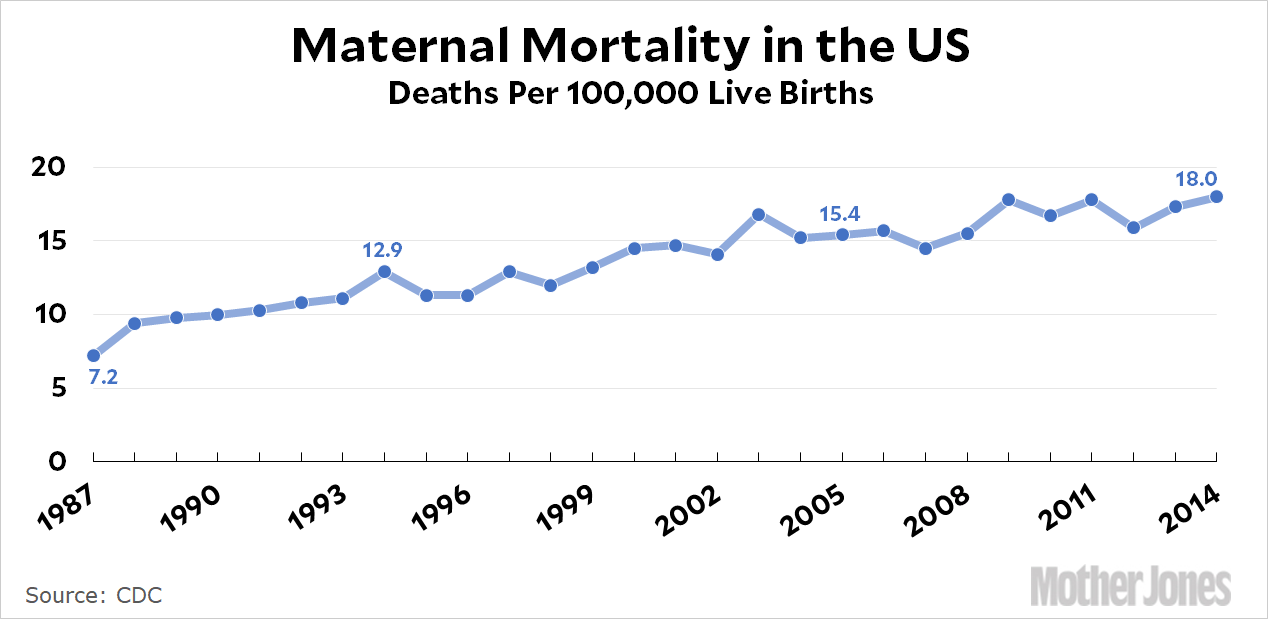
But even acknowledging all that, this rough look doesn’t seem to support the proposition that implicit bias among doctors is responsible for black mothers having a higher maternal mortality rate than white mothers. Plus there’s the experience of California: they cut their maternal mortality rate in half, and presumably this wasn’t because the state’s doctors suddenly all had racial epiphanies over the past decade. Instead, they focused on what kind of medical care was needed to prevent maternal deaths, and then pressed hospitals to get serious about it. There’s also this:
This is insane: over the past three decades maternal mortality has doubled in the US while it’s gone down everywhere else. More importantly, it’s been rising across the board. This suggests that maternal mortality is more a consequence of a broad medical breakdown than it is of some specific racial problem among doctors.²
All that said, I wouldn’t be at all surprised if implicit bias plays a role in the higher level of black maternal mortality. In fact, I’d be surprised if it didn’t. For one thing, we know it does in at least a few other areas of medicine. Still, if we’re going implicate racism here, it should be based on evidence.
¹Just as an example, Nebraska has 0.6 percent of the population of the US, which means you’d expect about four maternal deaths per year. African Americans make up 5 percent of Nebraska’s population. This means that even over ten years you’d expect maybe 36 white maternal deaths and 4 black maternal deaths. There are lots of states like this, and those numbers are way too small to produce any kind of meaningful comparisons.
²It also suggests that the rise might be an artifact of reporting rather than something real. There’s some evidence of this, but not enough to draw any firm conclusions.
And we respect that! But maybe you’re of a mind to support our work directly instead? We have until December 31 to raise the last $400,000 we need to keep our nonprofit newsroom running at full strength into 2026. Will you make a gift today?
We noticed you have an ad blocker on. Can you pitch in a few bucks to help fund Mother Jones' investigative journalism?
Billionaires own the media,
but they don’t own us.
At Mother Jones we know these aren’t conventional times, and they require unconventional coverage. That’s what deliver every day: fierce, independent journalism you can’t find elsewhere. Perhaps never in the history of our country has that been more necessary than now. But we can’t do it without reader support—your support. Please chip in today.
Billionaires own the media,
but they don’t own us.
At Mother Jones we know these aren’t conventional times, and they require unconventional coverage. That’s what deliver every day: fierce, independent journalism you can’t find elsewhere. Perhaps never in the history of our country has that been more necessary than now. But we can’t do it without reader support—your support. Please chip in today.