Why is Hilbert sticking his tongue out at me?


Why is Hilbert sticking his tongue out at me?

Erik Lesser/ZUMAPRESS
A couple of days ago I asked what liberals ought to do if the Supreme Court allows President Trump to add a citizenship question to the 2020 census. One option is to tell undocumented workers to simply lie about being citizens, but as David Dayen points out, that’s illegal:
When I looked into this, I found out that just telling people to lie on the census form and check the citizenship box would open campaigners up to prosecution. Terri Ann Lowenthal, the former staff director of the House census oversight subcommittee and now a consultant on census-related issues, pointed me to 13 U.S.C. Section 222, which states that anyone taking action “with the intent or purpose of causing an inaccurate enumeration of population to be made” can be fined up to $1,000 or imprisoned for up to a year.
So what other possibilities are there?
I am not advocating for anyone to improperly fill out the census form. But I was a census enumerator myself in 1990, and I know that I was instructed to get residents to fill out as much of the form as possible. Even if I could only get the number of people in the home, that form would be counted. “People and households are counted even if they don’t answer all the questions,” Lowenthal told me.
If households are counted even if they leave the citizenship question blank, the danger to electoral apportionment and federal funding allocation could be removed. Article I and the 14th Amendment to the Constitution clearly mandate counting “the whole number of persons in each state.”
So what happens if a substantial number of households simply refuse to answer the citizenship question? This form of massive civil disobedience was one of the most common suggestions I received: if millions of people leave the citizenship question blank, then it’s useless and no public policy can be based on it. The problem is that this doesn’t solve the actual question at hand: getting a full count of those who aren’t citizens. If the citizenship question scares undocumented workers from even responding, then we’ll get an undercount regardless of what the rest of us do. That’s the whole point of this cynical exercise. If California ends up with a recorded population of, say, 38 million instead of 39 million, maybe it loses a congressional seat. Take that, Hillary lovers!
So what to do? At this point, I suppose I should admit that my best guess is that . . . liberals shouldn’t worry about it too much. Sure, it’s a good idea to try to educate noncitizens that it’s OK to respond to the census, but if they don’t it’s probably not that big a deal. Why? Because the Census Bureau is keenly aware of coverage issues and always develops strategies to address them. These strategies aren’t 100 percent successful, of course, but if there’s a known issue—for example, children were undercounted in the 2010 census—they develop ways to fix it. Undocumented workers are always undercounted for obvious reasons, and if the Census boffins think it will get even worse in 2020, they’ll make special efforts to address it. In the end, my guess is that the citizenship question will have only a minor effect on the count. As with voter ID, it will be a too-clever Republican effort to hurt Democrats that ends up not making much of a difference.
But I could be wrong! And “not much” isn’t zero. So keep up the education efforts.
Deputy Attorney General Rod Rosenstein—the Trump appointed Republican who appointed a fellow Republican as special counsel to lead the Trump-Russia investigation—talked about the Russians last night:
He also said that, even after the Mueller report documented Russian interference in the 2016 election, that is only a small part of the story. “The bottom line is, there was overwhelming evidence that Russian operatives hacked American computers and defrauded American citizens, and that is only the tip of the iceberg of a comprehensive Russian strategy to influence elections, promote social discord, and undermine America, just like they do in many other countries,” Rosenstein said.
That’s all well and good, and I understand the desire to protect sources and methods. Still, it would be nice to hear more about this. The Republican Party is apparently determined to never speak of Russia in public since they know it agitates their man-child president, but the rest of us would like to hear about the whole iceberg. How can we make public policy otherwise?
Real GDP grew 3.2 percent in the first quarter:
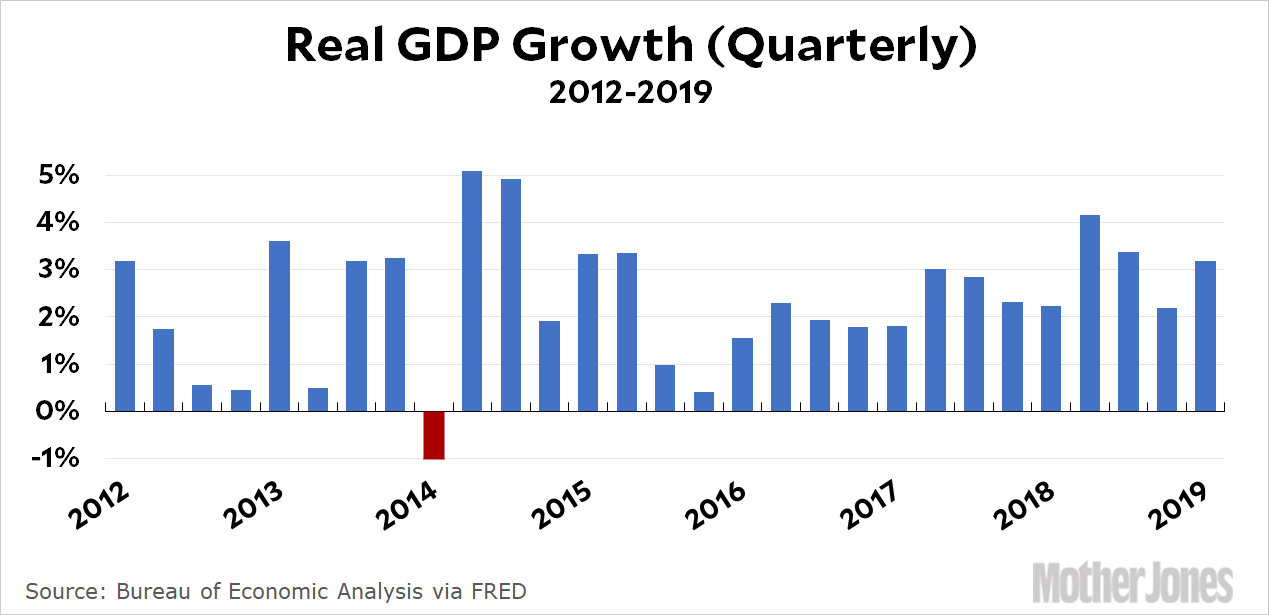
Consumer spending was weak in the first quarter but fixed investment was strong. Production of goods was actually negative for the quarter, but was made up for by services, fixed investment, and extraordinarily strong net exports. The federal government contributed zero to the increase in GDP.
The PCE price index plummeted to 0.6 percent in the first quarter. Inflation is obviously very well under control.
Richard B. Levine/Levine Roberts via ZUMA
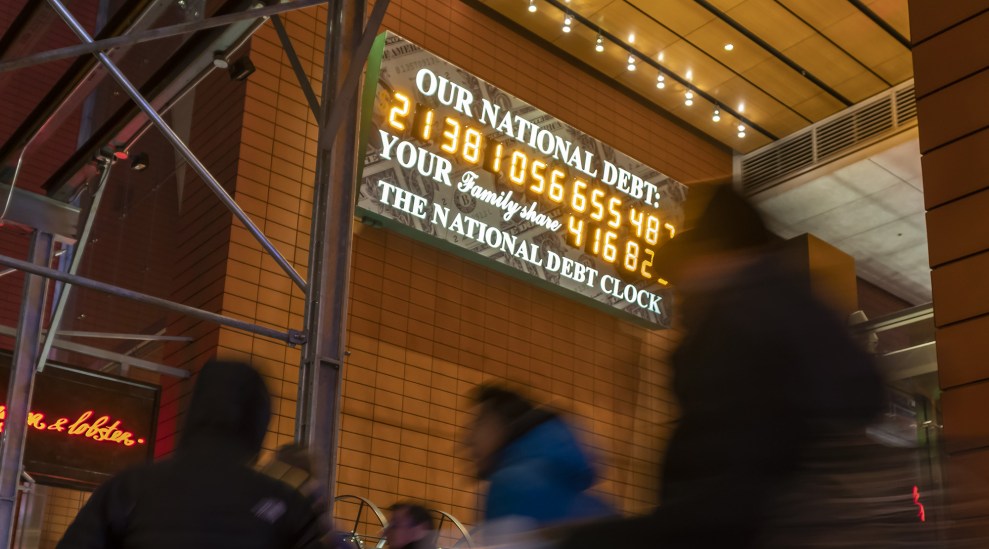
Top White House officials are imploring key Republicans to move quickly and raise the debt ceiling, four people briefed on the discussions said, concerned that a prolonged impasse could raise the chances of a misstep that damages the economy later this year.
….But the effort appears to be getting little traction so far, in part because some Democrats are insisting that any debt ceiling deal come as part of a package of changes that raises spending levels after October. The White House has sent mixed signals as to whether it would support raising spending caps, and Democrats have asked for firm commitments before they will proceed.
Last night I wondered aloud how Democrats should respond if the Supreme Court allows President Trump to add a citizenship question to the 2020 census. High road or low road? I have the same question this time. I don’t believe the debt ceiling is something to be held hostage for cynical partisan advantage. It should just be raised.
At the same time, after watching Republicans hold it hostage for cynical partisan advantage during the entire Obama presidency, it’s almost more than I can bear to let it go now that it’s their problem. What to do?
The Los Angeles Times says that pulling out of the TPP trade deal has been bad for US exports to Japan:
One of Donald Trump’s first acts as president was to pull the United States out of the Trans-Pacific Partnership, the 12-nation free-trade deal that President Obama negotiated but left unfinished. Trump derided the pact as a bad deal for America. But leaving it hasn’t turned out that well either.
The remaining 11 members proceeded anyway, slashing tariffs and leaving U.S. businesses at a significant competitive disadvantage….While Trump was busy slapping tariffs on China and other countries, Japan also concluded a pact with the European Union that lowered duties and other barriers to ease trade flows. Between the EU and Asia-Pacific, Japan is now starting to import substantially more from its free-trade partners, at America’s expense.
Let’s take a look:

Exports to Japan have actually been doing pretty well under Trump. However, it’s true that the first two months of 2019 have seen a sudden dropoff—possibly due to the EU-Japan trade agreement that went into effect on February 1. The problem is supposedly biggest among farmers, so let’s zoom in on that:
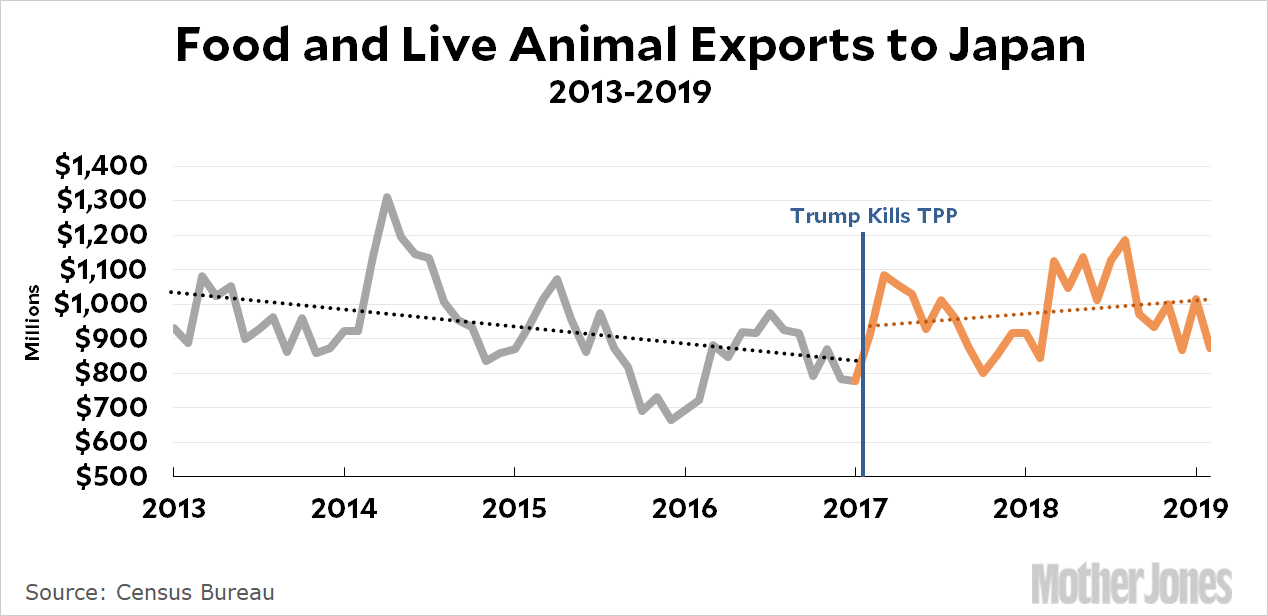
This has been a bumpier ride, but it still doesn’t look too bad. However, this includes all foodstuffs as well as live animals. What happens if we just look at crop-based exports?
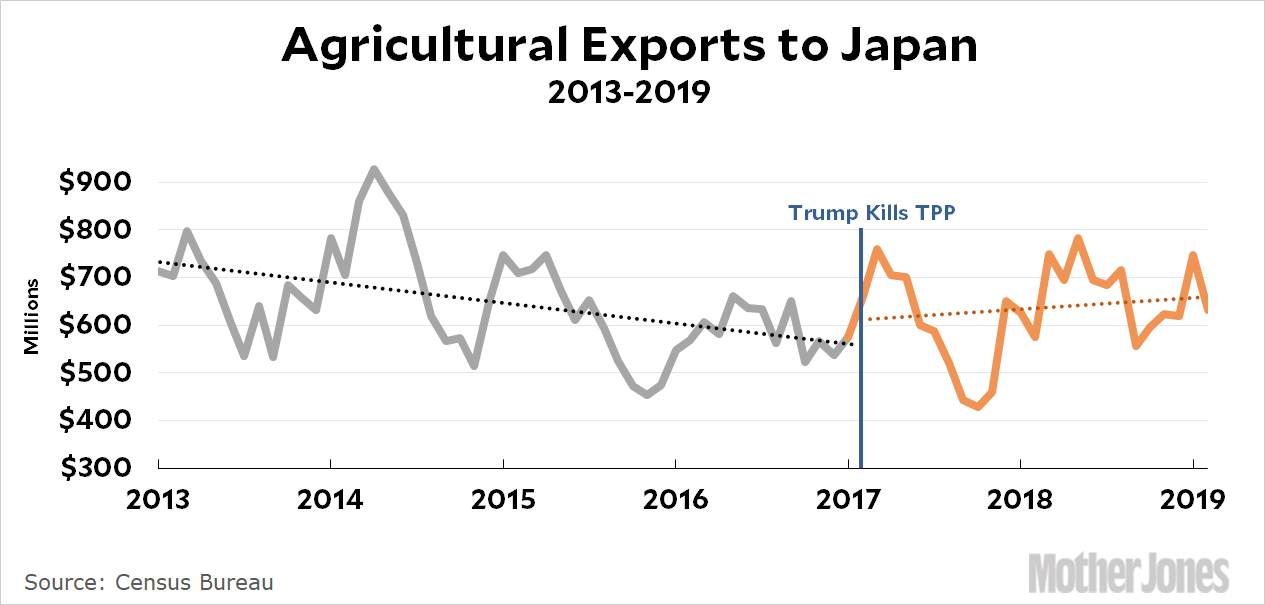
It’s about the same. There’s a decline starting in September, but even at that, exports are higher now than they were when Trump took office. But wait. The article says the problem is specifically with “wheat, beef, pork, dairy, wine, potatoes, fruits and vegetables.” So, because I’m insane I’m dedicated to bringing you the whole picture, here’s the best we can do to look only at those items over the past couple of years:

Aside from pork, which is slightly below its January 2017 level, everything is up. What’s more, beef is the only category that shows a recent decline, starting around mid-2018. Everything else is either steady or increasing.
On balance, I think it was a bad idea to kill TPP. However, majorities in both parties were dead set against it, and it was effectively dead well before Trump took office. Killing it may well do long-term damage to US exports to Japan and other countries, but I have to say it’s hard to see a clear problem yet.
Let’s take a short break from wildflowers this week and ease into the weekend with something from the garden instead. This is a Sally Holmes rose, which sports a lovely combination of delicate yellows and pinky salmons. Our back wall is currently overflowing with them, along with an outbreak of miniature pink roses.
And don’t worry about the wildflowers: I’ve got dozens of pictures of them, and you’ll see them all throughout the rest of the year.

Here is the Trump administration’s estimate of the benefit of USMCA (aka NAFTA 2.0), the trade deal with Mexico and Canada that was concluded last year. They say that GDP will go up:
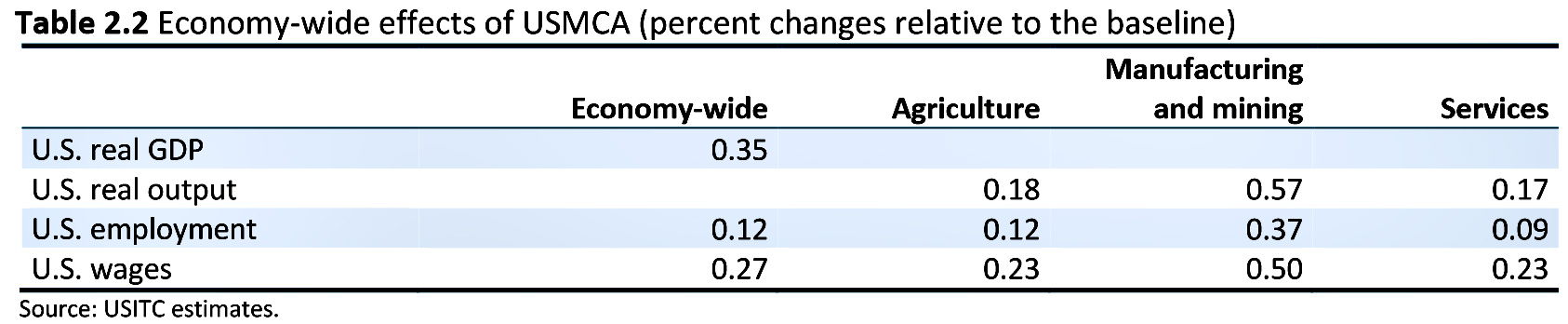
OK, it’s a table, not a chart. Sue me. In any case, it claims that Trump’s new trade deal will increase GDP by 0.35 percent, but mysteriously doesn’t say when this increase will happen. I wonder why they’d leave that out?
The answer is that it’s because this increase happens over the course of 16 years. That’s about 0.02 percent per year. Just to make it clear what that means, it’s the equivalent of $100 growing by two cents.
But wait, there’s more! It turns out that the model used by the International Trade Commission actually projects a GDP decrease of 0.12 percent. However, they add 0.47 percentage points because “commitments in USMCA address [] regulatory uncertainty by providing assurance to firms that current conditions will be maintained into the future.” The idea here is that companies can’t really be sure that things we’ve all been doing for decades will continue in the future, and the new treaty clears up this uncertainty.
Maybe so. But if that’s really the case, maybe we should sign a treaty that just clears up the regulatory uncertainty and leaves everything else alone?
This all comes via Dean Baker, who has more to say here.
Today features the weirdest anti-regulation polemic I’ve ever seen. But first, let’s set the stage:
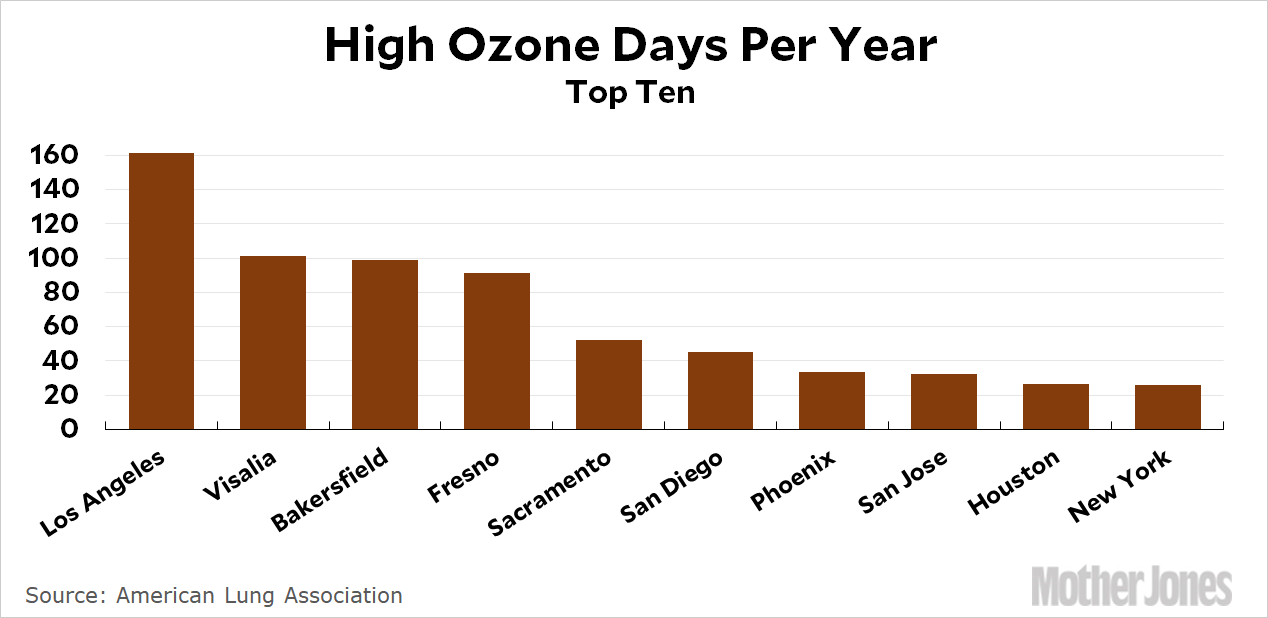
This comes from the American Lung Association’s annual “State of the Air” report, and as usual, California doesn’t do well. Here is National Review’s Jim Geraghty to tell us why:
California has the toughest air-quality regulations of any state in the country….Yet the State of the Air report finds that by every measure — ozone, year-round particle pollution, and short-term particle pollution — California cities are at the top of the list and often dominate the top ten.
….If California has such strict regulation, why is the air quality so bad? Blame it on geography and population density — two factors that are exceptionally difficult to change. The American Lung Association has done 20 State of the Air reports and Los Angeles ranked as the worst in 19 of those years. California’s cities have a lot of people, a lot of cars and traffic, and a lot of sunny days. When you live in a valley surrounded by high mountains, the smog doesn’t disperse easily.
….The American Lung Association opposes the Trump administration’s effort to repeal the Clean Power Plan, removing limits on methane emissions, efforts to loosen the fuel efficiency standards on cars, and the Trump administration’s stances on the environment in general. But California is a glaring evidence that you can only regulate away air pollution so much….If the toughest air-quality regulations in the country are having such a limited effect on what Californians breathe, proponents of tougher air-quality regulations elsewhere should be modest in their promises.
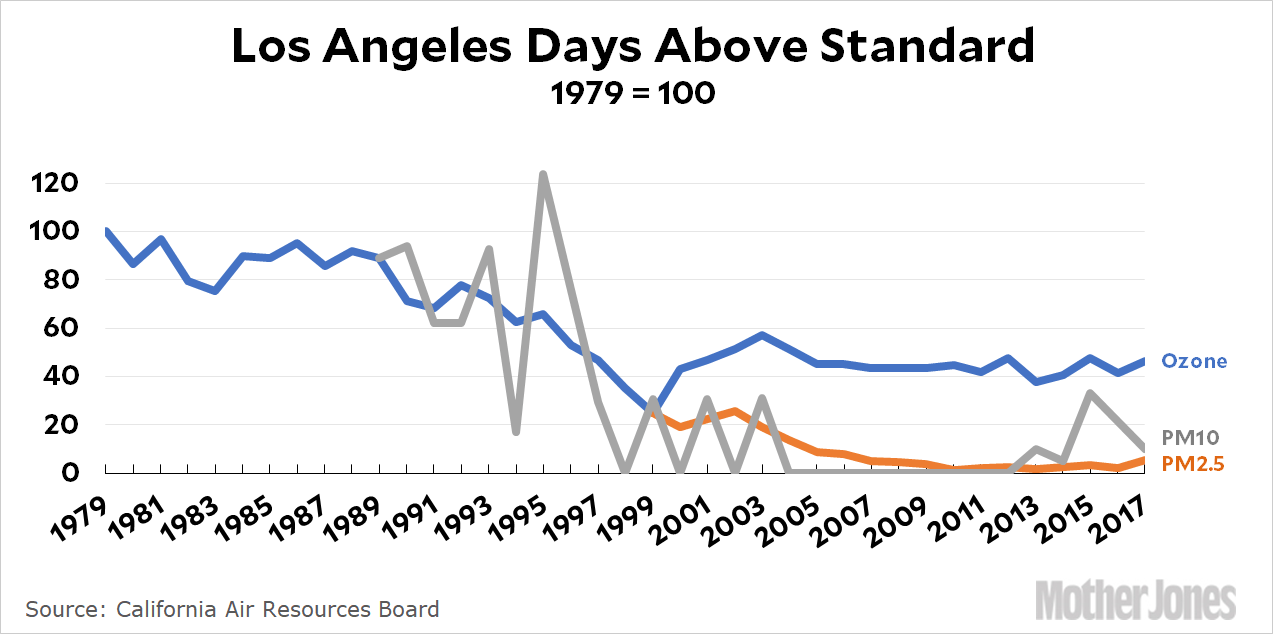
This is stone cold nuts. It’s true that there are reasons for California’s bad air. That’s why our regulations are so tough. And they’ve made a tremendous difference:
The news is even better in the Central Valley. In Fresno, for example, the number of ozone days above standard has dropped by 80 percent since its high point:
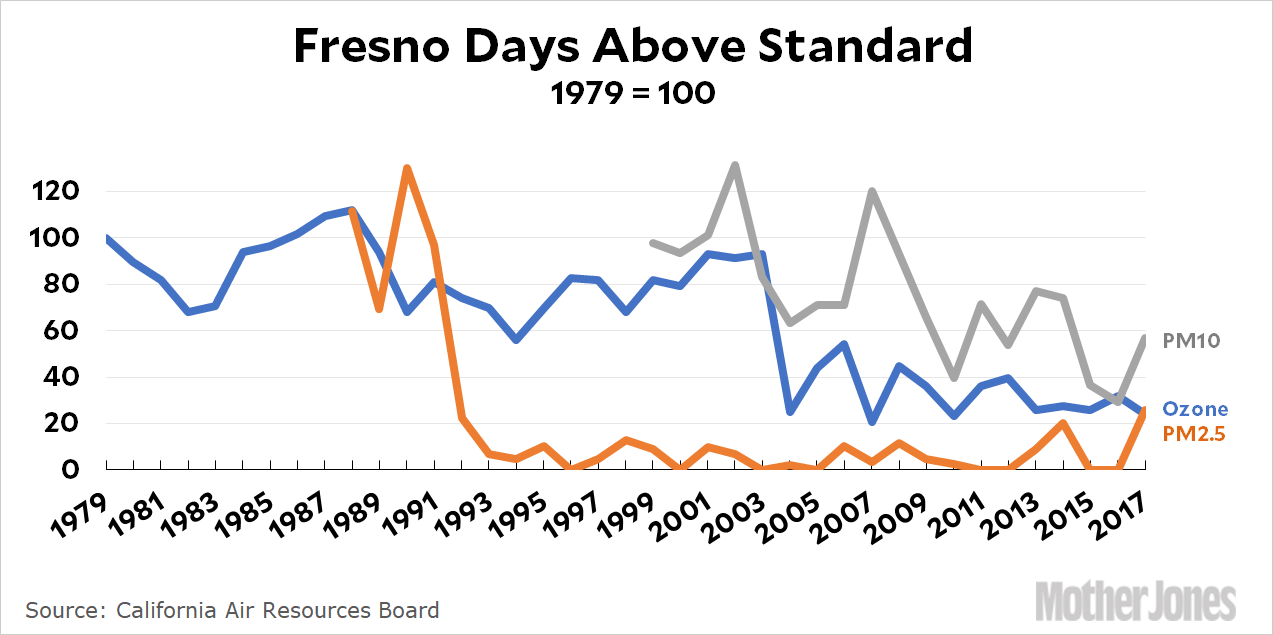
California is, if anything, a reminder of just how effective tough regulations can be. Everybody who’s lived here for the past few decades knows this perfectly well. The air today may still need improvement, but it’s light years better than it was a few decades ago. We are the poster child for just how much you can do for air quality if you’re willing to adopt strict standards and stick to them.

A comatose Otto Warmbier being hauled around in a 2017 propaganda photo from the North Korean government.Xinhua via ZUMA
North Korea issued a $2 million bill for the hospital care of comatose American Otto Warmbier, insisting that a U.S. official sign a pledge to pay it before being allowed to fly the University of Virginia student from Pyongyang in 2017.
The presentation of the invoice — not previously disclosed by U.S. or North Korean officials — was extraordinarily brazen even for a regime known for its aggressive tactics. But the main U.S. envoy sent to retrieve Warmbier signed an agreement to pay the medical bill on instructions passed down from President Trump, according to two people familiar with the situation. They spoke on the condition of anonymity because they were not authorized to discuss the matter publicly.
The bill went to the Treasury Department, where it remained — unpaid — throughout 2017, the people said. However, it is unclear whether the Trump administration later paid the bill, or whether it came up during preparations for Trump’s two summits with Kim Jong Un. The White House declined to comment. “We do not comment on hostage negotiations, which is why they have been so successful during this administration,” White House press secretary Sarah Sanders wrote in an email.
No wonder Trump likes Kim Jong Un so much. They’re birds of a feather.

Award-winning photojournalism.
Stunning video. Fearless conversations.


