• Wage Growth Has Been . . . OK Over the Past Year

    There must be something in the water. Today brings us another terrible chart, this time from the Wall Street Journal:
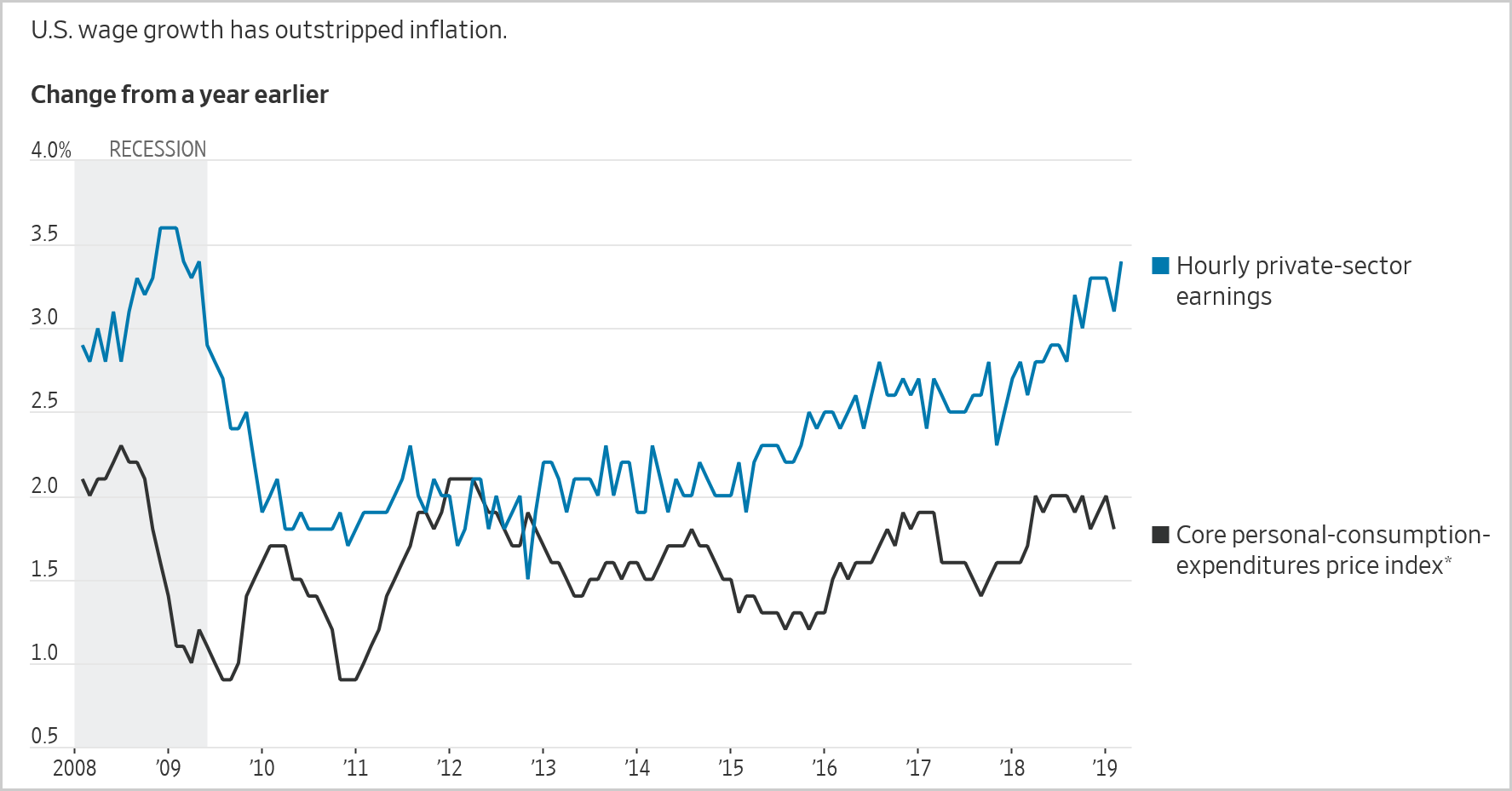
    Come on. You can’t compare workers’ earnings to core PCE, which doesn’t include food or energy. Core PCE might be useful for the Fed when they set monetary policy, but it makes no sense when you’re trying to evaluate the real rise of workers’ earnings. Workers, after all, have to buy both food and energy.

    It’s also not very useful to chart this as percentage change, since that makes it hard to figure out how much worker pay has outpaced inflation over time. Finally, since the point of the article is that corporations are facing higher worker pay, it makes sense to show total worker compensation over the most recent few years. Here it is:
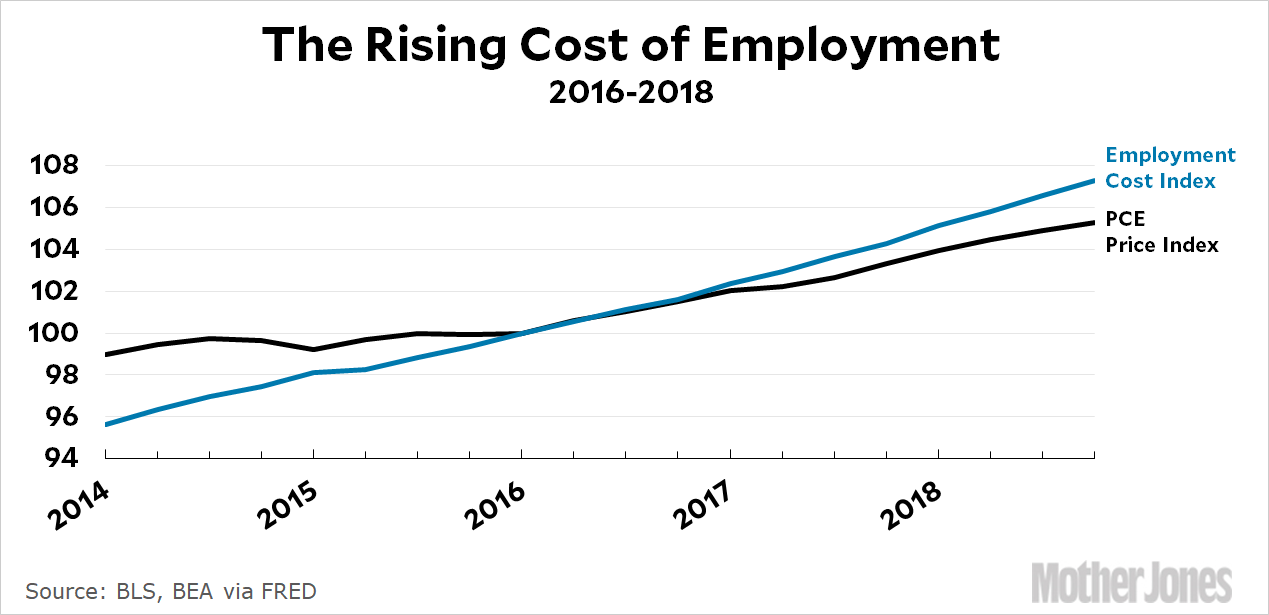
    The Employment Cost Index shows the total cost of compensating workers. The ordinary PCE price index includes food and energy. And the two are indexed to 100 at the start of 2016 so we have a sense of recent changes in worker compensation.

    This chart shows clearly that corporations, on average, are indeed paying their workers more. However, it also shows that the total increase has been a steady 0.7 percent annually over the course of three years. If that continues, it will “eat into corporate profits,” as the authors say, but not by an awful lot. Even if it goes up a bit, it won’t change corporate profits by all that much. This is all context that really ought to be included, especially in a publication aimed at sophisticated readers.

    On an entirely different subject, there’s not much reason that non-investors should care about this. Business profits have been great in recent years, and if they flatten out or even decline a bit because workers are finally getting paid a little more, that’s just fine. For the vast majority of us, this is good news, not bad.
  • Has Deflation Killed the Japanese Economy?

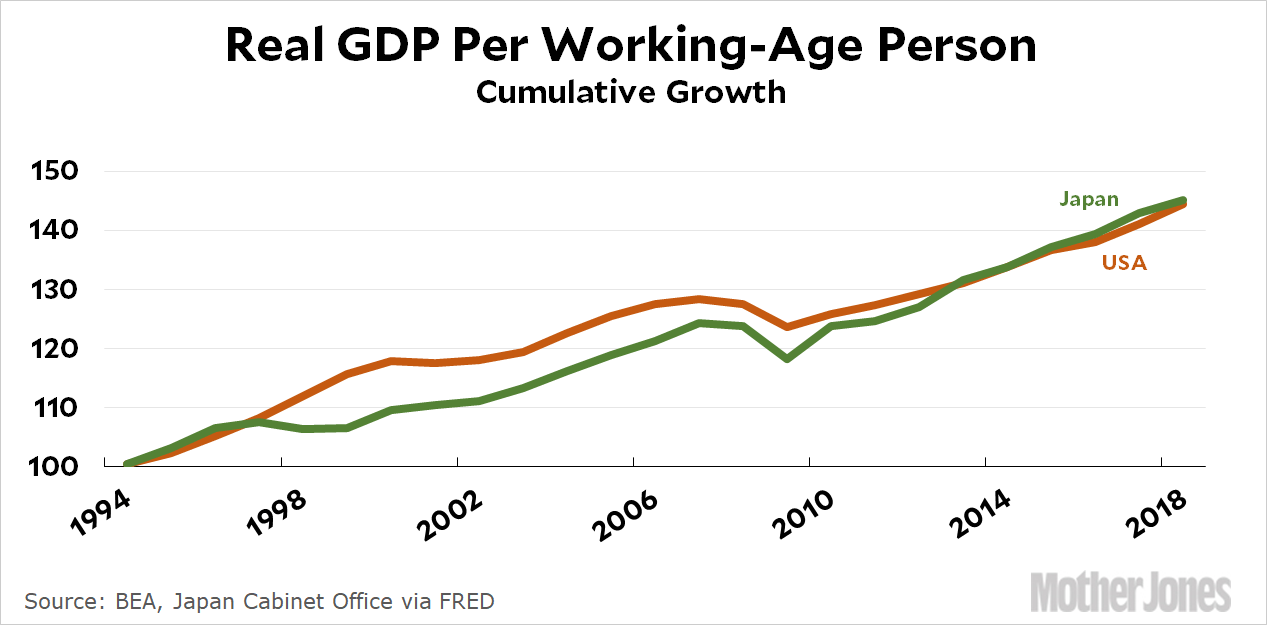
    Conventional wisdom in economics says that deflation is bad because it motivates consumers to put off purchases. Why buy now when the same item will cost less a year from now? Dean Baker isn’t so sure:

    Japan’s rate of deflation has only exceeded 1.0 percent in 2009. With a rate of deflation of 1.0 percent, a $20,000 car would sell for $100 less if buyers waited six months. It is unlikely that many consumers will make that decision. In this respect, it is worth noting that computer prices have fallen at double digit annual rates for most of the last four decades. This has not impaired sales in the computer industry in any obvious way.

    Not only is this true about computers, it’s famously true. People even complain about it. And yet we all keep buying computers by the truckload.

    That said, deflation makes the zero-lower-bound problem even worse. How does a central bank stimulate the economy when a 0 percent interest rate is not merely an inadequate stimulus, but a negative one? For this reason, it’s probably best to keep the inflation rate positive regardless of whether it has an effect on consumer spending.

    Baker’s larger point, by the way, is that Japan’s economy over the past couple of decades has basically been fine. He’s right.

  • Chart of the Day: Democratic Fundraising So Far

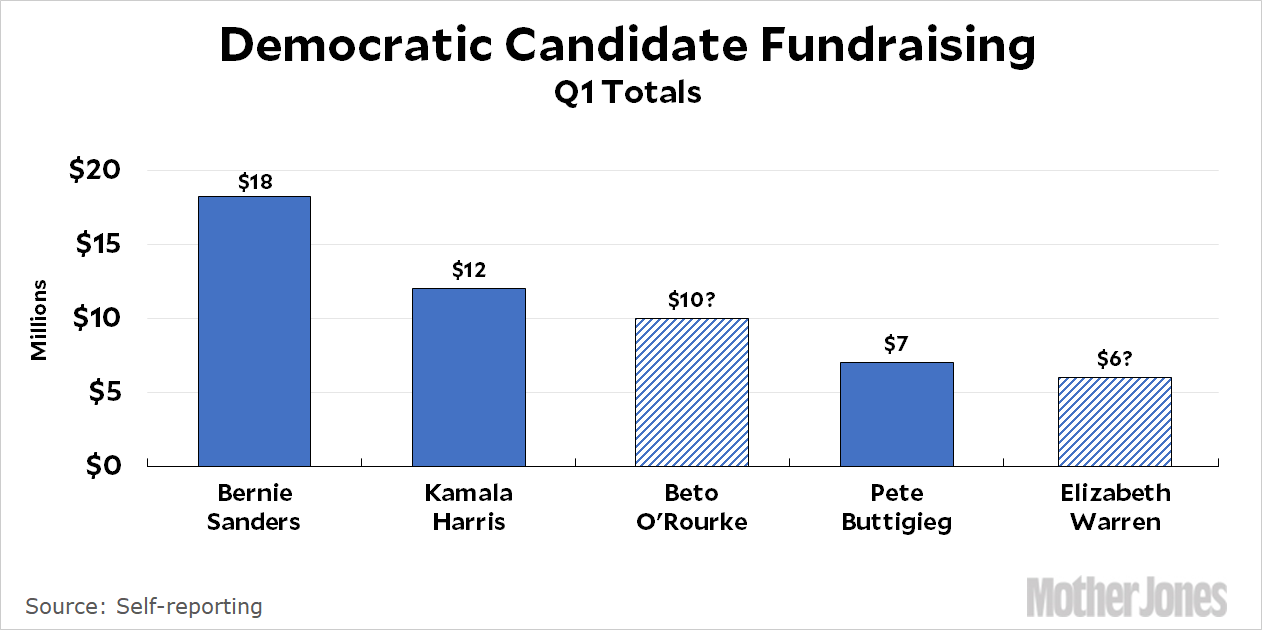
    Here are the fundraising numbers for each of the top Democratic candidates in the first quarter. For those who haven’t announced their totals, I’ve guessed—making the assumption that their numbers are probably a little disappointing if they’re holding back.

    Obviously my guesses might be wrong, so don’t take them seriously.

    And while we’re on the topic, can I remind everyone that Pete Buttigieg didn’t just pop up out of nowhere? He’s been getting loads of press as an up-and-comer for at least the past five years (for example: “The most interesting mayor you’ve never heard of” in the Washington Post in 2014, “The first gay president?” in the New York Times in 2016). In 2017 he ran for DNC chair. He’s been talked about as a presidential candidate and representative of Millennials ever since.

    In other words, it’s not a huge surprise that he’s gotten good press and raised a fair sum of money. He’s been courting the media for a long time, and he’s hardly an unknown in Democratic circles.

  • Dems Continue Their Timid Ways on the Mueller Report

    The April 2 deadline for turning the Mueller Report over to Congress has passed, so Democrats are almost ready to ask nicely for it:

    The House Judiciary Committee authorized its chairman on Wednesday to use a subpoena to try to force the Justice Department to give Congress a full copy of Special Counsel Robert S. Mueller III’s report and all of the underlying evidence used to reach his conclusions.

    The chairman, Representative Jerrold Nadler of New York, said he would not immediately issue the subpoena….“I will give him time to change his mind,” Mr. Nadler said in his opening statement. “But if we cannot reach an accommodation, then we will have no choice but to issue subpoenas for these materials.”

    There was never any reason to give the Justice Department ten days to turn over the report in the first place. Democrats should have given him two or three, since they’re demanding an unredacted version. I suppose that’s water under the bridge, but what’s the excuse for delaying even longer now that their deadline is up? Bill Barr is not going to change his mind and he’s not going to “reach an accommodation.” That’s not what the Trump administration does. So just issue the subpoena and then go to court. It’s where we’ll end up eventually anyway. Why put it off?

  • Five Things Donald Trump Said on Tuesday

    Today President Trump:

    • Tried three times to say the word “origins” but instead said “oranges.”
    • Said that his father was born in Germany, not New York City.
    • Complained, in a speech being televised on CSPAN, that he had to be careful because someone was probably going to leak what he said to the media.
    • In the same speech, warned Republicans to be “more paranoid” because he “doesn’t like the way the votes are being tallied.”
    • Said about wind farms, “They say the noise causes cancer.”

    But don’t worry. His mental state is just fine. Nothing to see here.

  • Republicans Are Way More Partisan Than Democrats

    Ah, partisanship:

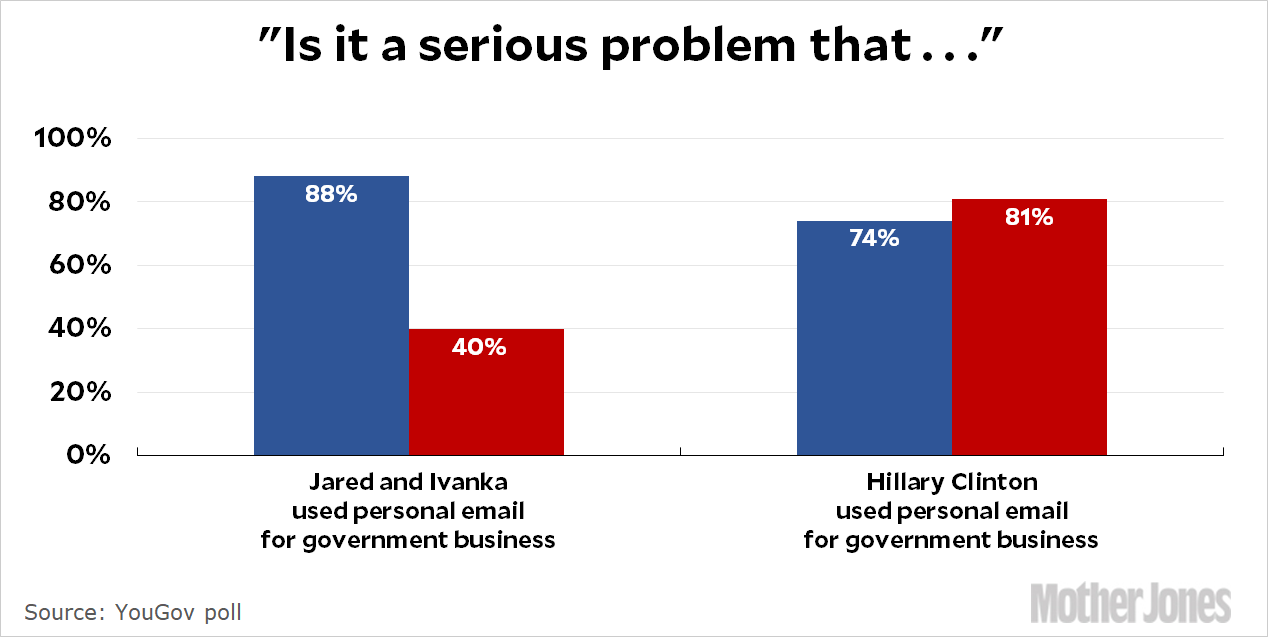
    This is from a YouGov poll via Catherine Rampell. There’s some partisanship visible on both side, but way, way more among Republicans. When Democrats were asked about Javanka, more of them were critical than they were of Hillary Clinton, but only by 14 percentage points. Conversely, when Republicans were asked the same thing, they were a whopping 41 points less likely to be critical.

    The acronym for this is IOKIYAR—It’s OK If You’re A Republican—and it’s a very consistent theme. Democrats display some partisanship, but usually in modest amounts. Republicans do the same, but in vast amounts.

    In other words, while it’s true that “both sides do it,” one side really does do it a helluva lot more than the other. We see this over and over and over, and this is just the latest example.

  • Is Stock Market Growth a Black Eye for the Fed?

    I don’t understand stuff like this. Here is Nomi Prins:

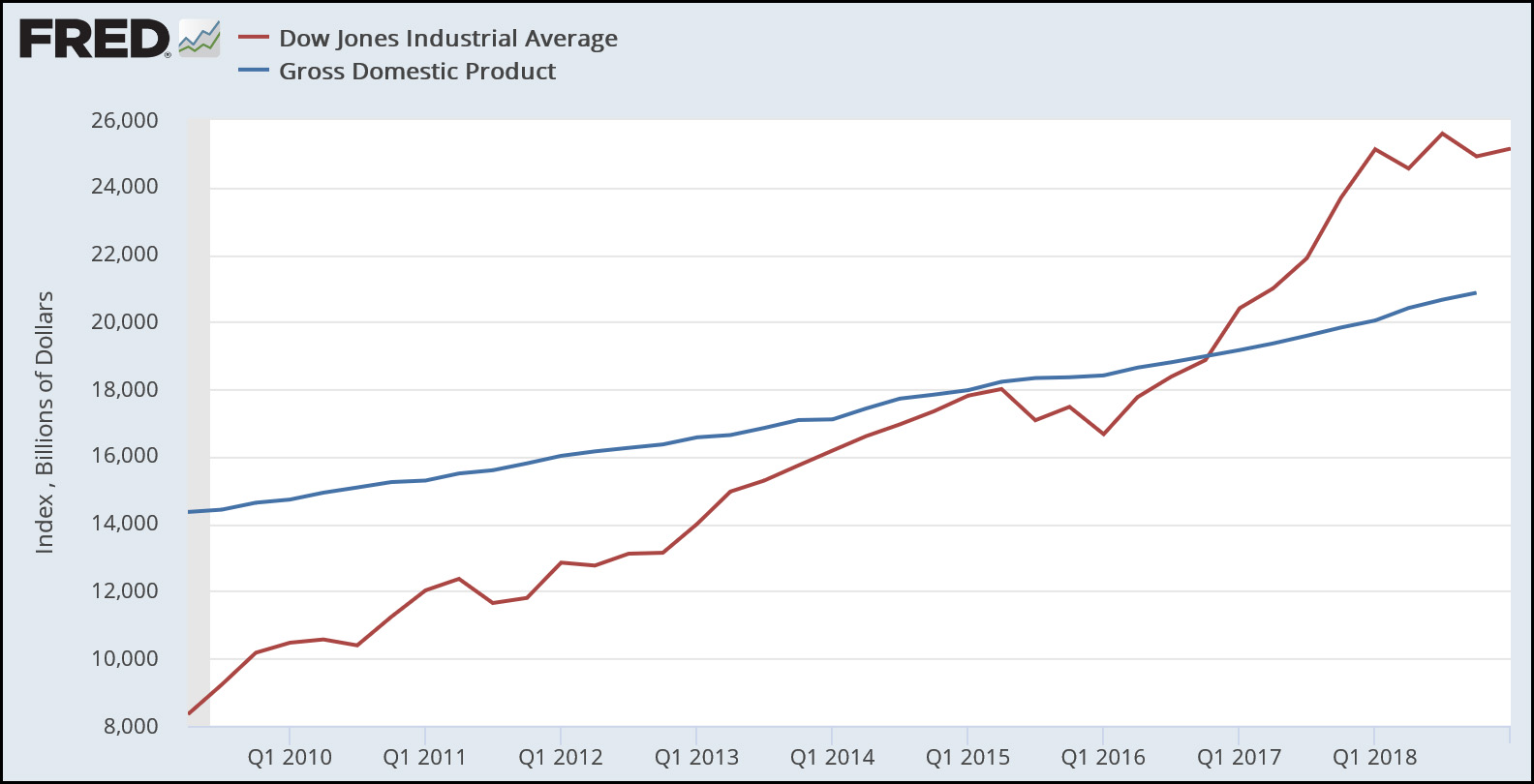
    Yes, this is from FRED, which is run by the St. Louis Fed. But the Dow Jones line shows a raw number, uncorrected for inflation. The GDP number shows growth since the previous quarter, and is corrected for inflation. You can’t compare these. Here’s a proper comparison:

    As you can see, this chart still shows that the stock market has grown a lot faster than GDP since the end of the Great Recession. So why not use it? I can only think of two possibilities: (a) Prins doesn’t understand that her comparison is meaningless, or (b) she understands but doesn’t care. Whichever one it was, she thought highly enough of her chart to retweet it today.

    Beyond that, I have no idea what her point is. Does she think that higher interest rates following the Great Recession would have been good for us working stiffs? It’s true that the stock market has grown faster than GDP over the past eight years, and that’s generally not such a great thing since equity growth mostly benefits the rich while GDP growth helps rich and poor alike. However, that doesn’t really say anything about Fed policy, which is a fairly blunt instrument that can’t be tuned to affect GDP but not the stock market.

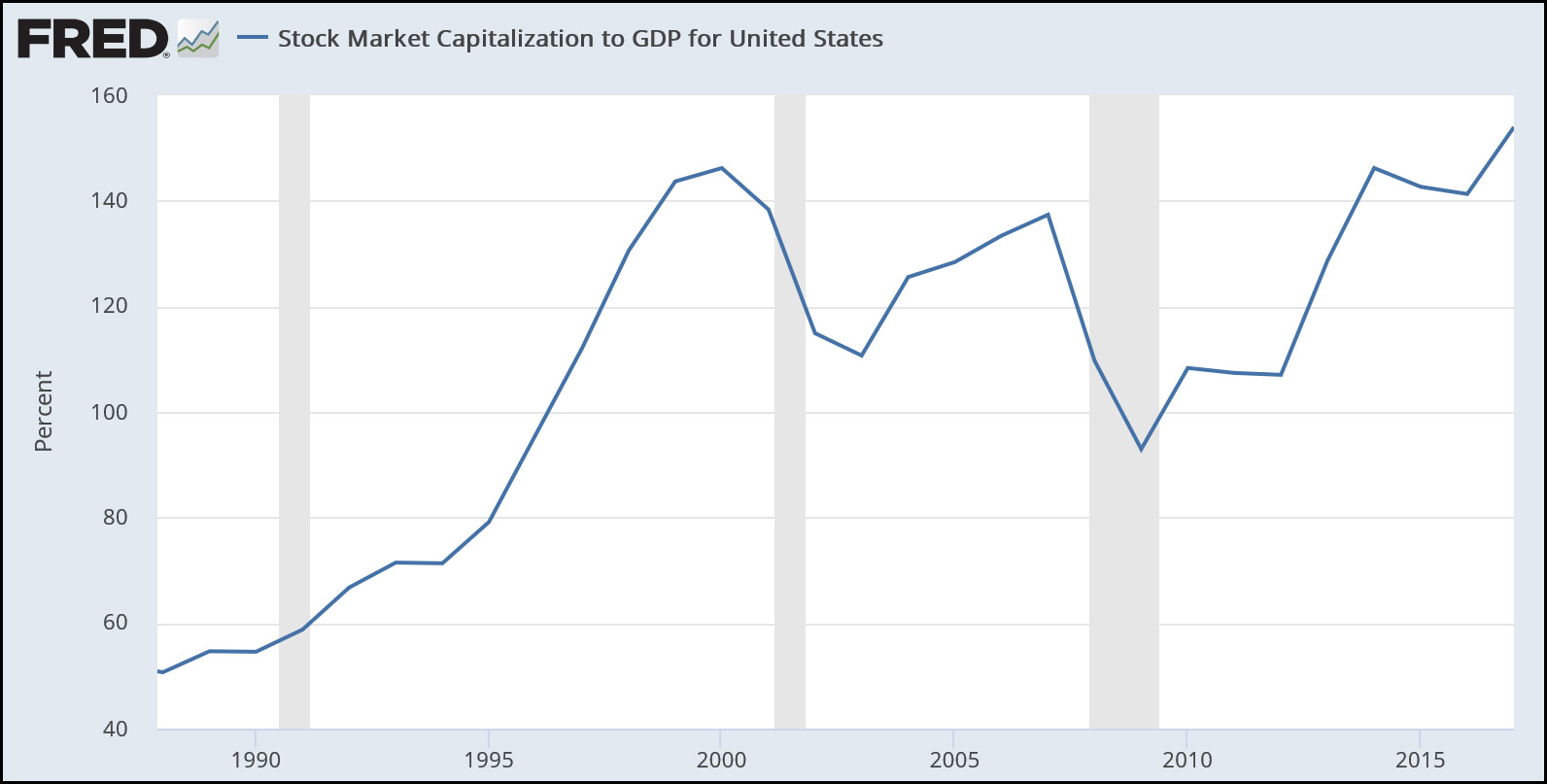
    In any case, you might be interested in a better measure of how much wealth is tied up in the stock market and how it’s performed over the past few decades:

    This accounts for all stocks, not just those in the Dow Jones average, and it shows total value as a percent of GDP. Once again, growth has been strong since 2010, but that’s after a steep drop during the Great Recession. We’re now only a bit higher than previous peaks. Like Prins, I’d like to see a more egalitarian economy, and I wish the Fed were more willing to keep interest rates low until we truly see the whites of inflation’s eyes. That said, there’s nothing all that spectacular to see here.

  • Border Closure Would Bring On the Avopocalypse

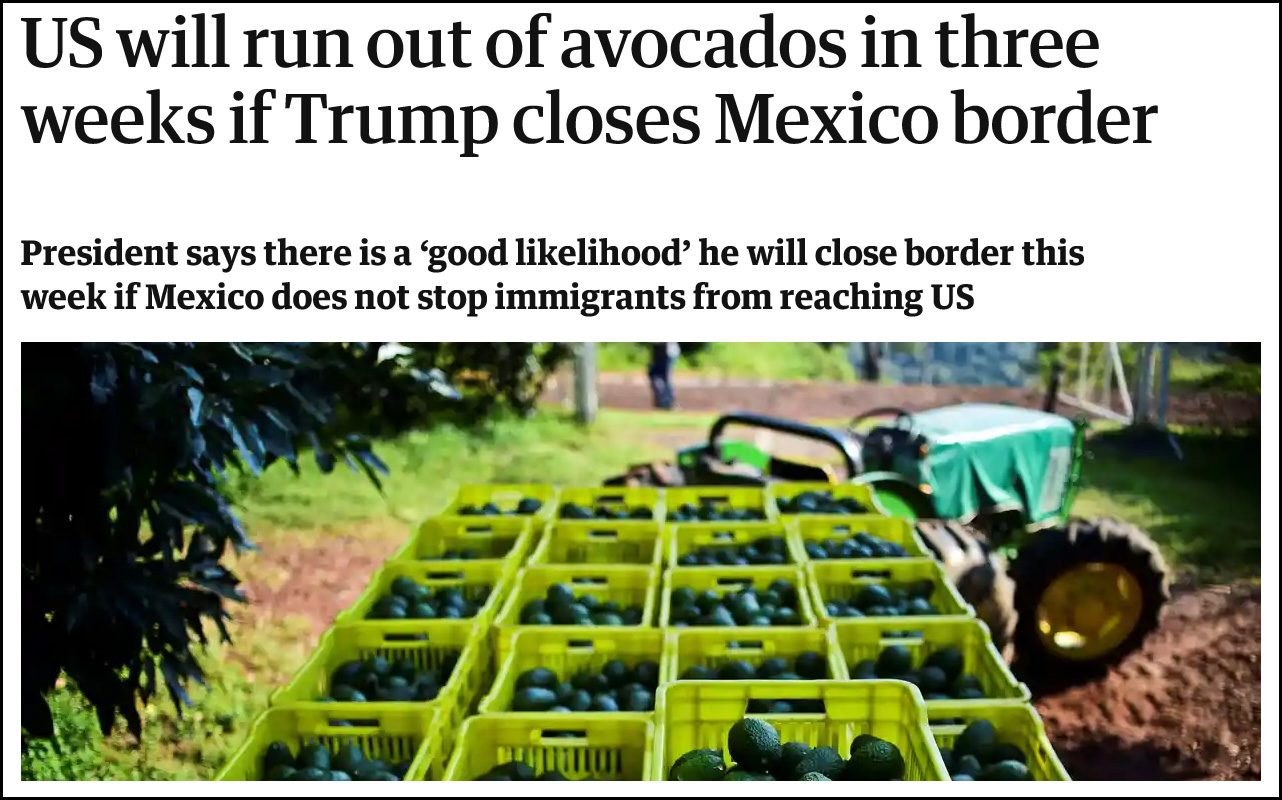
    The Guardian knows how to get straight to the heart of things:

    The insanity needs to stop. We have our own avocado supply here in California, which will be seized and stored in government warehouses in case of emergency, but what about the rest of you? What will you do when your avocados run out?

    But I guess it doesn’t matter. Trump is not going to close the border.¹ It’s just his usual idiotic blather, like going to the moon or banning European cars. The man really does like to blather, doesn’t he?

    ¹Probability = 90 percent because, in the end, you really never know with Trump, do you?