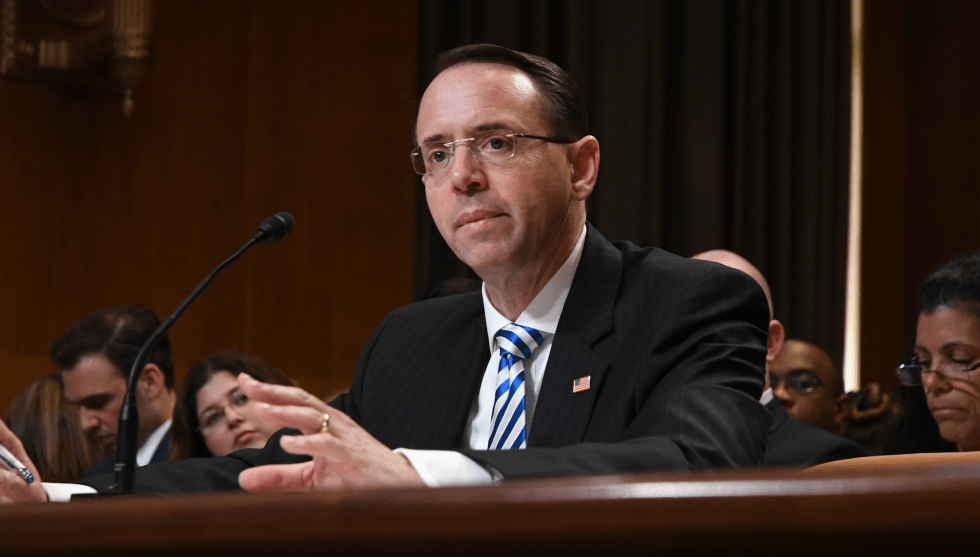
Deputy Attorney General Rod J. Rosenstein will stay in the job for now, but will meet with the president on Thursday, White House officials said Monday, after officials described a series of private discussions that pointed to his resignation or firing….The announcement capped a tense few hours after officials said Rosenstein had told White House officials over the weekend that he was willing to resign in the wake of revelations that he once suggested secretly recording President Trump.
On Monday morning, White House officials said Rosenstein had offered to resign to quell the controversy, while Justice Department officials said he had no intention of resigning but was heading to the White House with the expectation he would be fired.
If you’re over 30 and don’t use YouTube much, it’s almost impossible to convey how central the platform is to young people. But spend much time talking to college students about where they get their political information and you’ll find YouTube is dominant; what’s happening on the platform is important to our political future, and badly undercovered…. YouTube’s powerful recommendation engine learns who’s connected to whom, adds in a preference for extreme and outlandish content, and thus pushes the entire ecosystem in a more radical direction.
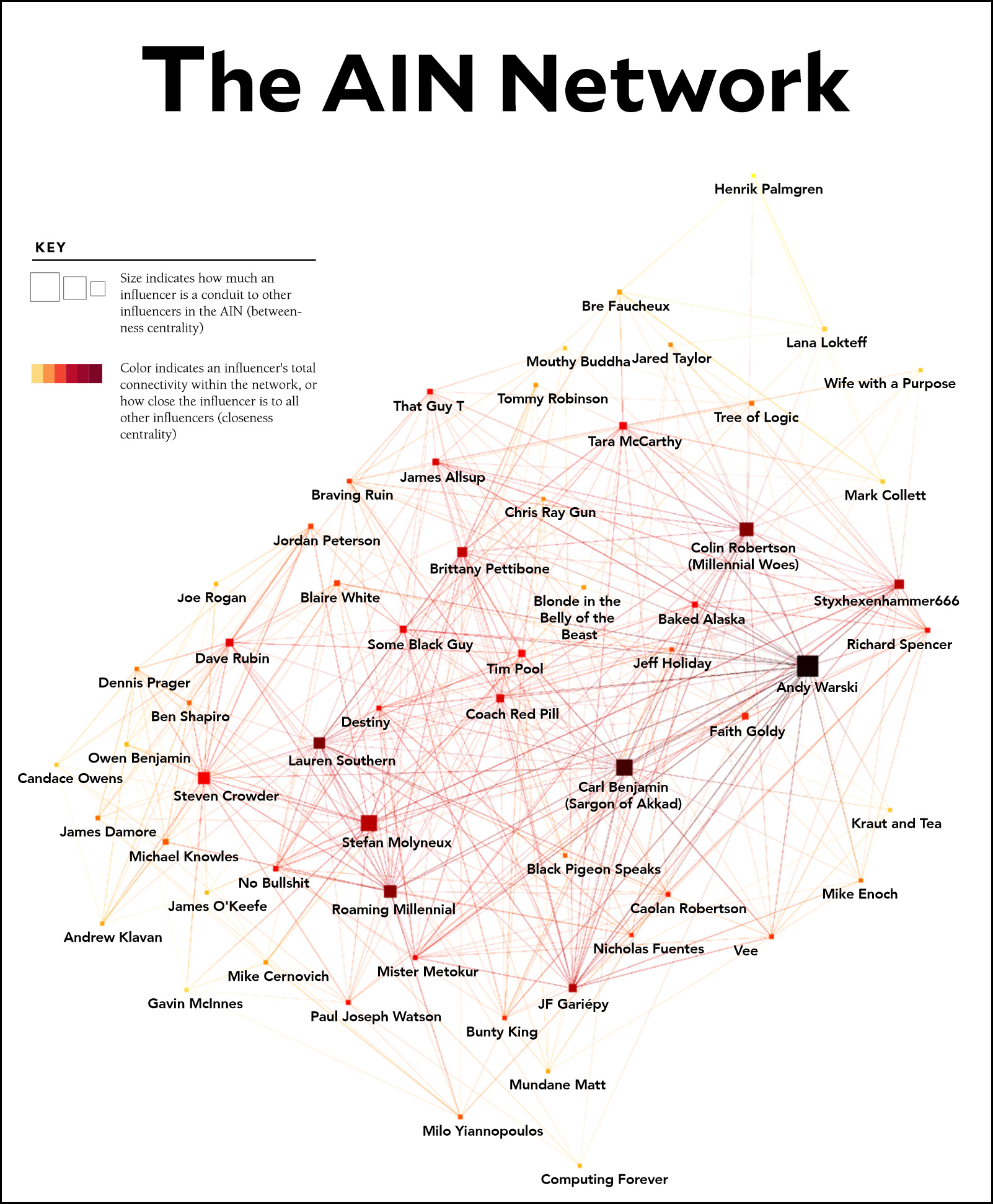
For those who don’t know this, it’s worth adding that YouTube can be a big moneymaker, but in a very lottery-ish sort of way. Generally speaking, YouTube encourages “entrepreneurs” to monetize their YouTube ramblings, and then heavily promotes the small number of them who make it big. You too can earn $10,000 a month just by making YouTube videos! These popular videos are often the first ones you’ll find when you search YouTube, and YouTube’s algorithms then recommend similar videos they think you might like. In the political realm, you might start out with something fairly sober, but if you keep clicking the recommended videos they’ll very quickly get more reactionary and further and further from the mainstream. Here is Lewis’s map of the AIN network. Some of these names you’ll recognize; many of them you won’t.
The thing to notice about this graph is that it’s based largely on what guests these YouTubers have on their show. Rather than accepting the usual excuse that every movement has a few bad apples, Lewis asserts that these bad apples—most of them guests—largely define the AIN. They’re the glue that holds the AIN network together, and they allow AIN videos to express odious reactionary opinions without the hosts having to do it themselves.
And what are those opinions? Lewis argues that although the AINers have lots of different political ideologies, the thing that unites them is a loathing of the “social justice left.” Klein suggests that this is also what unites ordinary progressives these days:
You can hold a lot of different opinions on the economy, on Trump, on same-sex marriage, on atheism, and still be part of this community. It’s much more accepting of differing views on health care, the role of the state, and taxation than the modern Republican Party. But you can’t be in sympathy with the SJWs.
On the left, the reverse is increasingly true. The unbridgeable divides today, the ones that seem to define which side you’re really on, revolve around issues of race, gender, identity, and equality. While I see a lot of angry arguments about deficits within the Democratic coalition, I don’t know of any congressional Democrats who are against gay marriage. vocally skeptical of Black Lives Matter, and in favor of tight restrictions on immigration — even though those were common positions among elected Democrats in the Aughts.
Lewis explains how the AIN network works together with its guests to steadily radicalize their viewers into seeing the world for what it really is:
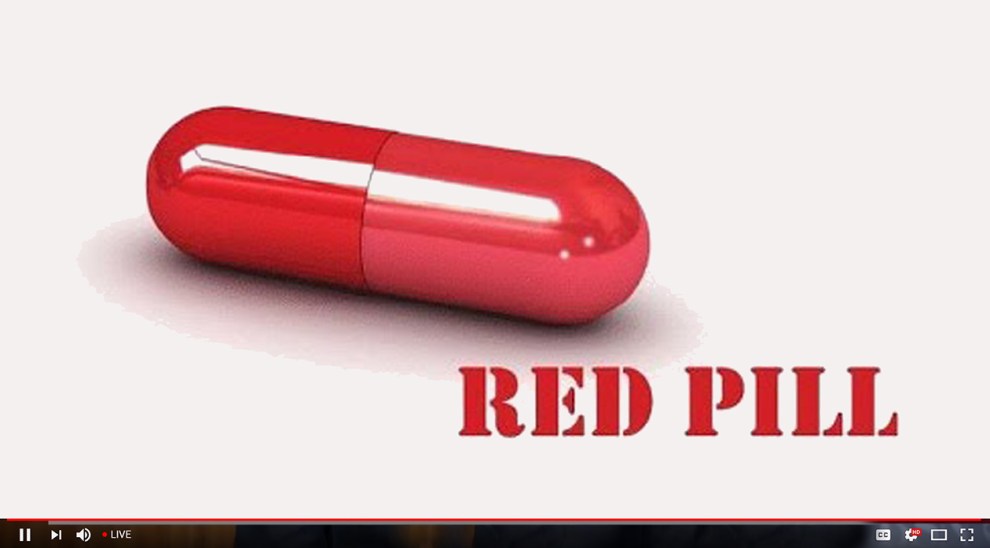
They refer to this process as “taking the red pill”….Because of the overlapping pattern of guest appearances in the AIN, it is remarkably easy for viewers to be exposed to incrementally more extremist content. However, many influencers fundamentally deny that their collaborations serve as endorsements or even amplifiers of other influencers’ content. This is the case, for example, with Dave Rubin. While Rubin himself mainly espouses support for small government and criticizes social justice in broad terms, he sometimes hosts guests who are openly anti-immigrant, espouse scientific racism, or directly identify with the “alt-right.” Rubin claims that hosting these guests is not an endorsement of them or their positions. Rubin says that he thinks it is necessary to expose his audiences to dangerous ideas so they can make fully informed decisions for themselves. He argues that “good ideas always beat out bad ideas if you let the light shine on both of them.”
This reading of the situation treats his show as a journalistic endeavor and endorses the view that “sunlight is the best disinfectant.” This interpretation has been challenged by media scholar Whitney Phillips, who has shown the damaging impact that exposure to extremist ideas can have. In a recent report on media coverage of white nationalists, Phillips argues coverage of extremist content is more likely to be like giving oxygen to a fire.
The fight over SJWs is invisible to most ordinary people, who have never heard the term. But it was integral to Gamergate, the Rabid Puppies, much of the alt-right movement that hangs out on Reddit and 4chan—and, increasingly, YouTube.
Has the progressive left fed this fire by overreacting to it with its persistent support of callout culture, safe spaces, microaggressions, hashtag advocacy (#MeToo, #OscarsSoWhite, #BlackLivesMatter, #Resist, etc), and general intolerance toward even moderate levels of discomfort with changing cultural norms? That’s a good question, and not one I’m prepared to offer an opinion about at the moment.
I don’t know how big or influential the AIN really is. But at a guess, it punches well above its weight among the young, while the olds barely even know it exists. If you want to check it out for yourself, YouTube is the place to go.
Jonathan Swan, who is usually dependable, reports that Deputy Attorney General Rod Rosenstein has verbally resigned. If this is true, it gives President Trump the opportunity to nominate a new deputy AG who will be a more reliable lackey. Since the deputy AG is the person who oversees the Mueller investigation, this could go a long way toward reining in the Russia investigation.
I think Brett Kavanaugh would be a great choice: he’s had a long career as a loyal Republican hack, and he’d have no problem crushing the Russia investigation if that’s what Trump tells him to do. After a bit of time has passed, Trump could then fire Jeff Sessions and nominate Kavanaugh as Attorney General to make up for losing the Supreme Court seat. What could go wrong?
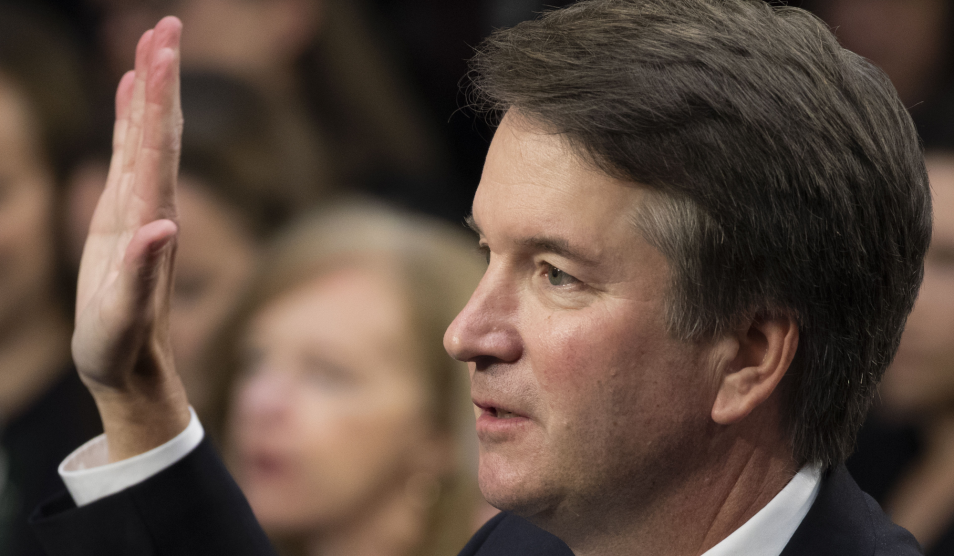
As Senate Republicans press for a swift vote to confirm Brett Kavanaugh, President Trump’s nominee to the Supreme Court, Senate Democrats are investigating a new allegation of sexual misconduct against Kavanaugh. The claim dates to the 1983-84 academic school year, when Kavanaugh was a freshman at Yale University.
….The woman at the center of the story, Deborah Ramirez, who is fifty-three, attended Yale with Kavanaugh, where she studied sociology and psychology. Later, she spent years working for an organization that supports victims of domestic violence. The New Yorker contacted Ramirez after learning of her possible involvement in an incident involving Kavanaugh.
….For Ramirez, the sudden attention has been unwelcome, and prompted difficult choices. She was at first hesitant to speak publicly, partly because her memories contained gaps because she had been drinking at the time of the alleged incident. In her initial conversations with The New Yorker, she was reluctant to characterize Kavanaugh’s role in the alleged incident with certainty. After six days of carefully assessing her memories and consulting with her attorney, Ramirez said that she felt confident enough of her recollections to say that she remembers Kavanaugh had exposed himself at a drunken dormitory party, thrust his penis in her face, and caused her to touch it without her consent as she pushed him away. Ramirez is now calling for the F.B.I. to investigate Kavanaugh’s role in the incident. “I would think an F.B.I. investigation would be warranted,” she said.
This is from Ronan Farrow and Jane Mayer at the New Yorker, and needless to say, Kavanaugh denies that this happened. At the moment, I have nothing to add to any of this, although it does sound as if Kavanaugh was a pretty hard partier during his late teenage years. This suggests that we shouldn’t be surprised if more allegations like this one turn up.
We’ve lived in this house for 25 years, and I’ve wanted something on that wall for that entire time. Now I’ve got it! The idea behind the grid is that it makes it easy to move things around. I can remove one or two pictures and replace them with new ones in just a few minutes, so the hallway becomes a rotating gallery of photos and a good way to learn more about printing photos.
Aside from the obvious pleasure of showing off my own work, the main point of this is to learn more about printing. I haven’t printed a photo in more than 40 years, and even then I printed only in black and white. So I know very little about color printing, and it shows here: of these, I’d say I was one for six:
The Yosemite photo on the far right is fine. Hooray!
The sunset picture next to it contains a lot of artifacts that I didn’t notice on the screen. I need to be more careful about introducing artifacts in Photoshop and more observant about seeing them before I commit to a final version.
The two small photos at the top were an experiment: shooting at my highest ISO, can a small-sensor camera produce a decent 11×17 enlargement? The answer, roughly, is no, though neither one of them is really all that bad. But there’s no question that the noise is pretty visible if you get within a few feet.
The purple moonrise at the bottom left was a disaster. I had to do a lot of Photoshop work on it, and I did it badly. I’m not sure if I’ll take another crack at it. It’s a tough nut.
The yellow house is fine except for one thing: it’s the only print of the bunch where the color is way off. I’m doing the color correction myself and embedding the color space in the image, and that worked out fine for the others, which are very close to what they looked like on the monitor. However, the yellow house should be a much brighter yellow. I don’t know what happened here.
I’d like a good print of the yellow house, but I’m not quite sure how to get it. Since I’m not printing the photos myself, I’d need to provide some additional instructions to the commercial printer I’m using, and I don’t know what those would be. But I figure I can learn. There are bound to be some good books or tutorials on color workflow and how to ensure you get the color you want. I just need to find them and get more practice.
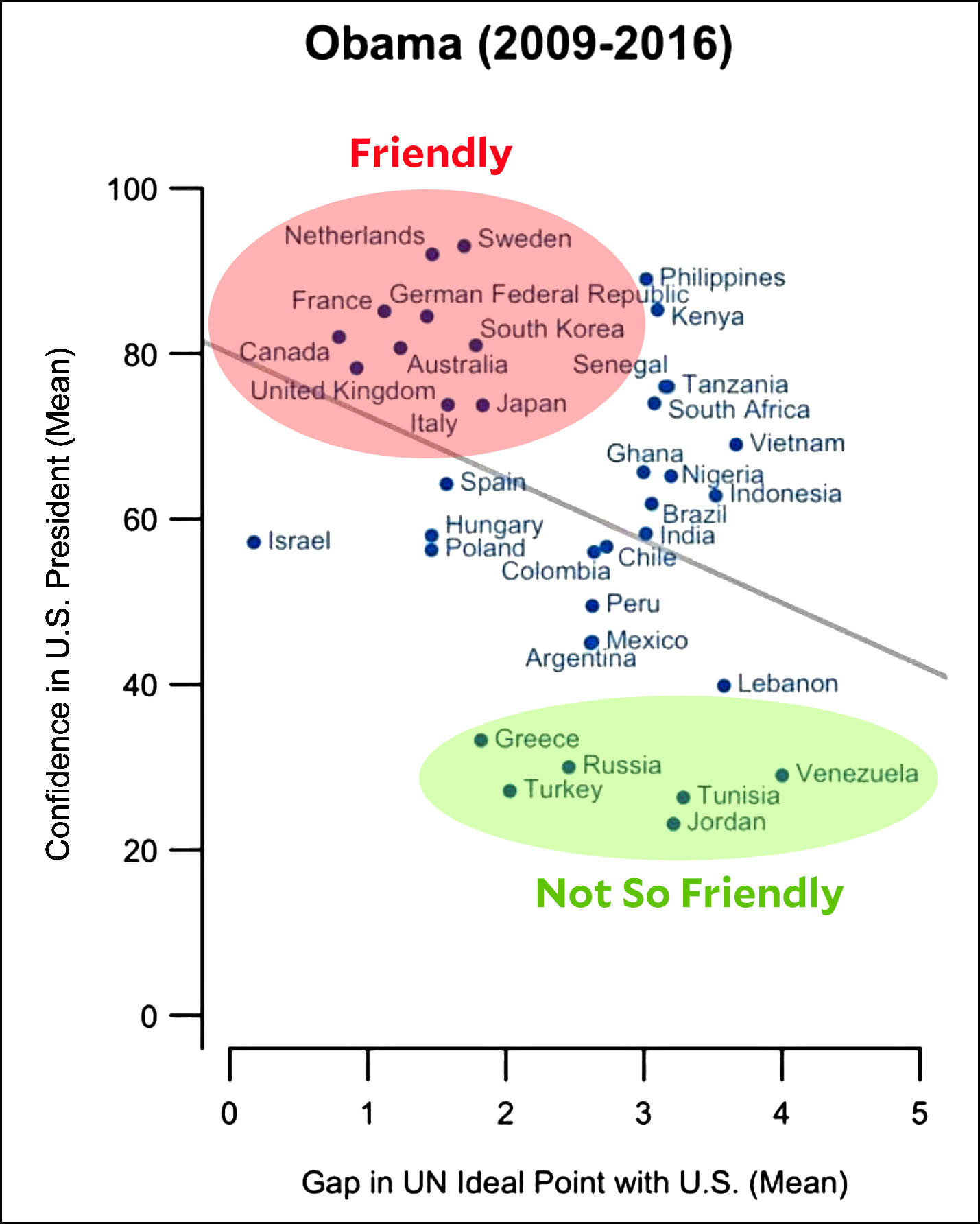
Here’s an interesting tidbit that’s been sitting in my RSS feed for a few weeks. It’s pretty obvious by now that we’ve lost the confidence of most of our longtime allies ever since Donald Trump was elected, but a group of political scientists decided to try to measure this. They took a look at how often countries voted with the U.S. in the United Nations and used that as a proxy for being an ally. Then they compared that to global Pew survey data asking about confidence in the U.S. president to “do the right thing.” During Barack Obama’s presidency, the results are about what you’d expect:
Up in the top left are France, Germany, Japan, and other traditional allies. In those countries, confidence in the US president is high. Conversely, in the lower right you find Turkey, Venezuela, Russia, and other countries that are either fickle allies or outright antagonists. In those countries, confidence in the US president is low.
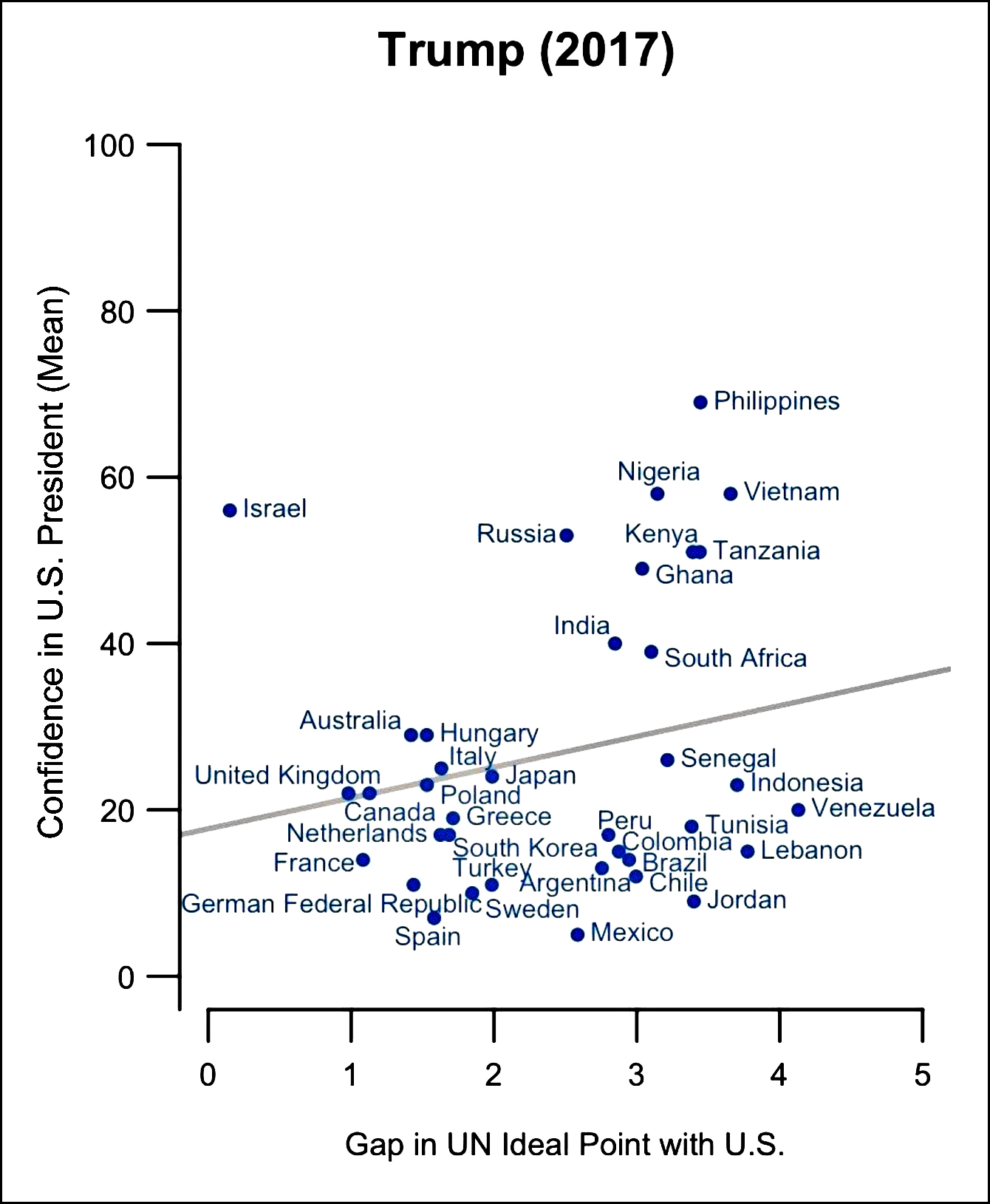
You probably already know what’s coming next. Here’s the same chart for Donald Trump in 2017:
Everything has plummeted. Practically everyone has low confidence in Donald Trump, and the very few with confidence above 40 percent are countries like Russia, Vietnam, and South Africa, which haven’t traditionally been close allies. Even the Israeli public has slightly less confidence in Trump than they did in Obama.
Under Obama, three-quarters of the world had at least 50 percent confidence that he’d do the right thing. Under Trump, less than one quarter of the world trusts him to do the right thing. The big outlier (surprise!) is Russia, which likes Trump a lot more than Obama. I wonder why?
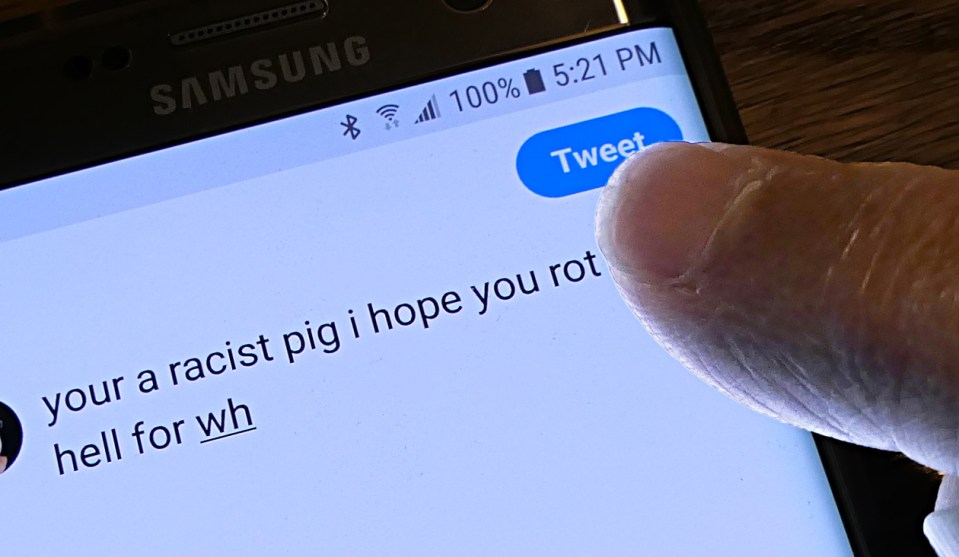
You should think long and hard before sharing this tweet with the world. Unfortunately, the people who most need this advice are the least likely to heed it.
Carlos Maza says that social media is just one big dumpster fire: fake news, Russian trolls, misogynist mobs, conspiracy theorists, and Donald Trump. And it’s all deliberate:
The problem with these social media sites isn’t that a few bad apples are ruining the fun. It’s that they’re designed to reward bad apples.
Social media sites are built to cater to the base preferences and desires of their users. They figure out what information people like and then show them more of it. That’s a great way to keep people online, but it also makes these platforms prime targets for con artists. People are naturally drawn to inflammatory and sensational news stories, regardless of whether they’re true. So bad actors — conspiracy theorists, trolls, and fake news writers — have been tremendously successful in using these platforms to spread false and divisive content that exploits people’s tribal instincts.
It’s not that this is wrong. But as I’ve alluded to before, I think it misses the point. So I’ll make my point bluntly this time: The big problem with social media is that we pay too much attention to it—and by “we” I mean every form of media except possibly gossip sites. With only the rarest exceptions, most social media outrage fests are storms in teacups, involving very few people and exposing bad behavior that’s common as dirt but didn’t have a national public platform before.
So the easiest way to bring social media “under control” is to mostly ignore it. Let the flamers and trolls and outrage artists do their thing in their own little cesspools. Let the NSA worry about Russian trolls. Do real reporting instead of being lazy and typing a quick Twitter search to find a few reactions to the story of the day. Just generally, stop glorifying the most extreme, outrageous reactions to everything just because you have easy access to them. Always keep in mind the Ten Thousand Rule: A twitterstorm of 10,000 people is the equivalent of a hundred folks picketing city hall. That’s about the minimum it takes to make news, and it’s page A16 news at that until it gets a lot bigger.
There are exceptions, of course. Anything the president says is potentially important, regardless of what medium he chooses to use. When Ed Whelan unveiled his bizarre doppelganger theory of the Kavanaugh assault, it was news even if he was forced to put it on Twitter because no responsible outlet would touch it. When governments are overthrown by revolutions coordinated on Facebook, that’s news.
But that stuff is rare. All the ordinary, outrage-fueled screaming and shouting is literally nothing. The only difference between now and ten years ago is that we can see it. Big deal. If you’re shocked that this is what human beings are like, you’ve probably led a sheltered life. Either way, now that we’ve seen it, how about if we all update our priors about the nastiness of the human species and then move on? It’s well past time to stop pretending that there’s any good reason for paying attention to social media mobs.
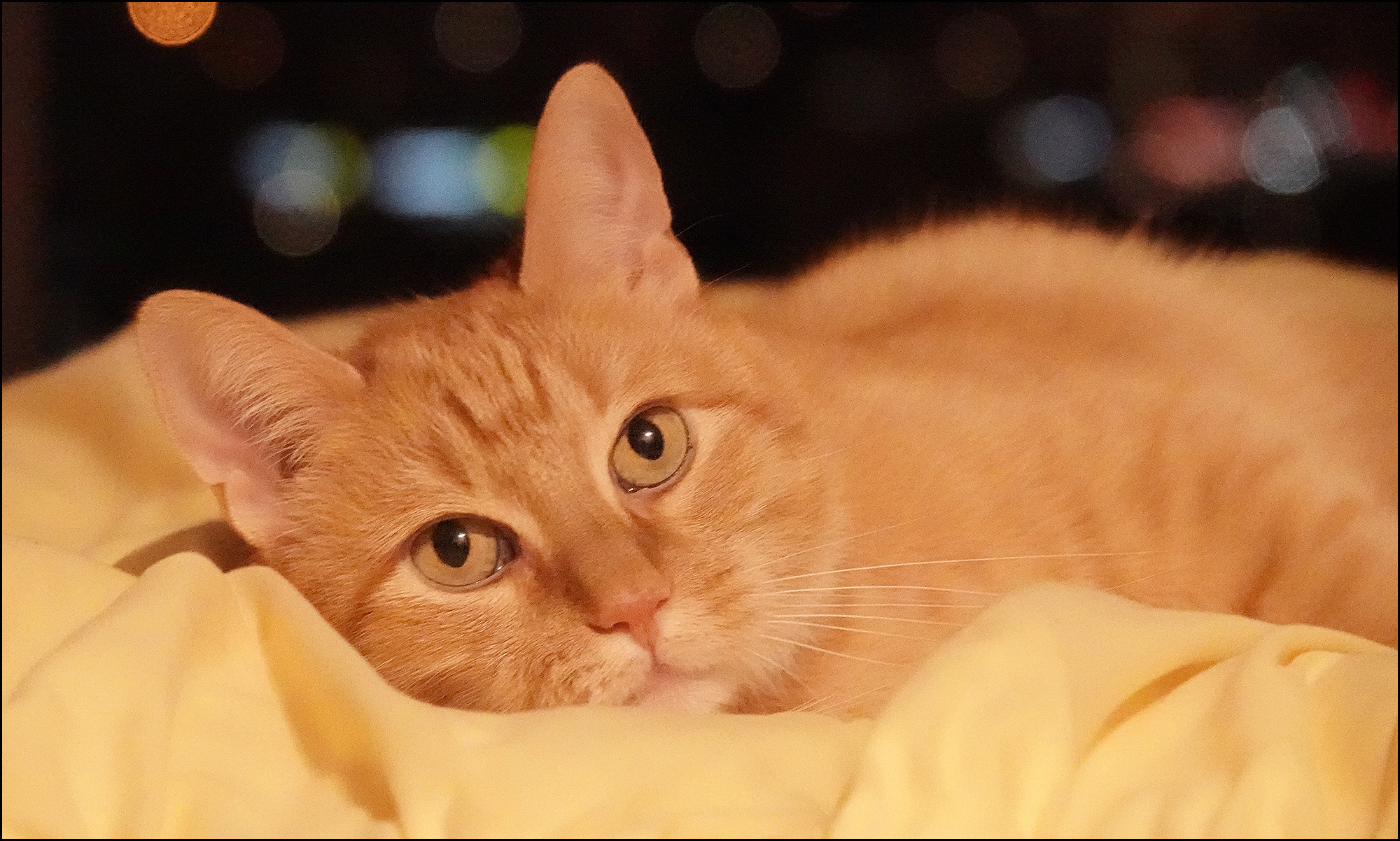
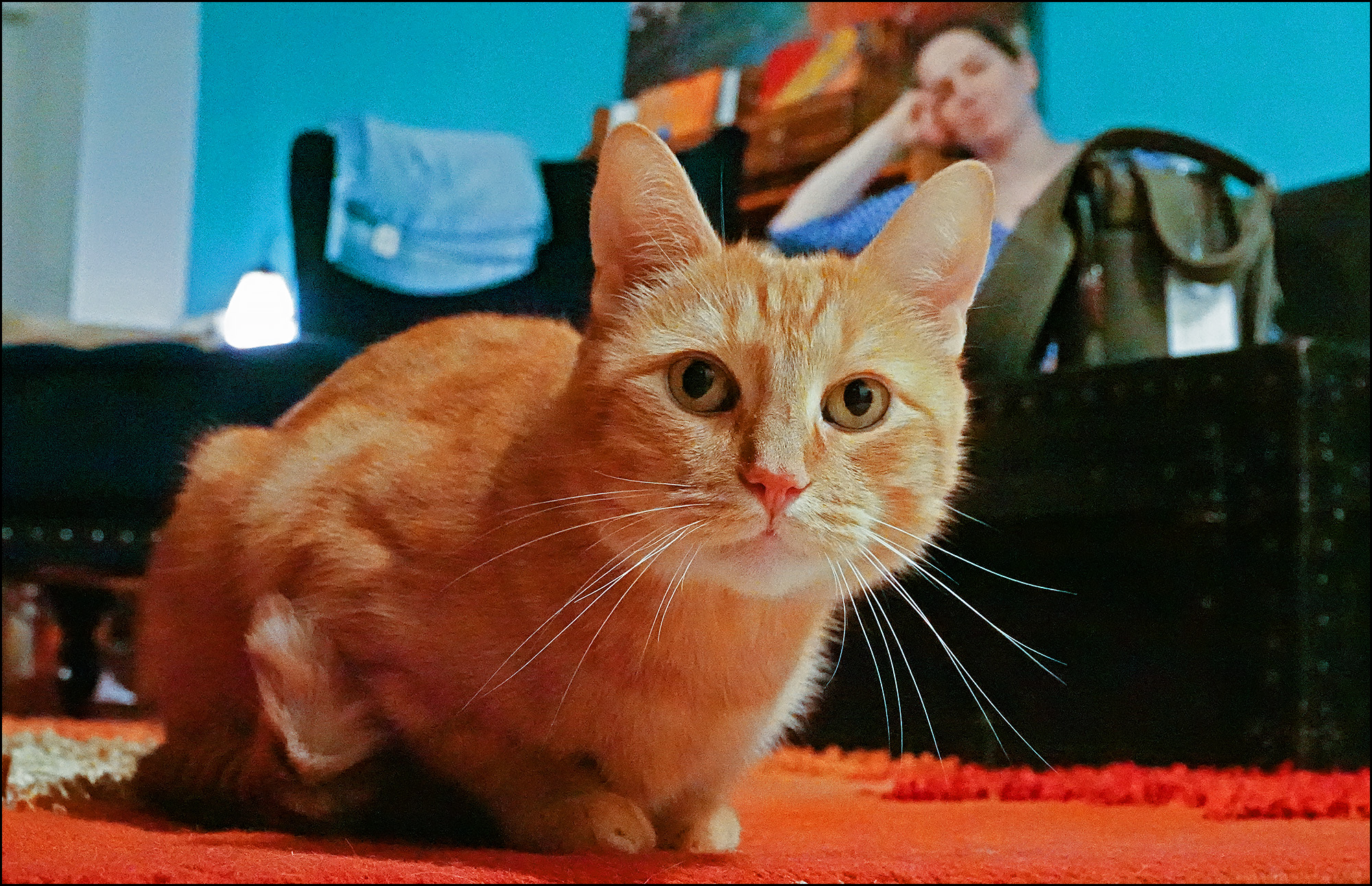
As you may recall, some friends of ours acquired a cockapoo puppy a couple of weeks ago. As it turns out, their daughter, who clearly has more refined taste in pets, acquired a cat several months ago. She lives in New York with her husband, and that’s where I was last week—so naturally I visited them. Just as naturally, I didn’t miss my chance to take pictures of Tony the cat (named after the Tony awards, I assume).
Now, this was an odd photo session. When I returned home and looked at the pictures, the color balance was all over the map. Some shots were way too red, some were way too green, and others I couldn’t even categorize. Photoshop’s color balance tool didn’t really seem to correct things entirely, so I had to play around a lot to get a color that seemed like it matched my memory of Tony, who is a beautiful and sociable orange cat. Here he is on the bed, with the lights of the city twinkling behind him:
And here’s what Tony looks like when you see the whole cat. This is not a great picture, but it’s not too bad considering how low the light was. I did my best to fiddle around until the color of Tony’s fur was fairly close to the top picture.
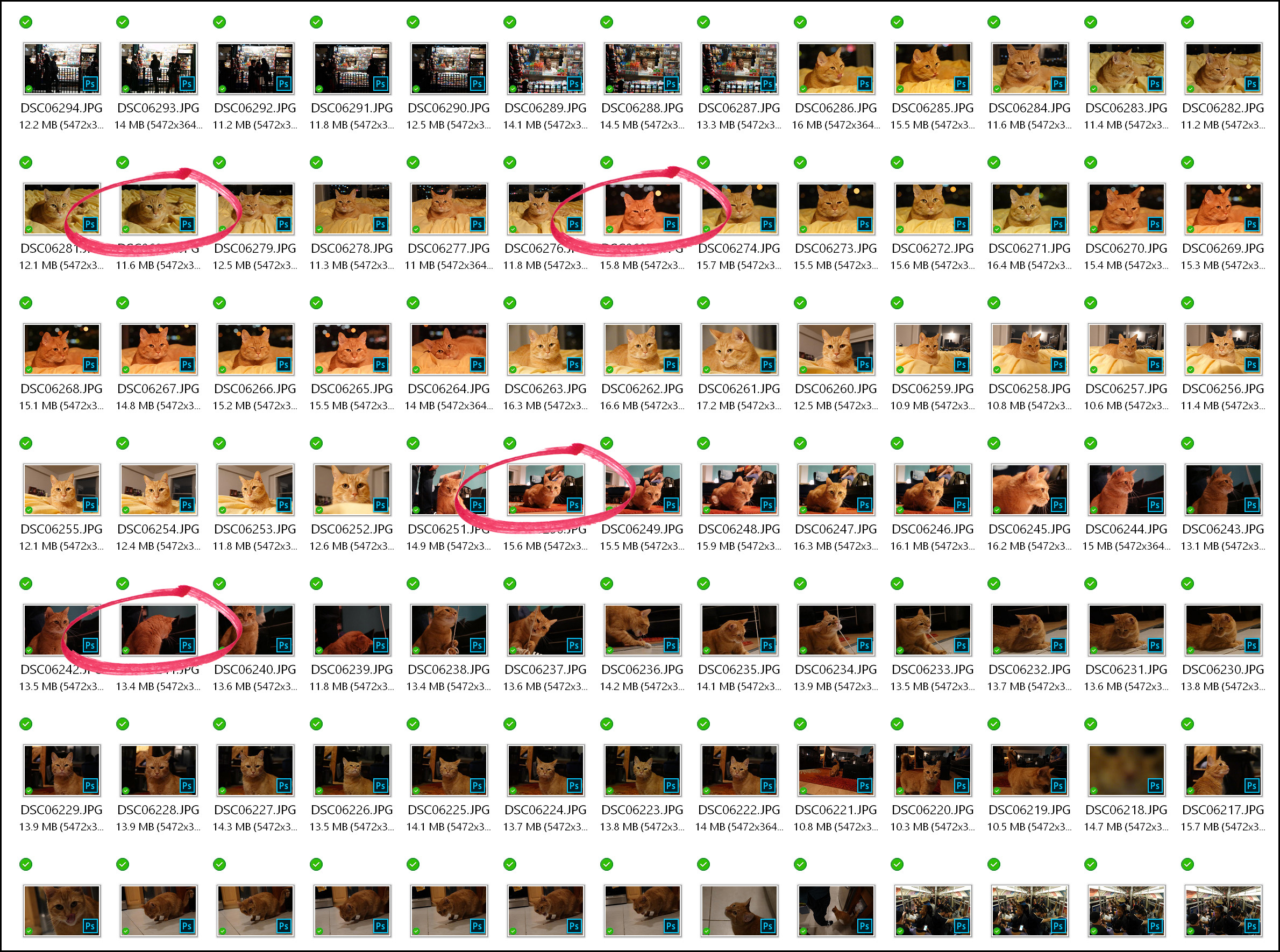
Finally, if you’re curious what I mean about wildly varying white balance, here’s a digital proof sheet of the whole photo shoot:
Some of these may look like they’re actually differences in exposure, but Photoshop doesn’t lie. Even when the exposures were corrected, there were still big differences in color balance. I’ve never run into such dramatic changes in color balance in a single set of pictures taken in the same place, so I’m really not sure what was going on.
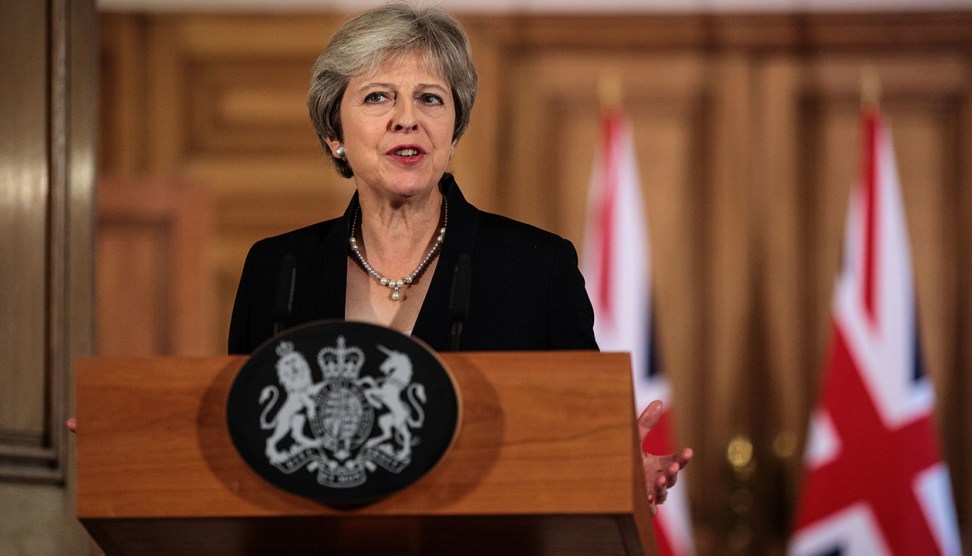
British Prime Minister Theresa May says that Brexit talks may have reached an impasse. But both sides always say things like this when they’re under pressure from their local constituencies to look tough. Probably best not to take it too seriously.
Deputy Attorney General Rod Rosenstein denies this, but the New York Times reports that last year he suggested making secret recordings of his conversations with President Trump after the White House was in chaos over the firing of FBI Director James Comey. Allegedly, he then tried to recruit cabinet members to invoke the 25th Amendment to remove Trump from office for being unfit. UPDATE: I initially misread the Times piece to say that Rosenstein had actually made recordings of Trump. He never did, and several sources now say his suggestion was only a sarcastic remark anyway.
In other Trump news, the declassifier-in-chief has backed down on his order to declassify a bunch of documents related to the Russia investigation. Why? “DOJ…agreed to release them but stated that so doing may have a perceived negative impact on the Russia probe. Also, key Allies’ called to ask not to release.” Uh huh.
And in yet other Trump news, a couple of days of being restrained and presidential regarding the Kavanaugh affair was all he could take.
Judge Brett Kavanaugh is a fine man, with an impeccable reputation, who is under assault by radical left wing politicians who don’t want to know the answers, they just want to destroy and delay. Facts don’t matter. I go through this with them every single day in D.C.
I have no doubt that, if the attack on Dr. Ford was as bad as she says, charges would have been immediately filed with local Law Enforcement Authorities by either her or her loving parents. I ask that she bring those filings forward so that we can learn date, time, and place!
In other words, Kavanaugh did nothing wrong; Dr. Ford is probably lying; and this is all a plot by the radical left-wingers in the Democratic Party to destroy Trump. The usual.
Southern California has suffered through 87 consecutive days of high smog. “Regulators blame the dip in air quality in recent years on hotter weather and stronger, more persistent inversion layers that trap smog near the ground. They’re also planning a study into whether climate change is contributing to the smog problem, as many scientists expect, due to higher temperatures that speed the photochemical reactions that form ozone.”
John Dowd, one of Donald Trump’s former personal lawyers, tried to use funds from the White House legal defense fund to help pay legal fees for Paul Manafort and Richard Gates. “In both cases, the president’s advisers objected to the lawyer’s actions over concerns it could appear aimed at stopping the two former aides from cooperating with investigators.” Ya think?
The Senate is still negotiating with Christine Blasey Ford’s attorney over the terms of her testimony. The Senate wanted Monday, Ford wanted Thusday, and apparently the Senate is now offering Wednesday. However:
The senator added that Republicans are not inclined to agree with Ford’s lawyers that she should only be questioned by lawmakers — not an outside counsel. “We’ll do it on Wednesday, we expect the accuser before the accused, and we do intend to have the counsel do the questioning,” the senator said, summing up the Republicans’ stance.
The party is assenting to two of the terms Ford’s lawyers laid out in a Thursday evening call with staff from both parties, the senator said: limiting the hearing to one camera and ensuring that Kavanaugh is not in the same room as her.
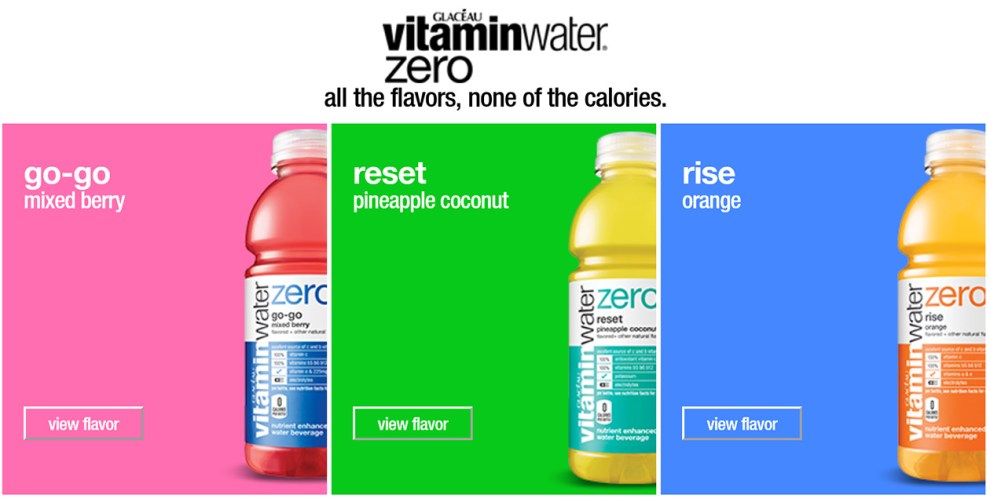
Sure, you can patent flavored water with vitamins added to it. I don't see why not.The Coca-Cola Company
Here’s something odd. It turns out that some patent examiners approve more patents than others. These easy-to-please examiners are subsequently more likely to leave the Patent Office and go work in the private sector. But there’s a catch, discovered in a new paper from Haris Tabakovic and Thomas Wollmann. Using data on over 1 million patent decisions they find that examiners grant far more patents to firms that later hire them. Alex Tabarrok comments:
It’s possible that examiners want to work for firms that have high quality patents but several considerations suggest that this is not the explanation for the correlation between grant probability and firm hiring. First, the firms doing the hiring are law firms that handle patent applications. We are not talking about USPTO examiners all wanting to work for Google.
There’s more, suggesting that patent examiners who leave are motivated to work for law firms near their alma mater, which they consider a desirable place to live. But here’s my question: why do the law firms want to hire these guys in the first place? Check this out:
Finally, the authors show that patent quality, as measured by future citations, is lower for patents granted to firms that later hire the examiner or to firms in the same city who are granted patents by the examiner (i.e. to firm-patents the examiner might have given a pass to in order to curry favor). The authors also find some evidence in the patents themselves. Namely, patents that are grant to subsequent employers tend to have claims that are shorter (i.e. stronger) because fewer words were added during the claims process.
So IP law firms seem to be deliberately hiring examiners who are likely to give bad advice on patents. Maybe this is done knowingly: they want technical advice that’s likely to just get the damn patent approved, figuring that once approved it’s hard for anyone to challenge it. Who cares if the claim is weak? On the other other hand, if the patent is important, they’re taking a risk of jamming it through and then suffering sizeable consequences down the road when it becomes worthwhile for a rich corporation to challenge it.
On the third hand, maybe they don’t care about that. When they get the patent approved in the first place, their client is happy and the law firm makes a lot of money. If someone challenges it, they’ll get hired to fight back and the law firm makes even more money. Maybe it’s in the law firm’s interest all along to hire mediocre examiners with rosy ideas about what’s patentable. This gives them the best possible veneer of (a) having expert technical advice on staff, but (b) making the most possible money from doing a bad job of advising clients.
The moral of the story is…I’m not sure. Choose your IP law firm carefully? Choose one located in an undesirable location that doesn’t attract lousy ex-examiners? Choose one at least 30 miles away from any high-rated research university?
And we respect that! But maybe you’re of a mind to support our work directly instead? We have until December 31 to raise the last $400,000 we need to keep our nonprofit newsroom running at full strength into 2026. Will you make a gift today?
We noticed you have an ad blocker on. Can you pitch in a few bucks to help fund Mother Jones' investigative journalism?
Billionaires own the media,
but they don’t own us.
At Mother Jones we know these aren’t conventional times, and they require unconventional coverage. That’s what deliver every day: fierce, independent journalism you can’t find elsewhere. Perhaps never in the history of our country has that been more necessary than now. But we can’t do it without reader support—your support. Please chip in today.
Billionaires own the media,
but they don’t own us.
At Mother Jones we know these aren’t conventional times, and they require unconventional coverage. That’s what deliver every day: fierce, independent journalism you can’t find elsewhere. Perhaps never in the history of our country has that been more necessary than now. But we can’t do it without reader support—your support. Please chip in today.