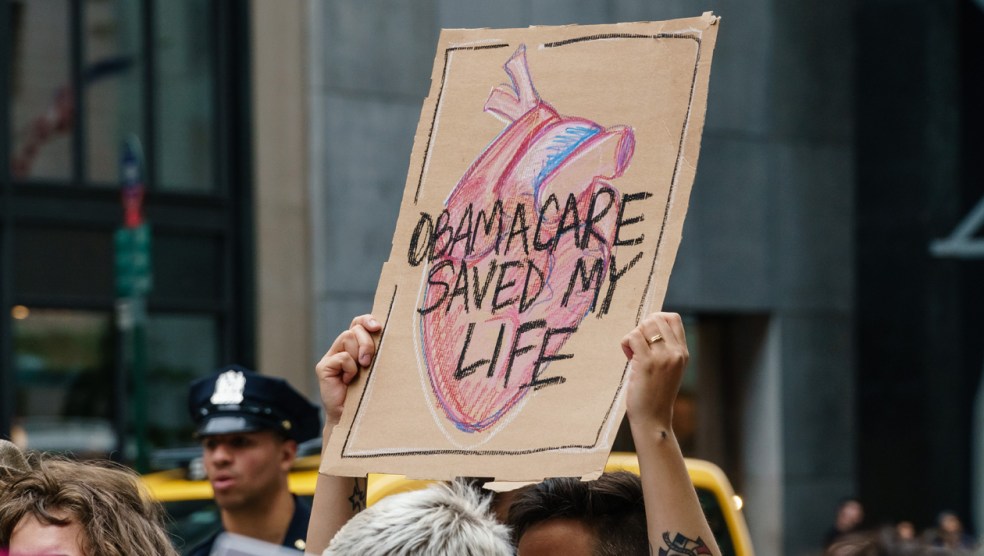
• Obamacare’s Top Ten Worst Design Flaws — Part 2

    Albin Lohr-Jones/Pacific Press via ZUMA

    Here is Part 2 of Jon Walker’s critique of the technical design of Obamacare.


    By Jon Walker

    This a pure nuts-and-bolts policy criticism of the design elements of the Affordable Care Act that judges the ACA only on its own terms. Even starting with the assumption that a marketplace of private insurers was the only politically viable option for expanding coverage, there is the problem that the ACA model was executed very poorly. Here are a few of the worst problems.

    6. Created a massive negative marginal tax rate

    The ACA has a massive subsidy cliff, particularly for older people, which means if an individual earns a dollar over the subsidy threshold, they end up losing thousands. This cliff problem will only get worse as premiums continue to rise. Even without increasing overall spending it would have been possible to smooth out the subsidies to at least remove this massive negative marginal tax rate problem.

    7. The creation and promotion of silver plans, when no one should buy middle level insurance

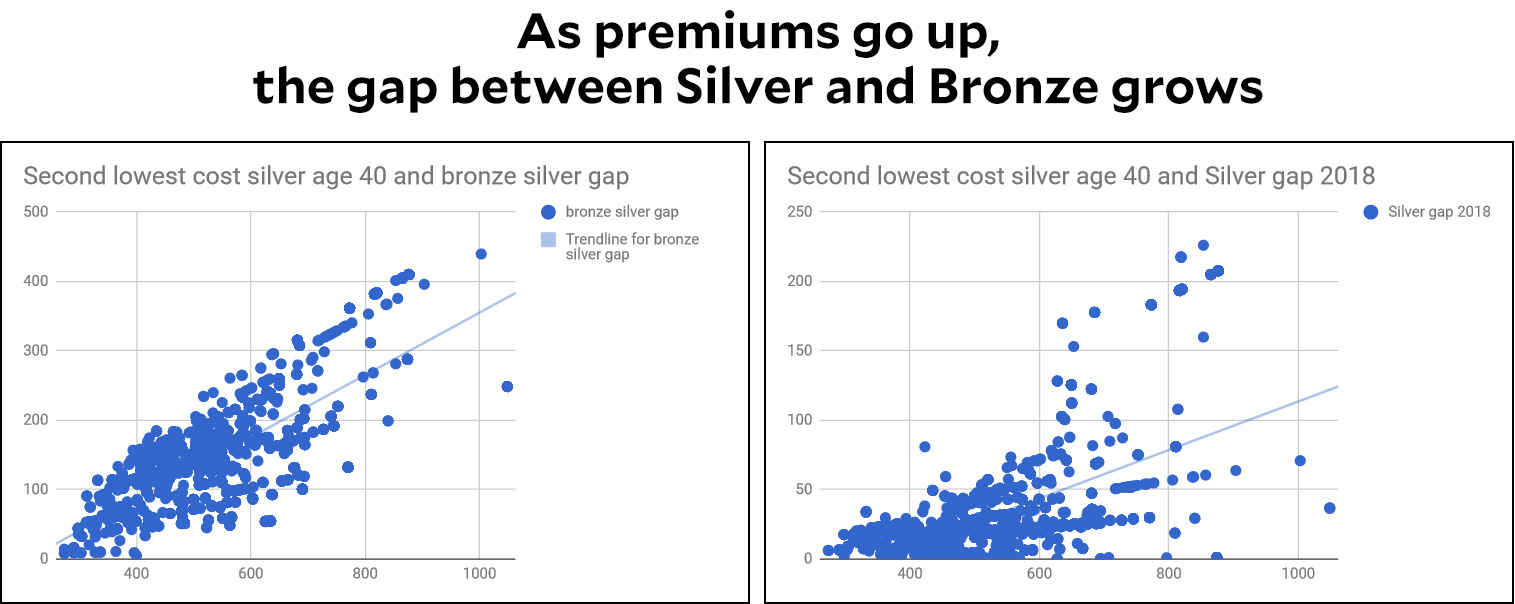
    The ACA exchanges offer Bronze through Platinum plans, which makes Silver a middle-level option in terms of cost-sharing. The problem here is that most people have a pretty good idea of whether they’re likely to be high-cost or low-cost patients in a given year. Rationally, high-cost patients should choose Platinum plans and low-cost patients should choose Bronze plans, but the ACA subsidies are designed to force insurers to offer Silver plans—and they all but force many people to buy Silver plans. Most people should only be choosing the highest or lowest cost sharing option depending on their expected health, never the middle option.

    Note that this problem gets worse the higher premiums go because the gap between Silver and Bronze also goes up. People who already pay the most are the ones who are hit hardest by the bias of the ACA toward pushing everyone toward Silver plans.
    8. A needlessly complex mess of plans

    In addition to the four metal tiers, the ACA requires plans to offer Cost Sharing Reductions to some lower income people but only if they buy Silver plans. These CSRs turn Silver plans into effective 94% AV, 87% AV, or 73% AV plans. That is seven different insurance tiers for every insurer, with numerous plans within each tier. It is a confusing administrative mess that also makes it difficult to explain to people why buying a Silver plan is way better than a Gold plan. These multiple subsidies could have been simplified, and these extra saving Silver plans could have just been merged with a “platinum” tier.

    9. Terrible public data makes smart shopping impossible

    The idea of the ACA was to bring down costs by getting individuals to be better, more conscientious consumers of their health care. This idea can’t even work in theory unless an individual has good data. However, the ACA has done a very poor job of providing people with the critical network data they need. Combined with the needlessly large variety of insurance plan designs, it is unreasonable to expect people to make the best choice.

    10. Lets employers punish their sick employees

    One part of the ACA allowed employers to charge employees significantly more if they don’t take part in “wellness programs.” These programs offer dubious value when it comes to improving health but have serious privacy and social justice issues. This effort, meant to help encourage sick people get healthy, has likely turned into a way for companies to discriminate against and financially punish those most in need.
  • Obamacare’s Top Ten Worst Design Flaws — Part 1

    Jeff Malet/Newscom via ZUMA

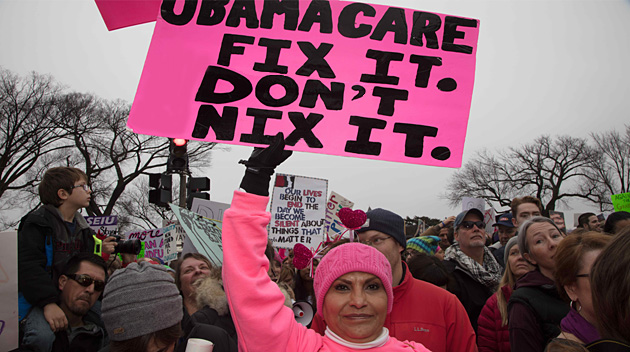
    A couple of weeks ago I got into a Twitter conversation with Jon Walker, who writes frequently about health care issues. We got to discussing Obamacare and some of the ways that it failed in its design, and I asked him if he’d put together a top ten list of the kinds of things he was talking about. These are not ideological issues like the lack of a public option or subsidies that are too stingy. These are things that, even if you accept the basic design of Obamacare, simply don’t work the way they were supposed to.

    I was interested in seeing this myself, and I figured my readers might be interested too. So here they are. I’ve split them up into two posts of five items each. The second post will go up in an hour or two.


    By Jon Walker

    This a pure nuts-and-bolts policy criticism of the design elements of the Affordable Care Act that judges the ACA only on its own terms. Even starting with the assumption that a marketplace of private insurers was the only politically viable option for expanding coverage, there is the problem that the ACA model was executed very poorly. Here are a few of the worst problems.

    1. State control combined with zero direct incentives for the states to make it work

    The ACA left much of the regulation of the individual market and the implementation of the exchanges to the states, but it gave states no incentive to perform these tasks well. State/federal partnerships are common and there is nothing inherently wrong with them, but they almost always offer strong incentives for states to use good oversight. For example, with Medicaid, states are responsible for paying a portion of their costs, so they have a strong incentive to keep Medicaid costs low. The ACA should have given total control to the federal government or given states financial incentives for keeping premiums low, but lawmakers chose the worst of all policy designs. There was zero political justification for this design mistake.

    2. Punishes low income people if their state or county tries to make the ACA work

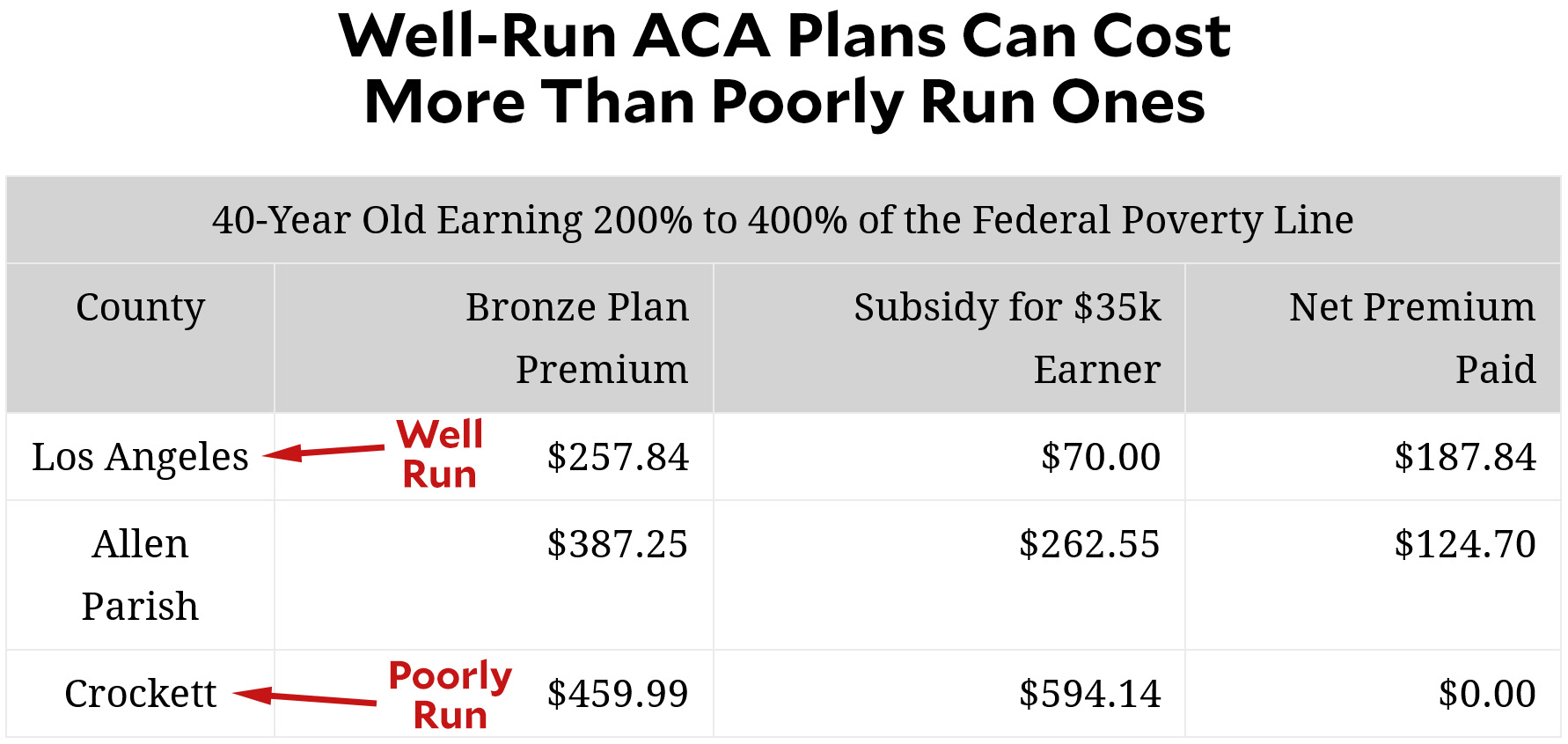
    Even worse, the law actively punishes low-income people in states and counties which try to make the exchanges function well. ACA’s tax credits for the poor are based on the price of the second-lowest-cost silver plan, which means that regions with higher prices also provide higher subsidies. Perversely, it turns out that badly managed ACA plans produce premiums so high that the tax subsidies rise even higher—which produces a lower net cost for anyone who qualifies for subsidies. Conversely, in well-managed states like California, the net cost of a bronze or silver plan tends to be fairly steep.

    3. Heavily encourages development of local monopolies

    In any market there is already a strong incentive for companies to try to develop local monopolies, but the ACA design supercharges this with its subsidies based on the second-lowest-cost silver plan. The low-cost insurer in a market can game this design by offering two low-cost silver plans, thus making it nearly impossible for anyone else to compete. California adopted plan standardization rules to reduce this problem and make shopping for plans easier. The Obama administration could have adopted similar rules for Healthcare.gov but chose not to. This is often worst in rural places where there are concentrated hospital markets, making it impossible for any but the largest insurer to negotiate decent rates, or markets where the dominant hospital network is the insurer. Of course, once an insurer has created a monopoly position, it can then use it to create a potentially massive windfall. The ACA was premised on the idea that more insurance competition should be a top goal, but its design encourages the opposite.

    4. Designed to get worse over time

    The exchange plans and subsidies are based off actuarial value (AV). An actuarial value of 70% means the average person pays 30% of health care costs and the insurer pays 70%. The problem is that if health care costs rise faster than inflation, consumers end up paying the price. If health care spending averages $10,000 per person, cost sharing is $3,000. But if premiums go up to $20,000, then cost sharing goes up to $6,000. Even if you believe that the subsidy structure of the ACA was sufficient to make care “affordable” for people with specific income levels at the time of its passage, the design assures it will slowly make care unaffordable over time. What’s worse, ACA’s design includes a “failsafe” mechanism that will reduce subsidies if demand for insurance ever gets high enough—as it’s likely to do during a recession. Cutting help during a recession is a terrible policy move.

    5. Accidently drove young, healthy people off the exchange

    The ACA allows insurers to charge older people as much as three times more than young people pay in premiums; this is called a 3:1 age band. Compared to requiring insurers to charge everyone the same price, this added some real administrative complexity, but it was done to prevent premiums for older customers from getting too high. This inevitably means that premiums for younger people will be higher than they would be otherwise, but this at least was expected. What wasn’t expected is that young people might end up actually paying more for health insurance than older people. However, thanks to the subsidy design, it’s often the case that the net cost of insurance is more for the young than for the old. At the same time, if your income is high enough that you don’t qualify for subsidies, then it’s old people who pay more. This is a perfect example of people designing complex policies without even understanding how they work together. Regardless of whether you think the young or the old should pay more, it ought to be the same regardless of income level.

  • Crime Has Been Cut in Half Since 1991

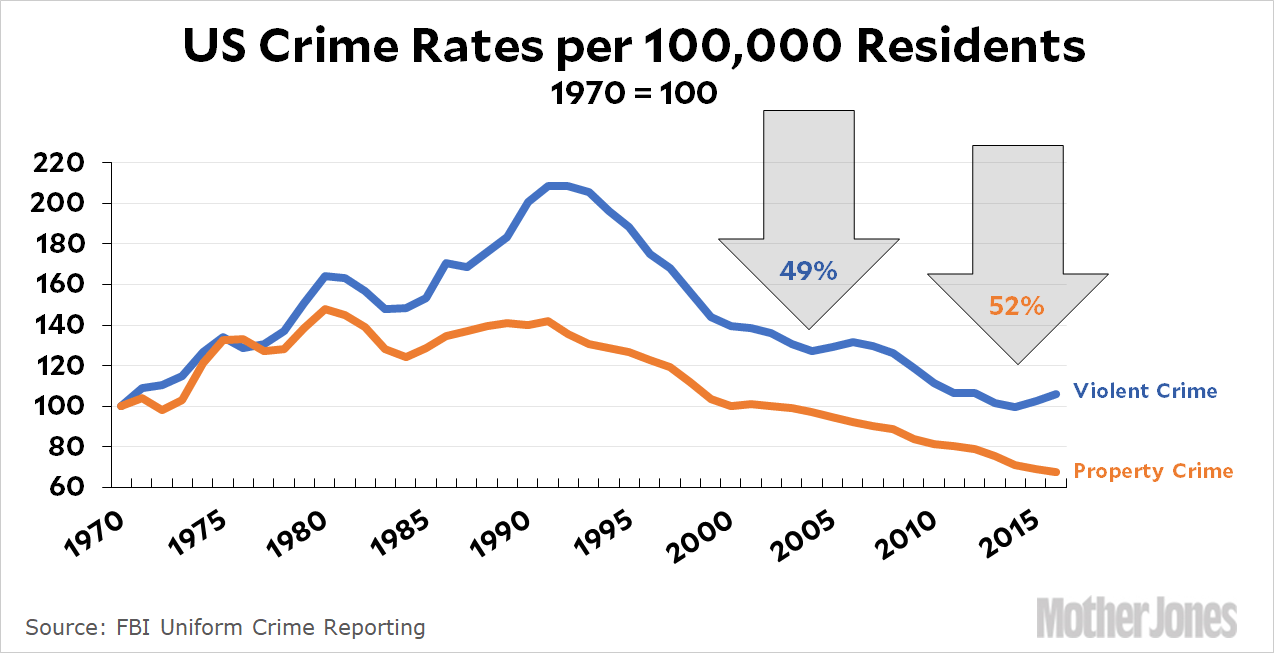
    I figure you can never show people this chart too often. Since its peak in 1991, property crime has dropped to levels last seen in the mid-60s and violent crime is down to its level in 1970. In some large cities, it’s dropped even more. There’s more we can and should do, but most of us live in pretty safe places these days—and they’re likely to stay that way. We should act accordingly

  • Here Are Three Excerpts From the IG’s Comey Report

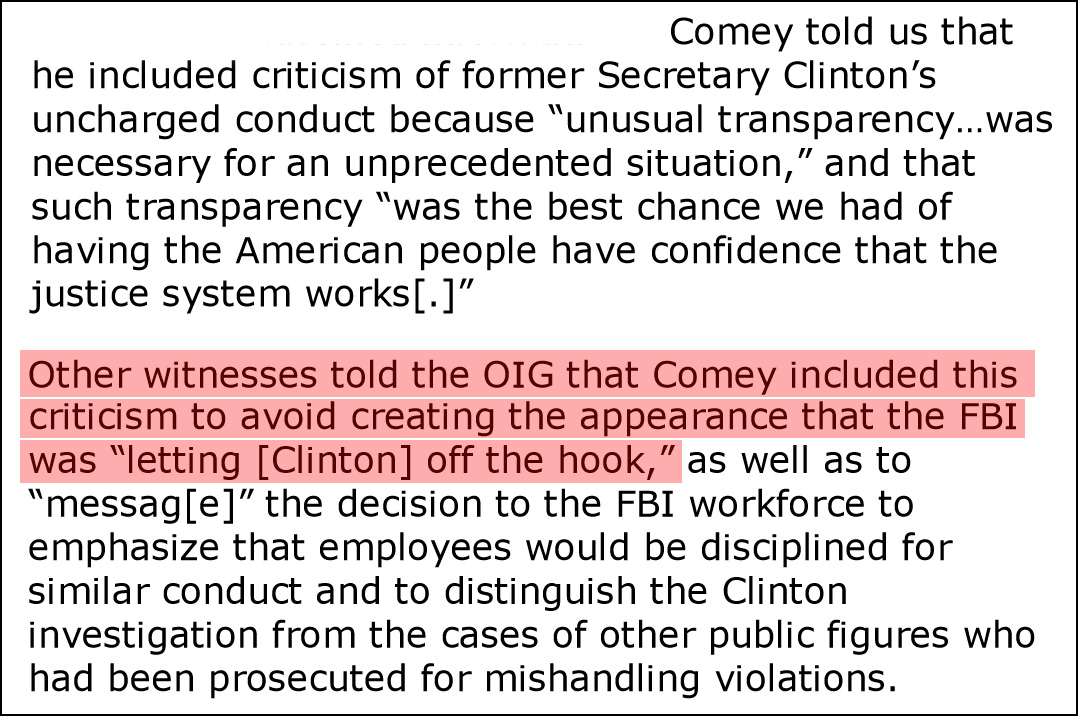
    Well, it turns out I’ve got a few minutes before my flight leaves, so here are a few excerpts from the inspector general’s report on the FBI’s handling of the 2016 election. First off, we have the reason for James Comey’s unprecedented decision to editorialize about the investigation when he announced in July that the FBI recommended no prosecution of Hillary Clinton:

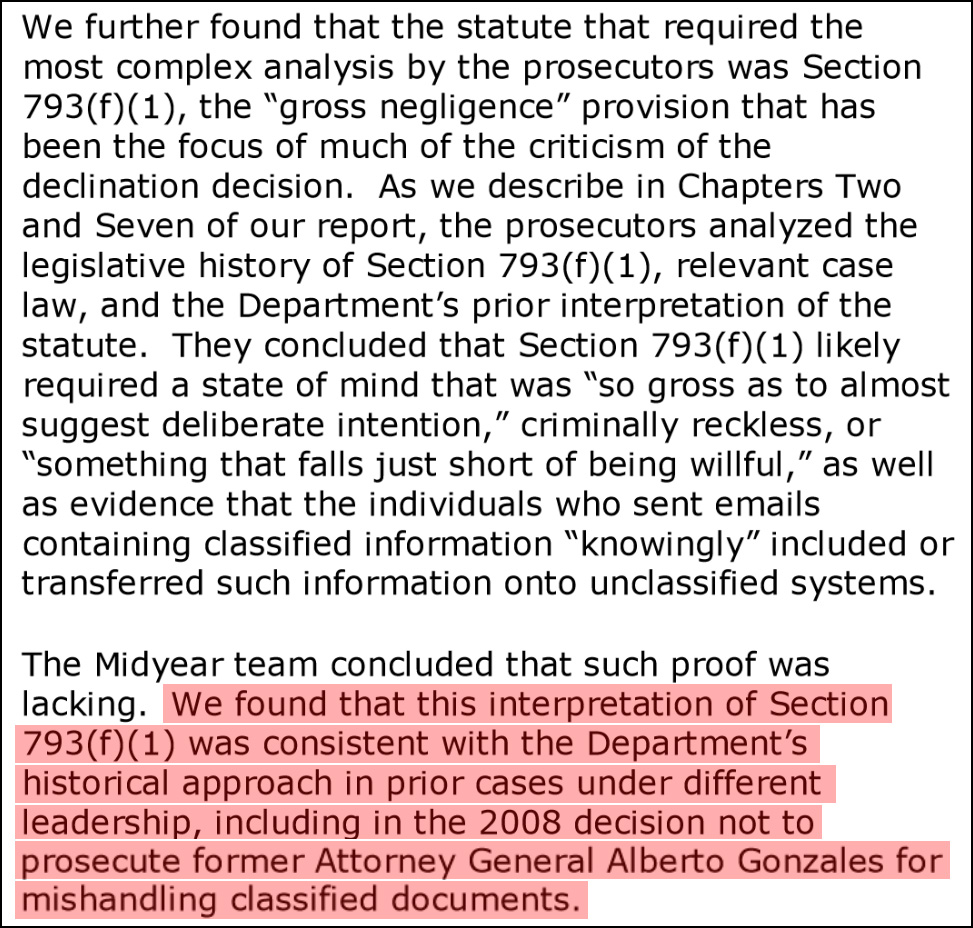
    Uh huh. And what about Comey’s decision not to accuse Clinton of “gross negligence”?

    So Clinton did nothing even remotely prosecutable, and she clearly didn’t display “gross negligence.” Despite this, Comey just had to say something to keep Republicans at bay, so he made up his “extremely careless” remark—something that was both inappropriate and lacked any legal foundation.

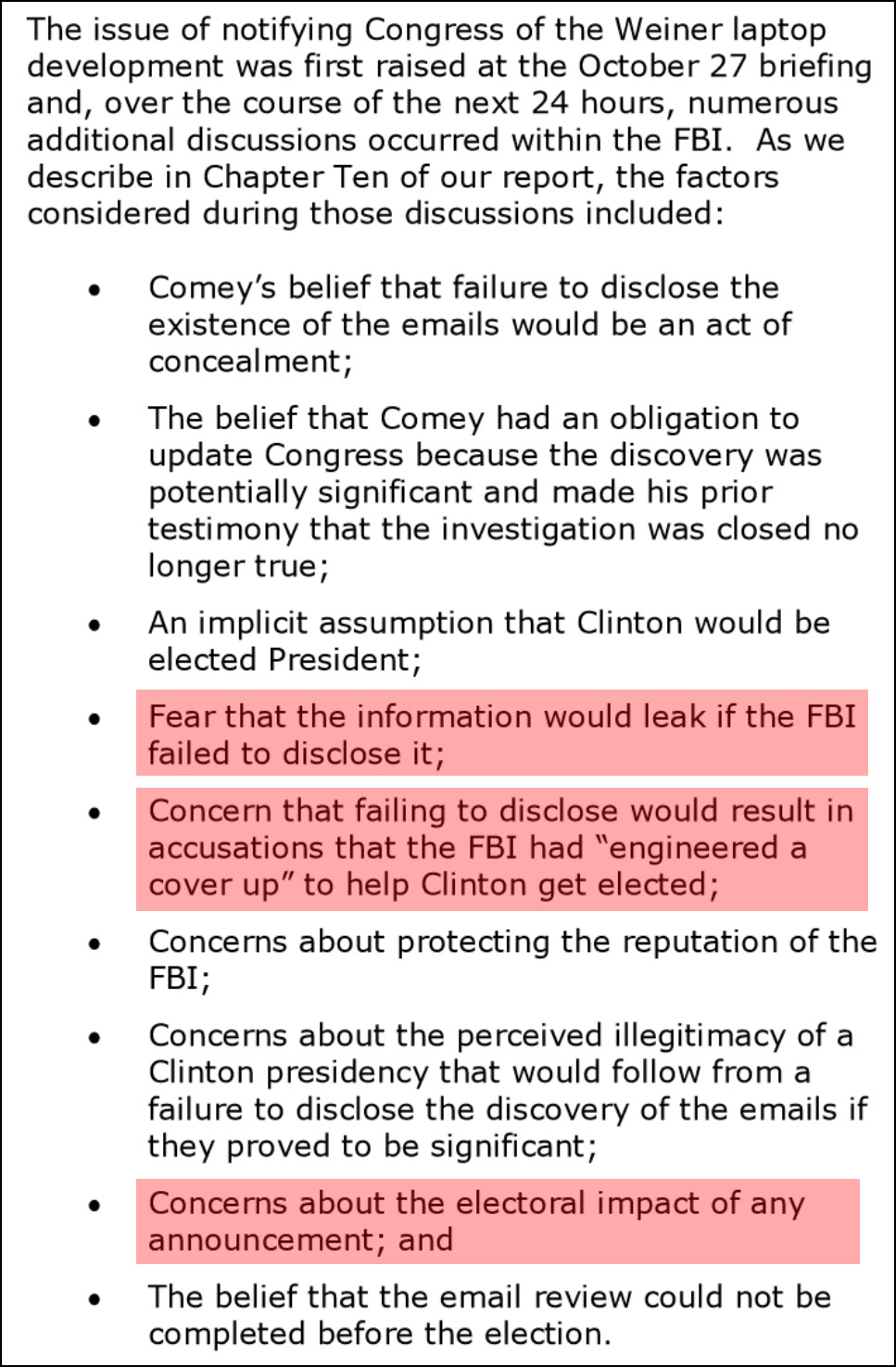
    Finally, there’s this about Comey’s reason for his “October Surprise” letter to Congress shortly before Election Day:

    In the end, there’s not much new in the report aside from a text message between two FBI agents in which one suggests that Donald Trump won’t ever become president because “we’ll stop it.” It’s unclear what this means; whether the agent was just boasting to his girlfriend; or what he could have done anyway. In the end, he did nothing. In fact the IG report says that some of the actions he took harmed Clinton and helped Trump.

    Hillary Clinton’s emails are going to go down in history as one of the great gaslighting campaigns of all time. After it was all over and the full weight of evidence began trickling out, it turned out that pretty much everyone—including the FBI—concluded that:

    • Clinton should have used a State.gov email address for her non-classified messages, but otherwise didn’t really do anything seriously wrong.
    • Confidential material was handled just as carefully by Clinton and her aides as it was in other administrations.
    • Clinton and her aides took care to phrase things carefully when they were using non-secure email—which includes both State.gov accounts and Clinton’s personal email. Again, this is the same as how other administrations have handled this.
    • The FBI’s investigation of Clinton’s email was perfectly reasonable and their conclusions were correct.
    • James Comey should not have editorialized about Clinton when he announced the end of the email investigation in July.
    • He should not have released his October Surprise letter to Congress.
    • No one in the FBI appears to have handled the investigation in a biased way. The one possible exception was the New York field office, which favored Trump and was suspected of being ready to leak news about the Weiner laptop if Comey had kept quiet about it.

    There’s much more in the full report here. And if you’re really jonesing for a full walk down memory lane, you might also want to take another look at my review of the FBI report released in September, which almost completely exonerates Clinton. This deep dive from Politico is worth a read too.

  • Lunchtime Photo

    This is the morning sea off of Westcove in County Kerry, taken from the backyard of the house we stayed in while we were on vacation in Ireland. This is an occasion when I wish I could go back and use my new camera to get a better shot: this picture is not really sharp, and the Sony would have done a much better job of capturing the scene.

    September 15, 2017 — County Kerry, Ireland
  • Inspector General Says Comey Blew It

    Jeff Malet/ZUMA

    The 500-page (!) inspector general’s report on the FBI’s conduct during the 2016 presidential campaign will be released in a few hours, but I probably won’t have time to get to it today. Luckily, the New York Times has gotten a sneak peek:

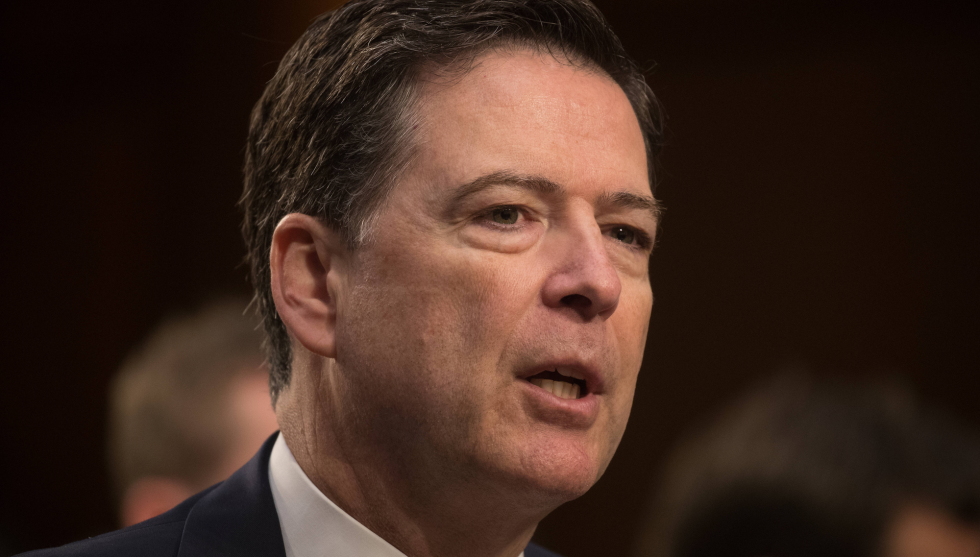
    The former F.B.I. director James B. Comey was insubordinate in his handling of the investigation of Hillary Clinton during the 2016 presidential election, a critical Justice Department report has concluded, according to officials and others who saw or were briefed on it.

    But the report, by the department’s inspector general, Michael E. Horowitz, does not challenge the decision not to prosecute Mrs. Clinton. Nor does it conclude that political bias at the F.B.I. influenced that decision, the officials said.

    “We found no evidence that the conclusions by department prosecutors were affected by bias or other improper considerations,” the report said, according to one official who read the sentence to The New York Times. “Rather, we concluded that they were based on the prosecutor’s assessment of facts, the law, and past department practice.”

    I assume that questioning the decision not to prosecute Hillary Clinton is beyond the scope of the IG’s remit. At least, I hope it is. But I don’t think it matters. Puerile chants of “Lock her up!” notwithstanding, it’s abundantly clear that Clinton did nothing seriously wrong. The FBI’s own reports leave no real doubt about that.

    Beyond that, I’ll be curious to see if the IG draws the obvious conclusion about Comey’s conduct: it probably wasn’t motivated by crude political bias, but it was motivated by a fear of Republican reprisals. It was clear from the start that congressional Republicans wanted blood, and Comey felt like he had to deliver some to keep the FBI out of their crosshairs. Republicans worked the refs ceaselessly, and it worked out spectacularly for them.

    Anyway, now we get to look forward to Donald Trump crowing about this, even though he egged on Comey’s actions and they were responsible for his election victory. I’m not sure I can stand that, so it’s just as well that I won’t be around this afternoon.

  • Hey! Wanna Work in the White House?

    SMG via ZUMA

    Politico reports that the White House is holding a job fair:

    The White House – which has been having trouble filling positions as it bleeds staffers – is now trying to find recruits at a conservative job fair on the Hill….The fair is being hosted by the Conservative Partnership Institute, an organization founded by former Heritage Foundation president Jim DeMint last year.

    A former Obama administration official said it would have been unheard of in the previous administration….The Trump White House, however, has had difficulty bringing new people in as staffers have resigned amid ongoing chaos and a crackdown on security clearances — or, more recently, been fired as part of a purge of people accused of leaking information to reporters.

    Sure, this is kind of funny. But then again, it’s not, really. It’s tempting to think that I’d just as soon not have Trump’s policies carried out capably, but I guess I do. Incompetence is just too capricious. No matter who’s in the White House, we all have an interest in having it fully and properly staffed with competent people. The fact that Trump can’t do this just adds another dimension of foreboding to an already troubled administration.

  • Quotations From Chairman Donald

    Here is one of the inspirational pieces of artwork that greet children daily at a Texas detention center for undocumented immigrants:

    Department of Health and Human Services via Jacob Soboroff, MSNBC

    I have a question. Do you think this was Donald Trump’s idea? Or did it come from someone who thought it was a great way to suck up to him? On the one hand, it sure seems like the kind of thing Trump would do. On the other hand, he’s never displayed the artistic temperament to think up something like this. On the third hand, maybe it was his idea and then he chose from a few samples that his aides prepared for him. It’s a tough call.

  • Chart of the Day: Blue-Collar Wages Are Down Under Trump

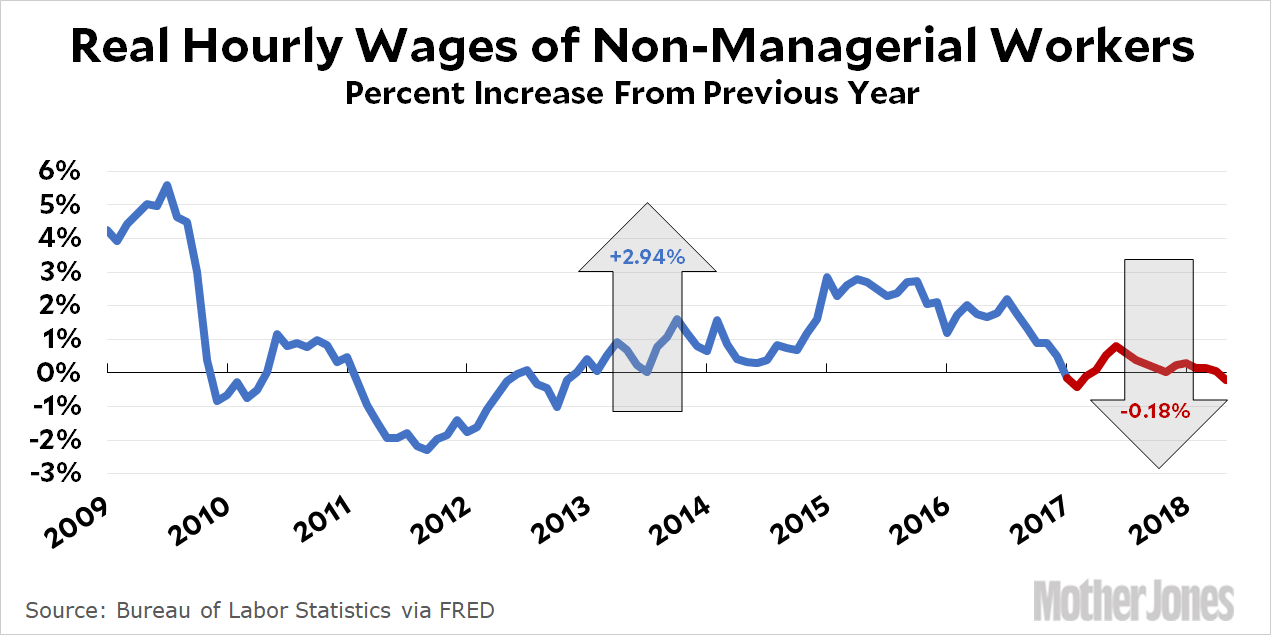
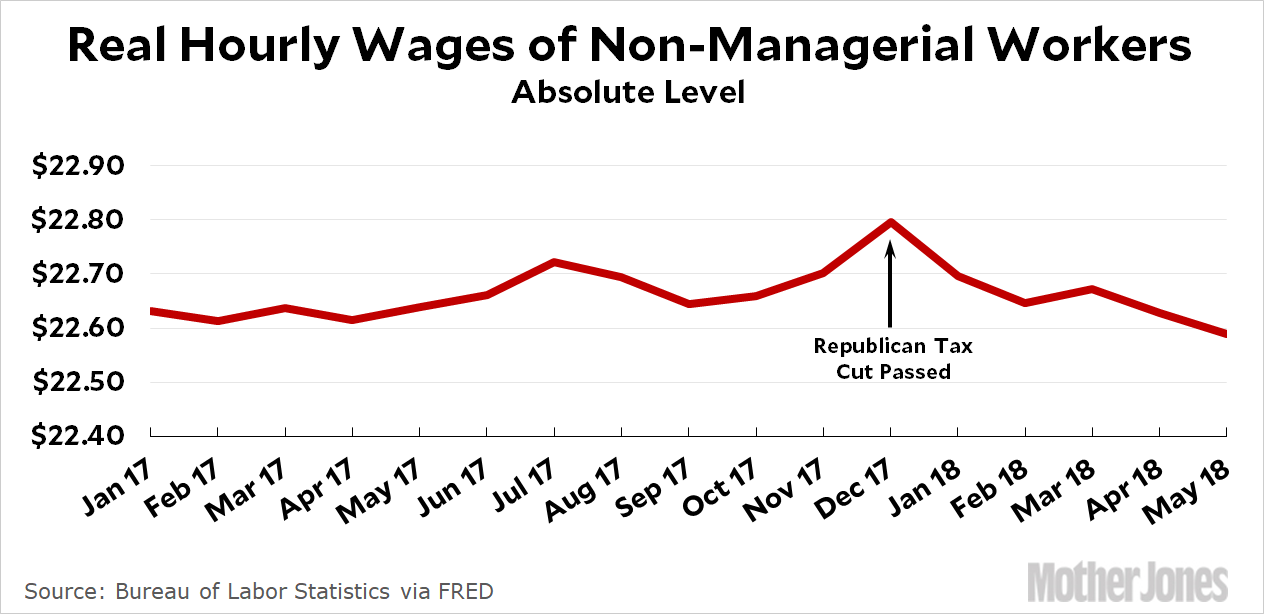
    The monthly Real Earnings Report from the BLS came out today, which gave everyone an excuse to note that hourly wages for production and nonsupervisory workers are down compared to a year ago. They’re also down compared to January 2017. Sad.

    POSTSCRIPT: It’s legit to note that wages for ordinary folks have turned down since Republicans passed their tax cut, which was sold not as a windfall for corporations and the rich, but as snake-oil that would supercharge the ordinary family’s paycheck. That was a flat-out lie. At the same time, we should keep our eyes on the ball: the real disgrace here is that the wages of blue-collar workers have been stagnant for decades. Over the past 40 years, under both Democrats and Republicans, blue-collar earnings have gone up just a bit more than half a percent per year while the incomes of the rich have skyrocketed. That needs to stop.