• Hooray for Statistics!

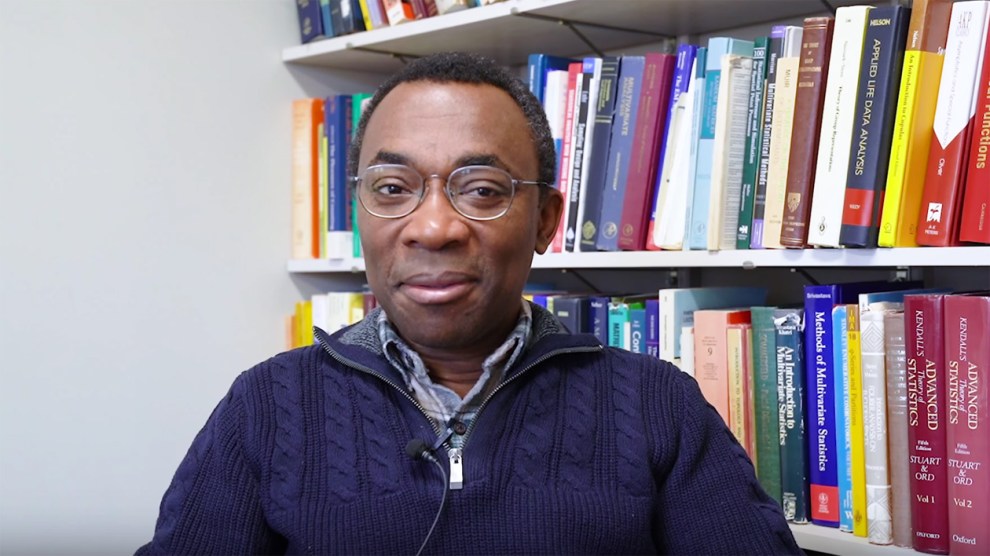
    Over at Quanta, they have an interview with Donald Richards, a statistician who is one of the pioneers in the use of a new and better way of measuring correlations:

    Wolchover: How does distance correlation work?

    Richards: This is where the concept of a Fourier transform comes in….If you give me two probability distributions—the statistical spread of values that a variable takes on—and if I want to test whether the two distributions are the same, all I have to do is calculate their Fourier transforms. If these are equal then I know that the two probability distributions had to be equal, to begin with. The distance correlation coefficient, in layman’s terms, is a measure of how far apart these Fourier transforms are.

    Ha ha ha. That’s the “layman’s” explanation. Richards must hang out with some pretty smart laymen. But let’s just pretend we all know what that means and move on. Last year Richards wrote a paper showing how distance correlation is better than bog-ordinary Pearson’s linear correlation. What prompted the paper?

    Richards: This was prompted by an opinion piece in The Washington Post in 2015, by Eugene Volokh, a professor of law at UCLA. The title of the article is “Zero Correlation Between State Homicide Rate and State Gun Laws.” What he did was—you know, my eyes bugged out; I couldn’t believe it—he found some data on the states’ Brady scores, which are ratings based on the toughness of their gun laws, and he plotted the Brady scores on an x-y plot against the homicide rates in each of these states. And if you look at the plot, it looks like there’s no pattern.

    ….I was horrified. There are so many things wrong with this analysis….Should you even fit a linear regression line to this data set? If you look at the rest of the data, you don’t see any linearity to the relationship, and it’s easy to understand why: There are bunches of points that correspond to geographic and culturally similar regions. If you break up the states by region, then you see reasonably linear relationships starting to show up in the scatter plots. And then in each case, you find that the higher the Brady score, the lower the homicide rate.

    Bloggers for the win! Though I have to admit I’m not sure whose side I’m on here. If I see a scatterplot that appears completely random to the naked eye, I’m pretty suspicious of efforts to massage the data with sophisticated techniques in order to extract a correlation. So…I’ll take this with a grain of salt. Still, at least Richards is speaking my language:

    Wolchover: Do you hope that by developing better tools—like distance correlation—that eventually these methods will seep out into more common use?

    Richards: Yes, I hope so. And in fact, I have heard that one of the big pharmaceutical companies is now starting to use distance correlation methods. And I know that people in academia are using it more. I hope to live long enough to see distance correlation be a standard pull-down tab in Excel, or if not Excel, certainly on Wolfram Alpha. You enter your x-y data, and boom: It gives you the distance correlation. I live for that day!

    Anybody who lives for the day when Excel will include an obscure statistical function is my kind of person. My hopes and dreams for Excel are a little more mundane, like being able to pick any starting point I want for a chart. I guess I’m a cheap date.
  • White House Admits Comey Swung Election to Trump

    Here’s the latest from the supergeniuses in the White House:

    President Donald Trump’s senior counselor, Kellyanne Conway, slammed former FBI Director James Comey as a publicity hound who is trying to promote his new book. “The president is very confounded that this person is always able to divert the spotlight to him,” Conway said told ABC News Chief Anchor George Stephanopoulos on the morning after his exclusive interview with Comey. “He has a very deft way of making things about him.”

    Conway also referred to Comey’s admission that he may have subconsciously expected Hillary Clinton to become the next president when he decided 11 days before the election to announce the reopening of an investigation into her emails. “He thought the wrong person would win,” Conway said.

    First, I have no doubt that Trump is very sincerely confounded at Comey’s ability to grab the spotlight. That’s something only Trump himself is supposed to do.

    Second, um, what? Conway said, “This guy swung an election. He thought the wrong person would win.” Conway is referring to Comey’s admission that he thought Hillary Clinton would win easily, which is one of the reasons he wasn’t worried about reopening the email investigation ten days before the election. So Conway is saying that Comey swung the election to Trump because he thought the “wrong person”—Hillary Clinton—would win. That’s an admission we’ve never heard from the White House before.

    https://www.youtube.com/watch?v=8-M5wa4m3gE&t=1m6s

    So was this just a case of Kellyanne Conway having too much coffee before the interview? She certainly sounds that way. Or just getting confused about the party line? Or what? She later “explained” that she was “being sarcastic.” Uh huh.

    Welcome to Monday.

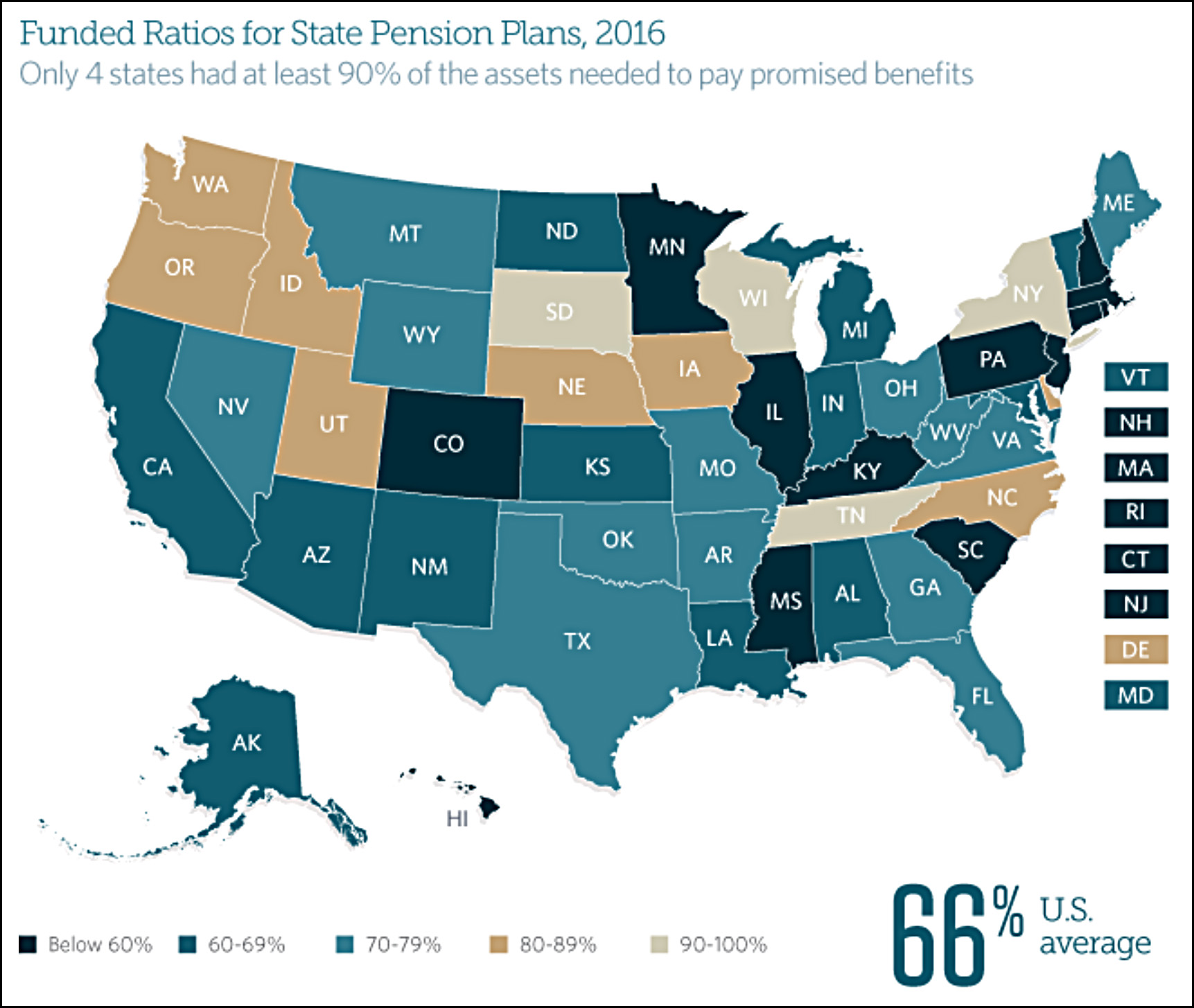
  • The Problem With Public Pensions Isn’t Size, It’s the Politics of Funding

    The New York Times ran a piece this weekend about the growing burden of paying public pensions. Naturally it features a few examples of outrageously high pensions, but the overall gist is that the cost of pensions is getting so high that it’s crowding out spending on other things. Dean Baker comments:

    Workers sign contracts that specify compensation. Most of it is in direct pay, but benefits like pensions are often part of the contract….Taking back pensions for which people worked is like taking back a portion of their pay after the fact.

    ….As far as the claim that public employees are overpaid, most research shows that they are actually paid less than their private sector counterparts, when controlling for education and experience….While the piece implies that public employees typically get generous pensions, this is not true. The Detroit pension system, which is referenced in the piece, pays an average annual benefit of $20,000 a year, or less than $1,700 a month. Most other public pension systems provide comparable benefits to typical employees as opposed to highly paid doctors and football coaches.

    For the most part, public pensions are fairly ordinary. The biggest exception is police and firefighters,¹ who are often allowed to retire after only 20 years; are allowed to spike their pensions; are able to take part in special semi-retirement programs that boost their pensions even more; frequently take disability pensions; and just generally have pensions that pay them a high percentage of their working salaries.

    But put that aside. If they can negotiate all that stuff, then bully for them. The real issue, as everyone knows, isn’t so much the size of public pensions as the fact that they’re almost never fully funded. Politicians, who mostly work on timeframes no further out than the next election, are simply more willing to negotiate generous pensions than they are to negotiate higher salaries that might require tax hikes on their watch. It’s like Wall Street’s IBGYBG: “I’ll be gone, you’ll be gone.” And sure enough, now that the pension bills are coming due, all the politicians who passed the buck—literally—are safely out of office.²

    The real answer all along has been simple: negotiate any pension you want, but you have to fully fund it with no wild-ass investment return assumptions. Done properly, an extra $1,000 in pension income would cost about the same as a $1,000 salary increase, so politicians would have no special incentive to prefer one over the other.

    It’s a little late for that, of course, and although lots of cities and states would love to take back a chunk of worker pensions, they can’t do it. It’s all specified in a contract, after all, and courts will enforce those contracts. One way or the other, paying out old pensions is probably going to require an average increase in state and local taxes of about 5-10 percent or so. Maybe more, depending on where you live. The sooner everyone owns up to this, the better off we’ll all be.

    ¹Although in Los Angeles the hot ticket is to work for the Metropolitan Water District. Hoo boy. Nobody shoots at them and they don’t have to fight fires. But they get paid a fortune and their pensions are sky high.

    ²And collecting a pension, of course.

  • Drug Lobbying Pays Off Yet Again

    Meet Revlimid, the drug I take for multiple myeloma. It costs $20,000 per month. A generic would probably cost $1,000 per month. However, the generic version is still stuck in court because Celgene refuses to sell any capsules for testing.Celgene

    In order to earn FDA approval for generic drugs, manufacturers need samples of the name-brand drug to test against. Frequently, however, the name-brand folks refuse to sell their pills for testing. Congress is on the case:

    Legislation to ensure access to drug samples for generic drug manufacturers has broad support in Congress, from Senator Patrick J. Leahy, Democrat of Vermont, on the left to Senator Mike Lee, Republican of Utah, on the right. A similar bill in the House also has diverse backers, including Representatives Peter Welch, Democrat of Vermont, and Mark Meadows, Republican of North Carolina, who is the chairman of the conservative House Freedom Caucus.

    Under the bill, a generic drug developer could file a lawsuit, and a federal court could require a brand-name drug maker to provide samples of its product to a generic company “on commercially reasonable, market-based terms.” The court could also award damages if it found that a drug maker had refused to sell samples “without a legitimate business justification.”

    ….Lawmakers of both parties pushed for the legislation to be included in a far-reaching budget bill signed by Mr. Trump in February, but it was dropped at the last minute.

    So this has broad, bipartisan support and would be an indisputably good thing, but somehow—note the passive voice here—“it was dropped” at the last minute. Apparently somebody’s lobbying budget paid off.

    But as long as we now have another crack at this, maybe we can write a better bill. Why authorize lawsuits? Why not simply authorize the FDA to buy pills at the Medicare price¹ and then resell them to generic manufacturers at cost? This would not only be a lot easier, but it would solve one of the complaints of the name-brand manufacturers: “They say the bill would be a boon to trial lawyers, giving them an incentive to sue brand-name pharmaceutical companies for damages, which could be worth more than sales of the proposed generic drug.”

    Why do we make things so complicated? If we think that drug companies should be required to make pills available for testing, then just require them to make pills available for testing. And if we want the pills available at a “market price,” then just set the market price. This shouldn’t be rocket science.

    ¹Or some lower price, if that’s appropriate.

  • Trump’s Approval Rating Really Is Up

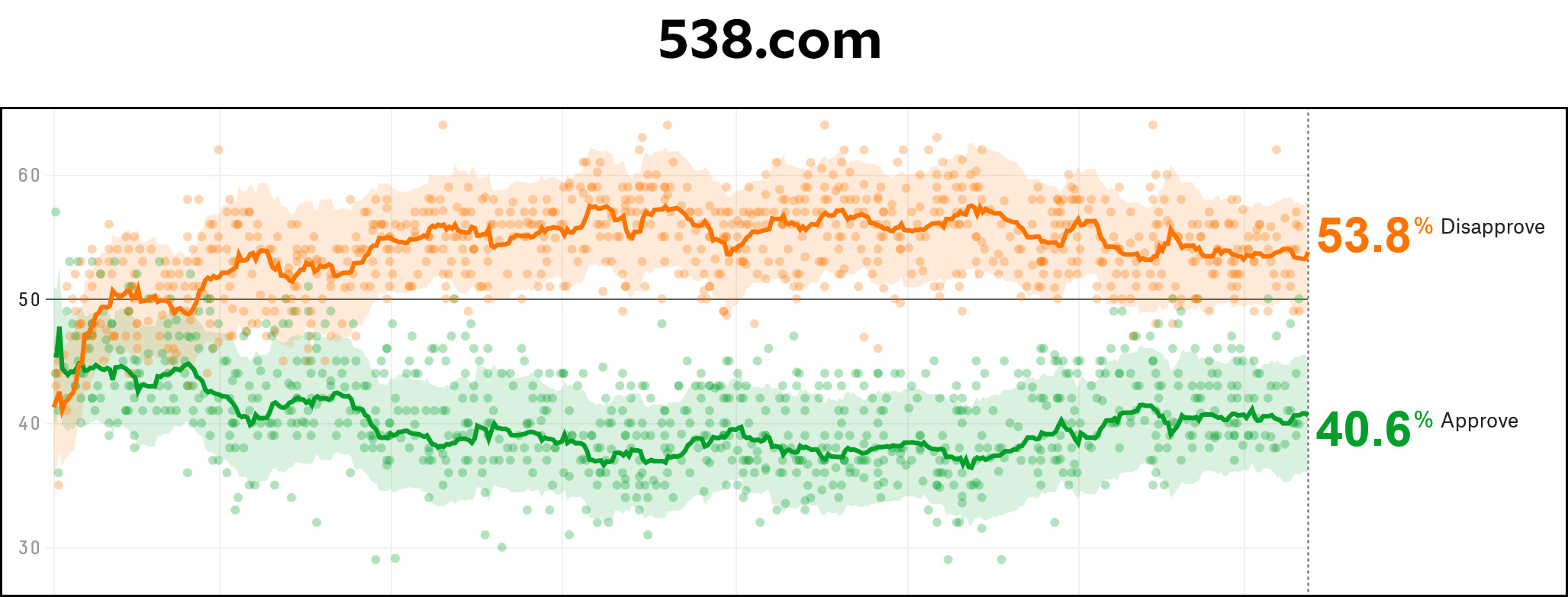
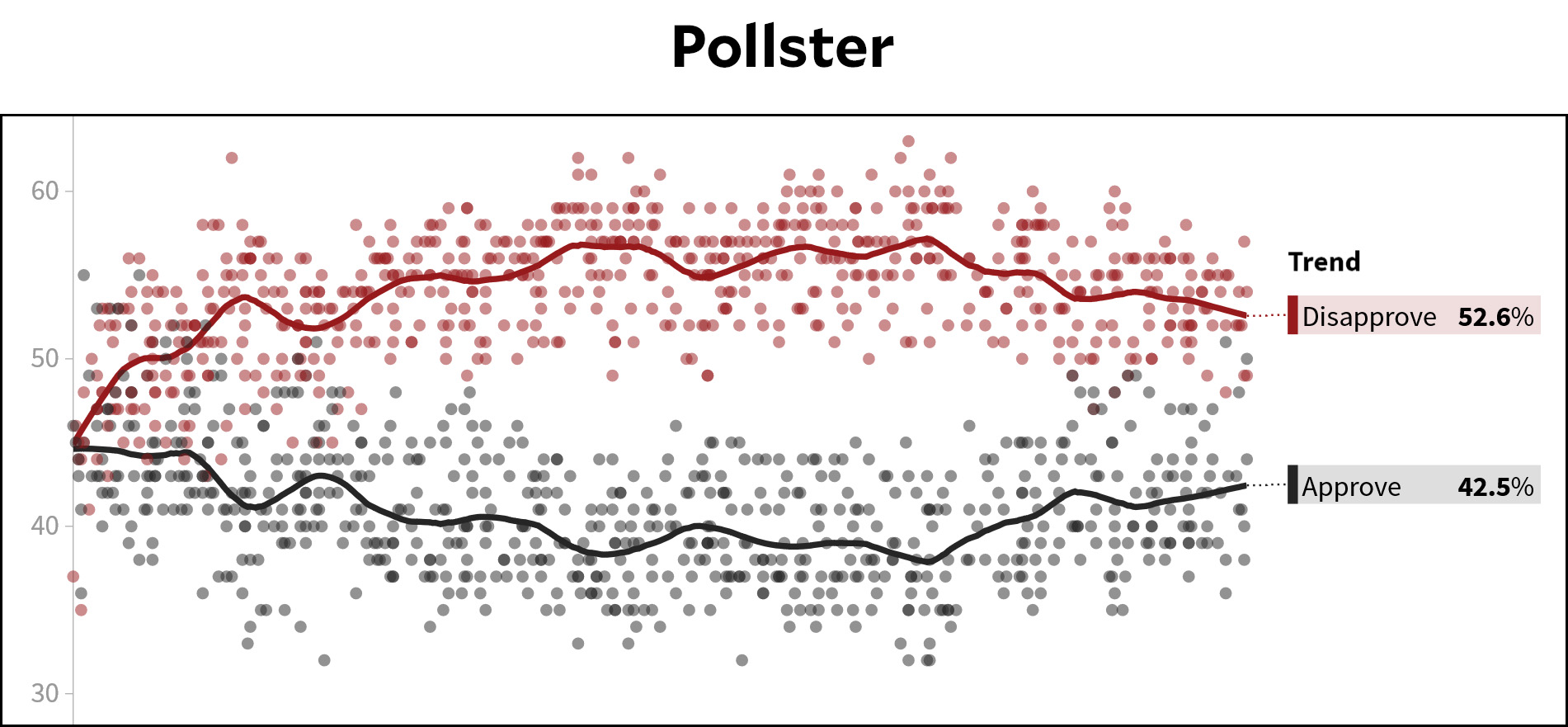
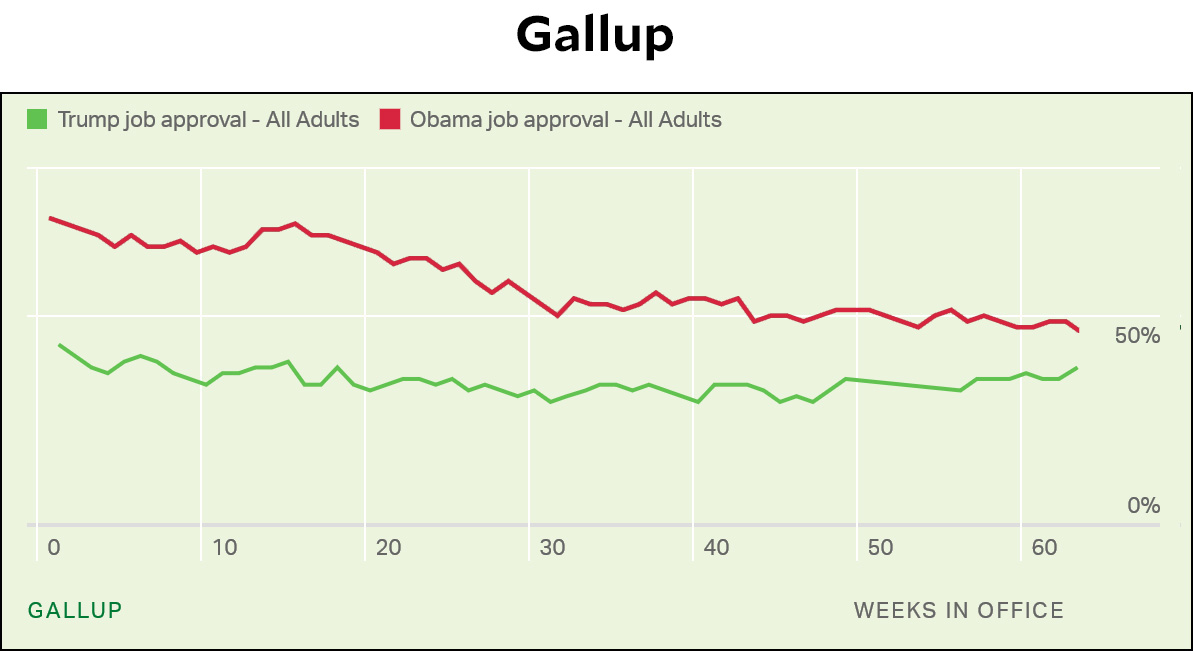
    Donald Trump can blather all he wants about the Rasmussen poll—which has always been extremely friendly to Republicans—but in reality his approval rating is nowhere near 50 percent. However, it is up. Why? I suppose that nothing really big has happened since the tax cut passed. That sounds crazy to political obsessives like us, but what’s made the last couple of months seem increasingly bizarre is a relentless tsunami of little things. These loom large to us, but are mostly unknown to normal people. So if you’re interested, here are the current estimates of Trump’s approval rating from the two leading poll aggregators, plus Gallup’s comparison to Obama:

  • More High-Speed Photos

    I don’t have anything new on the high-speed photo front, but I’ll come up with something eventually. In the meantime, here are a few more bees and hummingbirds. First up, a hummingbird:

    This picture shows the bird’s back and tail, for our birding folks who keep saying they need to see this. Hopefully we can now determine once and for all which type of hummingbird this is.

    Next up is a very good freeze frame of a bee in flight:

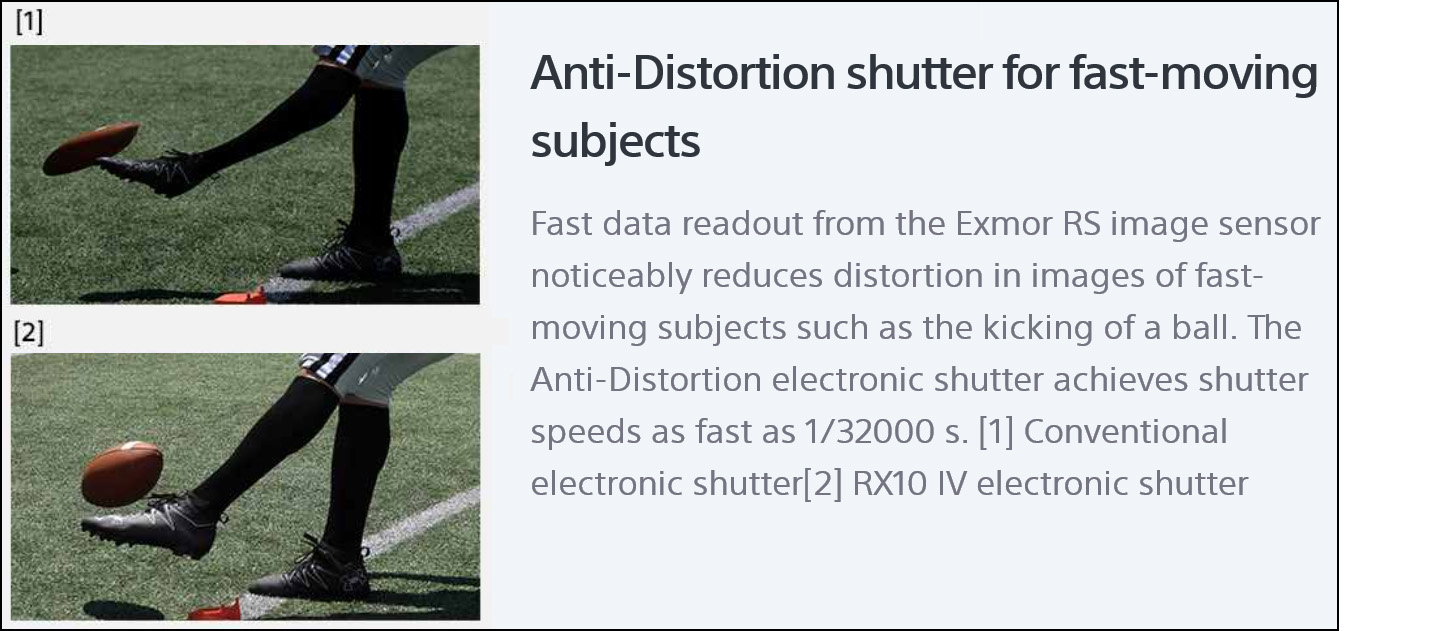
    The curvature of the lower wing is, I’m pretty sure, an artifact of how the shutter works at high speeds. The camera’s firmware allegedly compensates for this effect, called “rolling shutter,” to produce a proper rendering of reality. This fine piece of Sony marketing explains:

    Most of the time this works as advertised. Every once in a while, though, it can’t quite fix things properly, and you get some curvature in very fast moving objects. That’s what happened here.

    Finally, here’s another bee, just because.

  • Kevin Drum Accused of Obeying the Law

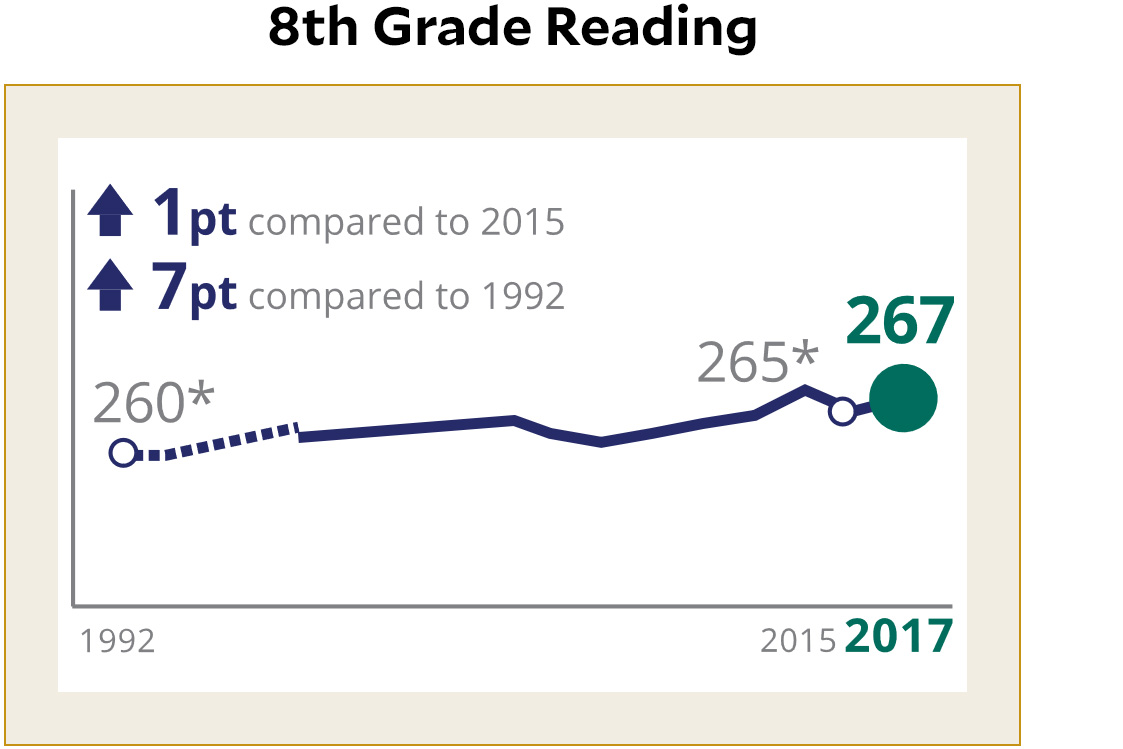
    On Friday night I snarked that the NAEP folks—who produce the “gold standard” of student testing—couldn’t even count to two:

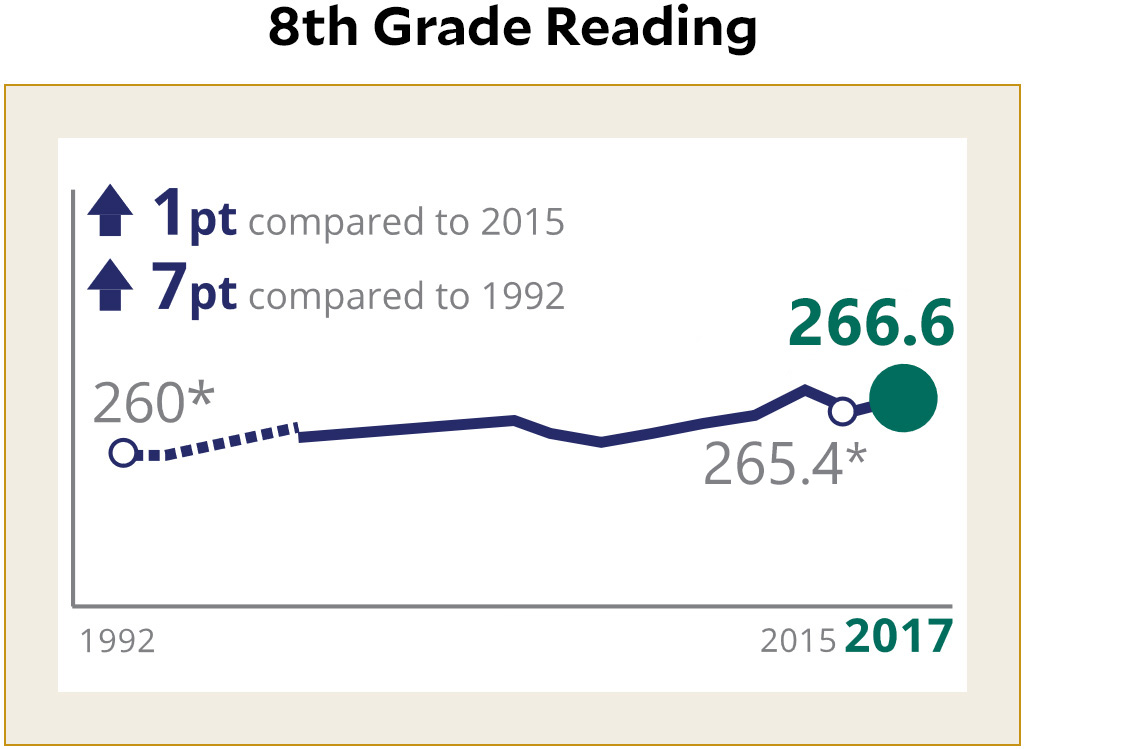
    Muphry’s Law states that “If you write anything criticizing editing or proofreading, there will be a fault of some kind in what you have written.” Sure enough, a regular reader emails to say that I got this wrong. Here are the exact numbers:

    • 2015 score: 265.4, which rounds to 265.
    • 2017 score: 266.6, which rounds to 267.
    • Difference: 1.2, which rounds to 1.

    This is actually a really nice example of how rounding numbers can get you into trouble. And it means that I have to change my criticism from NAEP’s too-weak arithmetic skills to its too-strong adherence to house style. Obviously their house style for simple graphics like this is to use only whole numbers. That’s probably a good style rule. But accuracy and clarity are always your main goal, and there are rare occasions when you just have to make style exceptions. Here’s what the chart should have looked like:

    Maybe there’s another way to do this, but one way or the other, the graphic simply can’t be allowed to display what looks like an obvious error. In long rows of numbers, you sometimes see the disclaimer “does not add to 100 due to rounding,” or something similar. Maybe something like that would be enough. But I suspect that the cleanest and clearest way of getting this right is to break the style rule. I sympathize with style nazis, since I tend to be one myself, but every once in a while house style rules just have to be broken.

  • Trump Launches Attack on Syria

    Mouneb Taim/Pacific Press via ZUMA

    We have fired some missiles at Syria again:

    Mr. Trump characterized it as the beginning of a sustained effort to force Mr. Assad to stop using banned weapons….“We are prepared to sustain this response until the Syrian regime stops its use of prohibited chemical agents,” Mr. Trump said.

    ….Defense Secretary Jim Mattis told reporters at the Pentagon on Friday night that the strike was completed and was designed as a one-night operation. “Right now this is a one-time shot and I believe it has sent a very strong message to dissuade him to deter him from doing it again,” he said.

    The Trump White House runs like a Swiss watch, doesn’t it?

    I don’t want to get bogged down in a dense discussion about American involvement in Syria, but I will say this: I’m not opposed to the proposition that anyone who uses chemical weapons should be prepared to pay a price. A judicious enforcement of the taboo against chemical weapons is worth it. If we commit to this, however, it can’t apply solely to countries we don’t like. It better apply to everyone, even if they’re fighting a war we don’t care much about. Are we prepared for that?

  • Did FBI Deputy Director Andrew McCabe Lie to the FBI?

    A few weeks ago, the Justice Department’s inspector general rushed out a draft copy of its report on Andrew McCabe to Attorney General Jeff Sessions. Why? So that Sessions could fire McCabe 26 hours before he qualified for his full pension and retired.

    Well, the final report has now been released and I’ve read it. But first, here are the background facts:

    • As deputy director of the FBI, McCabe had oversight authority over all FBI investigations, including the Clinton email investigation and the Clinton Foundation investigation.
    • A year earlier, McCabe’s wife had run as a Democrat for a state senate seat in Virginia. Like most Democratic candidates, she received money from a PAC controlled by Clinton pal Terry McAuliffe. During the 2016 presidential campaign, conservative media went berserk over this, claiming that McCabe had gone easy on Clinton because of his wife’s connections.
    • Near the end of the 2016 campaign, the Wall Street Journal ran an article implying that McCabe had also tried to slow walk the Clinton Foundation investigation.
    • In fact, McCabe had done just the opposite: in a phone call with the Justice Department he had refused to allow any political interference with the investigation. A few days after the original article appeared, McCabe authorized an FBI press liason to tell this to the Journal on background for a follow-up article that appeared on October 30.

    Everyone accepts this as the basic background of the case. What’s more, as deputy director, McCabe was authorized to speak to the press on background or to allow others to do it for him. The question is: did McCabe lie about authorizing this disclosure to the Journal? The inspector general says he did, and lays out the following timeline:

    1. October 31, 2016: McCabe speaks to FBI Director James Comey about the Journal article. McCabe says he told Comey what he had done. Comey says he didn’t.
    2. May 9, 2017: The FBI inspection division, which is investigating a series of leaks, talks to McCabe. McCabe says he doesn’t know where this particular leak came from.
    3. July 28, 2017: The DOJ inspector general interviews McCabe, who says he doesn’t know who authorized the press liason to talk to the Journal.
    4. August 1, 2017: McCabe calls the inspector general to change his testimony. He now says that he recalls authorizing the disclosure.
    5. August 18, 2017: The FBI inspection division re-interviews McCabe, who confirms that he authorized the disclosure.
    6. November 29: The inspector general interviews McCabe again. McCabe confirms yet again that he authorized the disclosure.

    The inspector general’s report concludes that McCabe lied multiple times: to Comey (#1), to the FBI inspection division (#2), to the inspector general (#3), and finally on November 29 when he told the inspector general his version of the conversation with Comey (#6).

    McCabe has defended himself against all the charges:

    • He believes his recollection of the conversation with Comey is correct, and it’s Comey who is mistaken.
    • He says that the May 9 interview was about an entirely different matter and touched on the Journal article only briefly. “That is reflected in the fact that in a 12-page draft statement prepared by INSD, the WSJ article occupied a single paragraph.” McCabe says he never meant to imply that he didn’t authorize the disclosure.
    • He says the July 28 interview was primarily about the FBI’s overall handling of the Clinton email case. “The OIG investigators assured him they would not ask questions about matters that could involve him.” When they suddenly asked McCabe about the Journal article, “He attempted multiple times to end the discussion as quickly as possible.” That caused him to flub his response, and two days later he called back to correct his testimony.

    I don’t know any more about this than anyone else, but McCabe’s defense sounds sort of sketchy. That said, this whole thing is over the most trivial and common kind of leak imaginable: a senior official defending himself and the bureau—truthfully—against a newspaper article that was objectively incorrect.¹ The information McCabe leaked was intended to defend both himself and the integrity of the FBI, and it was literally no more than a sentence or two that was completely harmless. The biggest charge is that McCabe’s leak effectively confirmed that the FBI was investigating the Clinton Foundation, but was anyone really in any doubt about that anyway?

    I dunno. The inspector general didn’t believe McCabe’s story and concluded that he had “lacked candor.” Maybe that’s a firing offense no matter what the issue is and no matter who does it. But it sure sounds to me like the kind of thing that wouldn’t normally get a guy fired 26 hours before his retirement unless the president of the United States was gunning for him. Obviously Trump was, and he issued his usual unhinged gloating over the downfall of an enemy after the inspector general’s report was released:

    ¹And not just incorrect: it was part of a coordinated campaign of character assassination from a presidential campaign.

  • Friday Catapalooza Blogging – 13 April 2018

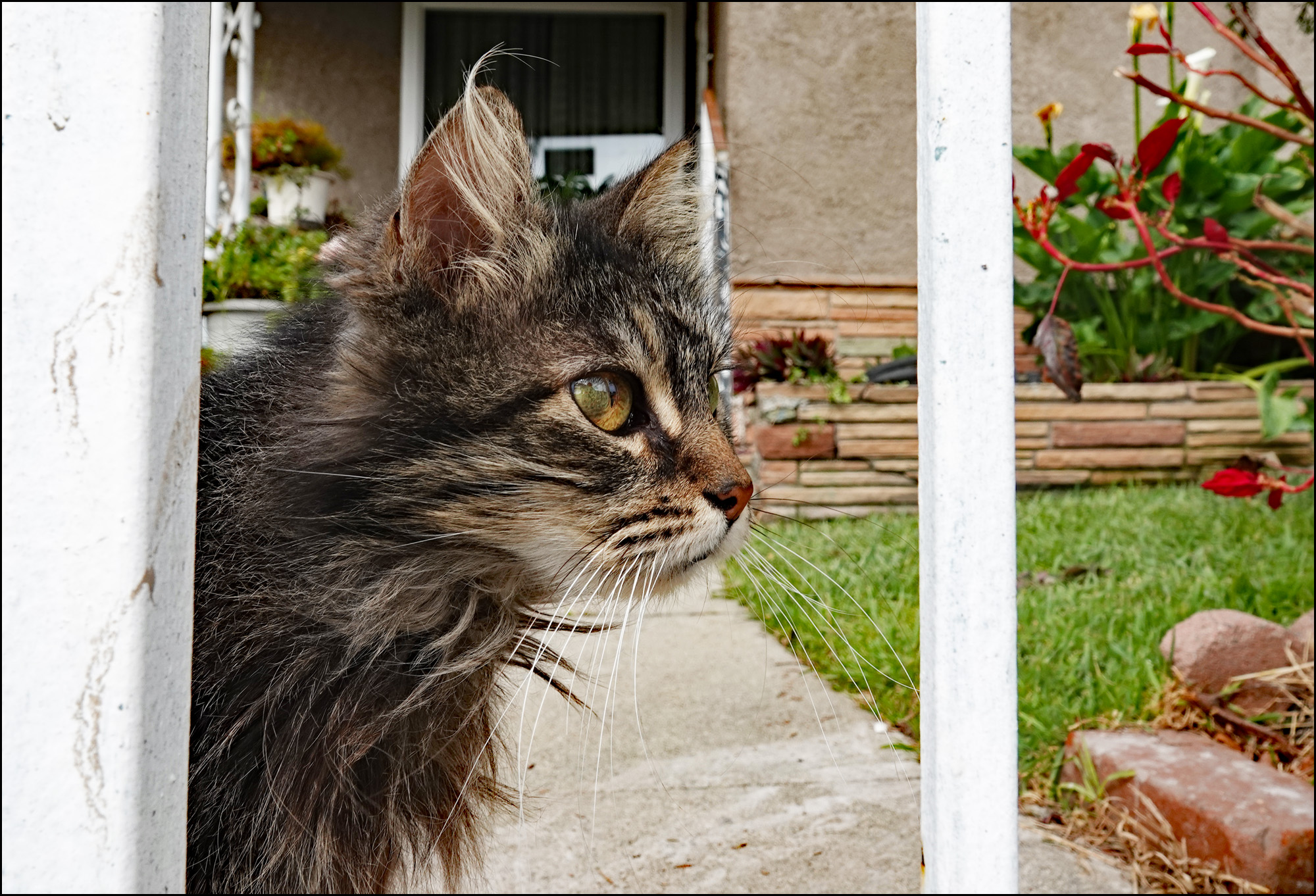
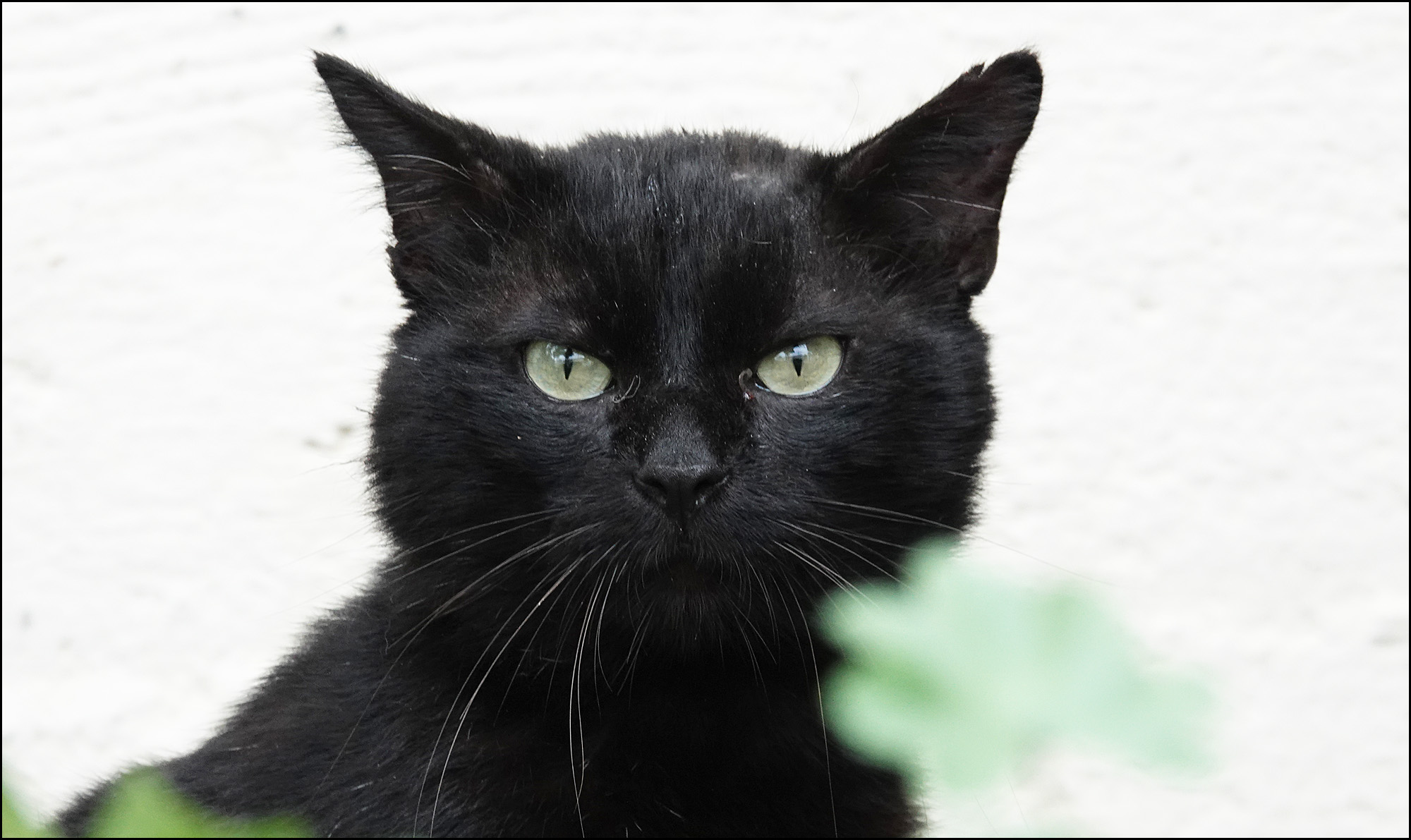
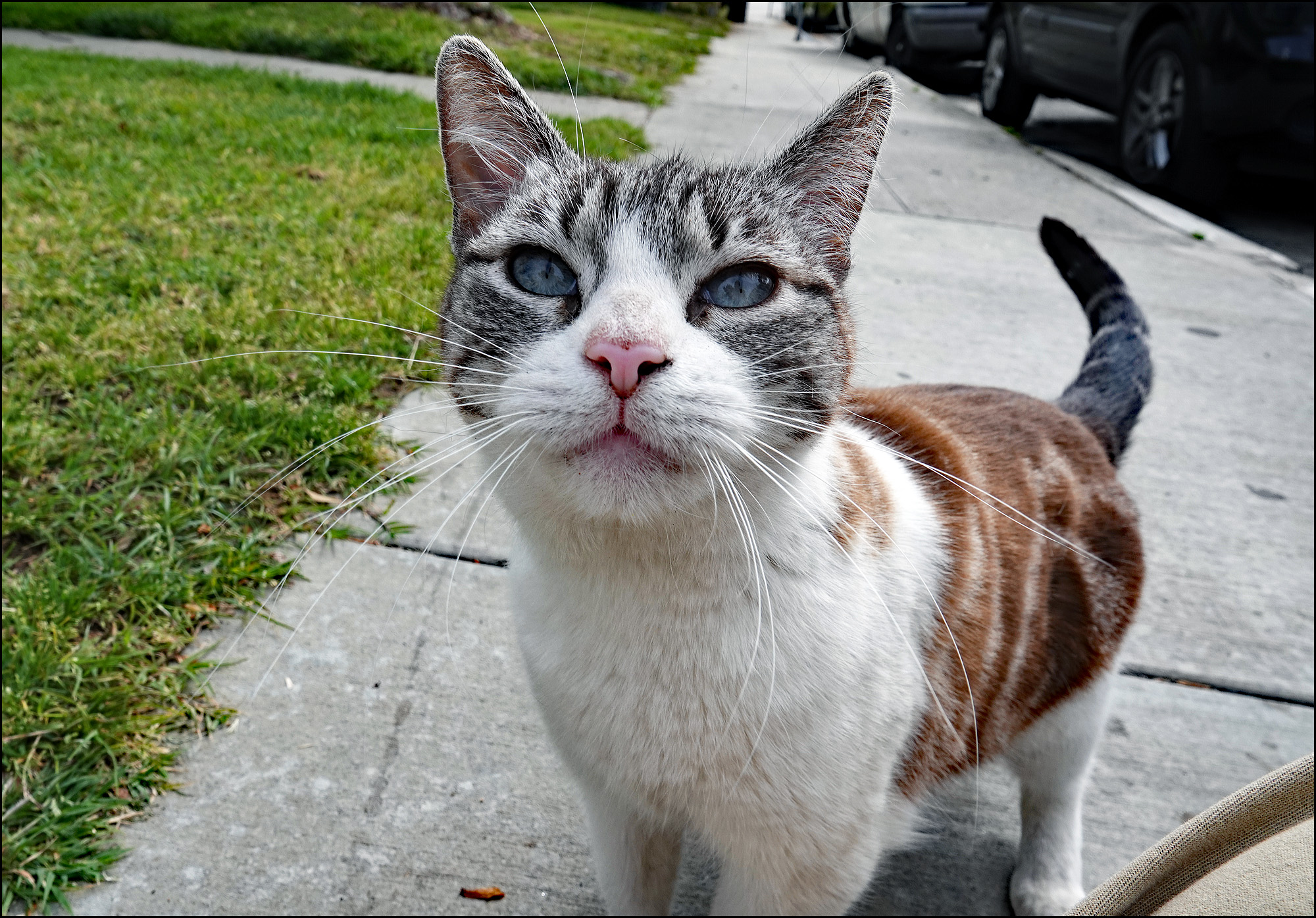
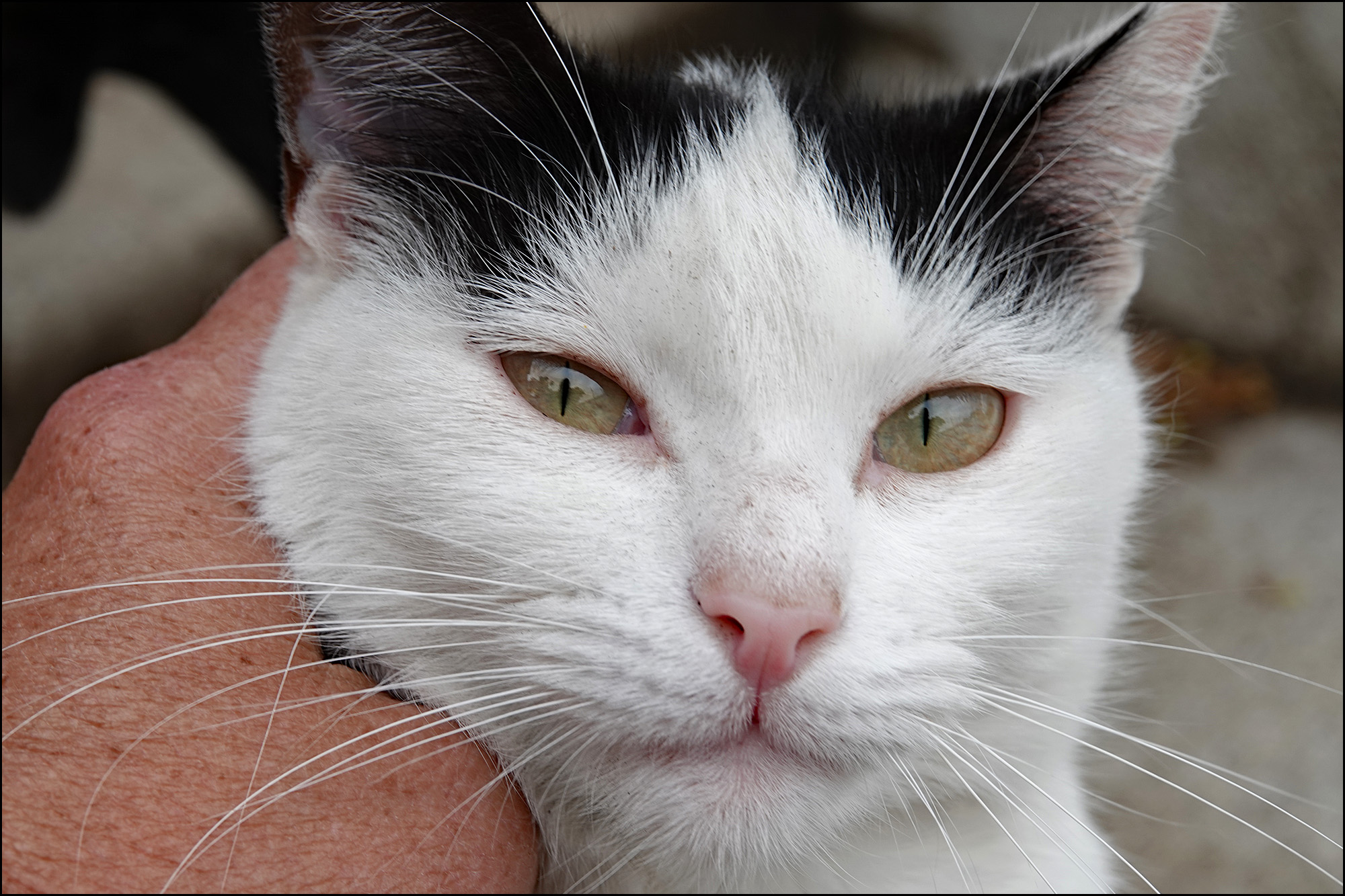
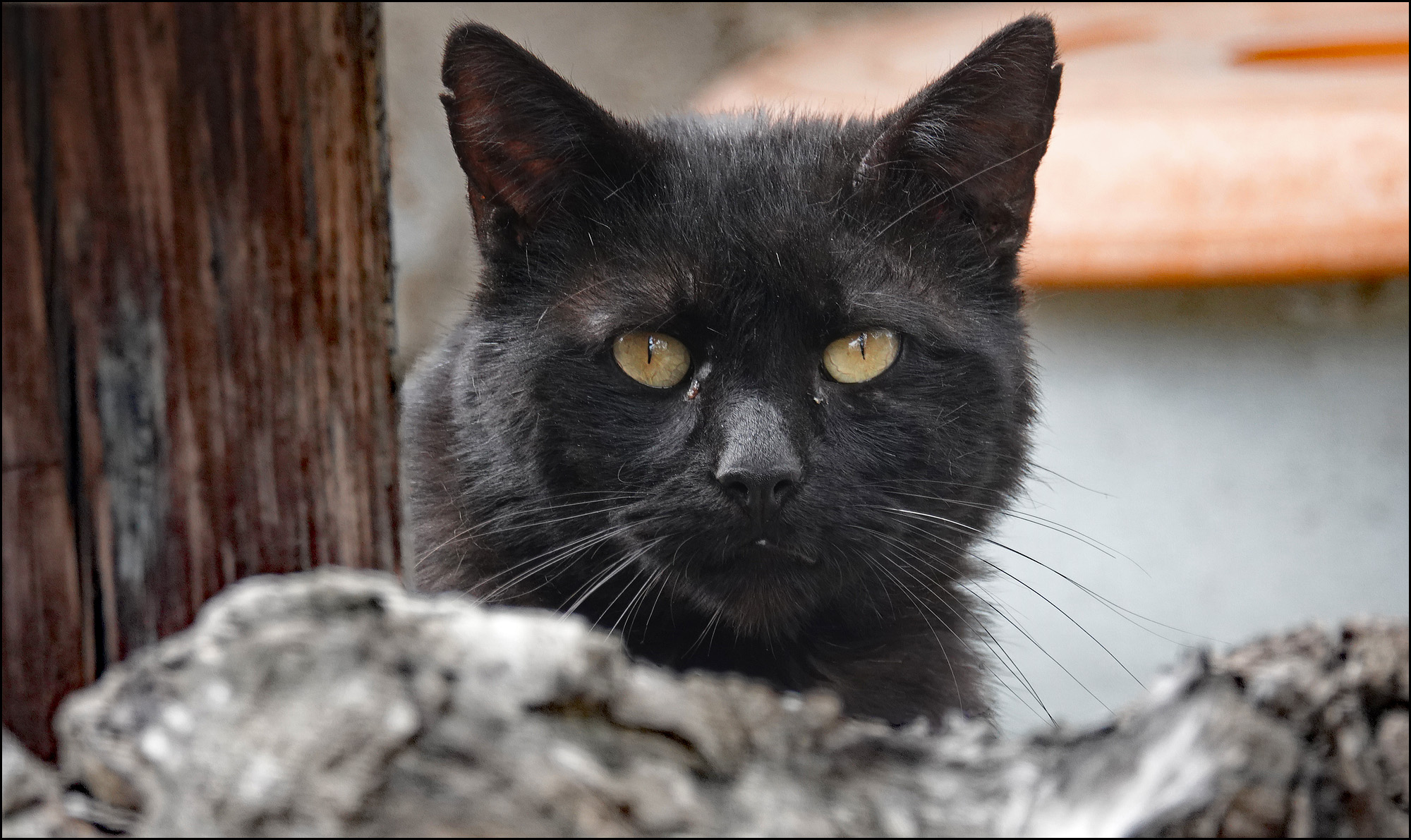
    As you know from Monday’s photo, I was in San Pedro last weekend—and the particular area of San Pedro I was in turned out to be teeming with cats. By coincidence, I also got an email from a reader who wanted more cats, please. So here you go: the cats of San Pedro. Three were sociable and three were not. Can you figure out which is which?

    April 7, 2018 — San Pedro, California