• Why Does OMB Want Authority Over Tax Law?

    Jeff Malet/Newscom via ZUMA

    Politico reports on an obscure bureaucratic struggle currently taking place behind the scenes:

    The White House is poised to give its budget office greater control over some of the Treasury Department’s regulations, handing budget director Mick Mulvaney a victory in a months-long power struggle with Treasury Secretary Steven Mnuchin, according to three sources familiar with the discussions.

    ….The highly sensitive debate has consumed the attention of top officials at both agencies. At stake is the final say over IRS regulations — and the implementation of the Republicans’ tax law….Downtown lobbyists have been keenly tracking the debate as they seek to influence the outcome of the new tax law. The move raises the possibility that key regulations surrounding the law — especially on the nuances of the international rules and the taxation of certain types of businesses — could be delayed if they must pass through both Treasury and OMB’s Office of Information and Regulatory Affairs.

    Nearly all federal agency regulations are reviewed by OMB, which typically does a cost-benefit analysis before recommending whether they should be approved. Conservatives like this because cost-benefit analyses are fairly easy to tweak, thus making it easier to kill off regulatory proposals. And since OMB is part of the White House, its decisions tend to be more overtly political than those of bureaucrats in the agencies. For conservatives, OMB review is a good way of keeping a close eye on all those radical lefties in the Deep State who are constantly trying to expand the scope of government meddling in the ability of God-fearing corporate executives to make money.

    IRS regulations, however, are different. They’ve never been part of the OMB review process because they aren’t supposed to be influenced by cost-benefit calculations. They’re supposed to represent the IRS’s best technical expertise regarding how tax law is meant to work. So what’s the point of having a second review by OMB?

    “The OMB is good at doing cost benefit, but they are not good at doing tax. They have no experience whatsoever in tax law,” said Mark Mazur, former assistant secretary for tax policy at Treasury and director of the nonpartisan Urban-Brookings Tax Policy Center. “In order to do a good job, they would have to hire 20 tax attorneys, which is what Treasury already does. You are duplicating the assets that you already have.”

    Obviously OMB Director Mick Mulvaney wants more authority over tax law interpretation. But why? As always, cui bono is our guide to answering this question.

  • Uber Tried to Cut Costs On Its Self-Driving Car Too Quickly

    Laura Dale/PA Wire via ZUMA

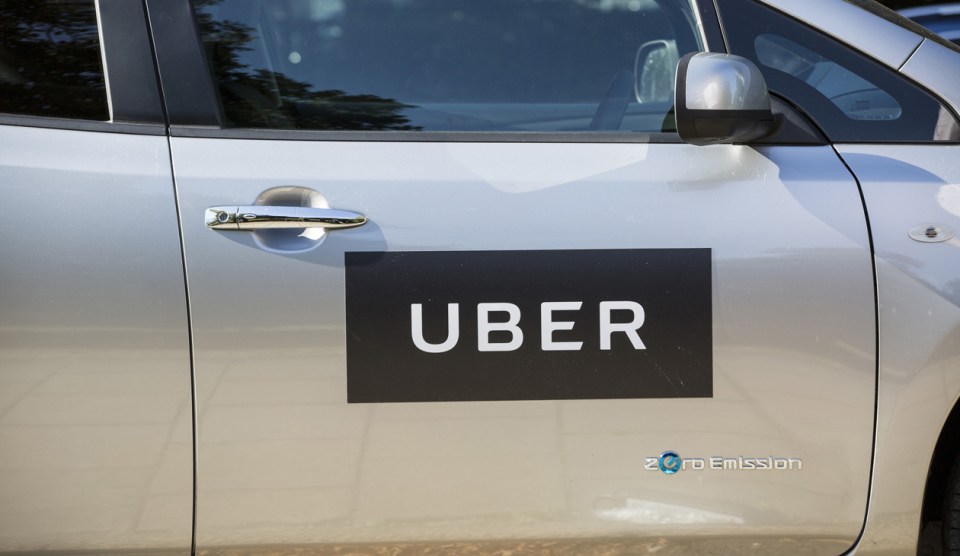
    A few days ago, in my mini-jeremiad against Uber, I said, “They’re exactly the kind of company that would cut corners: cheap optics, lousy safety drivers, pushing to drive at night before the software is ready, etc.” But I was just ranting. I had no idea just how right I was:

    In 2016, Uber decided to shift from using Ford Fusion cars to Volvo XC90s for its self-driving car program. When it did so, it make big changes to its sensor design: the number of LIDAR sensors were reduced from five to just one — mounted on the roof — and in their place, the number of radar sensors was increased from seven to 10. Uber also reduced the number of cameras on the car from 20 to seven.

    Removing LIDAR sensors from the front, back and sides and replacing them with a 360-degree sensor on the roof is more cost-effective but results in a blind spot low to the ground all around the car. In a remarkable statement, given that Uber’s car ran down and killed a pedestrian at night, the president of the company that builds Uber’s LIDAR sensors, Marta Hall of Velodyne, told Reuters: “If you’re going to avoid pedestrians, you’re going to need to have a side LIDAR to see those pedestrians and avoid them, especially at night.”
    The use of a single LIDAR sensor is all the more remarkable given that other companies running self-driving programs use significantly more: Google-owned Waymo has six on its cars; General Motors uses five.

    This is the kind of thing you do very late in a testing cycle, once everything is working and you’re focused on cost and efficiency improvements. It’s insane that you’d do it early in the testing program, which is where Uber was.

    That said, even with fewer cameras it’s still an open question how the video, lidar, and radar sensors all managed to miss seeing a pedestrian in front of the car. I’ll bet Uber already has a pretty good idea of what happened, but so far they aren’t telling.

  • In Defense of Smartphones

    Imago/ZUMA

    Sherry Turkle is an MIT professor who thinks social media is decimating face-to-face contact. Claude Fischer is a Berkeley professor who thinks social media has done nothing of the sort. Here he is in a 2012 Boston Review article:

    The first systematic studies of the Internet’s social side suggested that early adopters were hiding away from people. But as Internet use became widespread, the findings changed. Robert Kraut, a leading researcher who had raised early warnings explicitly recanted; the resulting Times headline was, “Cyberspace Isn’t So Lonely After All.” People using the Internet, most studies show, increase the volume of their meaningful social contacts. E-communications do not generally replace in-person contact. True, serious introverts go online to avoid seeing people, but extroverts go online to see people more often. People use new media largely to enhance their existing relationships—say, by sending pictures to grandma—although a forthcoming study shows that many more Americans are meeting life partners online. Internet dating is especially fruitful for Americans who may face problems finding mates, such as gays and older women. Finally, people tell researchers that electronic media have enriched their personal relationships.

    And again in 2015, responding to an essay by Turkle in the New York Times which suggested that conversation is dying as people escape into their smartphones:

    There may well be something to this assertion. But we want some systematic, reliable evidence that Americans converse less in person than before, attend to one another less, and suffer more as a consequence. It is hard to find such evidence. Much of the “data” in Turkle’s essay (and I presume the new book) is anecdotal: As in Alone Together, the documentation is mainly people here and there, especially unhappy people, with whom she talks. These reports may all be totally truthful and still the thesis be wrong. Fifty years ago, Turkle might have well have heard similar grousing about people eating together silently, or burying their noses in the newspaper, or, heaven knows, turning away to watch the always-on TV set. In addition, Turkle cherry picks studies….

    I don’t think there’s any doubt that social networks and ubiquitous smartphones are changing the way we relate with each other. It’s still early days, however, and we don’t know for sure how that’s going to play out. So far, though, I think Fischer has the better of the argument when it comes to in-person contact: we have as much of it as we’ve ever had, and people don’t report being isolated or lonely any more than they have in the past. Old people should probably stop stressing out about this so much.

  • Facebook Suddenly Realizes Its Privacy Controls are a Little Bit Confusing

    From the Switch:

    Facebook on Wednesday sought to make it simpler for people to control how their data is used….In the coming months, privacy controls that are now in 20 places on Facebook’s app will be merged into a single page, and will include what the company says will be easier-to-comprehend features that explain how the company is using a person’s data, the company announced. Facebook also will create a page that makes it easier for people to download their data so that they can more clearly view what information the company collects about them.

    Twenty places! Can anyone tell me with a straight face that this was all just a big blooper and Facebook is only now realizing that its privacy controls are a wee bit confusing? Seriously?

  • Maybe It’s Time to Wind Down the Kevin Williamson Affair?

    Eric Vance/Planet Pix via ZUMA

    This whole Kevin Williamson thing is weird. You may recall that liberals are spitting mad that the Atlantic hired him recently for a forthcoming section dedicated to ideas, opinion, and commentary on their website, but as near as I can tell this contretemps has had exactly zero penetration into the outside world. I’ve written about it, Slate has written about it, the Prospect has written about it, and so forth. But no one who isn’t an obsessive political junkie has heard anything about this.

    The other weird thing is that—again, as near as I can tell—the entire objection to his hiring continues to be based on precisely two things out of his ten-year writing career at National Review. The first is a tweet saying that abortion should be treated like any other homicide, and the second is a magazine piece he wrote in 2014 that started off with a racially clueless anecdote. I talked about both of them here.

    I’ve been waiting around for another shoe to drop, but there’s been nothing so far. So is this really all there is? Lots of conservatives believe that abortion is murder. Williamson was willing to take this publicly to its logical endpoint—that women who get abortions should be prosecuted for murder one—but that act of folly is the only difference between him and every other right-wing pundit. As for the racial anecdote, it was pretty offensive. But it was mostly offensive in a clueless way, not a deep-seated racist way. And he hasn’t repeated either of these things in the past few years, so they really are isolated incidents. Hell, even I’ve written more than two things over the past decade that have pissed off both my editors and assorted lefties.

    In any case, these are still the main charges on the bill of particulars against Williamson, but there’s only so long you can keep pounding away on just two things. So eventually, as these things do, the thrashing of Williamson morphed into a broader critique: namely that he’s just another white dude failing upward. If the Atlantic really wants diversity, why not hire a socialist woman? Or a Hispanic who supports Trump?

    This is kind of tedious. Fair or not, one of the steppingstones to getting a plum writing gig is to be a provocative, engaging, stylish writer. Williamson is. If the Atlantic just wanted a conservative from National Review, they could have hired Ramesh Ponnuru or Reihan Salam. They’re more reliably conservative than Williamson and they aren’t white. Problem solved. Hell, Salam is already a contributing editor there, so obviously they like his writing. But the Atlantic nonetheless pursued Williamson for several months thanks to his sometimes unpredictable opinions and energetic prose style. There’s a pretty limited supply of people like that.

    I wouldn’t care all that much about this except that it’s becoming a habit. Liberals went ape when the New York Times hired a Pulitzer-winning conservative columnist. It happened again when the Washington Post hired a libertarian. Also when the Times hired a queer, anarchist, female activist for its editorial page. And when MSNBC hired Hugh Hewitt for a weekend morning show. I suppose this all makes sense in a working-the-refs kind of way, but not in any other way. Are we really all going to keep getting outraged every time a conservative writer gets hired? That’s not a very good look, nor is it a very good use of our energy. I don’t think liberals are poorly represented in the pages of our biggest magazines and newspapers, after all.¹

    What’s more, it’s obviously not doing any good. Lefties are making a fuss over Williamson, which is probably making life tough for both Williamson himself and the editor of the Atlantic, but that’s about it. No one outside the political magazine ghetto cares. And it’s probably a good thing, too. If it ever did make it into the mainstream, I’m pretty sure I know whose side the public would end up on.

    ¹Or in the Atlantic’s new ideas section, which appears to be starting off with four liberals and one conservative.

  • Meet Your New VA Secretary

    Ron Sachs/CNP via ZUMA

    VA Secretary David Shulkin has been fired. That’s no surprise. He was an Obama holdover, so it’s a surprise Trump kept him in the first place.

    So who’s replacing him? A Heritage Foundation-approved ideologue who wants to privatize everything? Nope. The job is going to rear admiral Ronny Jackson, the president’s personal physician. He certainly looks the part, doesn’t he? And I guess he must have a terrific bedside manner. And lots of ribbons.

    For Trump, I suppose this is the next best thing to hiring someone from the Fox News Medical A-Team.

  • Here’s What Makes Local Politics Suck

    Jeff Gritchen/The Orange County Register via ZUMA

    Here in Orange County, we’ve been busily removing makeshift homeless camps from the concrete banks of the Santa Ana River. Under the prodding of a federal judge, the plan was to move the residents into temporary tent cities in Irvine, Huntington Beach, and Laguna Niguel. Unsurprisingly, that’s not going to happen. The good citizens of these cities made it vocally clear that they wanted nothing to do with homeless encampments, and the county Board of Supervisors has now backed down.

    Up north, in related news, state Sen. Scott Wiener has introduced Senate Bill 827, which would override local zoning rules to allow dense, medium-rise apartment buildings in all “transit rich” areas. Yesterday, the Los Angeles city council voted unanimously to oppose the bill.

    Why are these related? First, because the opposition in both cases is pretending to be high-minded. In the homeless case, Orange County protesters say the homeless deserve better than tents. The real reason for their opposition, of course, is that no one wants a homeless shelter in their backyard. In the SB 827 case, says one councilman, the problem is that “Los Angeles has a long and painful history of displacement in the name of progress, and of well-intended bills that uproot communities and destroy neighborhoods.” The real reason is that no one wants lots of poor people and lots of traffic in their backyard.

    The second similarity is that in both cases someone is trying to force a solution on local residents. This happens all the time, and it’s just never going to work. You might win a few victories here and there, but never anything more. Local residents have objections both good and bad to these things, and they will fight forever to stop them. In a democracy, there’s simply a limit to how much you can force people to accept things they don’t want.

    I’m not really sure what the answer is. In the case of Orange County’s homeless, it’s probably to quietly face reality and make sure that homeless shelters aren’t put in affluent residential communities. That’s hard to swallow, but you’ll be in court forever otherwise. Conversely, if you put them somewhere less threatening to middle-class homeowners, those homeowners will actively support you. This is both appalling and unfair, but is it worse than never finding an answer for the homeless that can actually move forward?

    In the case of housing, the biggest complaint is usually traffic, and all the liberal happy talk in the world isn’t going to convince people that these apartment buildings won’t really have a big impact on their commute. If you want their support, you have to genuinely do something about the traffic problem. You also have to convince them that the new buildings will be neither so affordable that they attract lots of poor people nor so high-end that they push out all the current residents. This is, again, sort of appalling and unfair, but it’s also reality. There’s a limit to what you’ll ever be able to accomplish in the face of entrenched local opposition. To make real progress, you have to offer locals actual solutions to their problems.

    This is why local politics sucks. Do you give in to selfishness and ill-will in order to accomplish some good things? Or do you stay pure and bang your head repeatedly against a wall, never accomplishing much of anything? It’s not an easy decision, is it?

  • Small Cash Grants Might Not Work as Well as We Think

    Wayne Hutchinson/DPA via ZUMA

    You have perhaps heard about the idea of giving small cash grants to the poor in Africa. The effects are miraculous: generally speaking, the money isn’t wasted. It’s used to start farms or buy equipment or otherwise improve the ability of villagers to earn money. But Berk Ozler, a development economist at the World Bank, points to a recent interview between Tyler Cowen and Chris Blattman:

    COWEN: What’s the last important thing you learned about cash transfers?

    BLATTMAN: We recently went back to some cash transfers that were given almost 10 years ago, following up a randomized control trial in Uganda in the north, and we’re just, in some sense, putting out those results. What we found is, the initial result after two and four years was like other places seeing big advances in incomes. People get cash. They’re poor. They couldn’t invest in some of their ideas, but they had good ideas, and so they take off.

    Now what we’ve seen is, essentially, they’ve converged with the people who didn’t get the cash. The people who didn’t get the cash have caught up because they saved and accumulated slowly and got up to the point where they have the same levels of success. They converged to a good level. But this means that cash transfers are much more of a temporary acceleration than they are some sort of permanent solution to poverty.

    Ozler comments:

    I am not surprised at the finding….What did surprise me is that I had to read the transcript of the interview to find out about this new finding….Remember that women almost doubled their income compared to the control group five years earlier. It’s not news that these effects are gone?

    We are all guilty. If the quote had been about the durability of the effects of cash transfers — even at half of the short- and medium-term levels — many of my tweeps would be shouting it from the rooftops….Many of you will politely retweet one of my posts about this or that hype about cash transfers, but deep down you know what you think: unconditional cash transfers are great and there is not a thing any researcher can do about it…

    There’s more at the link. It’s also important to keep in mind that being “merely” a temporary acceleration is not such a bad thing. If we can reduce poverty quickly, rather than making people wait ten years, that may well be worth doing. On the other hand, it’s also possible that the effect of unconditional cash grants will change substantially for the worse if they become a routine thing, rather than an unexpected bonus that happens to only a few people.

    Bottom line: keep an open mind. Unconditional cash grants may or may not have long-term positive impacts, regardless of what we personally think of them. The evidence isn’t all in yet, and it’s starting to look decidedly sketchy.