• Oops. Trump Meant $100 Billion.

    Apparently someone finally got around to telling Donald Trump that $1 billion is chump change compared to the size of our trade deficit with China:

    The Trump administration is asking Beijing for a plan to cut the annual U.S. trade deficit with China by $100 billion, according to people familiar with the matter….According to the people, Trump administration officials made the request to Liu He, the main architect of China’s economic policy, last week when he was in Washington.

    I dunno. Maybe Trump can talk China into buying a billion tons of American coal each year. Alternatively, he could talk to an economist, who would tell him that the most effective answer is to weaken the dollar. That’s easier said than done, though, and doesn’t have the same appeal as being able to crow about beating China at its own game. In the end, I assume this whole affair will amount to nothing, although Trump might be able to persuade China to make a few face-saving concessions in return for real-life concessions from the US. That’s how Trump’s dealmaking usually seems to go.

  • The Tesla 3 Blue Screens Every Few Days

    Tesla

    Edmunds got hold of a Tesla Model 3 and has driven it for a few thousand miles. They are not thrilled with the build quality:

    Body panel gaps are inconsistent, reflecting a lack of attention to detail….After we brought ours home, we discovered it also had a cracked vanity mirror and a broken driver’s seat shell. In our first six weeks, we’ve had to do the equivalent of a Windows PC’s Ctrl-Alt-Del reboot of the all-important touchscreen about a dozen times.

    We’ve called a Tesla service center about the problems, but have had difficulty getting an appointment. Drive-ups were not welcome, so our parts were ordered based on photographs alone. Weeks later, we’re still waiting for word and it’s hard to get answers.

    The touchscreen controls almost literally everything aside from steering and the foot pedals. If it decides to go belly-up, you have no windshield wipers, no radio, no headlights, no nothing. If it dies every 250 miles, that’s a problem. Elon Musk better get this fixed pronto.

  • The Votes Are In. The Best Time to Sell Your House Is …

    You were all pretty excited about my post yesterday suggesting that home sales weren’t really all that seasonal. Admit it. You were enthralled.

    Unfortunately, I only had data for new home sales, not the much larger number of existing homes sold each month. Well, today I have it. Here it is:

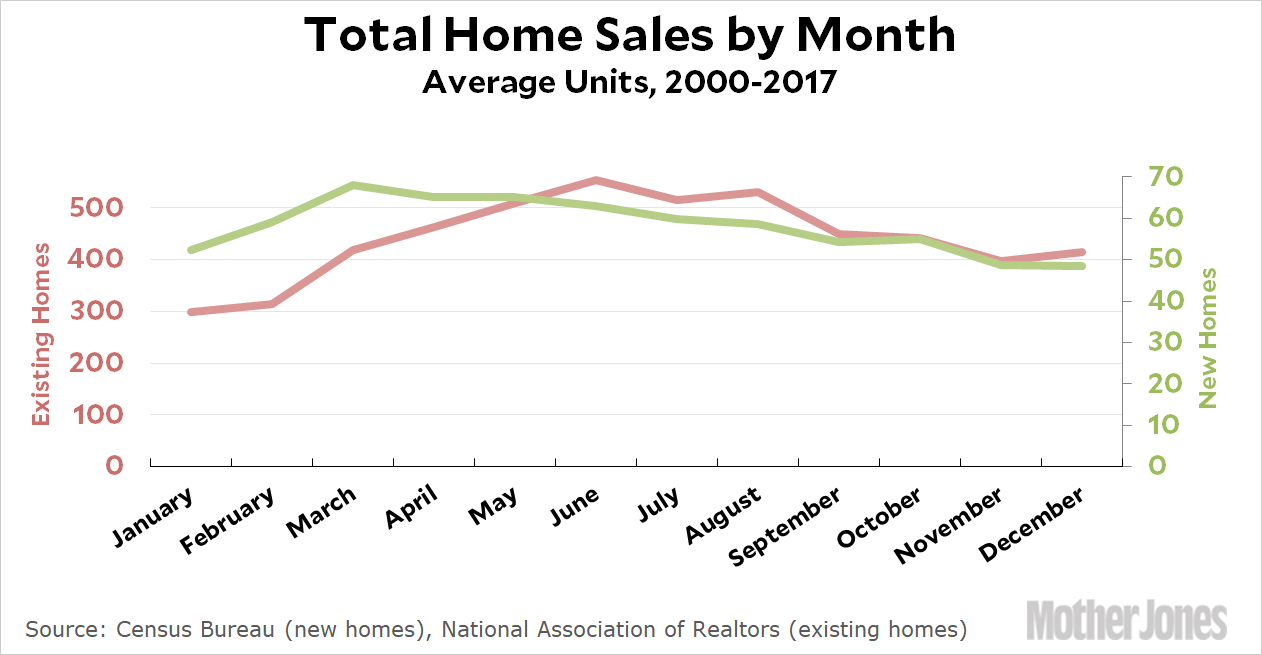
    It appears that there’s a bit more seasonality in sales of existing homes than in sales of new homes. I’d guess that this is a supply-side thing: builders want to sell new homes whenever they’re finished, while homeowners wait until spring to sell their homes. Is this because most of us don’t want to sell in winter? Or because realtors tell us that markets are terrible in winter, thus creating a self-fulfilling prophecy? I don’t know. But perhaps realtors don’t like trudging around in the snow any more than the rest of us.

    In any case, if you add up both new and existing homes, here’s what you get:

    • Spring:  26.5 percent of all home sales
    • Summer: 29.6 percent
    • Autumn: 24.1 percent
    • Winter: 19.8 percent

    In other words, winter sucks, but spring, summer and autumn are all about the same.

  • OMB Report: Net Benefit of Regulations Is Huge

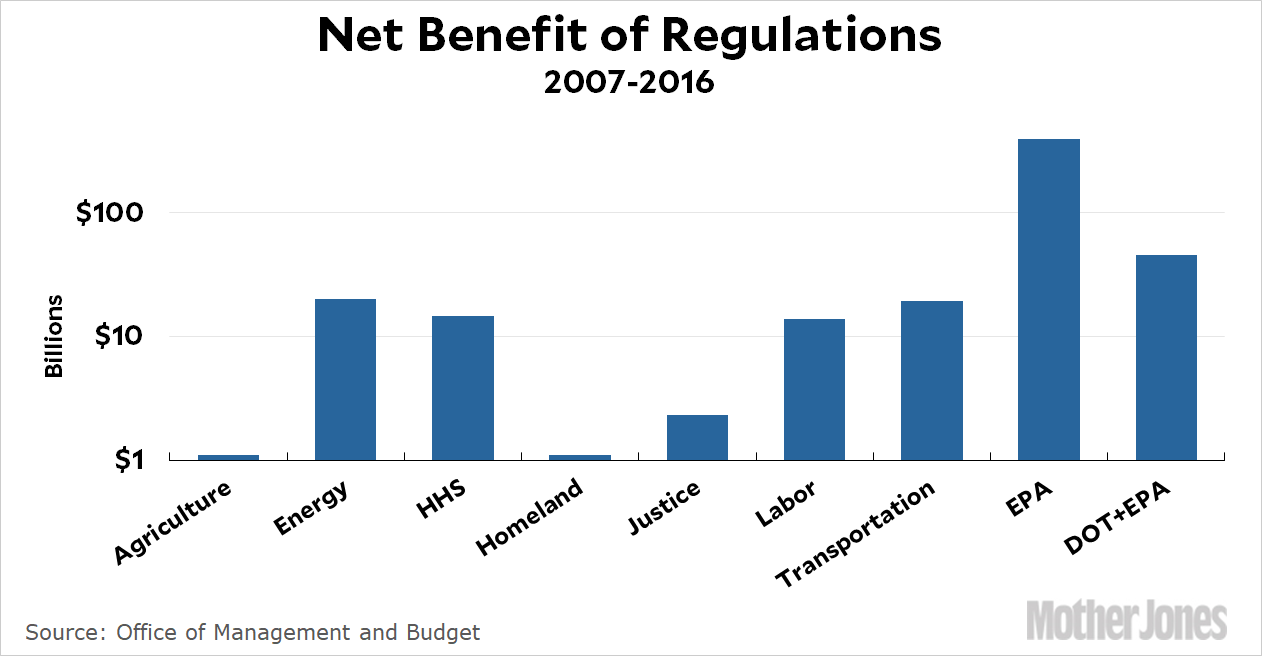
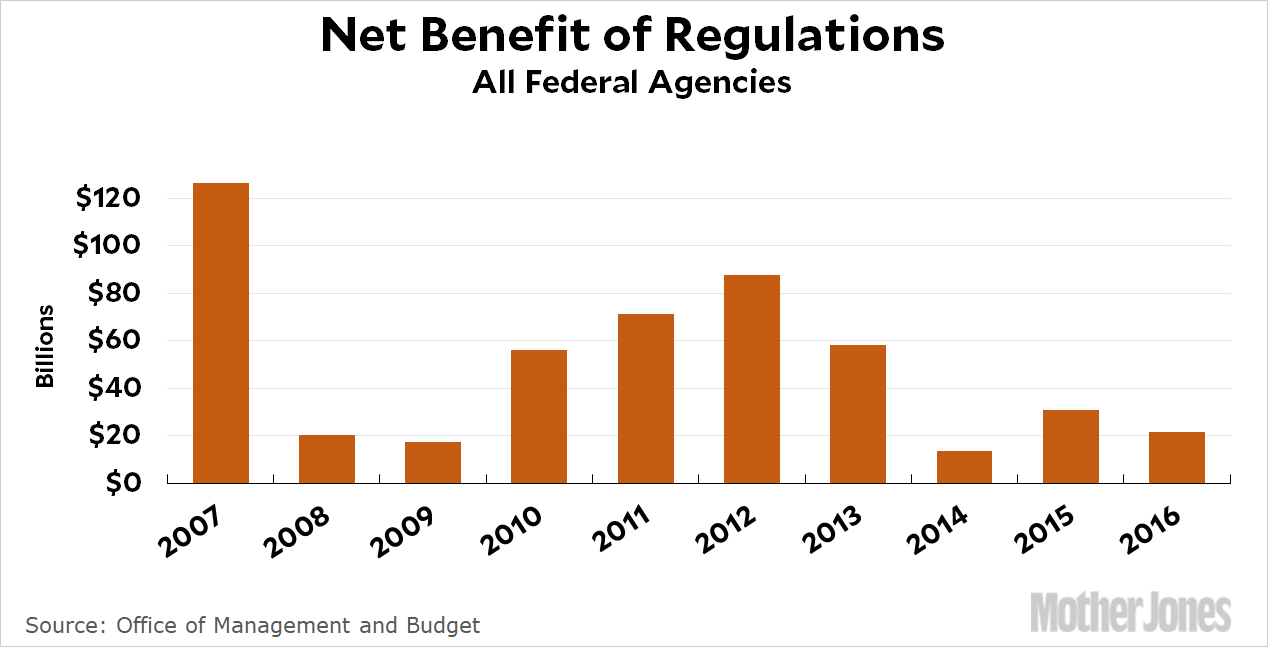
    Republicans hate regulations. Donald Trump hates regulations. OMB chief Mick Mulvaney hates regulations. So it must have killed him to publish the most recent report to Congress on the costs and benefits of major regulations. Unfortunately, there’s a regulation that requires it, so the report was submitted once again. Here are the estimated net benefits (benefits minus costs) of major regulations over the past decade:¹

    The thing to note here is that the net benefits are all positive: that is, the benefits far outweigh the costs. This is because federal agencies don’t generally adopt regulations that have a net cost. The people being regulated may hate all these regulations, but they aren’t the target for this stuff. You and I are.

    Of course, the people being regulated now have the ear of the White House. A year from now, I wonder if Mick Mulvaney will have figured out some way to issue this report without making regulations look so damn beneficial?

    ¹Costs and benefits are always given as a range of values. I used averages for these charts.

  • Quote of the Day: Lies and the Lying Liars

    Henning Kaiser/DPA via ZUMA

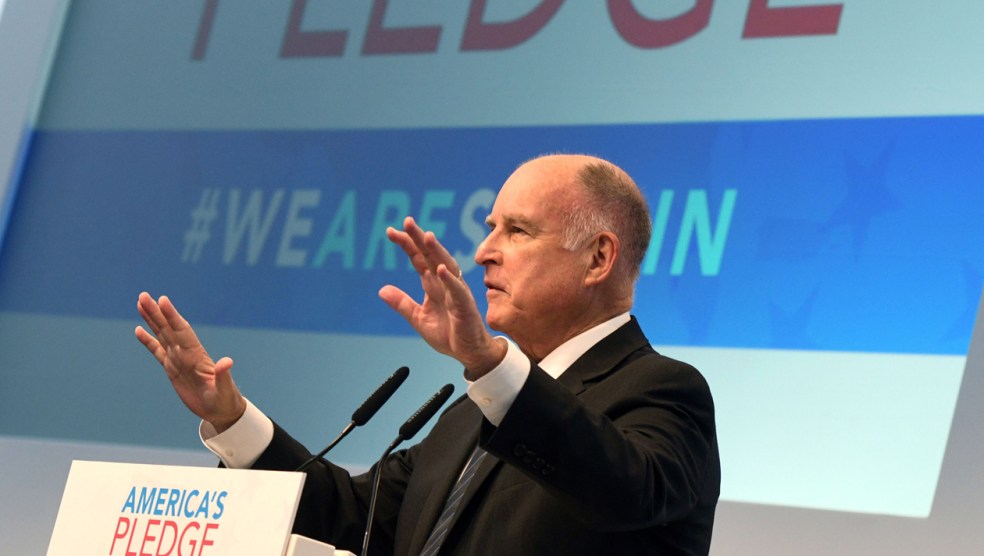
    From California governor Jerry Brown, commenting on the claim that California prevents sheriffs from cooperating with immigration authorities:

    Look, we know the Trump administration is full of liars.

    That’s pretty much all the answer anyone needs these days to anything the Trump administration says.

    But as long as we’re on the subject of Jerry Brown: Has any politician ever changed as much as he has over the course of a career without changing their basic values? The 79-year-old Jerry Brown sure isn’t anything like the 36-year-old Jerry Brown who slept on a mattress and dated Linda Ronstadt during his first tour as California governor. Over the last eight years, he’s done an outstanding job of maintaining liberal values but leavening them with a pragmatism that California sorely needs. I suspect we’re going to miss that pragmatism when he retires.

  • Home Sales Aren’t Really All That Seasonal

    The Wall Street Journal reports that this could be one of the weakest spring homebuying seasons in a while. But this paragraph caught my eye:

    The next few months are a critical test of the housing market, as buyers look to get into contract on a home before summer vacations and the new school year. About 40% of the year’s sales take place from March through June, according to the National Association of Realtors.

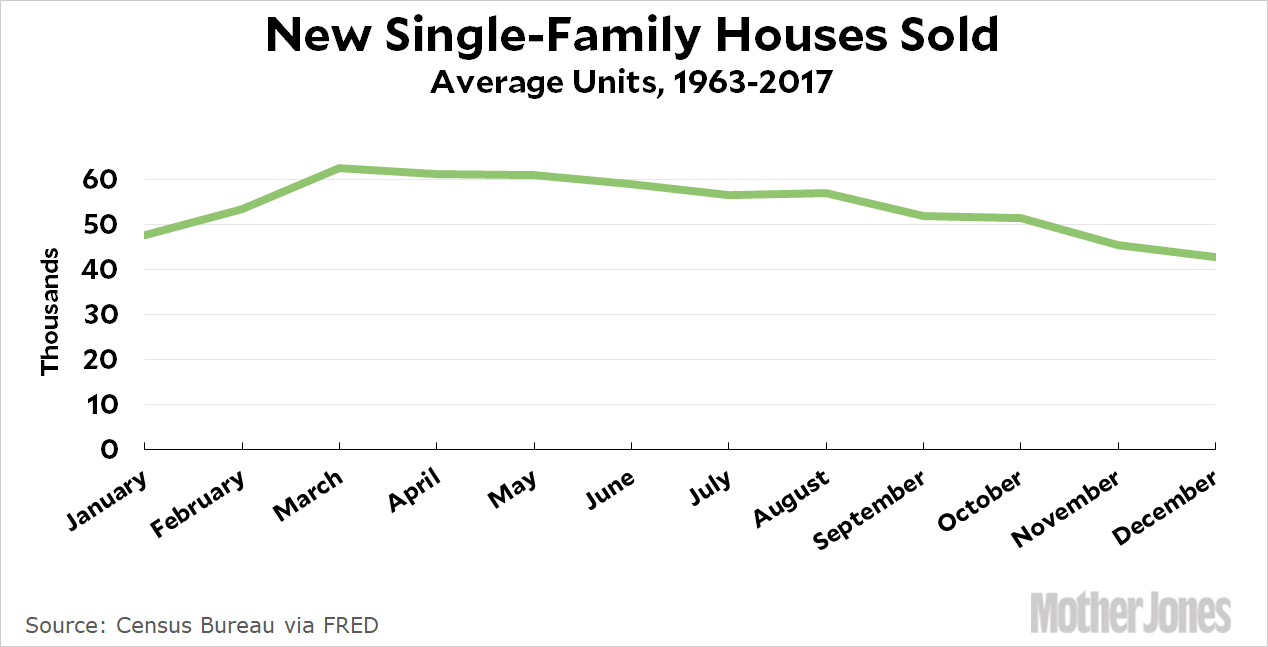
    Wait. They’re saying that 40 percent of sales take place in 33 percent of the months. That doesn’t make spring sound all that critical. But it got me curious, so here’s a chart of average new home sales since 1963:

    March-June is indeed the busiest period of the year. But not by much, really. The holiday season is obviously a laggard, but the entire rest of the year hovers between 50-60 thousand new homes per month. Since 1963, the March-June period has accounted for 37.5 percent of the year’s sales and July-October has accounted for 33.4 percent.

    Now, this is sales of new homes only. Perhaps sales of existing homes are more seasonal? I’m not sure why they would be, but it’s possible. Unfortunately, that data is available only from the National Association of Realtors, which distributes only seasonally adjusted figures. That’s not of much use when you’re looking for seasonal trends.

  • Lunchtime Photo

    This is a backlit tree at UC Irvine. But what kind of tree is it? I got a few suggestions from the local brain trust, but none of them panned out. So now I turn to you, the denizens of lunchtime photo. What is this, anyway?

    UPDATE: Everyone’s first guess was a gingko tree, but I had already ruled that out. However, Jorge Velasquez IDed it as a Chinese tallow tree, Triadica sebifera. I believe that’s our winner.

  • Mystery Map of the Day

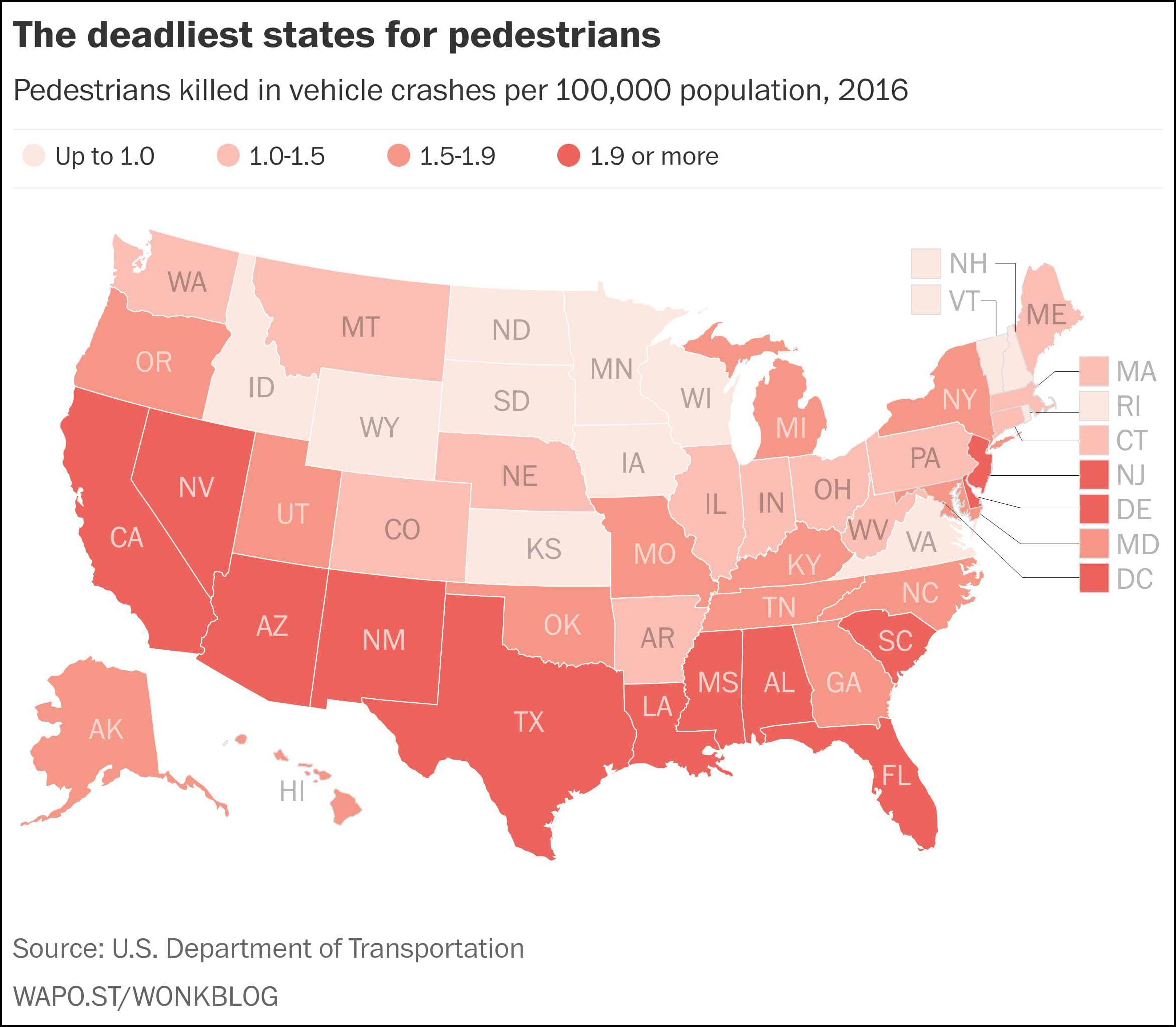
    The Washington Post reports today that after declining for decades, pedestrian deaths started rising in 2010. Fatalities are now 46 percent higher than they were eight years ago and nobody really seems to know why. But here’s the real mystery:

    With just a few exceptions, the deadliest states for pedestrians are all in a well-defined southern band stretching from California to Florida. What’s up with that? What does California have in common with Alabama? Or New Mexico with Florida? Or Nevada with Texas? What’s going on here?

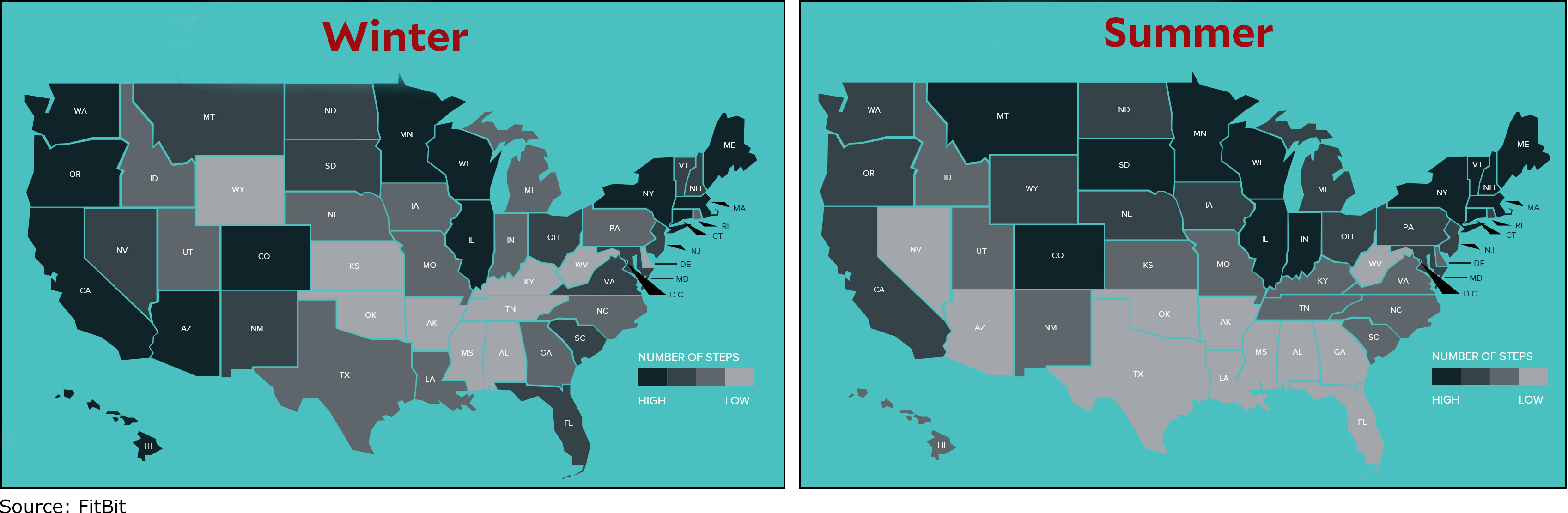
    UPDATE: The consensus seems to be that sunbelt states have a lot of pedestrian deaths because they’ve got great weather and people walk more. That seems reasonable. However, this map from FitBit suggests that the exact opposite is true:

    Now, maybe all those northerners are walking in the gym or something. Who knows? But it sure looks like Southerners (a) don’t walk much and (b) get killed a lot when they do. The mystery grows!

  • FDA Chief Takes on Health Care Monopolies

    Ron Sachs/CNP via ZUMA

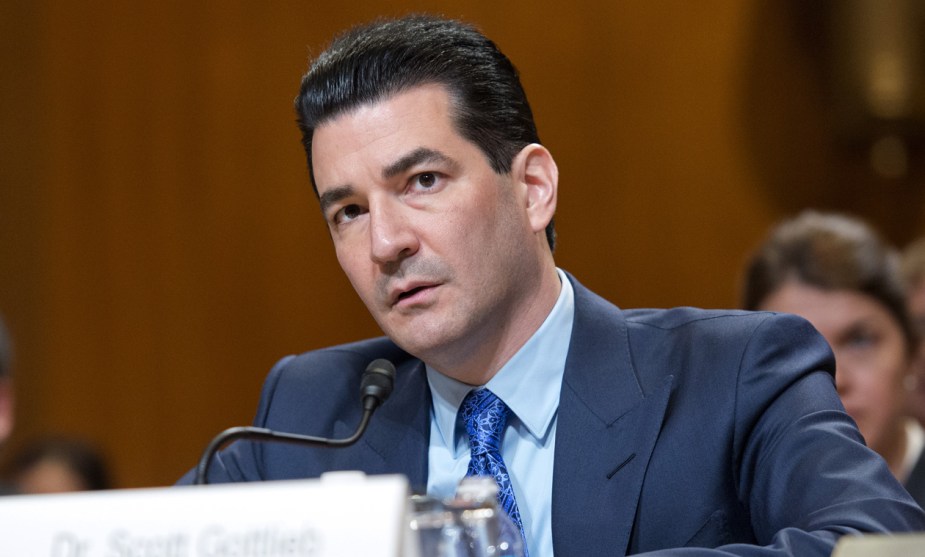
    Scott Gottlieb, commissioner of the FDA, spoke today to a meeting of the insurance industry’s main lobbying group. He basically accused them of conspiring to keep prices high on expensive biosimilar drugs:

    Too often, we see situations where consolidated firms — the PBMs,¹ the distributors, and the drug stores — team up with payors [i.e., insurance companies]. They use their individual market power to effectively split some of the monopoly rents with large manufacturers and other intermediaries rather than passing on the saving garnered from competition to patients and employers….And so, we continue to see a backlash against these Kabuki drug-pricing constructs — constructs that obscure profit taking across the supply chain that drives up costs; that expose consumers to high out of pocket spending; and that actively discourage competition.

    Patients shouldn’t be penalized by their biology if they need a drug that isn’t on formulary….After all, what’s the point of a big co-pay on a costly cancer drug? Is a patient really in a position to make an economically-based decision? Is the co-pay going to discourage overutilization? Is someone in this situation voluntary seeking chemo? Of course not. Yet the big co-pay or rebate on the costly drug can help offset insurers’ payments to the pharmacy, and reduce average insurance premiums. But sick people aren’t supposed to be subsidizing the healthy. That’s exactly the opposite of what most people thought they were buying when the bought into the notion of having insurance.

    ….Patient access to these innovations will depend on reforms that require every incumbent in the drug supply chain to take greater restraint for putting patients at the heart of their decision-making process….We’re not there today. Instead, we have a lot of finger pointing that ignores shared complicity for pricing practices that are eroding trust in both payors and innovators. I hope that you’ll act before that trust is eroded completely.

    Good for Gottlieb. Pharmacy benefit managers were originally a good idea intended to truly manage the complicated business of negotiating drug prices. As usual, though, things got out of hand when everyone realized they could be used to enrich themselves instead. These days they accomplish little except to make the entire procurement process so opaque that no one can reasonably figure out what the real cost of a drug is. That’s good for just about everyone except patients.

    And since consolidation is one of my bugbears, it’s worth noting Gottlieb’s raw data: “The top three PBMs control more than two-thirds of the market; the top three wholesalers more than 80%; and the top five pharmacies more than 50%.” In the past, the mere fact of market power this strong would have been enough to spur antitrust action. But after the Bork revolution, size didn’t matter. What mattered was whether big companies could argue that bigness was good for consumers. Needless to say, big companies are very, very good at making this argument, and so antitrust actions have dwindled to a trickle. It’s long past time for a counter-revolution that returns us to the era in which consolidation beyond a certain size is ipso facto a reason for antitrust action.

    ¹PBM = pharmacy benefit managers. Insurance companies hire PBMs to negotiate formularies and drug prices. As Gottlieb notes, two-thirds of the PBM market is controlled by three giant players: ExpressScripts, CVS Caremark, and OptumRx. PBMs are widely believed to abuse their position by negotiating obscure rebates and endless fees that end up increasing costs for patients.

  • Trump Demands 0.26% Cut in China’s Trade Deficit

    What is this all about?

    Is this a Dr. Evil parody? Last year we ran a $375 billion dollar trade deficit with China. This year it will be—who knows? $400 billion? How would you even know if it had gone down by a quarter of a percent?

    Donald Trump frequently makes no sense, but this makes even less than no sense. What the hell is he talking about? Was this seriously a formal request to the Chinese government? They must be laughing their asses off.