Elizabeth Warren really didn't like Pete Buttigieg's recent fundraiser held in a wine cave.PBS
The biggest fight of the night—by far—has been about whether Democratic candidates should accept donations from rich people. Billionaires in particular, and “billionaires in wine caves,” to be super specific about it. (This was Elizabeth Warren’s jab at Pete Buttigieg for his recent big-dollar fundraiser held in an underground wine cellar.)
This is . . . dispiriting. I get that Democratic candidates are mostly going to agree with each other about most things, so you’re not going to see a ton of sniping. But can it really be true that the single most contentious fight among Dems is a debate about fundraising tactics?
Mayor Pete didn't say much about climate R&D, but at least he mentioned it.PBS
Everyone is now talking about climate change. Everyone is in favor of emergency action. Everyone (?) is in favor of a carbon tax.
I guess this is good to hear, but it sounds an awful lot like what I’ve been hearing forever. We have to tell people that this is a big emergency! Yes we do, but so far that hasn’t really made much of a dent. We need to hold Congress accountable! Sure, but public opinion is the core thing here. Congress won’t do anything unless voters demand it, and there’s not much evidence that the public is excited about anything that would call for them to make even a small sacrifice. It’s an existential crisis! But . . . maybe not so existential that we should support expansion of nuclear power.
Naturally, I was listening for someone to mention R&D. No such luck. Aside from Andrew Yang, I think Pete Buttigieg tossed in a brief mention within a laundry list, and that was it. Sigh.
At the debate tonight, Bernie Sanders just spent his full minute saying that he opposed the original NAFTA, but the new USMCA is a bit of an improvement. Then, after this big buildup, he suddenly finished up with, “I will not vote for this agreement even though it makes some modest improvements.”
What? Why wouldn’t you vote for something that’s a modest improvement?
The National Institute of Standards and Technology released a report today about the accuracy of facial recognition software. The news was grim: most algorithms make a lot more errors when the subject is anything other than a white male, which means that women and people of color are more likely to be misidentified. But this got me curious: this might be the average result, but how do different algorithms stack up? Which one is the best at identifying all kinds of people equally well?
The full report is here. Figure 13 turns out to have what I was looking for:
The test was calibrated so that its error rate on white men was 1:10,000 for each algorithm (those are the purple dots on the right). Every other test is run with the same calibration, so the red, green, and teal dots show how much worse the error rate is for anyone who’s not a white man.
What surprised me was that pretty much all the algorithms are equally bad. There are a handful that do OK with Asian and black men (tech5_003, lookman_004, cogent_004, incode_004), but that’s it. With one exception (the adera_001 algorithm at the very bottom) the best that any of them do with American Indian men is five times worse than for white men. Recognition of women is worse than men across the board.
If we want better results, it looks like we’re going to have to use a Chinese-developed algorithm. Here’s how they rate:
Surprisingly, the Chinese algorithms seem to be no better on average. Especially surprisingly, they appear to be only slightly better even for Asian faces. Is this because of algorithm failures or because they’re training on datasets similar to what everyone else uses? Since the algorithms are all proprietary, there’s no way of telling. But this report sure shows that the facial recognition industry is broken from the roots up.
Among millennials, fewer than half identify as Christians. More than 40 percent identify as nothing in particular. Western Europe largely went through this transition away from religion during the 20th century, and it looks like the US is finally going to follow their lead in the 21st.
Mark Meadows, a big Trump ally and until recently head of the conservative House Freedom Caucus, announced today that he wouldn’t be running for reelection. He’s not the only one:
I’m a little surprised by this. Does it represent a loss of conservative optimism about the 2020 election? Or are people just tired in general of a divided government in which it’s obvious that nothing can get done?
Novartis AG launched a lottery-style program to give away doses of its pricey gene therapy for free, drawing criticism from patient groups that say that is an inappropriate way to distribute a lifesaving treatment aimed at babies.
Zolgensma, a one-shot cure for a deadly inherited disease whose victims cannot control their muscles, is so far sold only in the U.S. at a price of $2.1 million, making it the world’s most expensive drug….Under the program, doctors can submit requests for the treatment, with eligible patients entered into a draw every two weeks for free doses. AveXis, the Novartis unit that makes the drug, said it aimed to distribute around 100 free doses a year as long as production capacity allows.
This is not just sort of like The Hunger Games, it’s pretty much exactly like The Hunger Games. A rich corporation draws names of babies out of a hat, and every two weeks a lucky baby from a poor country gets to live. Then the drudges all go back to work and dream about the next lottery. All that’s missing are the outlandish costumes.
Meanwhile, in the US there’s no lottery. Your baby lives if you or your insurance company is willing to shell out $2.1 million. That’s a lottery too, but not quite such an obvious one.
While we all wait for the inevitable conclusion to the House impeachment debate, Bob Somerby has me pondering yet another education mystery. A couple of weeks ago Emily Hanford wrote in the New York Times that Mississippi had substantially increased its fourth graders’ reading ability recently:
What’s up in Mississippi? There’s no way to know for sure what causes increases in test scores, but Mississippi has been doing something notable: making sure all of its teachers understand the science of reading.
….But a lot of teachers don’t know this science. In 2013, legislators in Mississippi provided funding to start training the state’s teachers in the science of reading….Mississippi’s fourth-grade reading scores are up by 10 points since 2013, when the state began the effort to train its teachers in the science of reading. Correlation isn’t causation, but Mississippi has made a huge investment in helping teachers learn the science behind reading.
It turns out that this “science” of reading is twofold: kids have to learn how to decode letter sounds into words and then they have to understand what the words mean. This doesn’t sound especially revolutionary to me, but what do I know? In any case, I naturally got curious about these test scores, so here they are:
It’s true that Mississippi’s reading scores went up a lot between 2013 and 2019. But I’d make a couple of comments about this:
Mississippi’s 4th grade reading scores have been going up steadily since 1992. They increased eight points between 2002 and 2009 and then ten points between 2013 and 2019.
The biggest part of the recent rise was between 2013 and 2015, but it’s unlikely that a program that had just gotten funded in 2013 and was barely off the ground had much to do with that.
As usual, then, I’m skeptical that Mississippi has discovered a magic bullet. They have done a good job of catching up to the rest of the country over the past 30 years, and that’s worth celebrating. But I’d wait a bit to see if their new reading program continues to sustain improved reading scores.
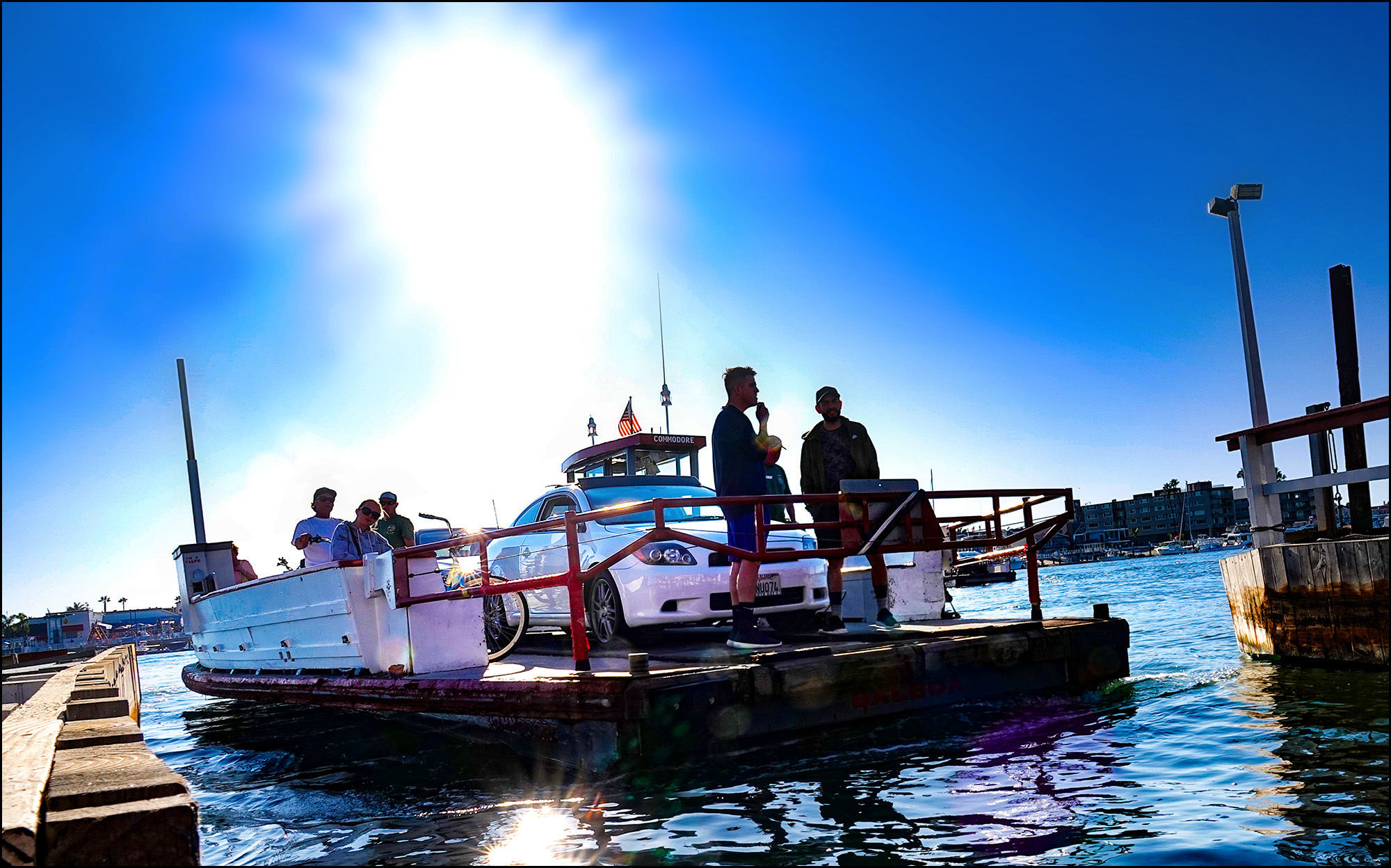
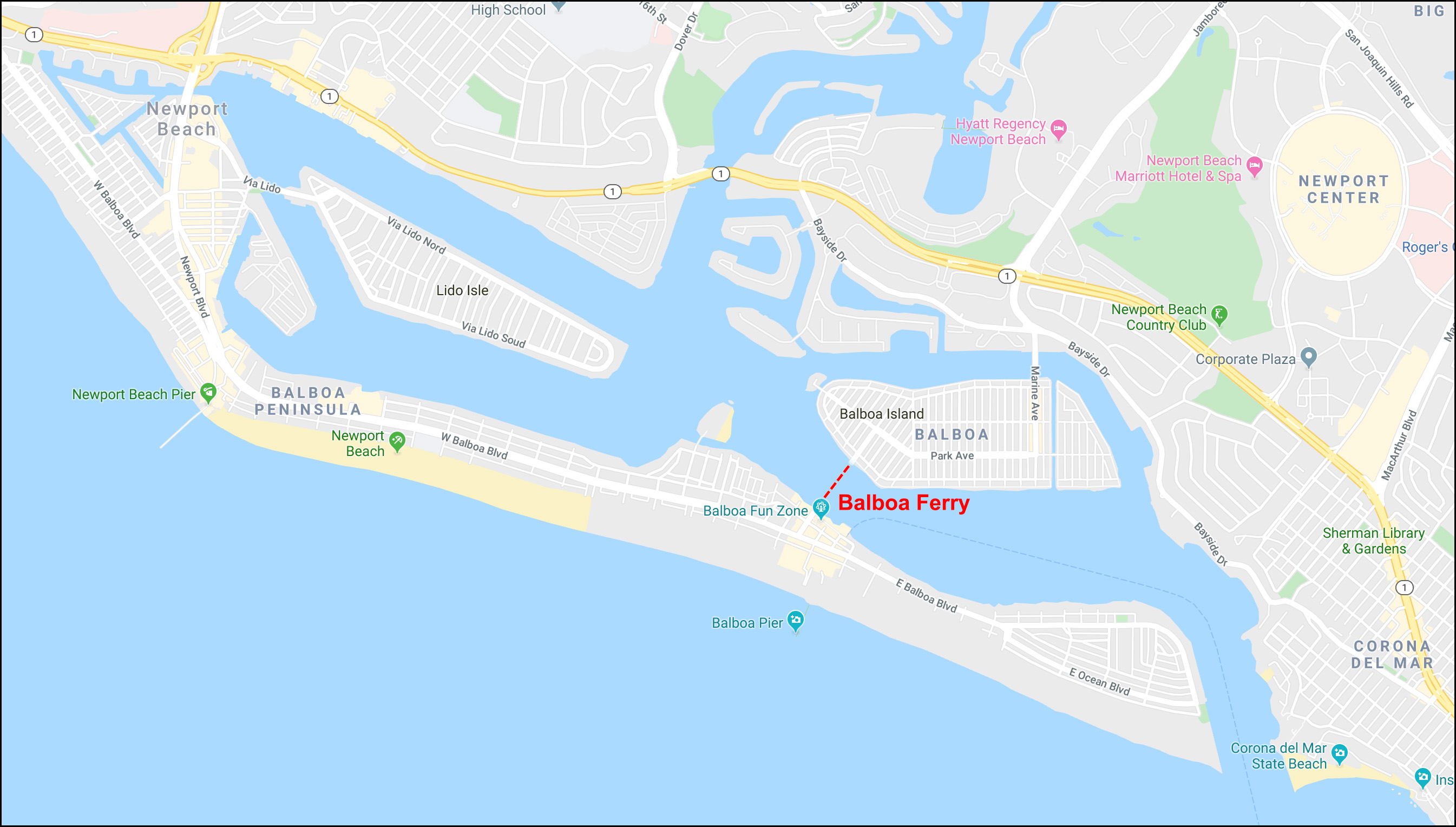
This year is the 100th anniversary of the Balboa Ferry, which has been plowing the waters of Newport Bay since 1919, saving people a trip out and around Newport Blvd. to Balboa Peninsula. Carfare is two bucks. People are a dollar each. Three ferries are in operation at all times on a five-minute schedule. This picture is of the Commodore, coming in to dock at Balboa Island. The other two are the Admiral and the Captain.
Can you pitch in a few bucks to help fund Mother Jones' investigative journalism? We're a nonprofit (so it's tax-deductible), and reader support makes up about two-thirds of our budget.
We noticed you have an ad blocker on. Can you pitch in a few bucks to help fund Mother Jones' investigative journalism?
Help us finish strong.
We’re not shy about asking you to help pay for the journalism you rely on—especially now. We have until December 31 to raise $400,000 to keep our nonprofit newsroom running at full strength into 2026. We’re off to a good start, but to make our goal we need contributions from readers who have never given before—and from steadfast donors who can give again. Every gift matters. Will you help us close the gap?
Help us finish strong.
We’re not shy about asking you to help pay for the journalism you rely on—especially now. We have until December 31 to raise $400,000 to keep our nonprofit newsroom running at full strength into 2026. We’re off to a good start, but to make our goal we need contributions from readers who have never given before—and from steadfast donors who can give again. Every gift matters. Will you help us close the gap?