• My 12 Rules For Life

    For some reason, Jordan Peterson is having a moment with his new book, 12 Rules for Life. This has inspired other people to create their own list of rules, and I thought I’d join in. Here’s my list:

    1. Don’t be an asshole.

    That’s it. After 59 years on this planet, I’ve decided that it mostly boils down to this. It’s better than the Golden Rule; it’s easier to keep in mind than an actual list; and it’s relatively undemanding. And yet, it works.

    Perhaps you don’t like my rule because we all have different definitions of asshole. I don’t think so, really. We all know what an asshole is, even if we can’t define it precisely, and the few of us who don’t are psychopaths who probably ought to be in institutions. And in tricky cases, there’s an easy guideline to follow: assume the best of other people and the worst of yourself. If you’re unsure of whether someone else is being an asshole, they probably aren’t. If you’re unsure of whether you’re being an asshole, you probably are.

    Also, take note of what this rule doesn’t require. It doesn’t require you to have any particular politics. It doesn’t require you to be especially nice or kind. It doesn’t require you to be generous. It doesn’t require you to be sociable. And it doesn’t prohibit you from being mean. Sometimes being mean is justified. The asshole rule prohibits you from being mean just for the hell of it, but that’s all.

    In other words, we can all have our different personalities and our different value systems. We can fight for those values, and we can do it passionately. You just can’t be an asshole about it. You don’t get to smear people with lies just because they disagree with you. You can’t mock people just because they’re weak or stupid or unlike you in one way or another. You don’t get to take out your anger on other people. In other words: you get to honk your horn if you need to get someone’s attention, but not just because they’re moving a little too slow for your taste. (You can curse them under your breath, though. Being an asshole is a public thing. When you’re alone, you can think anything you want. You’ll be happier if you don’t obsess about all the people you hate, but that’s your business.)

    Anyway, this is the bare minimum for being a decent person, and it’s achievable for almost all of us if we just decide to do it. Most rules for life really aren’t. They’re either too hard for lots of people to keep up, or else they work for those with a particular personality, but not for others.

    Don’t be an asshole. OK?

  • After Charges of Abuse, White House Staff Secretary Resigns

    Tom Williams/Congressional Quarterly/Newscom via ZUMA

    As you probably know by now, White House Staff Secretary Rob Porter has resigned after two of his ex-wives publicly accused him of assault and abuse during their marriages. Porter was the primary assistant to chief-of-staff John Kelly, and despite the allegations Kelly reportedly wanted Porter to “stay and fight.” According to Gabriel Sherman, this was not a universally popular decision:

    Kelly’s decision to go to bat for Porter deeply frustrated White House staffers, sources told me. He was supposed to be the West Wing’s resident grown-up, but staffers are increasingly questioning Kelly’s judgment, four Republicans close to the White House told me. “It’s beyond disbelief. Everyone is trying to figure out why Kelly is leading the charge to save him,” one former West Wing official said.

    Indeed. So why was Kelly such a big fan of Porter’s? Here’s a clue. Porter’s second wife, Jennifer Willoughby, says that: Porter called her a “fucking bitch” on their honeymoon; her entire marriage was spent “walking on eggshells” because of his explosive anger; Porter dragged her naked from the shower on one occasion and yelled at her; she got a protective order against him after he violated the terms of a separation agreement; and finally, after counseling and several separations, she divorced him. And yet, she still says this:

    ‘I want to be very clear when I say this,’ Willoughby said. ‘I don’t want to be married to him. I would not recommend anyone to date him or marry him. But I definitely want him in the White House and the position he is in. I think his integrity and ability to do his job is impeccable. And the majority of the issues he suffers from are very personal and intimate.’

    He must be a helluva competent guy to get a recommendation like that from a woman who went through what Willoughby went through.

    This is all from the Daily Mail, which is the place to go for salacious tittle-tattle. They interviewed both Willoughby and Porter’s first wife, Colbie Holderness, who has even more hair-raising things to say about Porter.

    As for Porter, he told the Mail that “many of these allegations” are false, which is not exactly an inspiring denial, and then resigned. Given the support he had within the White House, I can only assume he did this because he knows there’s more out there that’s bound to become public now that the firestorm has started.

  • Lunchtime Photo

    This is a bed of true geraniums growing in our front yard. My notes say it’s the biokovo breed, which according to this site means it’s a Biokovo Cranesbill (geranium x cantabrigiense ‘Biokovo’), so named because it comes from the Biokovo Mountains, the second-highest range in Croatia. This is your botany lesson for the day.

  • Senate Leaders Agree on Two-Year Budget Deal

    I guess we have a deal to avoid a government shutdown:

    Senate leaders, disregarding President Trump’s threats to shut down the government, struck a far-reaching agreement on Wednesday that would set spending levels on military and domestic spending for the next two years, breaking the cycle of fiscal crises that have bedeviled the Capitol since last summer.

    There’s more money for the military, more money for domestic programs, and of course, Mitch McConnell’s promise that he’ll allow a vote on an immigration bill in the Senate. However, Nancy Pelosi announced that she opposed the deal unless Paul Ryan would agree to allow a similar vote in the House. Unfortunately, that probably doesn’t mean anything since Ryan doesn’t need Pelosi’s support. He can pass the spending bill with just Republican votes.

    The interesting part of this is that it’s a two-year deal, which means that it binds the next Congress. Apparently everyone is willing to take out a little insurance against the possibility that the other party might win control on Congress in the midterm elections.

    So what happens with DACA? Good question. Presumably the Senate will vote on a bill of some kind, and if it passes it goes to the House. Then Ryan has to decide whether to allow a vote, and he says that depends on whether President Trump supports it. Since Trump has been all over the map on what he’ll support, there’s no telling what he’ll do. However, my prediction is that Republicans really don’t want this hanging over their heads. They don’t want ICE to start deporting Dreamers. So they’ll suck it up and pass a temporary DACA extension if they can, or a permanent one if Democrats won’t go along. Basically, their goal is to clear the decks for an election that will be fought cleanly on a strong economy, the war against MS-13, and not much more.¹ This deal gets them most of the way there.

    ¹Assuming that Trump isn’t in jail waiting for trial on obstruction of justice charges, of course.

  • No, the IRS Did Not Target Conservatives for Persecution

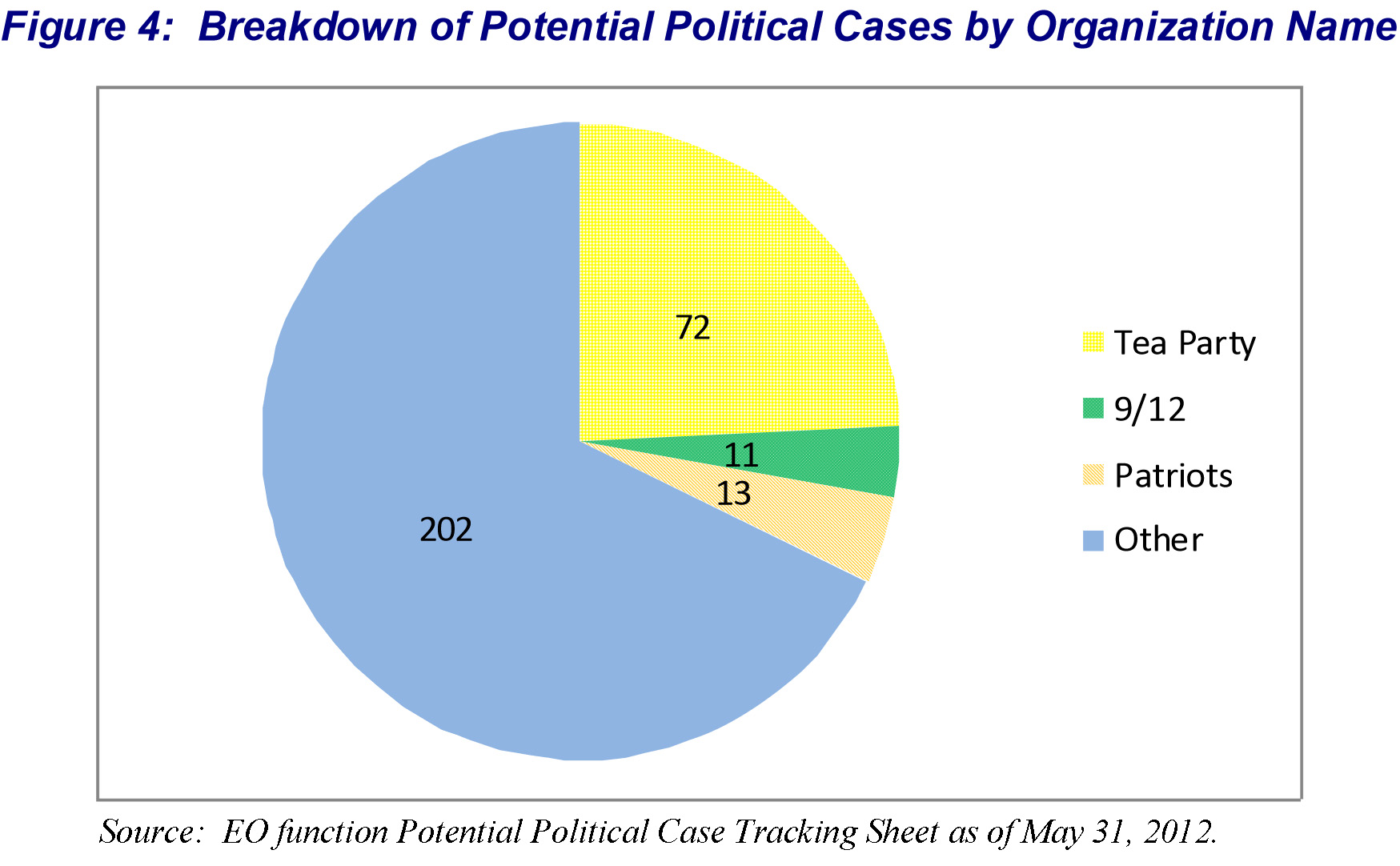
    I didn’t see this when it came out, but over at Townhall Guy Benson takes me to task for claiming last year that the IRS “scandal” was not an Obama administration effort to harass tea party groups. Rather, it was a general bureaucratic clusterfuck that targeted both liberal and conservative organizations. Benson links to a post I wrote about the final inspector general audit report on the topic, but faults me for not referring to the first IG report in that post. That’s fair enough, actually, and I should have done it in the first place. So here’s a chart from the first Treasury audit:

    Sure enough, the only groups mentioned are conservative. Why is that? Well, as we’ve all known for years, it’s because Republicans asked for the report and specifically told the inspector general to look only for a few select names. That’s why we have 96 conservative outfits and nothing more. Everything else is lumped under “other”—and presumably even doing that went beyond the IG’s remit.

    And just what is that “other”? Here’s a PowerPoint slide from an IRS training presentation explaining what kinds of names might be cause for suspicion that an organization is political, not educational, and therefore doesn’t qualify for tax-exempt status:

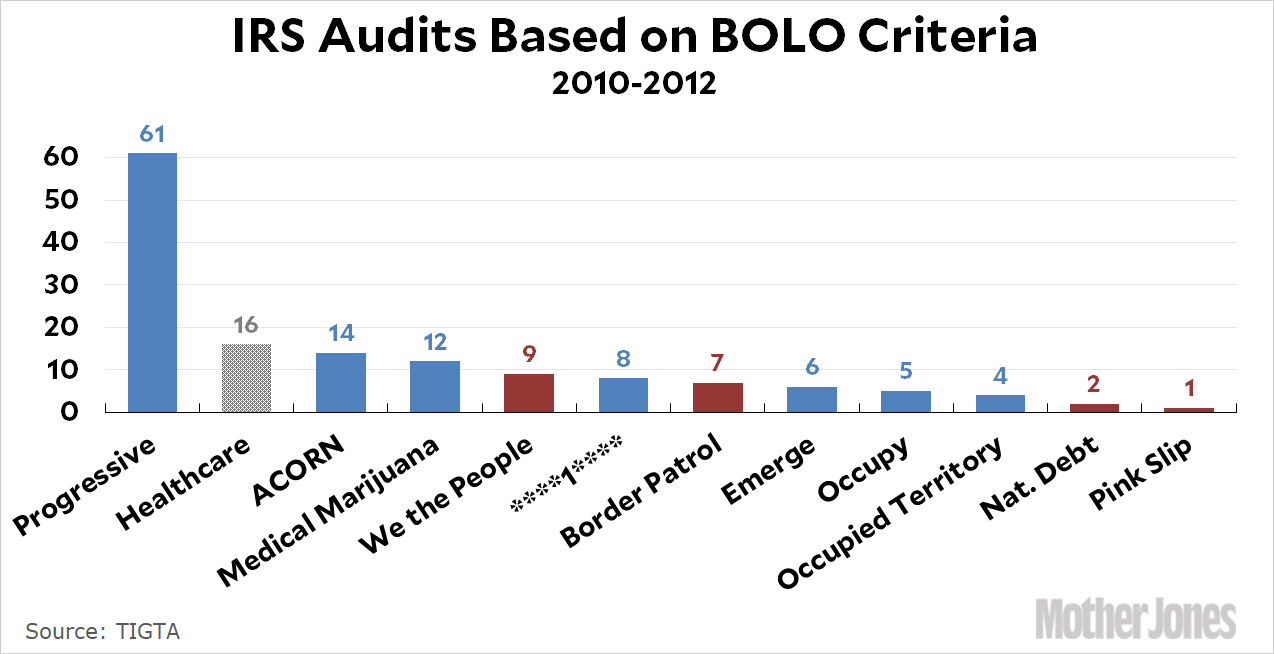
    Note the elephant and the donkey in the top left. Needless to say, Democrats were a wee bit suspicious about this, so they asked for an audit using a new set of keywords. Years later, this one identified 181 additional groups that had been identified by their names, 146 of which were eventually audited. This brings us to the post I wrote last year. Here’s the chart I created based on data in the Treasury audit released last September:

    Between the two reports, then, the IG identified 115 conservative groups (96 in the first audit, 19 in the second) and 110 liberal groups. Does this sound like a liberal conspiracy to sic the IRS on conservative groups? No it does not.

    Now, you can produce different numbers depending on which parts of various reports you cherry pick. As you might expect, the Republican section of a 2015 congressional report insists that conservatives were unfairly targeted, and it was a lot more than 115 groups. Democrats disagreed. That’s how last year’s IG audit came about.

    Conservatives can blather all they want, and I don’t expect any of this to have the slightest effect on their religious faith that the IRS under Obama targeted tea party groups for audits. They’re going to believe this forever. But the bulk of the actual evidence suggests that (a) the IRS adopted a program of identifying political organizations based on their names, (b) this was probably not a great idea, and (c) it was nonetheless a nonpartisan effort. The IRS officials involved were just trying to create a way to more efficiently ID groups that might not qualify for tax-exempt status because they were political, not educational. There’s simply no evidence that there was a partisan valence to any of it.

  • Without Discrimination, the Gender Pay Gap at Uber Is Only 7 Percent

    Laura Dale/PA Wire via ZUMA

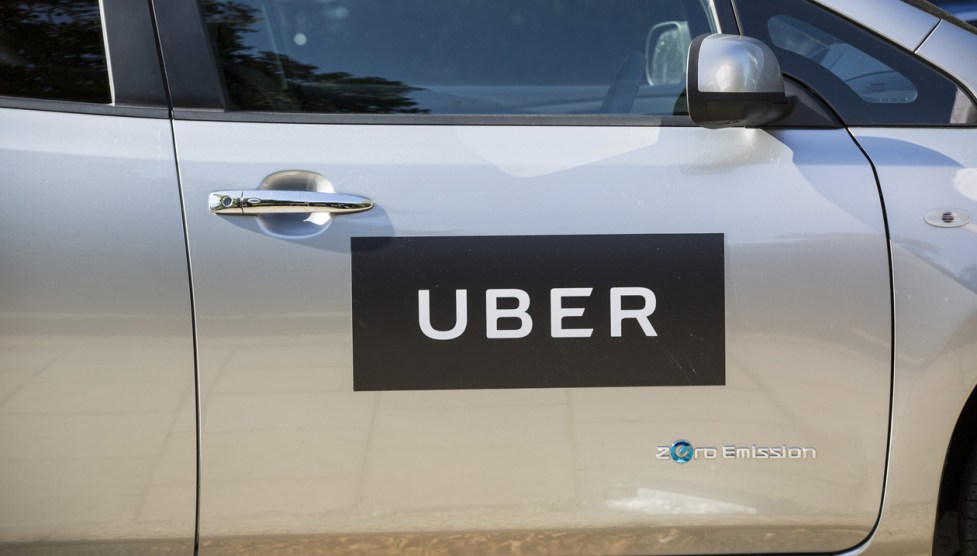
    A new paper with access to Uber’s massive database of driver records concludes that female drivers earn 7 percent less than male drivers. Why? Mostly because women drive more slowly than men.

    There are a couple of other factors as well that are tied to experience, and that’s interesting enough by itself. But the authors call their result “surprising,” and I think that’s the wrong conclusion. The proper conclusion is that in a job that pays via algorithm and has no special rewards for working long hours, the gender gap is only 7 percent. That’s what you get when there’s no opportunity for discrimination.

    In the rest of the world, of course, the gender pay gap is about 19 percent. The usual estimate is that less than a third of this is due to outright discrimination, but the Uber data suggests that it might be more than we think. Perhaps it’s more like 12 percentage points from discrimination and, like Uber, about 7 percentage points from other causes. Food for thought.

  • Is Wall Street Nervous About Inflation? It Shouldn’t Be.

    Tonight I read this at the Washington Post:

    Main Street has been watching prices rise for a while. Now Wall Street has taken notice.

    Wherever Bob Humphreys looks, things are getting more expensive. The chief executive of Delta Apparel, a Greenville, S.C., clothing maker, sees higher costs at every link in a multinational supply chain: Raw materials, such as cotton; energy to run his factories; transportation to move his goods to market — all are getting pricier. With higher wages looming, he’s passing on some of those extra costs by raising prices on Delta Apparel’s plain and decorated T-shirts and fleeces.

    “Clearly, there is inflation in the apparel delivery system right now,” Humphreys told investors on a recent call. “So there’s definitely cost increases coming.”

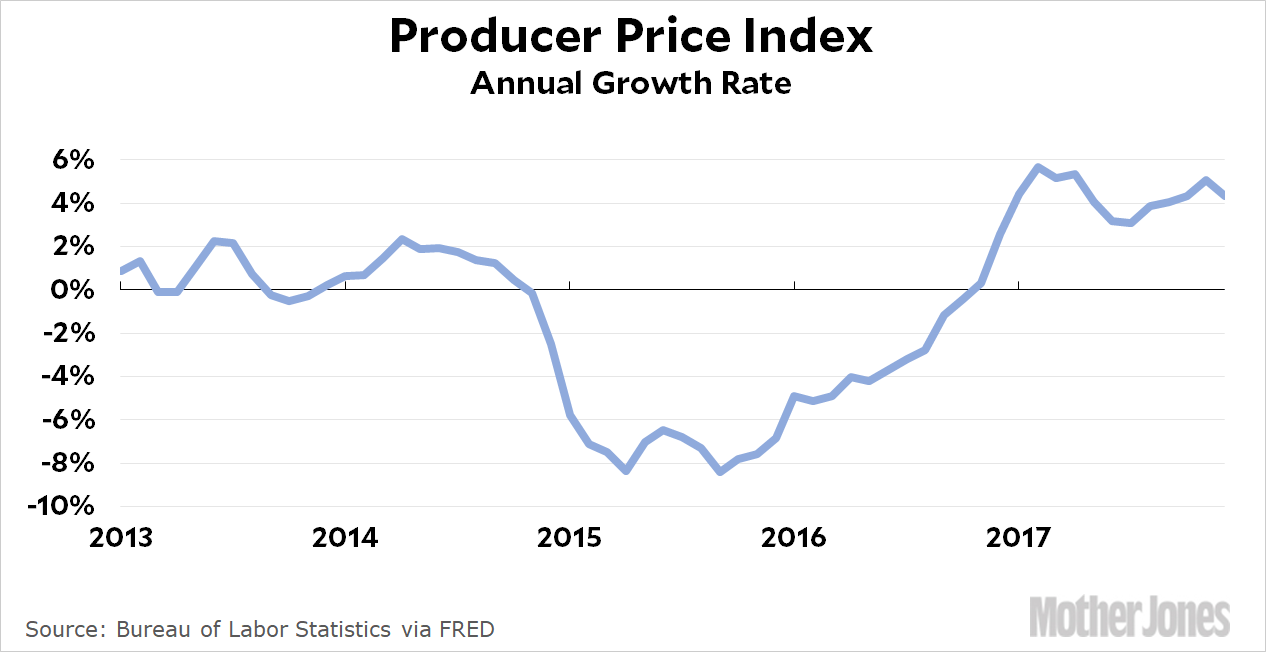
    Since I’m on an inflation kick right now, I immediately dismissed this as hogwash. This Humphreys guy can blather about what he “sees” all he wants, but the numbers don’t lie. And the numbers say that inflation remains pretty low. I even went to the trouble of looking up not the usual CPI inflation numbers, but the Producer Price Index just to prove it:

    Oops. It turns out that PPI has been running at 4-6 percent all year. That’s high! It’s mostly making up for substantial deflation in 2015-16, but still. Prices for manufacturers really are going up substantially.

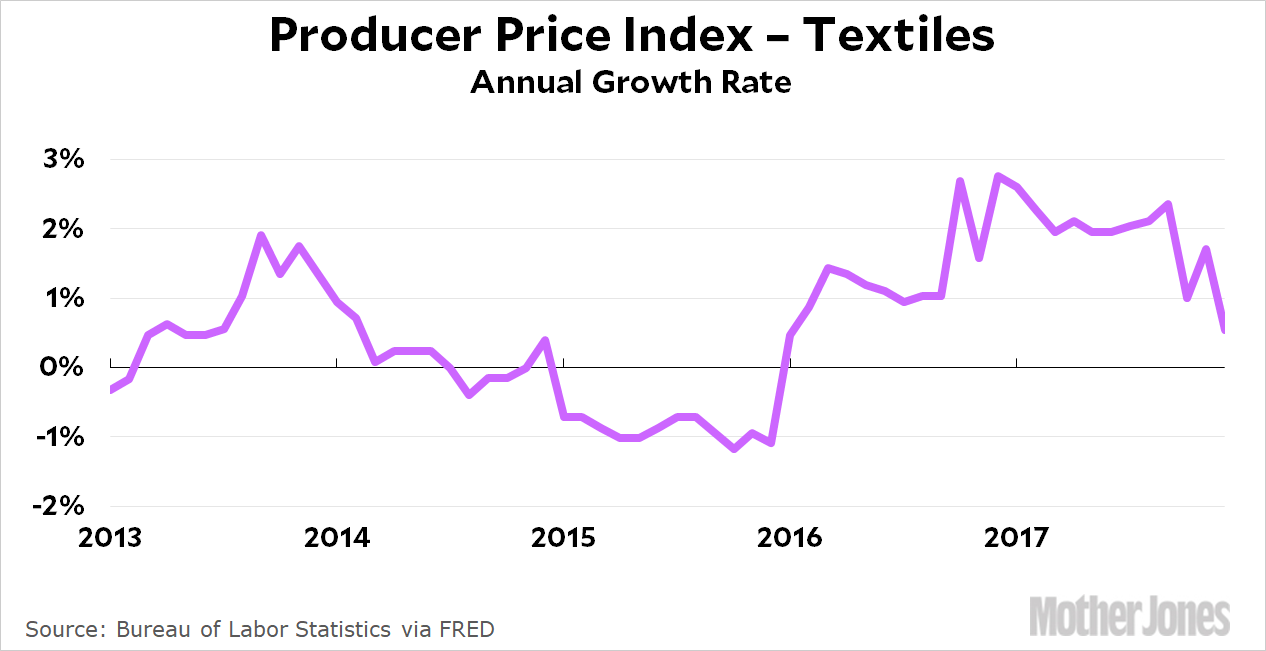
    But then, just to be extra careful, I took a look at the PPI for textiles, since that’s the industry Humphreys works in:

    That’s weird again. PPI is up in general, but it turns out that in the textile biz it’s been running at a moderate 2 percent since March, and has dropped to around 1 percent for the past several months.

    So I don’t know what Humphreys is seeing. The high PPI numbers might be a concern, but in the textile industry, with the exception of five months early this year, price increases have been below 2 percent for the past five consecutive years.

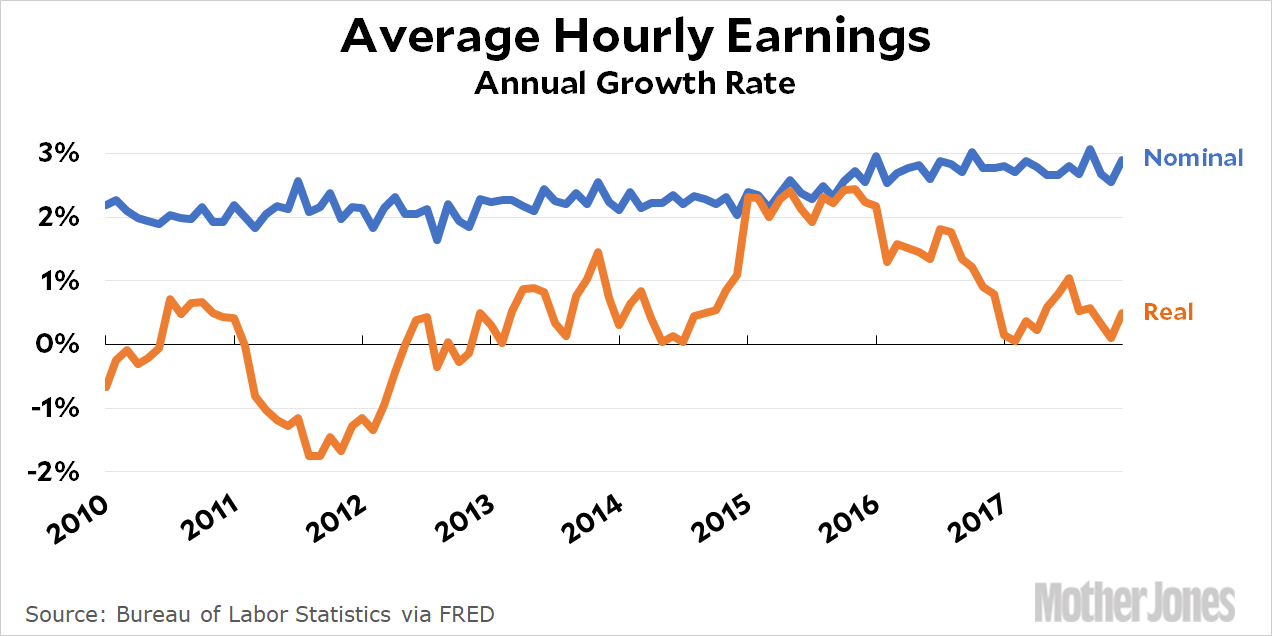
    But what about wages, which is what everyone on Wall Street is allegedly freaked out about lately?

    In nominal terms, wages have been rising at a steady annual rate of about 2.6 percent for the past two years. There was some acceleration in 2015, but none since then, and in real terms wage growth has been between 0-1 percent for the past year. That doesn’t seem especially scary to me.

    All things considered, I think I’m going to revert to my initial stance: inflation is pretty restrained everywhere, and there’s no special reason to think it’s about to burst its surly bonds. Maybe it will, and then everyone can point and laugh at me, but why worry about it prematurely? It’s always possible that inflation is about to spiral out of control, after all. So instead of being in a perpetual panic, why not just wait until the data suggests there really is something going on?

  • Let’s Stop Lying About Money

    Why do I drone on and on about reporters who don’t adjust for inflation when they show dollar figures over time? Well, consider the following sentence from the first op-ed that hack economist Stephen Moore wrote as a member of the Wall Street Journal editorial board:

    In the 1980s, President Ronald Reagan chopped the highest personal income tax rate from the confiscatory 70% rate that he inherited when he entered office to 28% when he left office and the resulting economic burst caused federal tax receipts to almost precisely double: from $517 billion to $1,032 billion.

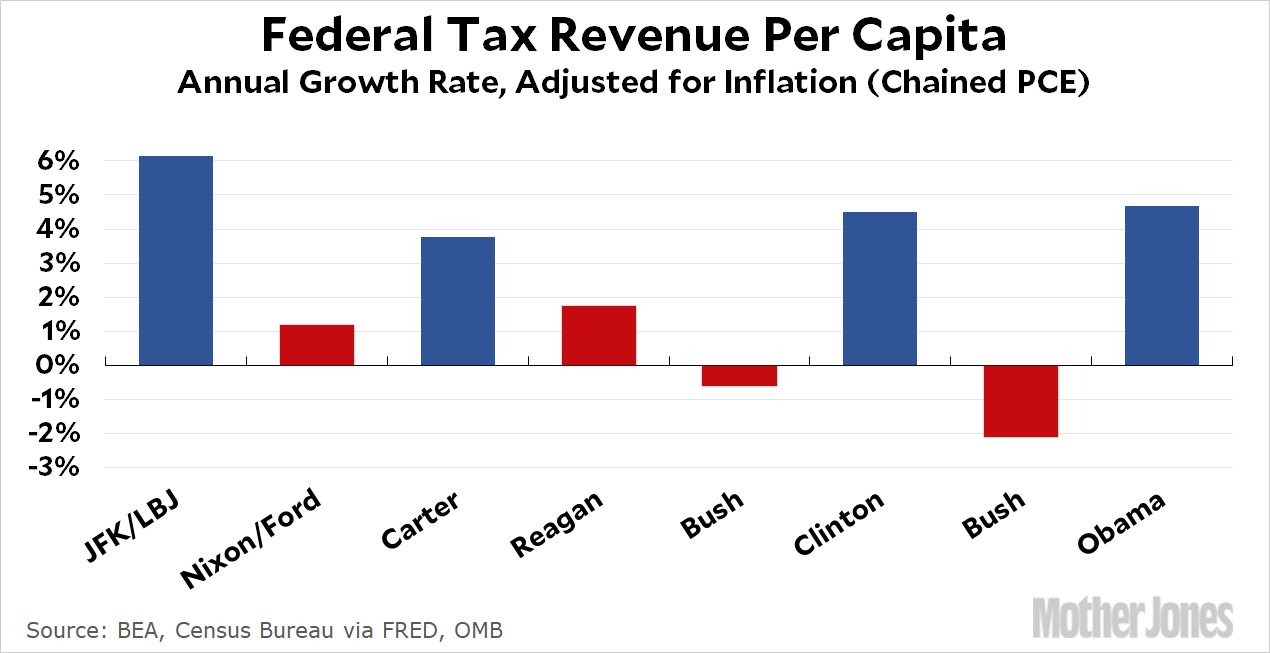
    This is wrong. Partly that’s because Moore didn’t even use figures from Reagan’s first and last years in office. But mainly it’s because he didn’t account for inflation or population growth. Once you do that, it turns out that federal tax receipts actually went up 14 percent on Reagan’s watch, or 1.7 percent per year:

    Moore’s statement isn’t  just wrong. It’s a lie because he knew perfectly well it was wrong and said it anyway—and I savaged him for it at the time. But if it’s wrong for Stephen Moore, it’s wrong for everyone else too. And just like Moore, if you know better, it’s a lie. My goal is to make sure that everyone knows better so that we’ll all stop lying, either deliberately or otherwise.

    Unless you have a very specific, technical reason for using nominal dollars—and they exist!—always adjust for inflation. Generally speaking, you should usually adjust for population growth too. Stop lying!

  • Did the FBI Mislead a FISA Judge? Why Not Just Ask Him?

    Judge Rudolph Contreras.Diego M. Radzinschi/National Law Journal

    The gist of the Nunes memo is that the FBI misled a FISA judge when it asked for a warrant to wiretap Carter Page. I was chatting about this at lunch yesterday with a friend, and suggested that all we had to do was wait a while to find out if this was true. The FBI has to renew the warrant every 90 days, so they’ll be back in front of the judge in March or April. If he’s pissed off, then Nunes is right. If he’s not, then Nunes is full of shit.

    Over at Lawfare, Sophia Brill has an even more straightforward suggestion: just ask the judge. This wouldn’t require any classified information to be made public. The judge just has to explain in general terms whether the provenance of the Steele dossier—i.e., that it was paid for by the Hillary Clinton campaign—gives him pause for thought:

    Already, the New York Times and other organizations have filed a motion in the FISC asking it to unseal documents related to Carter Page. It may well take some time and potential wrangling for the court and the government to determine what documents can be declassified and what must be redacted. But if the FISC were to issue a new order simply stating whether it believes itself to have been misled by the government, that order could be easily be declassified—and could answer definitively whether the Nunes memo has any legitimate claims behind it….If the court views the matter of the Steele dossier and the other contentions in the Nunes memo as immaterial in light of other evidence, it could say so without revealing that other evidence.

    ….Typically, the FISC does not simply go around issuing declarations of this kind—let alone public declarations about specific FISA orders. But there are a few potential procedural mechanisms that could lead it to issue an opinion or short order stating whether or not it views any of the Nunes memo’s new information on Steele (to the extent it is new and is factually accurate) as having any material impact on the validity of its prior orders.

    Brill goes on to outline these procedural mechanisms, but what probably matters more is whether the judge wants to get involved in this food fight. Brill suggests that this is a unique situation, but a judge might be skeptical of that. They’re all unique situations according to the folks pressing the case, after all. Still, it seems worth a shot.

  • Lunchtime Photo

    One of the great things about photography as a hobby is that I don’t get bored in airports anymore. Instead, I wander around looking for things to take pictures of. This is a plane taking off at Heathrow while we waited around for our flight home in October. The funky colors are partly due to the clouds and partly due to the glass I took the picture through. I don’t know what kind of plane it is, but I’ll bet someone in comments can ID it.

    UDPATE: The consensus in comments is that it’s either a 737 or a 757 or a 767 or an Airbus A320. Thanks a lot, folks.