• The Weirdness of Mayor Pete

    Bastiaan Slabbers/NurPhoto via ZUMA

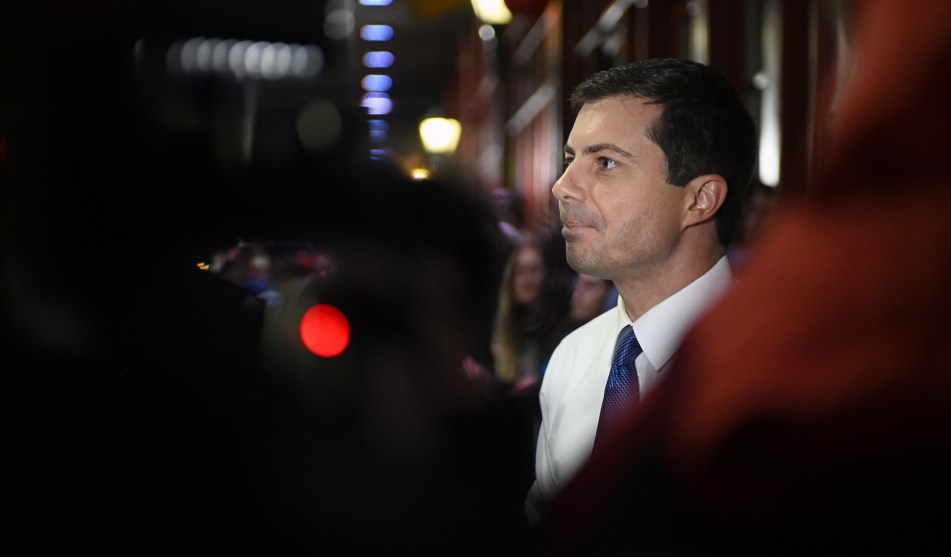
    Mayor Pete continues to climb in (some of) the polls:

    Pete Buttigieg, the mayor of South Bend, Indiana, who was initially seen as a long-shot presidential contender, has surged within striking distance of former vice president Joe Biden and Massachusetts Sen. Elizabeth Warren in the first-in-the-nation Iowa caucuses, a Suffolk University/USA TODAY Poll finds….The poll, taken Wednesday through Friday, put Biden at 18%, Warren at 17% and Buttigieg at 13% among 500 likely Democratic caucusgoers.

    There is something weird about Mayor Pete. I mean, the guy is a small-town mayor who compiled an OK record thanks to a long economic expansion. He’s 37 years old and looks it. His political positions are entirely conventional. And yet he’s remained steadily viable in the polls, even creeping up a bit over the past few months. What’s more, he’s raising a ton of money. Who is it that believes in this guy so much that they’re funding his campaign to the tune of $50 million so far?

    Buttigieg is not a flavor-of-the-month candidate who enjoys a brief surge in the polls and then crashes. We see a few of those every election cycle. Rather, he’s been plodding along, waiting for his chance, while people shovel enormous sums of money his way.

    I don’t get it. I have nothing against him, but it makes no sense that someone with his background could remain a serious contender for so long, even if he does talk a good schtick. It makes even less sense that he could attract so much money. Can someone please enlighten me about what’s going on here?

  • Online Lies Aren’t Helping Donald Trump Much

    The New York Times informs us that Donald Trump’s reelection campaign is blitzing the online world:

    On any given day, the Trump campaign is plastering ads all over Facebook, YouTube and the millions of sites served by Google, hitting the kind of incendiary themes — immigrant invaders, the corrupt media — that play best on platforms where algorithms favor outrage and political campaigns are free to disregard facts.

    ….That campaigns are now being fought largely online is hardly a revelation, yet only one political party seems to have gotten the message. While the Trump campaign has put its digital operation firmly at the center of the president’s re-election effort, Democrats are struggling to internalize the lessons of the 2016 race and adapt to a political landscape shaped by social media.

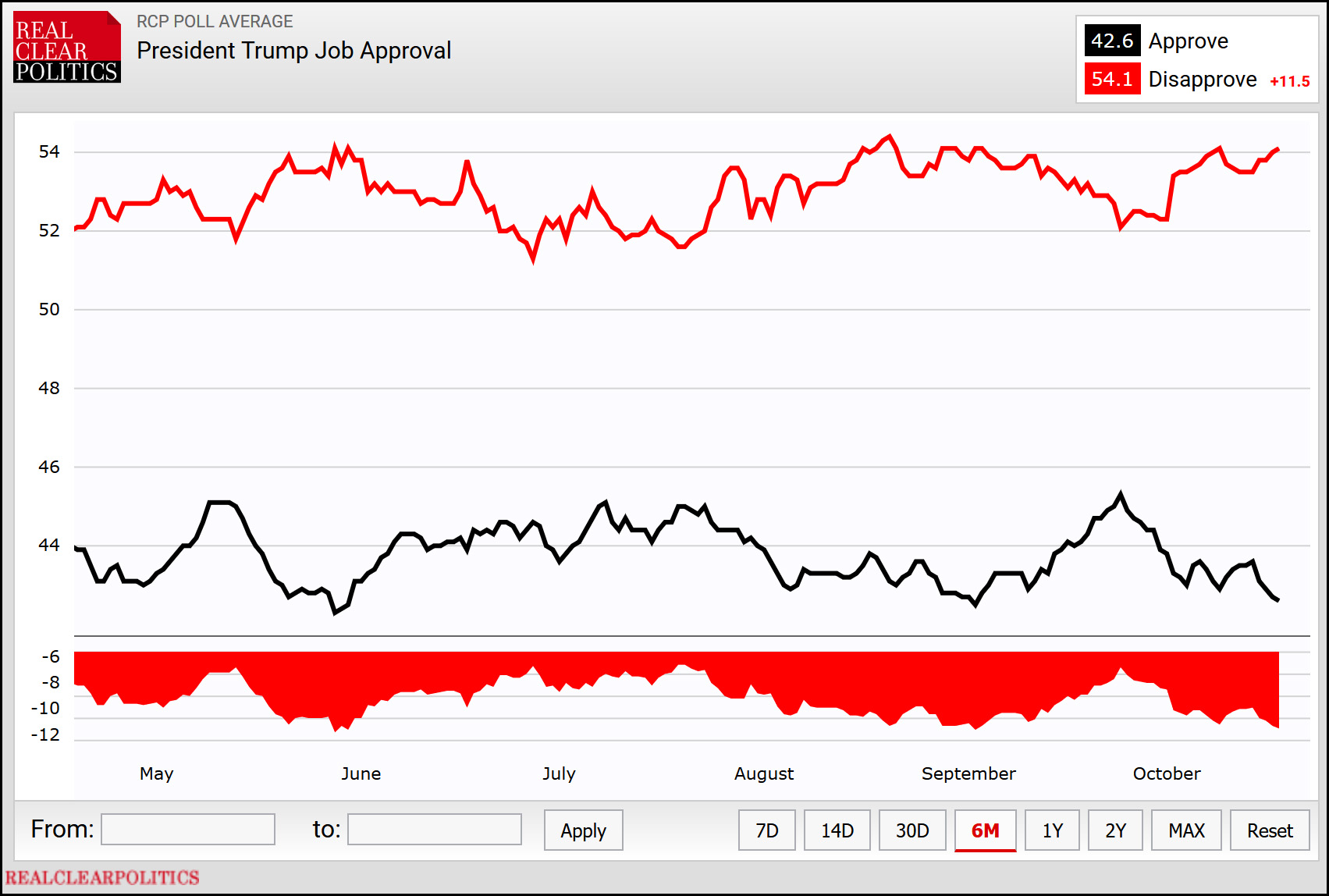
    My goodness. I guess Democrats must be taking a pummeling as Trump’s approval rating climbs and climbs. Let’s take a look:

    Huh. After six months of blitzing, Trump’s net approval rating has gone down from -8.2 to -11.5. It’s almost as if all those outrageous online ads have had no appreciable effect on anyone but Trump’s base, which already approved of him anyway.

    It’s possible, of course, that without all the online ads Trump’s approval rating would have dropped even more. However, it’s also possible that incendiary online ads are mostly a waste of money because they appeal only to true believers in the first place. I think the latter is more likely.

    Now, there’s nothing wrong with keeping your base worked up. It’s a time-honored strategy, and Democrats will be doing it too once they agree on a candidate. But Trump isn’t going to win in 2020 with a base strategy. His base is just way too small. He’s going to win—if he wins—by taking some votes from the middle. He might or might not do that via social media, but he definitely won’t do it with obviously scurrilous ads. That’s the kind of thing that turns off moderates.

    Bottom line: don’t worry too much about the fact that Trump is able to lie online, especially this far ahead of Election Day. It may keep his base frothing at the mouth, but that’s about all. It’s not the game changer people sometimes make it out to be.

  • Today Is My 5-Year Anniversary

    Remember this?Kevin Drum

    Five years ago I was diagnosed with multiple myeloma and my oncologist told me the average lifespan following diagnosis was . . . about five years. But here I am, feeling fine¹ and testing out brand new chemo meds that didn’t even exist in 2014.

    So what do I want for my anniversary? How about a donation to our fundraising campaign dedicated to corruption in politics—a timely topic if ever there was one? All contributions will be doubled, so this is a great bargain.

    Still not enough? Tomorrow is my birthday. I’d like a cake and a contribution to our fundraising drive. How about it?

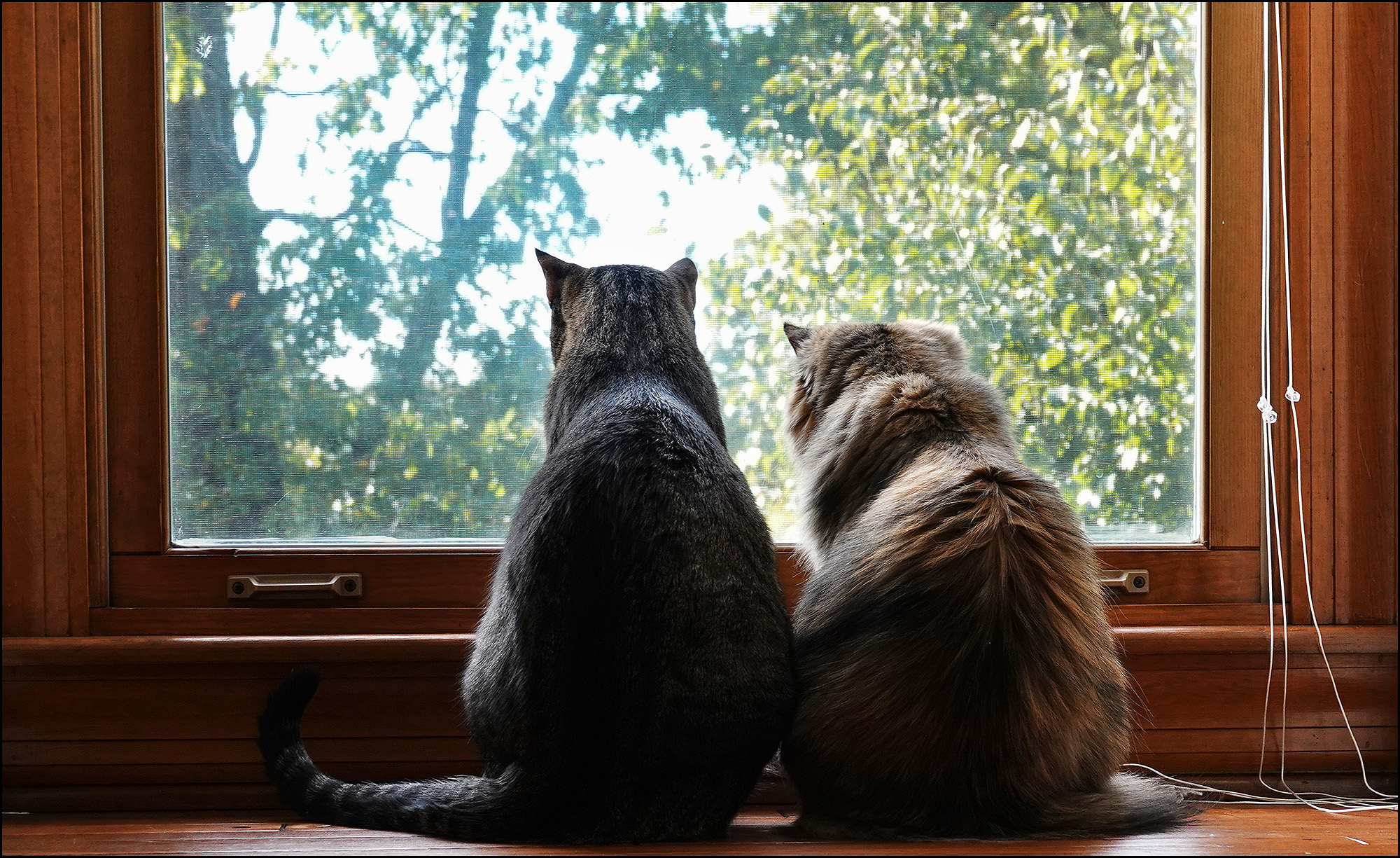
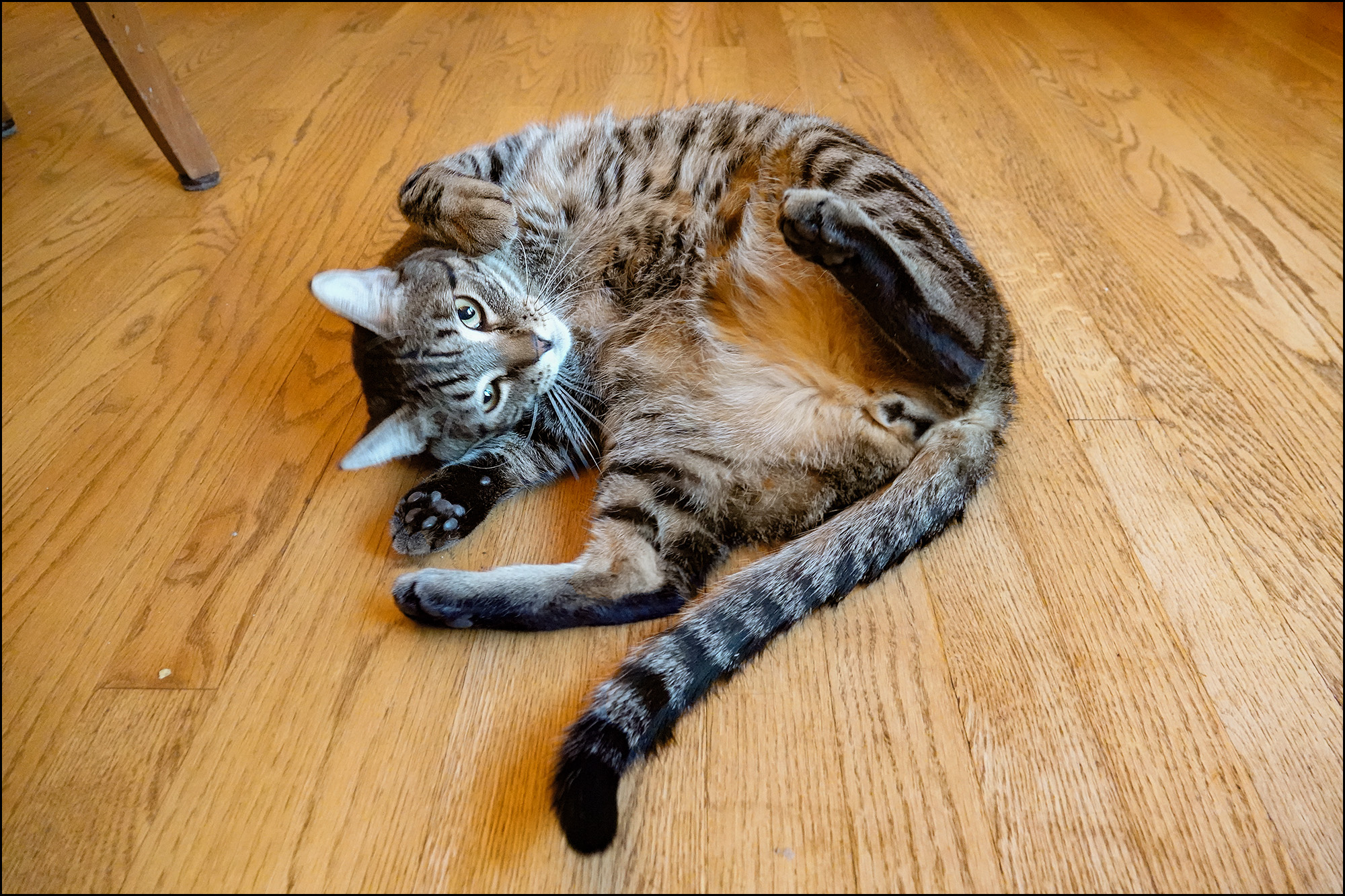
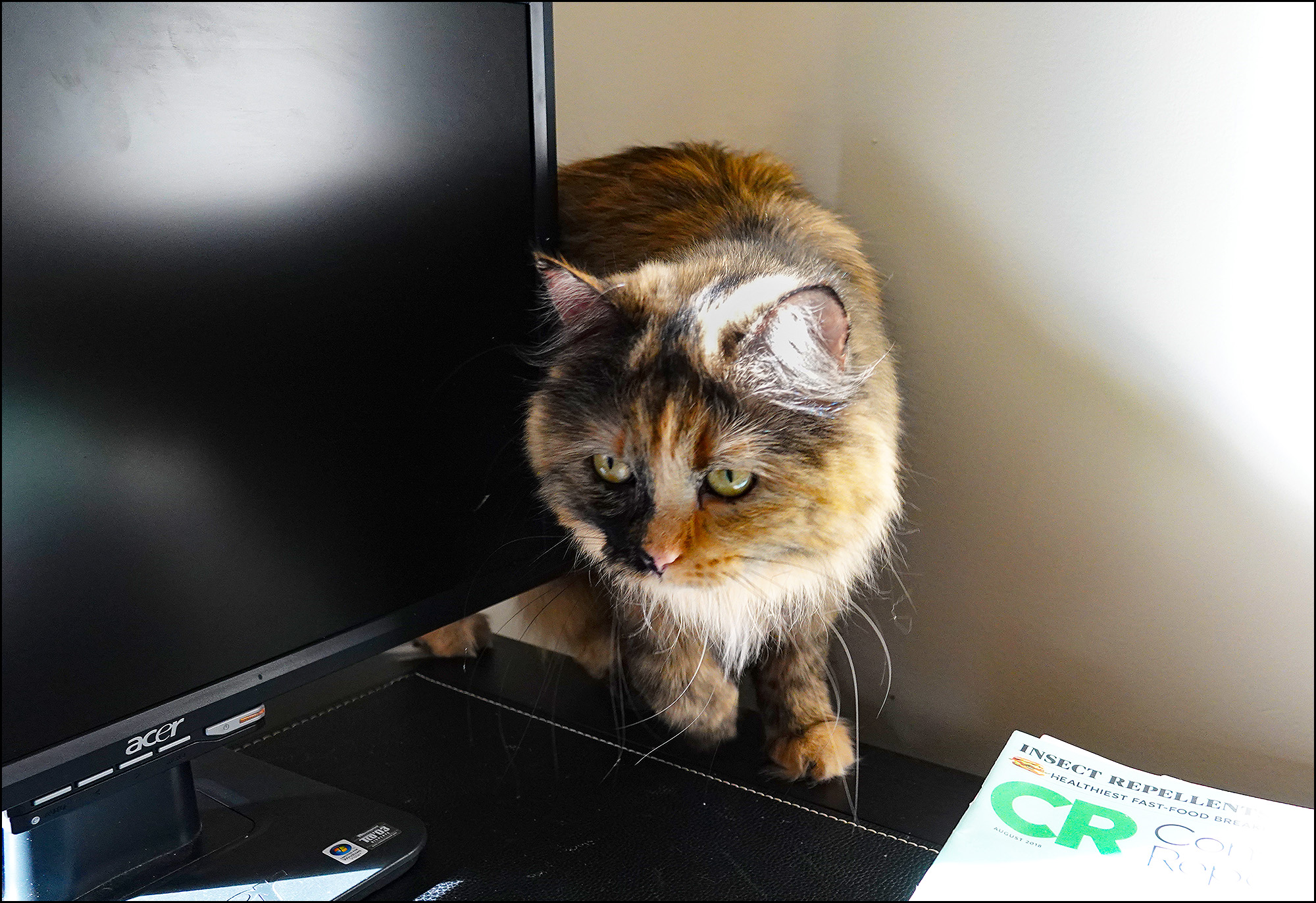
    Still not convinced? Today’s catblogging offered you three separate pictures of two different cats. That must be worth a contribution all by itself.

    Or maybe I can guilt you into it? After all, there’s no telling how many years I have left to pester you about fundraising drives. You’d feel bad if you ignored this one and it turned out to be my last, wouldn’t you?²

    To contribute via PayPal or credit card, just click here.

    ¹Except for the Evil Dex, of course, but waddayougonnado? Things could be a whole lot worse.

    ²Journalistic integrity forces me to acknowledge that this is unlikely. I should have many more years ahead of me. But I could always get hit by a bus.

  • Friday Cat Blogging – 18 October 2019

    We are all happily ensconced in the suburbs of Chicago now, and the cats have been exploring their new home. I figure they deserve a better picture than they got last week, peeking warily out of their cage in the back of a Honda, so here they are in all their natural glamor. That’s Timmy on the left and Mocha on the right:

    Here is Timmy showing off for the camera:

    And here is Mocha making the rounds of Dr. Marc’s study:

  • Americans Are Getting More Satisfied in the Trump Era

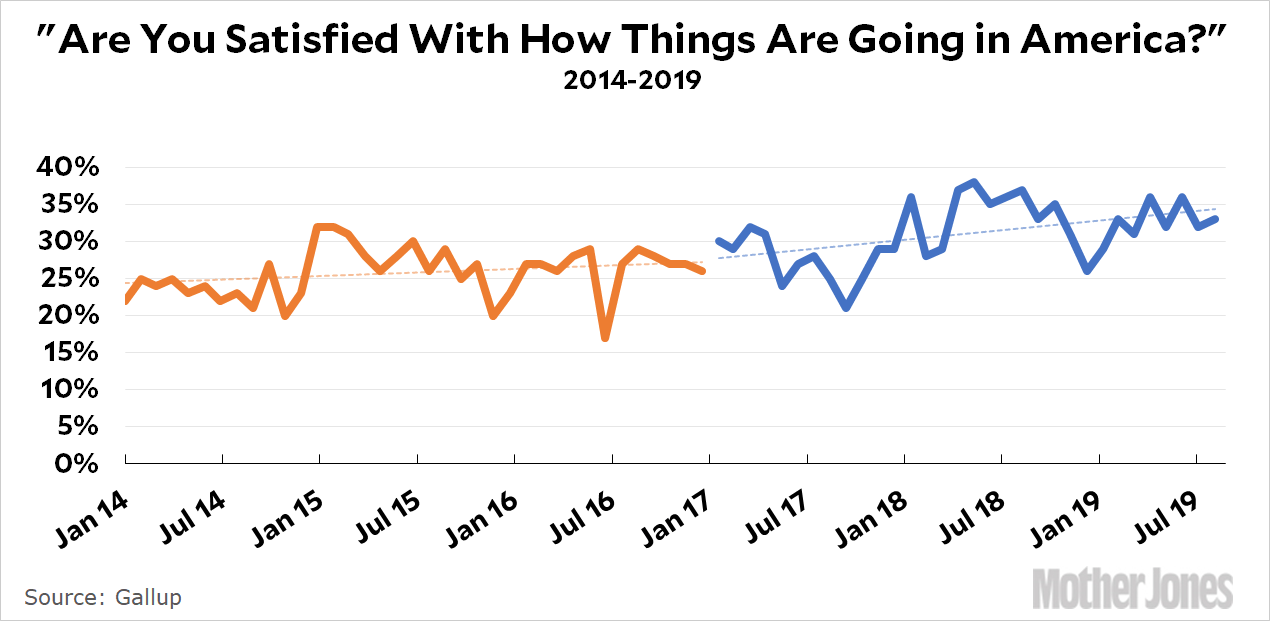
    Apropos of nothing in particular, here is the latest iteration of a poll that Gallup conducts monthly:

    We Americans are never very satisfied with how things are going in our country, and we’ve been especially unsatisfied over the past few years. But we’re getting happier! And the Trump years have made us happier still.

    Roughly speaking, satisfaction needs to be above 30 percent for an incumbent party to win reelection. That’s not a guarantee, though: Al Gore lost in 2000 even though satisfaction was sky high. Trump is currently at 33 percent.

    Just sayin’.

  • Democrats Should Move Slowly on Impeachment

    Shealah Craighead/White House/ZUMA

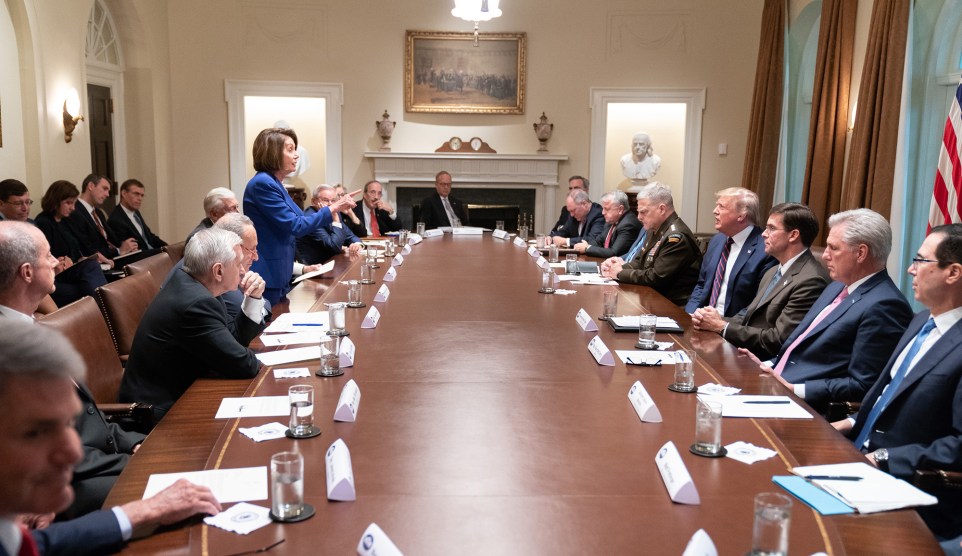
    Should Democrats move fast or slow on impeachment? I say slow. For one thing, new evidence is pouring out like a fire hose right now, and we should keep the investigation going until we have as good a picture as we can get of what really happened. Politically, it’s also the best thing to do. Republicans want a fast impeachment so they can brush it off as a partisan stunt and get on with business. Democrats should want just the opposite. They need to treat it seriously, and they need time to build up public support as new revelations are unearthed. Until we get to the point where a third or so of Republicans support impeachment, there’s not much point in voting on articles in the House.

    Will this interfere with campaigning? I doubt it. Will it prevent the House from working on other things? Nope. They’ve produced plenty of legislation and all of it goes straight into Mitch McConnell’s round file. So no worries there.

    Keep up the committee work until there’s a rock-solid case with good public support. That’s when to stop, and not a moment before.

  • “But How Are You Going to Pay For It?”

    How much would Medicare for All cost if we made employers pay most of the bill, as they do now? Let’s take a horseback guess.

    • CMS estimates total health care spending in 2018 of $3.6 trillion.
    • About 55 percent, or $2 trillion, is covered by private sources, mainly corporations. The rest is already paid for by state and federal governments.
    • Of this, perhaps 20 percent would be paid by individuals in the form of copays. This is about the average for health care plans in other countries.
    • The total outlay for employers is therefore $1.6 trillion.
    • Approximately 112 million people are currently employed in large corporations.
    • That comes to $14,000 per employed person. Currently, large corporations pay about $10,000 per employee in health care costs.

    There are several options left to us here:

    • We could make large corporations pay $14,000 per employee. They’d just have to suck it up.
    • We could keep them at their current rate of $10,000 and raise the remaining $400 billion elsewhere, perhaps from some combination of higher taxes on the wealthy and a small VAT.
    • We could make all but the very smallest employers pay a head tax. With a larger tax base, the cost per employee drops to $11,500 and there’s very little to make up.

    This is rough, but it’s the basic lay of the land if we’re willing to make corporations continue to pay for health care at the same rate they pay now. They’d have no real beef since it would cost them nothing more and would free them from the overhead cost and hassle of dealing with health care. There’s also a strong chance that the head tax would rise more slowly than it does now, since government-run health programs almost invariably cap cost growth better than the private sector.

    This is a slightly more detailed version of my post the other day asking, yet again, why Democrats don’t propose this as the funding mechanism for M4A. Other countries do this without a problem, and there’s no special reason we can’t do it too. It certainly makes it far easier to provide a cogent and popular answer when reporters ask, “But how are you going to pay for it?”

  • Free Speech Applies to Social Media Too

    Tom Williams/Congressional Quarterly via ZUMA

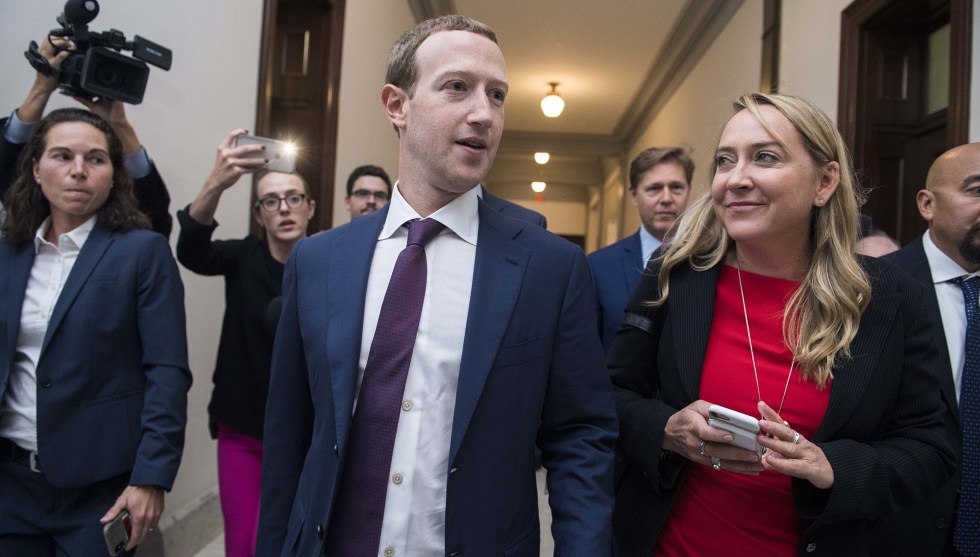
    Facebook CEO Mark Zuckerberg gave a speech today defending his decision not to police political ads:

    “People having the power to express themselves at scale is a new kind of force in the world — a Fifth Estate alongside the other power structures of society,” Mr. Zuckerberg, 35, said. He added that despite the messiness of free speech, “the long journey towards greater progress requires confronting ideas that challenge us. I’m here today because I believe we must continue to stand for free expression.”

    I continue to be more on Zuckerberg’s side than on the conventional lefty side of this. As always, my fundamental concern when anyone suggests a restriction on free speech is, “Who decides?” I don’t want the government deciding, and I’m not sure I really want Mark Zuckerberg deciding either.

    Let’s dive a little deeper, though. This whole affair reminds me of concerns about the early blogosphere: Why, those bloggers can say anything! They can even lie and not suffer any consequences!

    Quite so. And that’s been true of speech since the founding of the country. In general, the question isn’t whether speech is true, but whether it’s actionable. If it is, and if you want to do something about it, you go to court.

    But wait: maybe that’s OK for blogs, which have a pretty small audience. Facebook, however, has an enormous audience. Can we really allow such a big platform to remain unregulated?

    I think so. After all, freedom of speech doesn’t mean much if it only applies to small platforms. Let’s consider two other platforms that are probably as big or bigger than Facebook:

    Television. This is a regulated medium, but it’s pretty lightly regulated—and cable TV is barely regulated at all. Nor do TV stations themselves do much vetting of campaign ads. What keeps political TV ads from going too far overboard is that they’re highly public: everyone sees them, and an ad that’s way over the line can do more harm than good.

    Of course, there’s also the alternative of filing a complaint with the FEC. That’s pretty weak tea, but no one really seems to want the government to have much more authority than that. Needless to say, the same remedy is available if you see a Facebook ad you don’t like.

    Online newsletters, chain mails, etc. Don’t laugh: there’s a ton of this stuff out there. It’s a huge platform, and it’s the source of most of the truly outrageous social media stuff. Like Facebook, however, it’s extremely targeted: you mostly have no idea it’s out there unless you’re part of the target audience.

    So would you regulate it? If not, why not? Why would you support regulation of content on Facebook that you aren’t willing to regulate elsewhere?

    This is no easy problem. But keep a couple of things in mind. First, outrageously false Facebook posts are inherently limited in their influence because they have to stay targeted. If everyone sees them, they can do more harm than good. Second, do you really want political speech policed by the content regulation departments at Facebook and Twitter and Instagram—all of whom have a corporate interest in staying on the right side of whatever government is in power at the moment? I don’t.

  • Lunchtime Photo

    Here’s the latest on the new Gerald Desmond bridge across Long Beach harbor, in a picture taken from the old Gerald Desmond bridge. Not much more to go! The new bridge is scheduled to open next year.

    October 5, 2019 — Long Beach, California