• Portraits of Survival: COVID and Community Strength Through an Artist’s Eyes

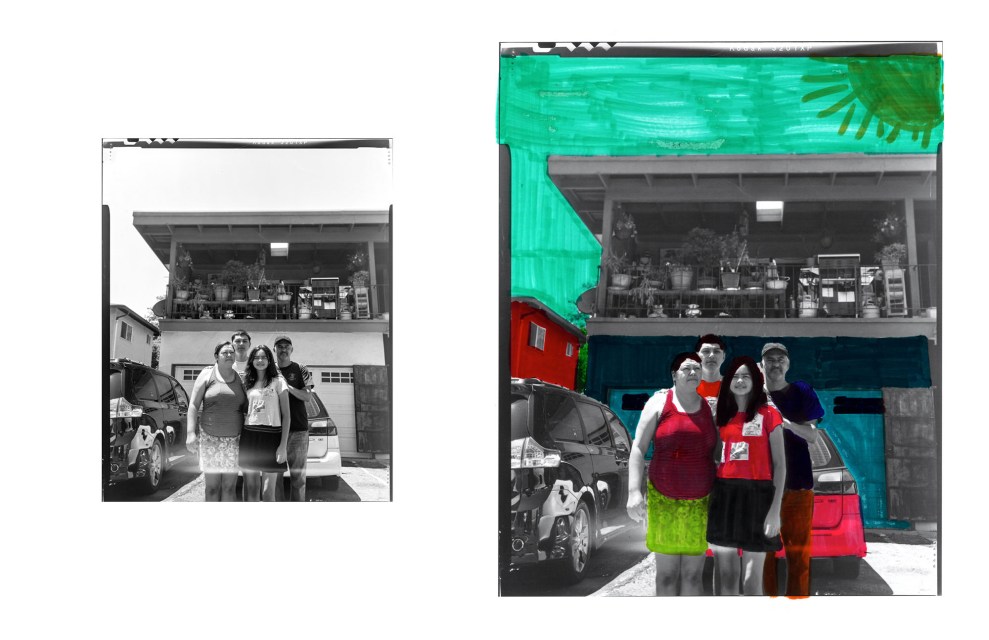
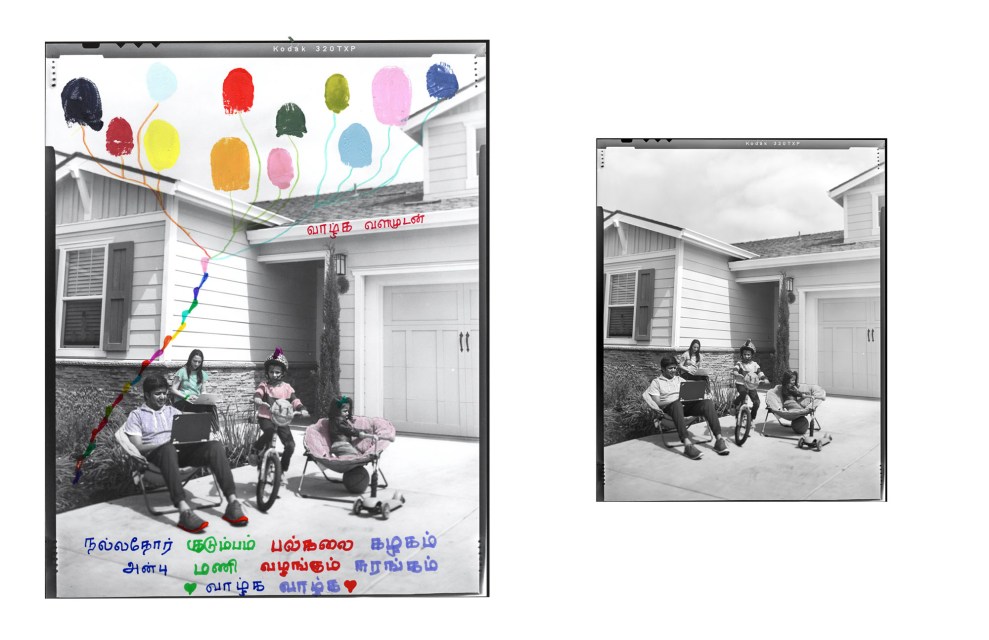
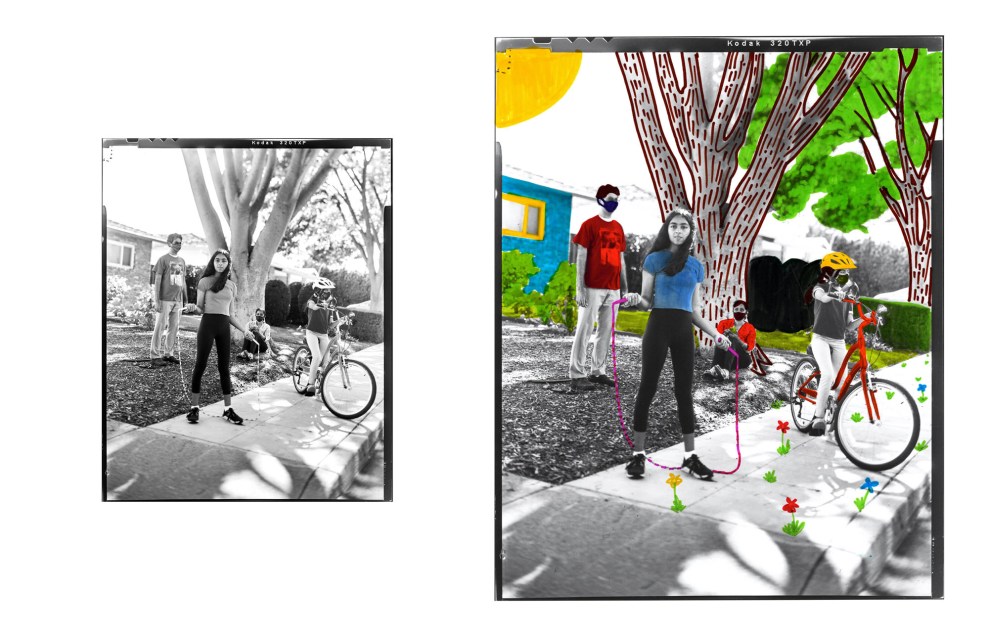
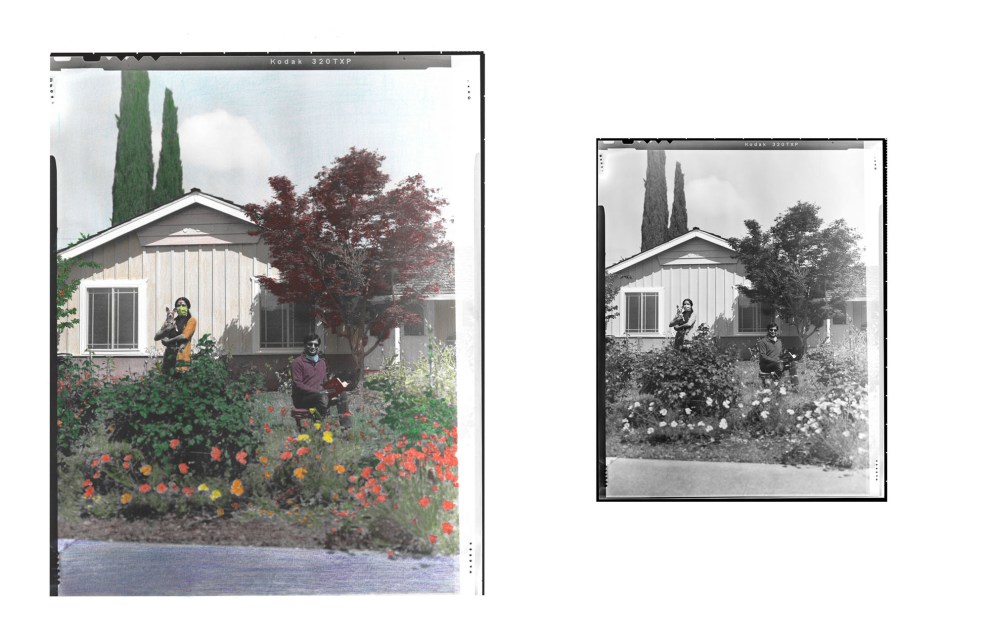
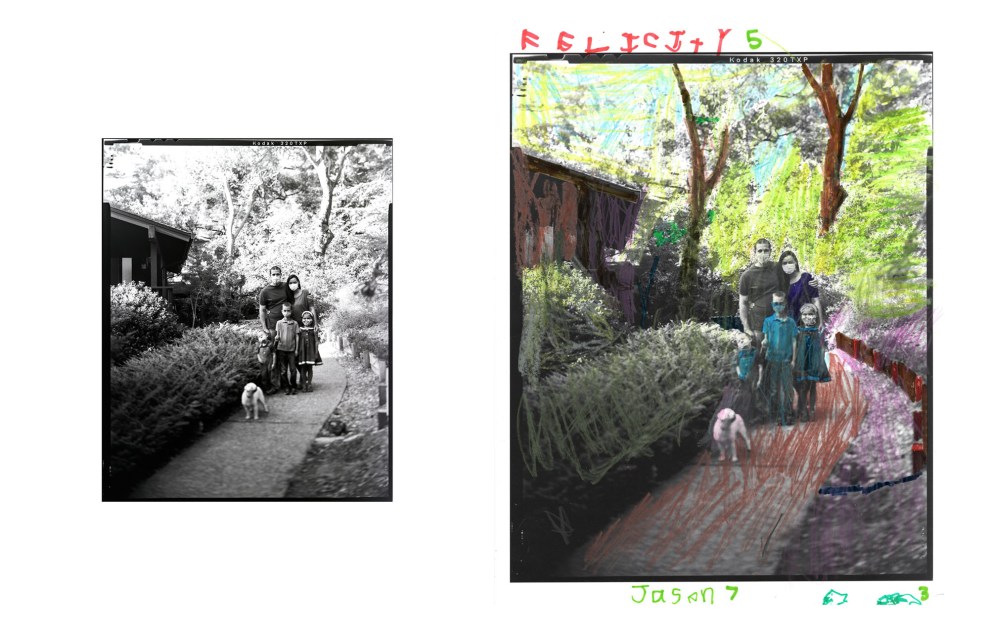
    A family poses for Ashima Yadava's "Front Yard" series of portraits during the pandemic, focusing on how families relate to their homes and each otherAshima Yadava

    When shelter-in-place orders swept the country in March, Ashima Yadava’s first thought was not just to rush home safely to California from New York, but to find ways to make more visible—and help alleviate—a threat indoors. Domestic violence had been her photography’s focus for eight years. She knew right away that isolation in unsafe homes amplified risks for millions of survivors, including people she advocates for. She’d been documenting survivors’ stories in portraits, and she saw that “not all shelters are equal and safe to shelter in,” she tells me.

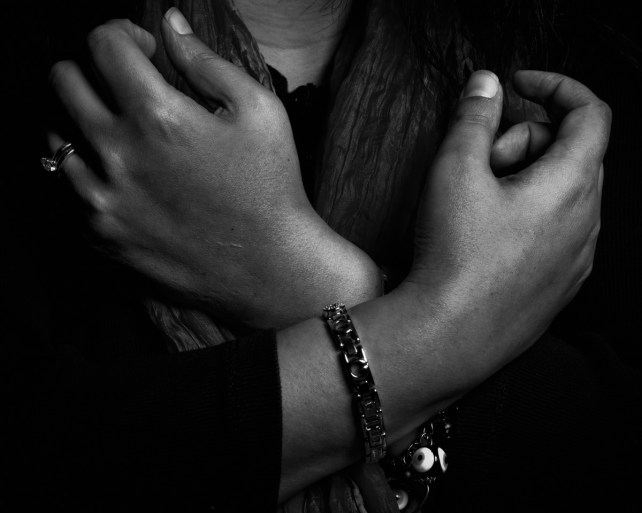
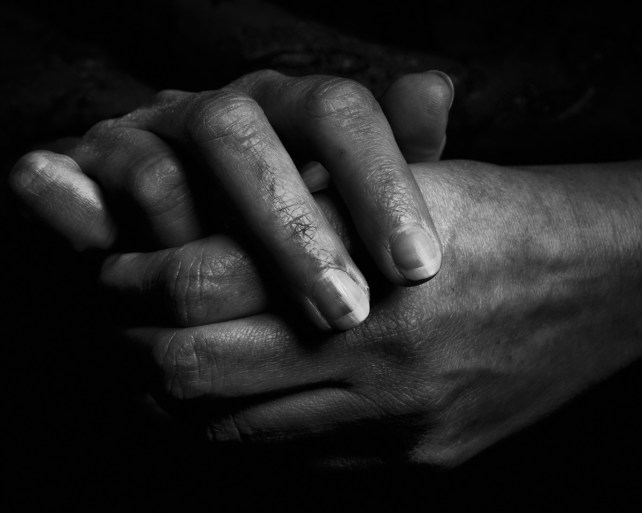
    But she vowed to continue advocating. “The project closest to my heart is If Hands Could Speak, about domestic violence in the South Asian community in the Bay Area. I had to find a visual grammar to tell their stories without compelling them to relive their trauma. So I started to photograph their hands.”

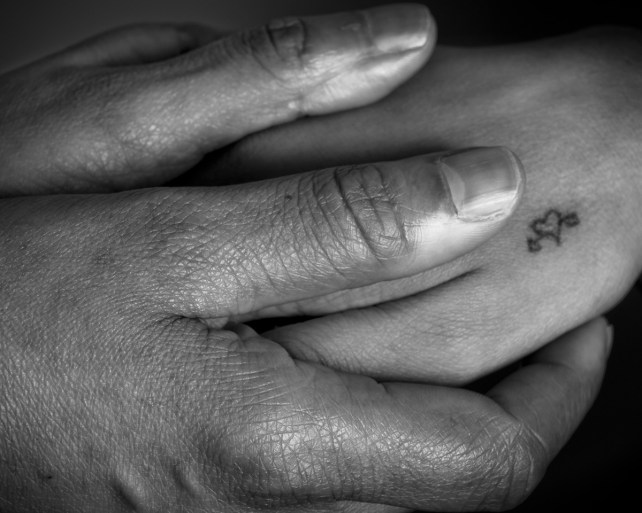
    If Hands Could Speak is a vivid portfolio of images, each answering the title’s question. Gesture, touch, texture, expression, and many other aspects of hands tell a story of how trauma goes unseen, and how, in creative forms, it is seen. In one image, two hands hold a third supportively; in another, fingers are bent back. As Yadava tells me, “Not all bruises are visible. Perpetrators often resort to hurting without leaving physical evidence of bruising, and twisting fingers is manipulative, intimidating, and deliberate because, in many ways, it signifies the possibility of more violence.”

    In another image, hands drape across a chest in self-embrace or guardedness, or both. Each person decides for themselves if and how to participate, pose, reimagine, and share their stories, with Yadava’s support:
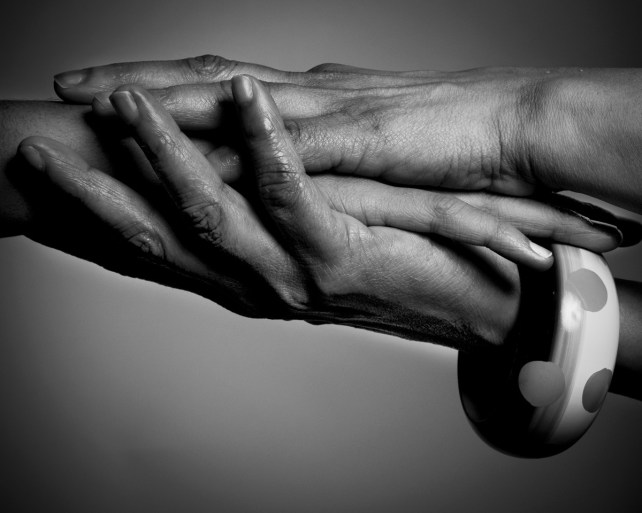
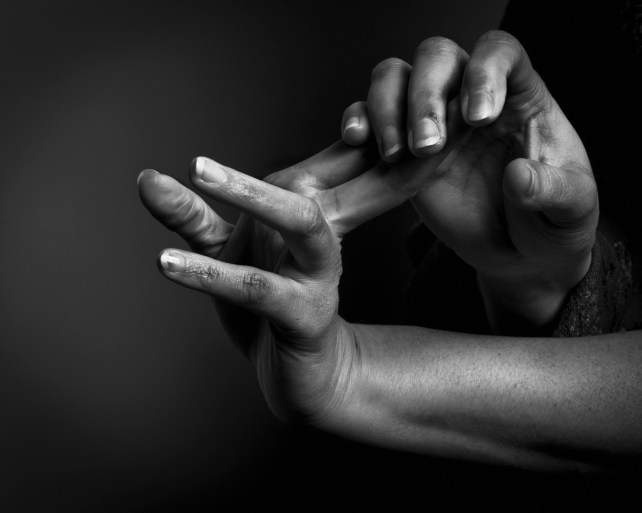
    A drawing adorns the hand of one of the people photographed in Ashima Yadava’s If Hands Could Speak series.

    The power of Yadava’s approach is not in documenting harm. It’s in reframing what survival and support look like; in finding a language to share bodies’ experiences while protecting identities. She began If Hands Could Speak as an artist-advocate with Maitri, a nonprofit that launched in 1991 when a group of women created a confidential helpline for South Asian survivors of violence in the Bay Area.

    Yadava speaks about herself and her work reflectively, choosing her words as deliberately as she chooses her themes and subjects—but “subjects” is not a word she uses. “I’m very conscious about the language of photography because we’ve known for a long time that photography is a power tool. How it oppresses. ‘Shooting people,’ ‘my subjects.’ They’re not. They’re not my subjects—they’re people.”

    She calls up Sustan Sontag’s Regarding the Pain of Others as a foundational work to illustrate a photographer’s role, and Teju Cole’s essay about the camera as a weapon of imperialism. She also mentions Yuval Noah Harari’s Sapiens: A Brief History of Humankind as a reminder of how civilizations progress by collaborating. “Stories are never one-sided,” she says. “I need to keep sharing my power with the people I photograph.”

    She accomplishes that brilliantly in Front Yard, a pandemic series that portrays families in their yards. After developing large-format slides, she prints them in black and white, inviting each family to color as they like:
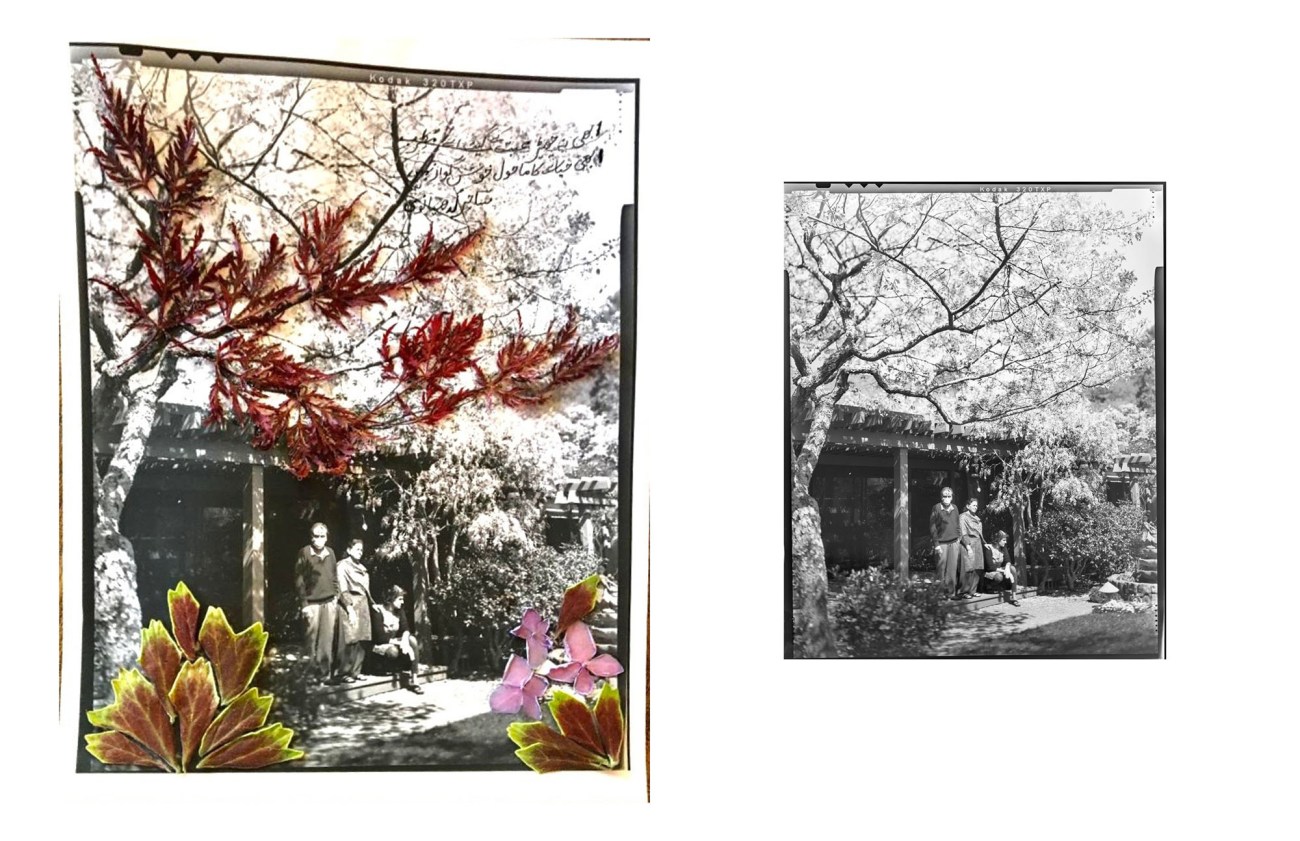
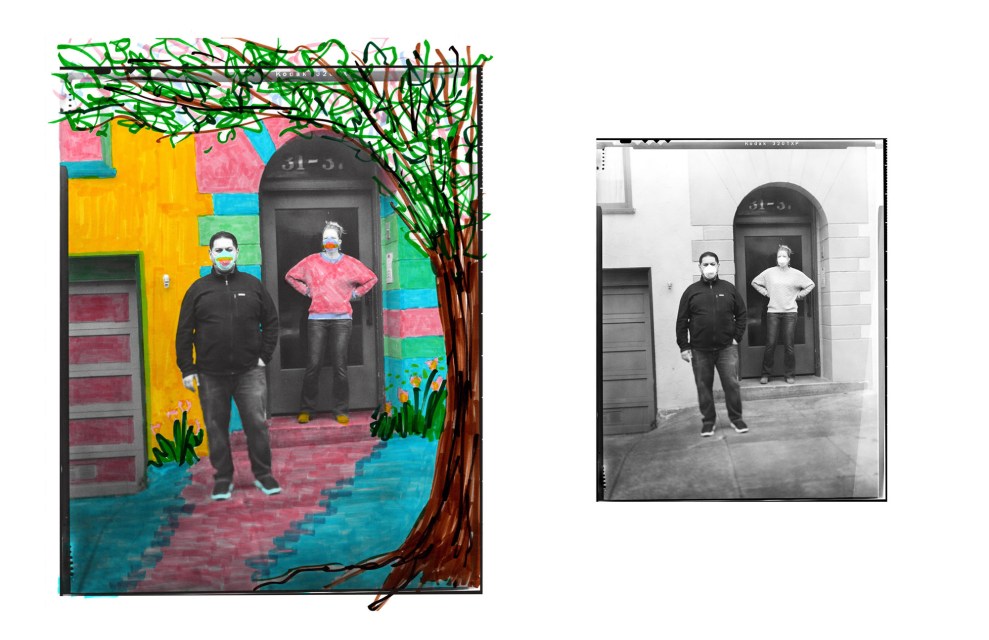


    A selection of images from Ashima Yadava’s Front Yard series

    “This is your story. Do what you want!” she tells them. “Write on it, paint, embellish.” Some faces are pensive and quiet; others are bursting with joy. “Homes are places of love, comfort, fears, and so much more. I see how each family deals with the pandemic differently.”

    Yadava keeps the 6-foot distance. “I miss the tactility of interaction. I wasn’t able to hug them, but the exchange of sharing the print and seeing the art they made of it added a bit of cheer.”

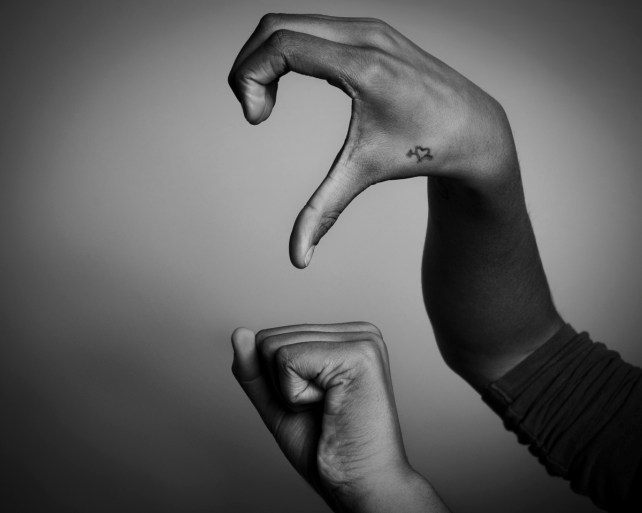
    In her latest work, a 40-page zine that’s a photographic representation of “Black Lives Matter” in American Sign Language, Yadava returns to the theme of hands. “The use of ASL not only speaks to this idea of pervasive silence on racism, but also deploys hands as powerful metaphors,” she says. “Hands are in equal part tools of oppression and agents of resilience and revolutionary change.” With the zine, she’s raising funds for grassroots organizations in their fight for racial justice.
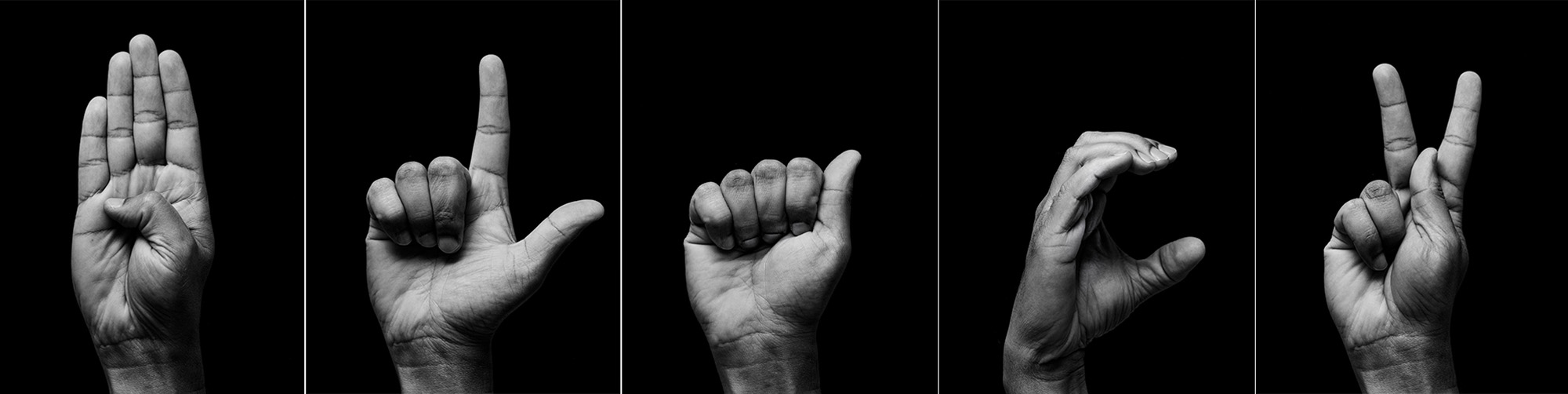
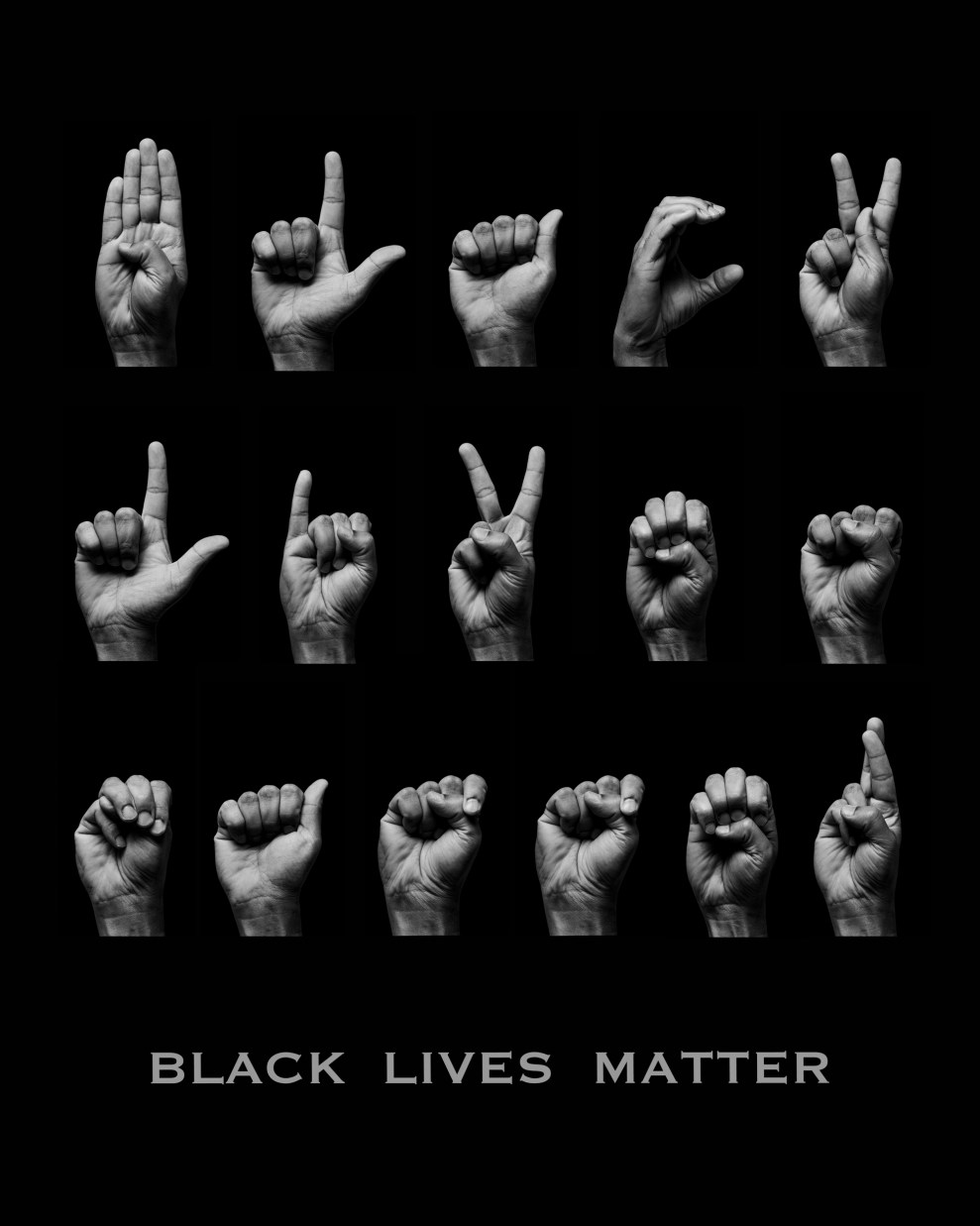
    “At the core of my work, I’m trying to answer some difficult questions and add to conversations around issues that matter,” she says. “I want to be a creative channel through which these stories are told. Because I have this skill, and if I can use it to amplify these voices, that’s what I’d like to do.”

    For more of Yadava’s work, visit AshimaYadava.com. Art inputs in the Front Yard series are by Hamida Banu Chopra, Molly Brennan, Mia Villa, Krish and Mayura Iyer, Shriya Manchanda, Nitya and Arvind Kansal, and the Shade family.

    Maitri is at maitri.org and 1-888-8MAITRI (1-888-862-4874). The National Domestic Violence Hotline takes calls 24/7 at 1-800-799-SAFE (7233), or 1-800-799-7233 for TTY. If you’re unable to speak safely, visit thehotline.org or text LOVEIS to 22522. The Department of Health and Human Services has compiled a list of organizations by state.
  • From Our Archives, Baseball!

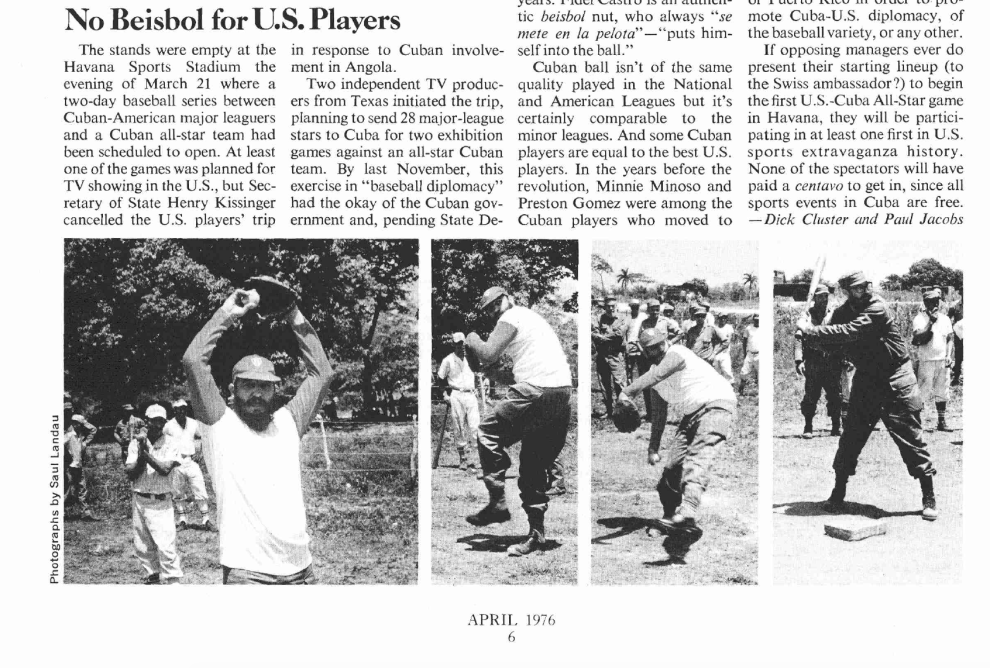
    Each Friday, I’ve been doing a bit of archive digging, looking back at old issues of Mother Jones to bring you the good stuff. So, let’s go back to our second-ever issue. It is from April 1976, replete with our usual strong reporting.

    We covered a rent strike in the Bronx’s Co-Op City (the high-rise heavy apartment megaplex brought to you by Robert Moses on the former site of an amusement park called Freedomland). We told the story of a worker-owned mine in Vermont. We looked at the presidential race (or, at least, listed musician endorsements: Pat Boone for Ronald Reagan; Linda Ronstadt for Mo Udall; the Allman Brothers for Jimmy Carter). We had a Der Spiegel reporter write from Vietnam.

    Also, we covered baseball.

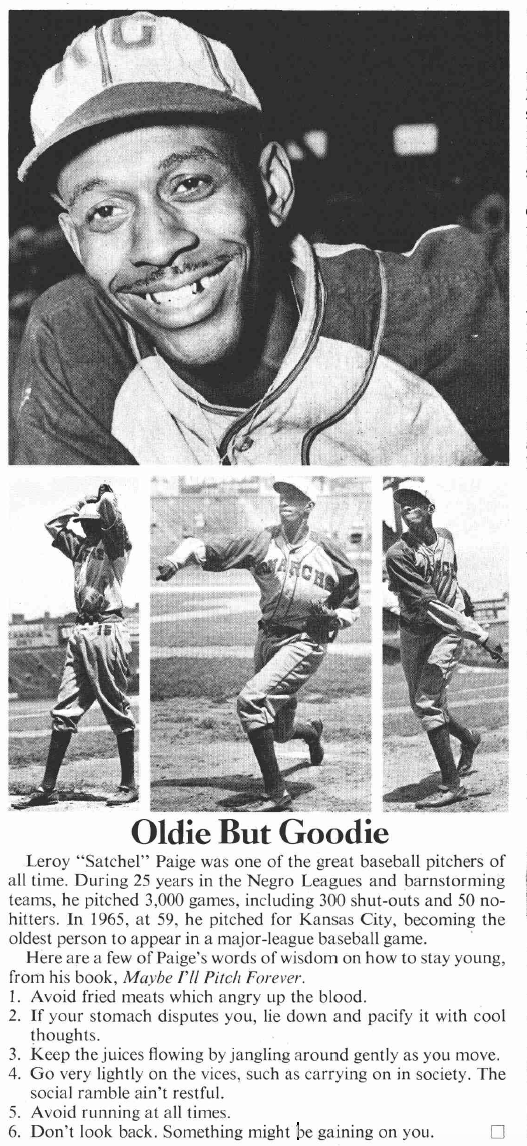
    The issue had two short pieces on baseball. One was significantly harder-hitting than the other: a report of a canceled trip by US baseball to Cuba, derailed by Henry Kissinger (over, the State Department said, Cuban relations with Angola):

    And the other is the best advice you’ll ever get in your life, from Leroy “Satchel” Paige, a pitcher who played until 59 years old both in the Negro Leagues and for Major League Baseball:

    Here are the six pieces of wisdom from Paige, taken from his book Maybe I’ll Pitch Forever:

    1. Avoid fried meats which angry up the blood.

    2. If your stomach disputes you, lie down and pacify it with cool thoughts.

    3. Keep the juices flowing by jangling around gently as you move.

    4. Go very lightly on the vices, such as carrying on in society. The social ramble ain’t restful.

    5. Avoid running at all times.

    6. Don’t look back. Something might be gaining on you.

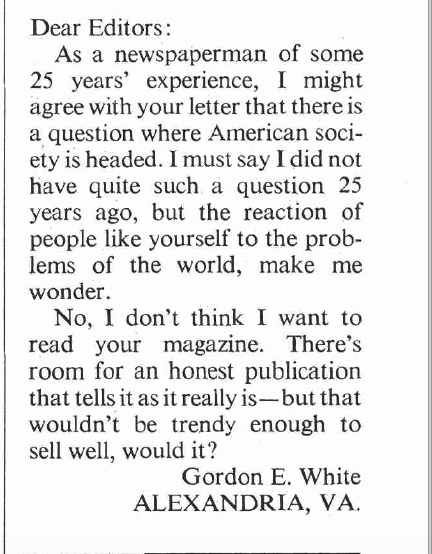
    Great stuff. Overall, I’d say Mother Jones was looking to be a top-flight magazine. But you can’t please everyone. One reader had picked up our inaugural issue. He wrote to us:

    Dear Editors,

    As a newspaperman of some 25 years’ experience, I might agree with your letter that there is a question where American society is headed. I must say I did not have quite such a question 25 years ago, but the reaction of people like yourself to the problems of the world, make me wonder.

    No, I don’t think I want to read your magazine. There’s room for an honest publication that tells it as it really is—but that wouldn’t be trendy enough to sell well, would it?

    Gordon E. White

    ALEXANDRIA, VA.

  • A Virtual Dinner Party With Anand Giridharadas, Free and Open to All

    Author, MSNBC analyst, Time editor, no fan of plutocracy, and possessor of one of the most stylishly written, justice-driven Twitter accounts Anand Giridharadas is inviting you to dinner. Join him tomorrow, Friday, for food and drinks. It’s part of Busboys and Poets’ weekly virtual dinner series; register for free. If you haven’t read Giridharadas on money and power and corporate consolidation, catch his latest at The.Ink or his bestseller Winners Take All: The Elite Charade of Changing the World. Spin his interview with podcaster and broadcaster Nelufar Hedayat, and watch his rundown of the challenges and conceptual solutions to capitalism’s economic arrangements.

    If you pull up a seat, get him going on the engines and excesses of growth; the widening wealth gap; and the illusions many of us uphold about corporate powers that are unaccountable to public oversight. He and Elizabeth Warren spoke last year about the case for a Big Tech breakup, and Giridharadas has intoned one of the most memorable truths of modern life: “Plutocrats are going to plute.”

    Tomorrow’s dinner is hosted by the series’ founder, Andy Shallal, who brings together artists, activists, and writers to eat and learn out loud. One imagines what a world would look like in which these collective acts, and changing our minds publicly, were more encouraged.

  • 3 Chefs to Watch and Rewatch for Recipes to Ease the Pandemic’s Grip

    If you haven’t heard, everything is solved: the pandemic, presidential corruption, climate armageddon, raging wildfires, assaults on human rights. All set. Pack it up. We did it! But if you still need a creative fix, turn to chef Latif of Latif’s Inspired. His unscripted, must-watch videos lead us into the kitchens of family-run restaurants (including his own); he shares recipes alongside his mother and sister; and he welcomes friends and family from the UK, Bangladesh, and worldwide.

    Also huddle around the fire with Anita Lo, whose Cooking Without Borders is creative beyond category; it’s no less extraordinary than her recent Solo: A Modern Cookbook for a Party of One. And get down with Jack Chaplin of the popular Daddy Jack’s Cooking With the Blues, running for 12 years. He shares blues history, restaurant secrets, and home cooking tips, with phenomenal camerawork by Lakisha and relentless circling by their dog Axel. “It’s a wonderful thing to see people assist each other” through the pain of the pandemic, he told me when cities locked down as he continued to cook safely at a distance for those in need. He launched a Patreon page to support the effort, and he’s about to release an album of live blues from his years organizing shows—including with the legend Lucky Peterson, his old friend, who’d played with Etta James and Otis Rush.

    Latif’s Inspired is here, Lo here, and Chaplin here. If you have pandemic tips and Recharge recipes to share, email us at recharge@motherjones.com.

  • When the Runway Lights Broke, They Used Their Cars to Land a Medevac

    Last Friday in Igiugig, a village on the Kvichak River in Alaska, residents of the town (population 70) drove at least 20 vehicles to the airport to cast light on the runway as a medevac plane circled above.

    A child needed to be airlifted to a hospital. But the lights of the state-operated airport weren’t operating properly. The vehicles guided the plane down.

    The story was reported by the local station KTOO and by the New York Times. One of the leaders of the group that helped the plane was Ida Nelson. Here’s a bit more about how she gathered people to help. It involves, of all things, a late-night steam bath:

    Ida Nelson had just climbed out of a steam bath and was getting dressed when she heard the LifeMed plane fly over her village…

    “Anytime there’s any type of planes flying after dark, you always assume it’s going to be something urgent and an emergency,” she said. 

    She can see the airport from her steam bath. And when she looked to see what was going on—the runway lights weren’t on.

    “Normally if you push the button like 10 or 15 times the lights will just light up,” she said. “But they didn’t and so the medevac plane flew over the village.”

    She hopped onto her four-wheeler and sped the few hundred yards to the runway. Her neighbor jumped in to help too.

    This is very moving, and concerning (fix those lights!). But it’s also a good example of how civic engineering undergirds our entire lives. (See the fact that the United States has two measurements of feet for no reason, and the havoc it causes.)

    There’s one way of thinking of these kinds of events—one-off moments of humanity peeking through. But it’s actually a civic mindset we’re reminded of. This isn’t the first time Nelson has been profiled for what seems to be her regular practice of helping her neighbors. She’s featured in an article in Hakai Magazine that highlights the practice of villagers in coastal communities sharing smoked fish in winter. It’s a bigger deal than that might sound:

    In a community where a jug of fresh milk is considered a luxury item, with a $20 price tag, fish shared from the Christensen smokehouse contributes nutritious food to freezers and pantries throughout the long, cold winter months. But each act of sharing involved in bringing salmon to a loved one’s dinner table—from mending nets to delivery, and even child care—serves an additional purpose. It gives a reason to check in with those who can’t fish themselves and to ensure they have everything else they need, like medication, a working furnace, and a shoveled driveway. Together, these interactions keep families and community members connected and thriving…providing support that’s just as essential to human survival as food.

    And here is Nelson again:

    Ida Nelson of the Bristol Bay village of Igiugig is Yup’ik and a single working mom. Because she doesn’t have the time to fish and hunt, she welcomes gifts of moose and fish each year. “I think we’re a lot richer than the statistics say we are,” she says.

  • From Our Archives, a Visit to the Culture Wars (of the 1990s)

    Do you remember the hysteria of the “culture wars”? In the 1990s—across magazine pages and college campuses and in books (Arthur Schlesinger Jr., hello!)—there was a growing concern about the culture. Ah, that vague noun. Much like today, discussions of the problem with the discourse or the culture fit the eye of the beholder. In grasping for facts that fit a feeling of anxiety, thinkers lumped in anything they could find.

    This led to one of my favorite sentences I’ve read in our archives—as I pull from it each week to give you a boost into the weekend: The opening line in Louis Menand’s 1995 piece “Mixed Paint.”

    The “culture wars”—the metaphor into which campus hate-speech codes, school prayer, Afrocentric school curricula, abortion, politically correct language, family values, affirmative action, the racial distribution of intelligence, deconstructionist literary criticism, sexual harassment policy, the Great Books, hardcore pornography, publicly funded art, and many other fractious things, are currently stuffed—are misfigured.

    I found comfort, and maybe you will too, in realizing how “stuffed” terms can be when they mean, in fact, whatever you want them to.

    The rest of Menand’s piece might not be worth the read. I don’t agree with much of it. Its best parts point out that these discussions over “culture” have occurred for a long time. He quibbles that the misconfiguring fear for liberalism in the “culture war,” much like the fear of “cancel culture” ruining free speech today, is actually a series of attacks (from every angle, all across the political spectrum) over who has power. Gripes about the end of the melting pot, and the end of liberalism, are misplaced. That’s all interesting, and worth remembering.

    But Menand, who now writes at the New Yorker and published the fantastic history of American pragmatism The Metaphysical Club, spins that out as a grand vision of liberalism as saving America. He believes that all this friction of ideas means America is actually finally doing some mixing, as real integration occurs. (I disagree!) He says liberalism is to thank for that. (I disagree, again!) And it drones on from there, with more than a vague hint of condescension.

    His most fascinating (and wrong) point, to me, is that the problem is that “liberalism has nothing substantive to say about culture.” While “liberals, like anyone else, have views about culture,” he writes, “liberalism doesn’t.” Think of the “cultural vacuum” of the SAT, as an example, he writes.

    Liberalism’s faith is that groups are fundamentally equal in capacity, so that bracketing race and gender to eliminate bias will produce demographically proportional results. There is no reason to believe that, in the cultural vacuum tests like the SATs are supposed to provide, people will score lower or higher just because they have breasts or darker skin. Holding cultural background constant, liberals believe we can measure, and reward, excellence and excellence alone.

    I think many would find the SAT example laughable. The test’s false neutrality is the problem. In a racist society, you cannot, as liberalism would hope, just keep “cultural background constant.” Menand holds out hope for the triumph of a neutral meritocracy that liberalism will create. Well, it hasn’t happened.

    But, at the same time, I think Menand is aware of how capitalist democracies are prone to complain about “culture” as a code for battles over inequality.

    The obsession with “culture” (as opposed to, say, economics) as the key to our national problems draws on an intellectual tradition which points to culture (high culture, indigenous culture, or folk culture, depending on the theorist) as the element of continuity and moral coherence in a world characterized precisely by its lack of respect for continuity and moral coherence. The trouble with this faith is that in addition to being socially and economically mobile and unstable, modern liberal societies are culturally mobile and unstable, as well. Capitalist democracies are not just permissive about cultural change; they actually thrive on it. A new taste means a new market. A free-for-all is exactly the sort of “culture war” capitalist societies produce.

    Even if you hate all of this Menand article, take comfort—hate-reading a long article can be a lovely weekend activity too. Plus, his recent one on affirmative action in the New Yorker has a markedly different series of conclusions. Check that out here.

  • A Top Court Resoundingly Affirms Trans Rights in Gavin Grimm’s Battle for Equality

    After a yearslong fight for equal protection in a bathroom access battle that’s made Gavin Grimm a trans hero, the 4th Circuit Court of Appeals ruled yesterday that it’s a violation of Title IX to bar students from bathrooms that match their gender identities. Grimm made national news in 2015 when his Virginia high school refused to let him use the boys’ room. Now 20, he celebrated the “incredible affirmation” not just for him “but for trans youth around the country.”

    In a tweet yesterday, he shouted out the relentless solidarity that sustained him: “Thank you to everyone at the @ACLU for inviting me in like family and fighting like hell to make sure justice was served.”

    “Fighting like hell” will be familiar if who’ve heard our namesake’s best-known quote, “Pray for the dead, and fight like hell for the living”—and it could use an extra beat: Fight like hell for the living, and mark victories when you score them. The fight doesn’t end, but wins dot its path. The trajectory is best seen by revisiting my colleague Samantha Michaels’ powerful 2017 profile of Grimm and enduring look at one of his attorneys.

    The victory, just as schools start up, is perfectly timed for students looking for signs of progress as a counterweight to the self-absolution and snarling discrimination of the revisionists onstage at the RNC this week. The headlines are stacked; they’ll keep elevating chilling reminders of the steep climb ahead. But a major win is a major win. Congrats to Grimm. Share thoughts at recharge@motherjones.com.

  • LeBron James Just Launched a Multimillion-Dollar Fight Against Voter Suppression in Battleground Districts

    If King James’ crossovers and dunks on Donald Trump in tweets and press statements weren’t enough to mobilize voters, the NBA star has another move: He’s leading a group of top athletes to fight voter suppression in heavily Black districts before the election. Collaborating with the NAACP Legal Defense Fund, he launched the group More Than a Vote, focusing on Ohio, Georgia, Florida, Wisconsin, Michigan, and other states beset by disenfranchisement and disinformation.

    Most poll workers are over 60, and many states are looking for younger recruits to join them. More Than a Vote plans to bring aboard paid workers and volunteers of all ages while prioritizing poll safety during the pandemic. The details are here. If you’re a poll worker in one of these states and want a shoutout, or have stories or concerns about ballot access, let us know at recharge@motherjones.com.

  • If the RNC’s Lies and Outright Lunacy Were Insufferable Last Night, Take Pharoahe Monch’s Timeless Advice

    Odds are good that the parade of absurdities, fantasies, and bizarreness at the RNC last night didn’t excite you about the Trump-Pence ticket, as surrogate after surrogate studiously tried to rewrite history with soaring racism and flag-draped propaganda. You might be looking for a creative fix. A catharsis. The kind of catharsis summed up in a tweet yesterday by one Pharoahe Monch, hip-hop truthteller celebrated for “Simon Says” and many other classics:

    Th1rt3en is Monch’s latest, with Daru Jones and Marcus Machado, and Monch is busy producing what’s promised to be “the most amazing short film in music history.” Mark your calendar. Monch’s team is shooting visuals this month and next, and his music has always been both catharsis and call to action. To millions of fans he’s an engine of solidarity and stamina; immunity-boosting endurance for, say, another night of the RNC. “I alleviated the pain with a long-term goal,” Monch raps in “Simon Says.” Follow him for recharges all week, whether you’re tuned in to the RNC or mercifully, blissfully checked out.

  • Postal Workers Heroically Rescued 1,225 Ballots Before an Election Deadline, While Trump Keeps Smearing Them

    While the president and his cozied-up postmaster general play with the fate and funding of the Postal Service, there’s some good news on the ground of post offices in Florida. A group of postal workers in Broward County took it upon themselves to break protocol in the name of protecting voting rights. Realizing they had stacks of ballots that wouldn’t be processed in time for an election deadline, the employees rushed to get it done by calling the Supervisor of Elections Office and requesting expedited delivery. The supervisor sent special couriers to multiple post offices to grab the ballots and speed them over, rescuing all 1,225 ballots.

    Assaults on the USPS and voting rights will continue. Guaranteed. Like the sun rises and pizza is good. Like Publix supermarket soda is delicious. (If you’re in Florida, don’t take Publix for granted.) These are guarantees in life, axioms of American experience, but here’s what else is predictable: unnamed acts of overperformance by and underrecognition of laborers in every industry who do what’s right and routinely do it well (or try to), and almost always without headlines acknowledging them. Relentlessly hard work goes on every minute by workers across public and private sectors, and you know, or are yourself, one of them. Send your story of boostable work to recharge@motherjones.com for a shoutout. Postal workers to the front.

  • From Our Archives, an Interview With Ntozake Shange

    Over the past few weeks, I have begun a long project of trying to read through the Mother Jones archive, piece by piece. You can too, here. (Well, sorry, you can read from January 1995 onward. Don’t fret, that’s plenty.)

    If you, like me, do some archive digging, I think you’ll find that magazine articles—both purposefully and accidentally—speak beyond their times. Consensus is conditional. The assumptions of 1995 can be glaringly out of step with today, or surprisingly close. These pieces serve as something like second drafts of history, or maybe first drafts of opinion. They not only tell us the story the author intended but also give us a peek at the world the author assumed the readers inhabited.

    A mundane example: We thought our readers would want to know about a private eye who solves ecoterrorist attacks—that is, attacks on environmentalists (or their pets). I think this article speaks to Mother Jones, the ’90s, and the Bay Area just as much as it does to one Sheila O’Donnell, private eye. (It includes a regressive joke involving “Dick Tracy” puns, too.)

    Here’s an example I enjoyed from our January 1995 issue, in the more timeless category: an interview with Ntozake Shange, a Black poet, playwright, and feminist writer who died in 2018. She segues from a discussion of batting down race science to an exchange about shifting language and norms. I think it still resonates today. Check it out:

    Q: About this Bell Curve business—

    A. Oh my God, it made me so mad. Do you believe that just because they can’t control us, they’re gonna say it’s Darwinian—[that] they’re better?

    Q: It’s not that they are better, just smarter.

    A: Well of course they are—we fed them! They took all the land, all the food—we ate chitlins and they ate beef! But who carried that nice food to them? And who is still talking and thinking? Now all they can say is that they’re better? It’s not even a new idea!

    Q: Toni Morrison writes about the ways we try to get over, around, and underneath our slave history, but it’s still there. How do you deal with that?

    A: I have spent my life undoing language until it works for me. We must not only repossess the language, we must deslaveryize it.

  • Gabby Giffords Spoke Last Night About Overcoming Despair. Here Are 3 More Ways to Tackle It.

    “Confronted by despair, I’ve summoned hope,” Gabby Giffords said last night, nine years after she was almost killed in a mass shooting as a Congress member from Arizona. “Confronted by paralysis and aphasia, I responded with grit and determination. I put one foot in front of the other. I found one word and then another.” Finding the words to describe despair, let alone overcome it, is a hugely personal project, and approaches differ, but here are three creative reads to get you going this weekend. Watch Giffords first, then dive in:

    1) All About Love, by Bell Hooks, or bell hooks, was written 20 years ago. Its insight into distancing is timeless:

    Although we live in close contact with neighbors, masses of people in our society feel alienated, cut off, alone. Isolation and loneliness are central causes of depression and despair. Yet they are the outcome of life in a culture where things matter more than people. Materialism creates a world of narcissism in which the focus of life is solely on acquisition and consumption. A culture of narcissism is not a place where love can flourish. The emergence of a “me” culture is a direct response to our nation’s failure to truly actualize the vision of democracy articulated in our Constitution and the Bill of Rights.

    All About Love is a poetic collection of critical essays on what resilience looks like, and it looks like bell hooks.

    2) The Invention of Solitude is Paul Auster’s moving memoir about his family’s skeletons—a philosophically penetrating book that draws a line between physical and social distance; enforced and chosen isolation; lockdown and evasion. Which of these we invent is an answerable question in Auster’s hands. Describing one family member, he writes: “[His] capacity for evasion was almost limitless…What people saw when he appeared before them was not really him, but a person he had invented…Solitary. But not in the sense of being alone. Solitary in the sense of retreat.”

    3) Albert Murray’s Stomping the Blues asks and empowers us all to keep the blues at bay. Murray is musical, lyrically questioning what he sees as orthodoxies in pursuit of creativity and freedom. He was a lifelong friend of Ralph Ellison, and a founder of Jazz at Lincoln Center. I interviewed Murray for the Village Voice in his New York home in 2003, before he passed away. Drop a line to recharge@motherjones.com if you’re down for a Murray marathon.

    Bonus! A dance video. Click the frame to unmute! Giffords here, hooks here, Auster here, Murray here. Dance here.

  • “Not Going Quietly,” a New Documentary on the Battle for Health Care, Gets a Boost at the DNC

    One of the most powerful speeches at the Democratic National Convention last night was given by health care activist Ady Barkan, who in 2016 was diagnosed with the terminal disease ALS. His spotlight continues to grow—far beyond a single convention: He’s also in the upcoming documentary Not Going Quietly, and an excerpt was shown last night. In almost every speech and interview, he strikes notes of practicality and hope, all too aware of the challenges of revolutionizing a system of power but convinced that the movement for health care is gaining speed. “I look at the freedom fighters past and present,” he told the New York Times before his speech. “People have endured such tremendous suffering, overcome such enormous structural obstacles.”

    Overcoming is a recurring theme of the convention, invoked on day one by Michelle Obama, who shouted out “all those folks who sacrificed and overcame so much.” “Hope is not a state of mind. It is a state of action,” Barkan told the Times. “It is in the praxis of resistance, solidarity, and love that we can find a path to” a world of accessible health care. For glimpses of Not Going Quietly, follow the film here and Barkan here. And if you have ALS or know someone who does and wants to share stories with Recharge, drop a line to recharge@motherjones.com.

  • Baseball, Bebop, Human Rights, and Freedom Movements in a New Short-Story Collection

    If you missed Michelle Obama’s powerful speech at the Democratic National Convention last night, catch it here. She vividly summed up “the story of America” by anchoring it in the lives of “all those folks who sacrificed and overcame so much.” “The story of America” is an expansive phrase that calls up endless places, people, and subplots, and it’s the subject of Mark Ruffin’s brilliant short-story collection about justice and equality in baseball and music. Bebop Fairy Tales is his first book in his 40-year career as a radio broadcaster, most recently a SiriusXM host, and it’s a detail-rich work of historical fiction that sets real athletes and artists in imagined circumstances.

    One climactic story, “The Sidewinder,” alludes to Lee Morgan’s 1964 album and takes us to Philly, where a 12-year-old explores his passion for baseball and bebop and navigates racial, cultural, and class lines. The story arc is challenging and risk-taking, all the brilliance you can expect from Ruffin (who once wrote a screenplay in which Fats Waller is kidnapped by Al Capone). Michelle Obama here, Ruffin here, “The Sidewinder” here.

  • Dorothea Lange’s Indelible Photos of Struggle and Survival Are Newly Archived Online

    The faces, places, and politics of Dorothea Lange’s photos during the Great Depression, Japanese American incarceration, Jim Crow, and other eras of inequality have echoes today, not just in the conditions she captured but in the strength of people she met. More of her work is now online, thanks to the Oakland Museum of California, whose team has digitized her archives. Her greatest themes are powerfully presented, from wealth inequality to wartime challenges, strategies for survival, and resilience. She overcame hurdles of her own, contracting polio at 7 years old and getting stranded in San Francisco after a robbery that took everything. But nothing kept Lange from her focus. She was the first woman awarded a Guggenheim Fellowship in photography, and she gave it up to take a job documenting history in the field.

    Lange called herself a journalist first, artist second, but she embodied the storytelling creativity and brilliance of both. Drew Johnson, the museum’s curator of photography and visual culture, tells the San Francisco Chronicle that Lange “hoped her photography would encourage empathy, motivate you to do something about [challenges in the world] and create a popular movement to relieve people of suffering.” Lange’s legacy is right this way (the museum’s archives) and here and here (glimpses from Mother Jones’ archives). Thoughts about her impact? We’re at recharge@motherjones.com.

  • A Galaxy Eerily Like Our Own Has Been Found 12 Billion Light-Years Away. Without a Single Trump Hotel.

    In a study published Wednesday in the journal Nature, scientists shared telescope images of a galaxy so many light-years away, and similar enough to our own, that its discovery challenges prevailing theories of galaxy formation. The bombshell finding “represents a breakthrough” that shows how “structures in nearby spiral galaxies and in our Milky Way were already in place 12 billion years ago,” said Francesca Rizzo of the Max Planck Institute for Astrophysics. Nowhere in the study is there indication of any evidence, direct or indirect, of Trump hotels, steakhouses, golf courses, or resorts. But the galaxy, named SPT0418-47, does include a rotating disk structure similar to ours. Its mass is also similar to the Milky Way’s, and it’s the earliest ever found with a galactic bulge.

    Catch the telescope images here, and enjoy a weekend free of the fear that galaxies can’t exist without a particular brand of hotels and golf clubs.

  • Laughter Is Powerful, Personal, and Political

    It’s no secret that laughter works miracles. It stimulates and relaxes muscles, reduces pain, and improves moods and immune systems. But sometimes when we, women of color, need it the most, it’s hardest to come by. And we need it right now. More than ever, you might say—even if it is always right now, and always more than ever.

    Laughter is my superpower. And it is loud. My laughter fills rooms, resonating and expanding from bass notes to mezzo-soprano. When I laugh hardest, it’s a full-body experience, my stomach rounded out, eyes shut, ribs shaking, and one arm reaching to cover my wide-open mouth. The truth is that my laugh is as essential to me as anything else. It’s a form of survival and catharsis in the face of suffering.

    But I remember too many times and spaces in which, and people for whom, my laughter has been too loud. Elderly white ladies in almost every kind of setting, particularly restaurants; middle-aged white men in office spaces; extended family.

    When I started a career in my mid-20s, I was both embarrassed and indignant at being told to laugh quietly or not at all. To make myself smaller. To take up less space. I would nervously apologize.

    Now I don’t. Apology would justify the unjustifiable: the right someone presumes to have to referee my laugh, to tell me to take my place in the background. I might laugh when just a smile would do—but I see no reason to mute my joy or withhold its expression. The foreground is ours to claim by organizing, protesting, voting, running for office, hiking, writing, and laughing.

    Comedians Sarah Cooper and Ziwe Fumudoh know it too. They get me laughing by using humor as an act of resistance—to racism and sexism and a culture of racialized misogyny that’s all too familiar in the United States. To laugh loudly is to reject the assumption that women of color must, at all costs, watch our place. Cooper and Fumudoh are in their place and out front. And they are really, really funny.

    Photos of Kamala Harris are everywhere this week as we witness her historic rise as a vice presidential candidate. She is smiling big, unabashedly taking pleasure in the moment. I imagine she knows the power of vocalizing, whether she’s at the back of the room or holding the mic; at the edge of power or the center of it; in a moment of rage or a fit of laughter.

    Venu Gupta is Mother Jones’ Midwest regional development director. Laugh with her at recharge@motherjones.com.

  • 62 Years Later, the Most Iconic Photo in American Music Inspires Celebration and Re-creation

    The power of a single photo to galvanize generations of artists has never been more clearly captured than in the one taken 62 years ago today on the sidewalk of 126th Street between Fifth and Madison in New York City. It’s the most immortalizing image in American music. On August 12, 1958, 57 musicians got together for an extended reunion that doubled as an Esquire cover shoot. Titled “A Great Day in Harlem,” the photo features legend after legend, their collective creativity giving the moment its timelessness. To celebrate, the Billie Holiday Theatre and a production group are inviting artists to reimagine the scene.

    The new photo, happening today at the Black Lives Matter mural in Bed-Stuy, will be called “A Great Day in New York.” “We find ourselves at the beginning of another civil rights era,” organizers wrote, adding that artists should wear masks for the re-creation. For a powerful behind-the-scenes look at the 1958 moment, catch this video.

    Who’s in the original? In nonalphabetic order: Coleman Hawkins, Dizzy Gillespie, Thelonious Monk, Count Basie, Art Blakey, Sonny Rollins, Jimmy Rushing, Horace Silver, Charles Mingus, Mary Lou Williams, Marian McPartland, Hank Jones, Pee Wee Russell, Stuff Smith, Gerry Mulligan, Oscar Pettiford, Red Allen, Buster Bailey, Jo Jones, Benny Golson, Roy Eldridge, Art Farmer, Milt Hinton, Sonny Greer, Bud Freedom, Gene Krupa, Eddie Locke…and many, many others. Here’s the photo and here’s the video. Recharge shouts and more to recharge@motherjones.com.

  • A Native American Artist’s Stunning Protest Mural Wins the “Art on the Streets” Award

    The 66-foot-tall painting depicts the artist’s 14-year-old daughter, her face covered by a handprint that symbolizes missing and murdered Indigenous women and girls, on the side of a downtown Colorado Springs building. Painting as an act of protest and education is artist Gregg Deal’s way of calling attention to “a silent epidemic,” he says. And his mural, Take Back the Power, just won the city’s Art on the Streets award.

    His daughter helped him paint it; she wanted to help her father give voice to the many who are voiceless. “As a Native person, I get to be up there representing Native people and this epidemic,” she told the Gazette. “I think it’s very important that we get that type of representation.” To create the mural, her father partnered with the Haseya Advocate Program, a nonprofit resource for Native survivors of domestic violence and sexual assault. “Any amount of awareness” is essential, says Monycka Snowbird, an advocate with the program. “We’re hoping people see this, google it, and get more background.”

    Watch the 5-minute video of the mural’s creation, with inspiring comments from the artist and his daughter. A Recharge shoutout to the Gazette’s visual team, including Katie Klann, for the powerfully produced video.