• How Expensive is New York City?

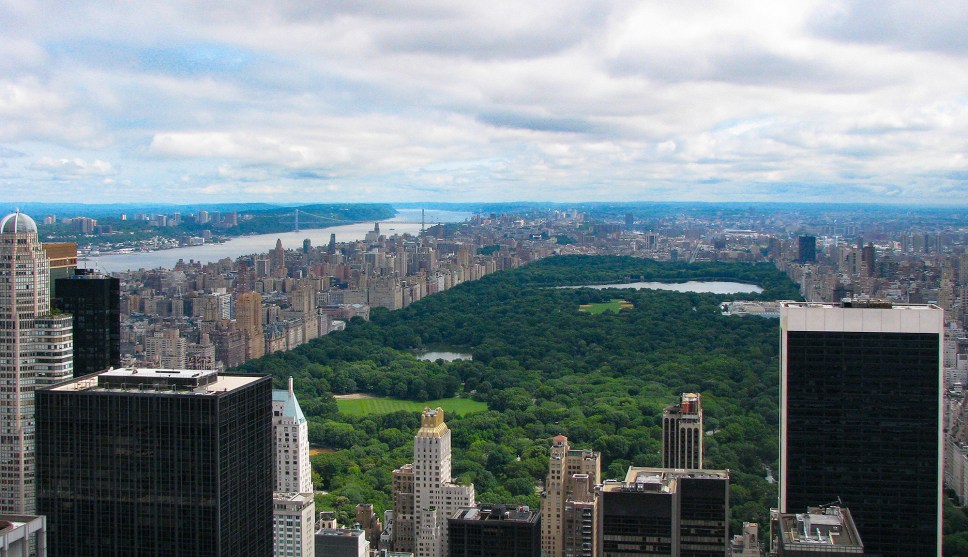
    Just look at all this wasted land in the middle of the city that could be used for more housing.Kevin Drum

    Are you all rested up from the July 4th holiday? Great! Let’s start out the week with a fascinating subject: how much does it cost to live in New York City? Are costs skyrocketing because so many people want to live there? There’s no such thing as definitive, smoking-gun evidence on this score, but I can provide you with a whole bunch of fragmentary evidence that should allow us to draw tentative conclusions.

    Three words of warning. First, this post has a ton of charts. But don’t worry, we’re going to blow through them pretty quickly. Second, all figures have been adjusted for income growth over the years. I used the Census Bureau numbers for household income in the northeast US. Third, all of these charts have flaws. I’m going to point them out as we go along.

    First up is a HUD housing report:
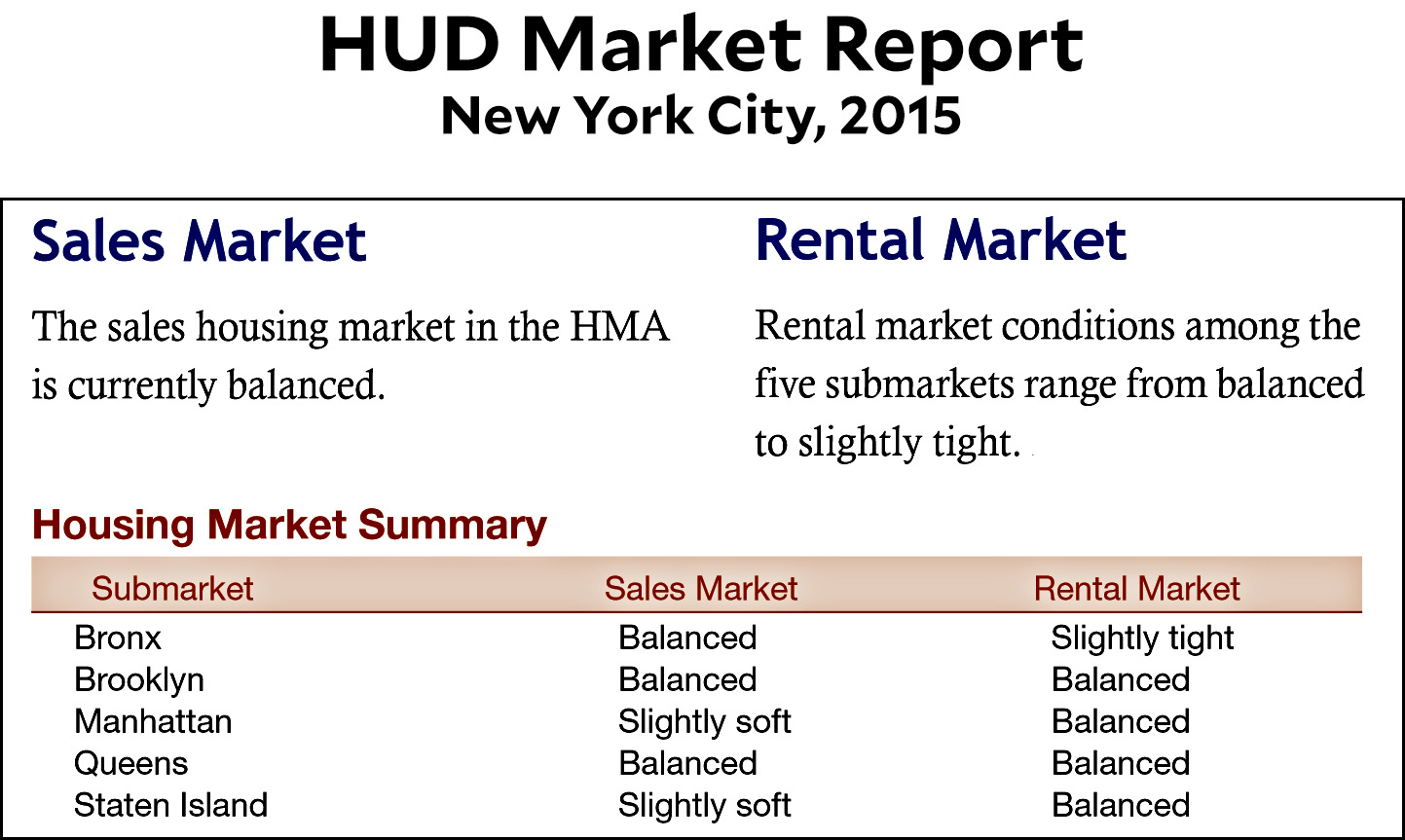
    This suggests that demand for housing is not abnormally high. The problem is that this report is from 2015, which is the most recent year that HUD has looked at New York City. However, there’s also this:
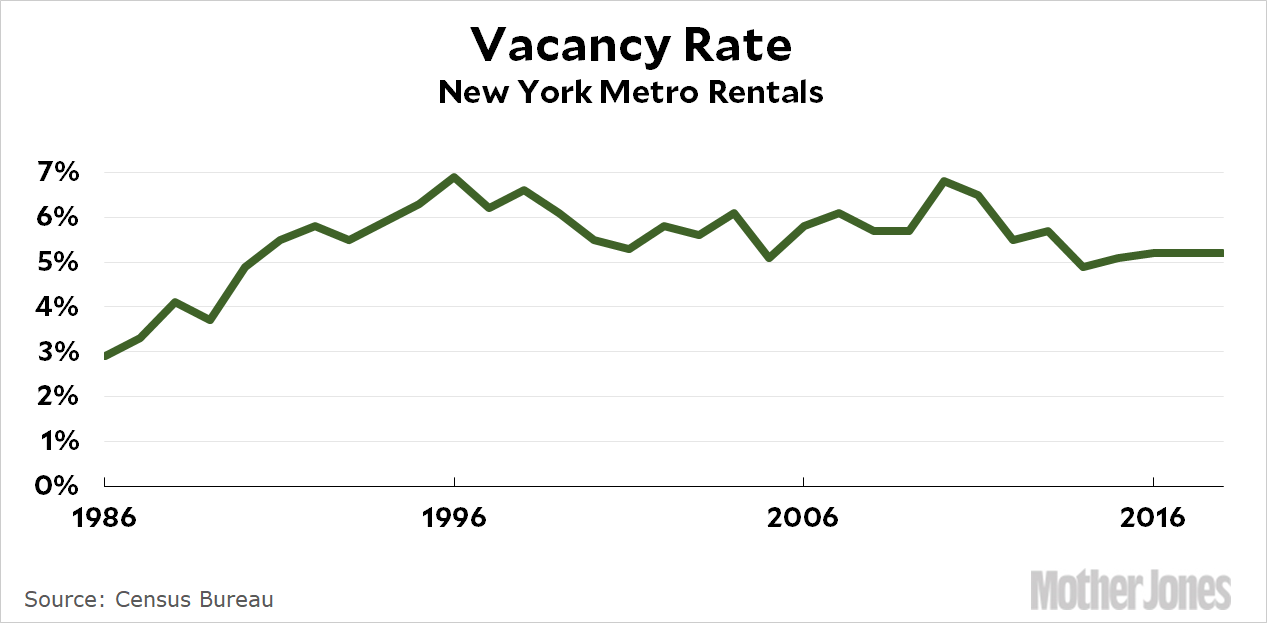
    Back in the ’80s, demand was high and that drove the vacancy rate down. For the past 20 years, however, it’s been pretty steady at around 5-6 percent. That doesn’t suggest a super tight housing market. Now let’s look at prices:
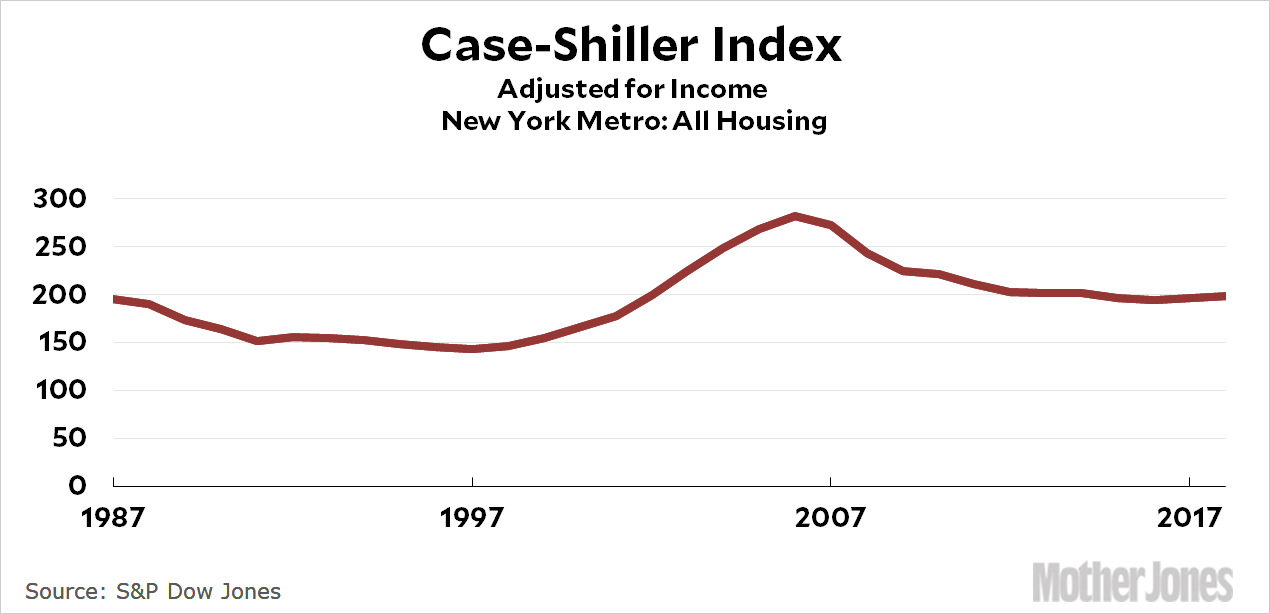
    This is for home sales, not apartment rents, but rents generally follow sales prices. Over the long term, this provides us with a fairly reliable look at one piece of the market, and it shows that prices are at about 1987 levels. One problem is that this index includes all housing, but it’s the cheaper places that have seen the biggest increases. Luckily, there’s a Case-Shiller series for that too:
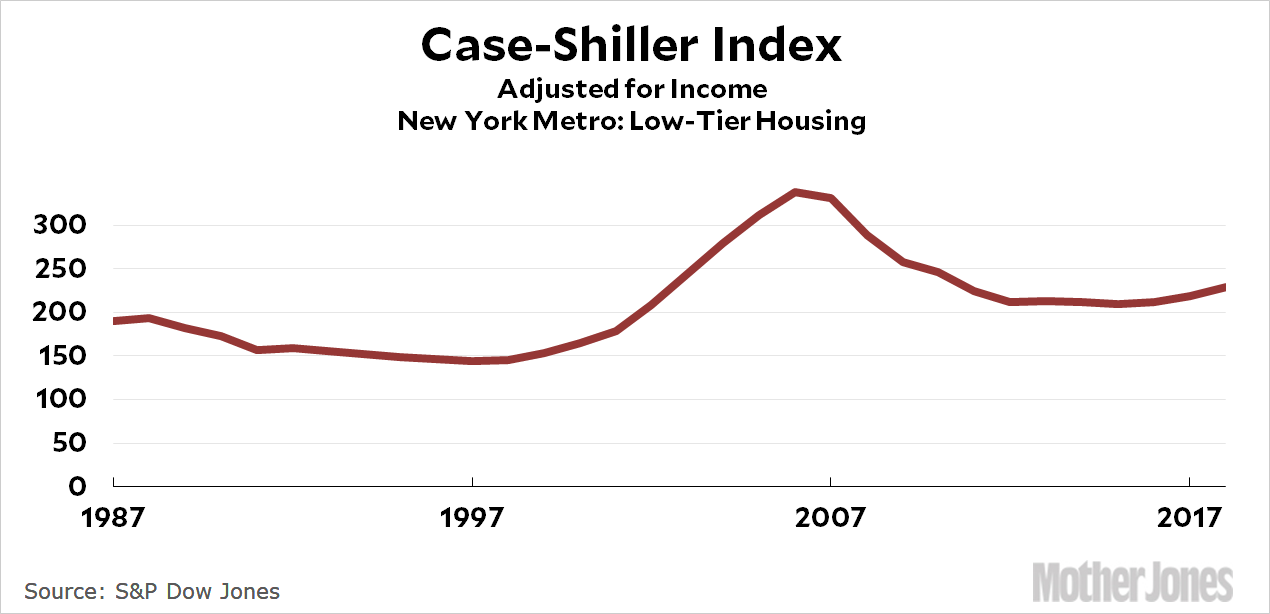
    Cheap housing was also at 1987 levels until a couple of years ago. It’s now about 15 percent higher. However, like the previous chart, this one covers the entire New York metro area, which includes Long Island and northern New Jersey. There’s nothing we can do about that, but here’s a look at condo pricing:
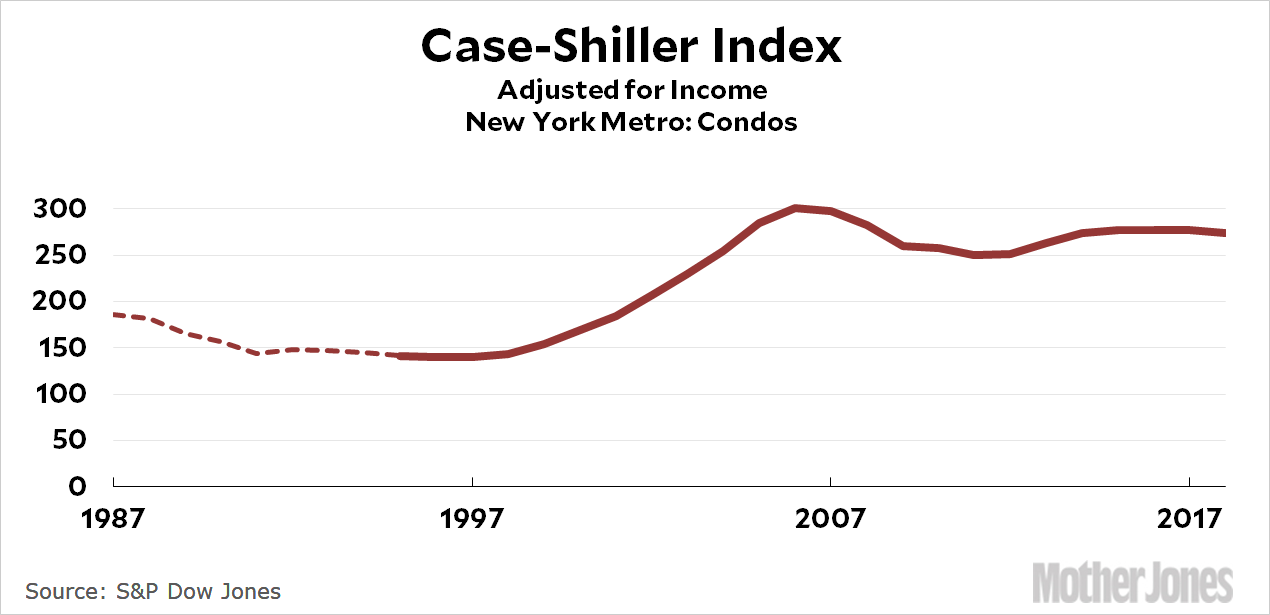
    It’s reasonable to guess that the condo market is heavily weighted toward New York City, and this suggests that prices have gone up 40 percent or so since 1987, mostly thanks to a huge boom in the aughts. Now let’s take a look at an estimate of rents just for the five boroughs:
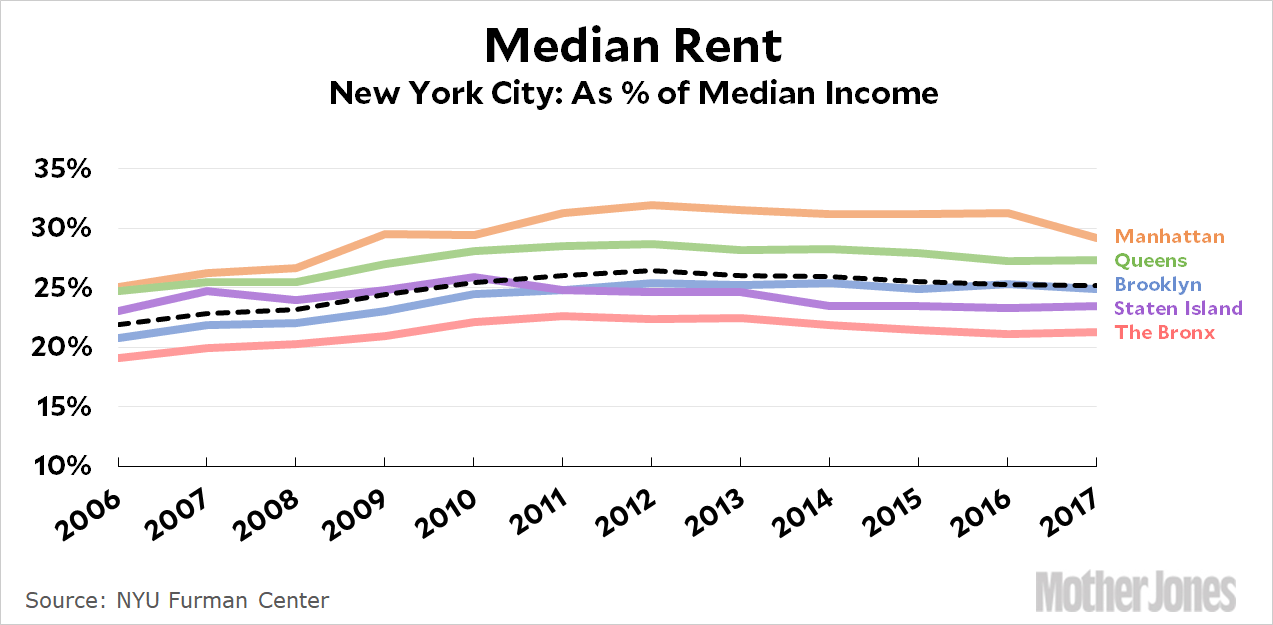
    Don’t worry about the absolute numbers here, which strike me as low. What we’re interested in is the growth rate, and aside from Staten Island this shows increases of 10-20 percent. The problem with this chart is the short time frame: it shows us what’s happened since 2006, but not before that. Here are some other short-term estimates:
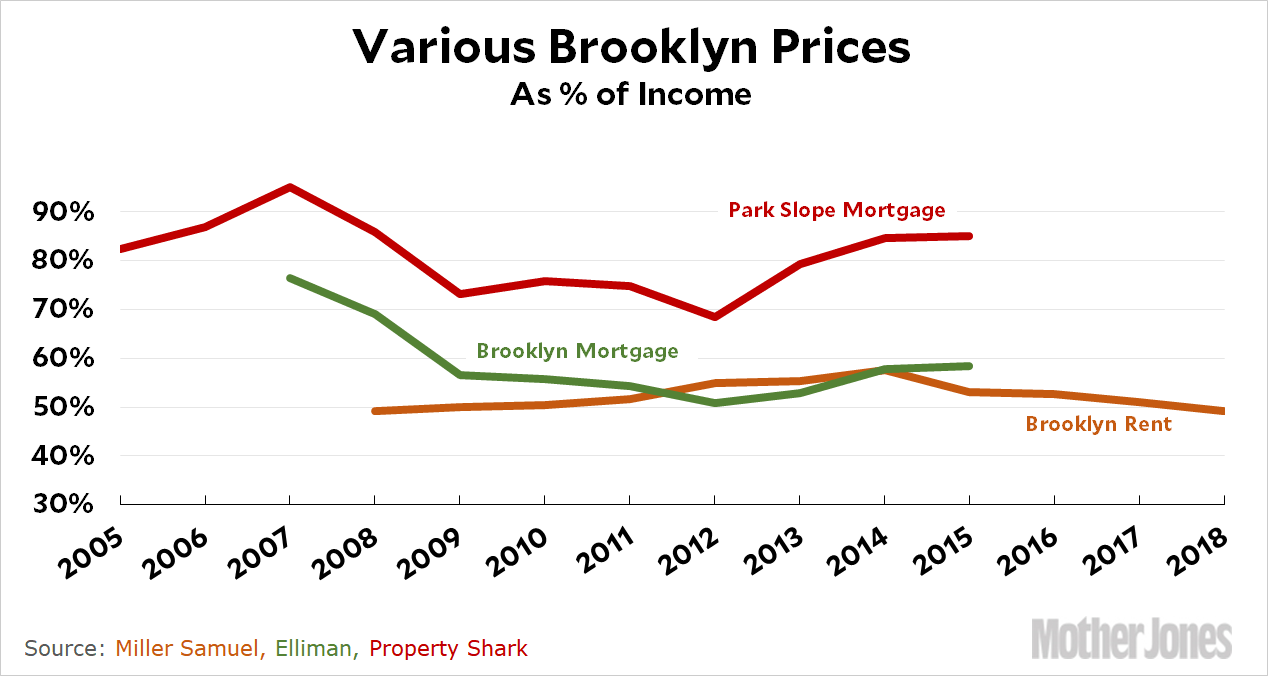
    One of these is for rents, and the other two are average mortgage payments based on price and interest rates. All of them suggest recent flatness in the Brooklyn market.

    And now for one final chart. Here it is:
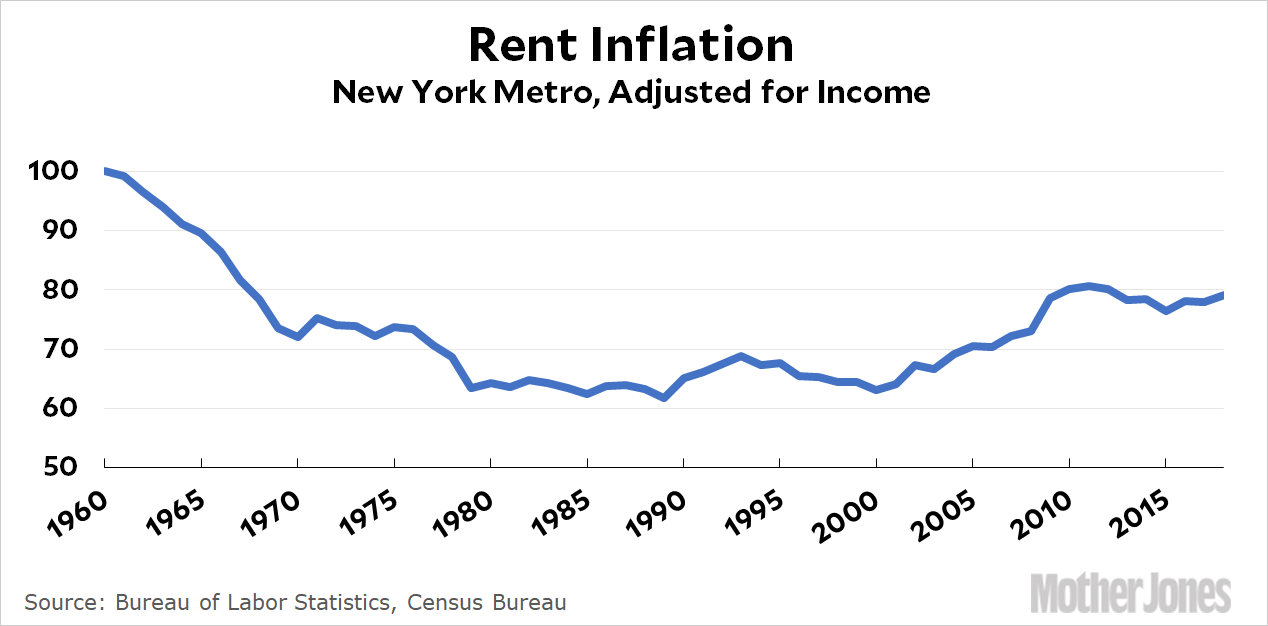
    This is the BLS estimate of rent inflation. It covers the entire metro area, but that doesn’t seem to be a problem: it mostly matches up with everything else we know. In other words, despite the fact that this is the statistic I would have trusted the least going into this exercise, it’s probably actually the best. It seems to be fairly accurate, and it goes back a long way. What it shows is that average rents in New York are currently higher than 1995 levels; about the same as 1970 levels, and lower than 1960 levels.

    In generational terms, this means that if you’re hunting for an apartment right now you’re worse off than Gen X at the same age; about the same as boomers; and better off than the Silent Generation.

    If I had to choose one single measure that best represents NYC housing, this would probably be it. At various times you’ll find differences between classes of housing (luxury vs. median), between types of buildings (co-ops vs. condos), and between areas (Manhattan vs. Brooklyn, Tribeca vs. Dumbo). Sometimes one of these is the hot market, other times it’s one of the others. So if you’re focused on a specific kind of place in a specific area, this might not represent your personal experience. On average, however, it’s a pretty good guide.

    POSTSCRIPT: One problem that all of these charts have in common is rent control. Since many apartments in New York City are rent stabilized, it means the estimates shown here are an average of places that are and aren’t rent controlled. Thus, they probably overstate the price growth of mid-range apartments that are rent controlled and understate the price growth of higher-end apartments that aren’t. Beyond that there’s not too much to say. There’s no telling what market rent growth would be like if rent control weren’t around, and anyway, it doesn’t really matter. Rent control is around, and it affects the real-world prices that apartment dwellers pay in New York.

  • British Ambassador Says Trump White House Is “Clumsy and Inept”

    It was nice knowing you, Kim.Wiktor Dabkowski/ZUMA

    It looks like Great Britain may need to appoint a new ambassador to the US:

    Sir Kim Darroch, one of Britain’s top diplomats, used secret cables and briefing notes to impugn Trump’s character, warning London that the White House was ‘uniquely dysfunctional’ and that the President’s career could end in ‘disgrace’….In the memos, seen by The Mail on Sunday following an unprecedented leak, Sir Kim:

    • Describes bitter conflicts within Trump’s White House – verified by his own sources – as ‘knife fights’;
    • Warns that Trump could have been indebted to ‘dodgy Russians’;
    • Claims the President’s economic policies could wreck the world trade system;
    • Says the scandal-hit Presidency could ‘crash and burn’ and that ‘we could be at the beginning of a downward spiral… that leads to disgrace and downfall’;
    • Voices fears that Trump could still attack Iran.

    In one of the most sensitive documents, Sir Kim writes: ‘We don’t really believe this Administration is going to become substantially more normal; less dysfunctional; less unpredictable; less faction riven; less diplomatically clumsy and inept.’

    In fairness, it doesn’t look like Darroch actually said much that you couldn’t glean from the front page of the Washington Post. Everyone already knows that Trump is an incompetent buffoon, after all.

  • Here’s My Take on Free College For All

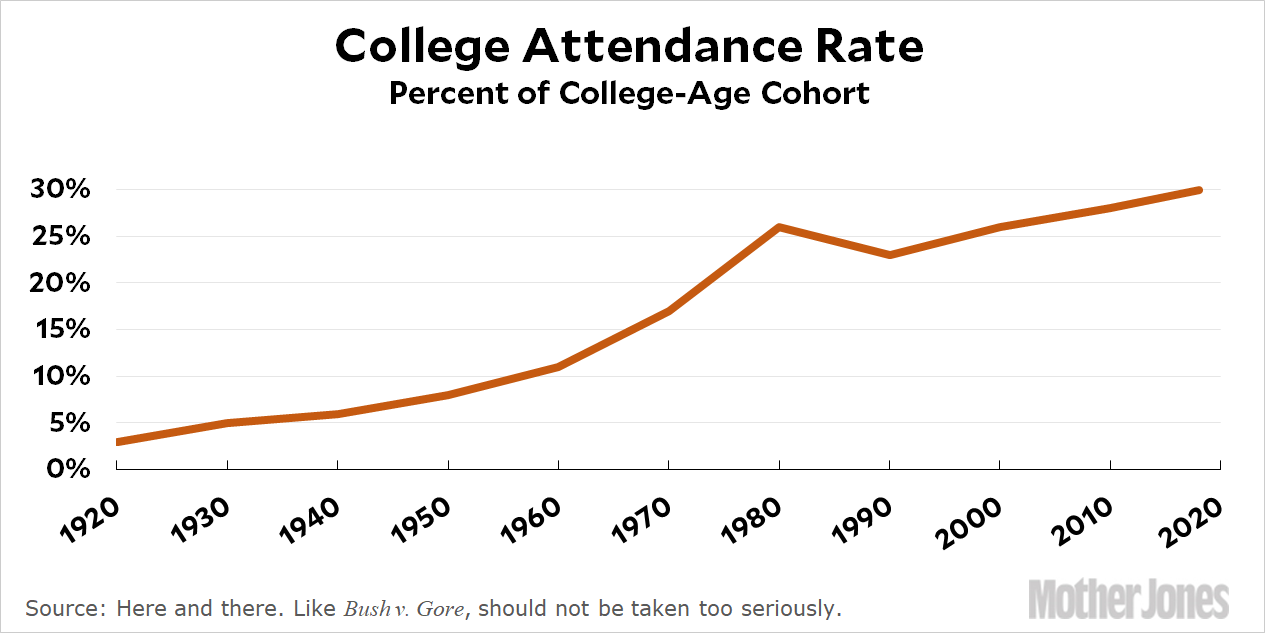
    A few days ago I was chatting with friends about the high cost of college and whether we should do something about it. I’ve been on the fence about this for a while, and one reason has to do with who benefits from a university education these days. Obviously all of society benefits, but that’s not what I mean. I’m talking about who, specifically, benefits the most.

    Here’s a nickel summary of college over the past century. In my grandparents’ generation, college was expensive and almost nobody who wasn’t already well-off attended. Both my grandfathers, for example, wanted to go to college and would have done well, but they were working-class kids and it was out of the question.

    This changed during my parents’ generation. After World War II, we actively pursued a policy of sending working-class children to college and making it cheap. Both my parents went to USC, even my working-class mother who attended on a scholarship. By my generation public universities were all but free, but they increasingly served the middle class. Finally, in the generation after that, the cost of public universities rose tremendously and the working class was served less and less. That brings us to the present: today, the vast majority of 4-year college students are middle-class or upper middle class, and for a variety of reasons this is unlikely to change much.

    So: should public taxes be used to educate the sons and daughters of the working class? You bet, and that’s what we did in the ’50s and ’60s. Should public taxes be used to educate the sons and daughters of the upper middle class, who will use that education to land jobs that pay far more than any working-class kid can hope for? Hmmm. That’s a lot less clear.

    There’s also the problem that public universities are run by the states, but on the campaign trail the notion of free college is treated as a federal issue. That’s a bad mix. It’s really hard to get the incentives and rules right when states set the price but the feds are paying the bill.

    So that’s two reasons to be skeptical of free college for all. Here’s the third one: on the list of top domestic issues facing us, I just don’t think it ranks very high. Here’s my very rough (and non-exhaustive) personal ranking:

    1. National healthcare
    2. Climate change
    3. Labor union reform/card check
    4. $15 minimum wage
    5. Childcare
    6. Black/white education gap
    7. Immigration
    8. Redistricting reform
    9. Lead remediation
    10. Charter schools
    11. Campaign finance reform
    12. Free college
    13. Gun control
    14. Middle class tax cut
    15. Reparations

    My rankings are, broadly speaking, a combination of how important a topic is and how likely it is to get something done about it. For example, even if gun control and reparations are more important than I think they are, I don’t think there’s the slightest chance of getting anything serious accomplished on those fronts. So why bother wasting political and emotional energy on them? Likewise, I think the black/white education gap would move up to fourth on my list if it were based solely on societal importance, but I’ve moved it down because it’s so enormously difficult to figure out what we can do about it.

    Obviously you might disagree, and I’m not trying to convince you of anything here. This is just me. And while I could be persuaded to move things around here and there, I don’t think I could be persuaded to make any drastic changes. Given all the other problems facing us, I just don’t think the cost of college even makes the top ten, let alone the top five—and realistically, we’d all be over the moon if we could make real progress on even the top five. Personally, I consider the top three to be in a class of their own, and I’d be pretty happy if essentially all of our energy were spent on them.

    So, anyway, there you have it: my take on free college. It sounds great, and I’ve got nothing really against it. But it’s nowhere near important enough for me to think it should be a major campaign issue.

  • Even If Climate Change Doesn’t Affect You, It Will Still Affect You

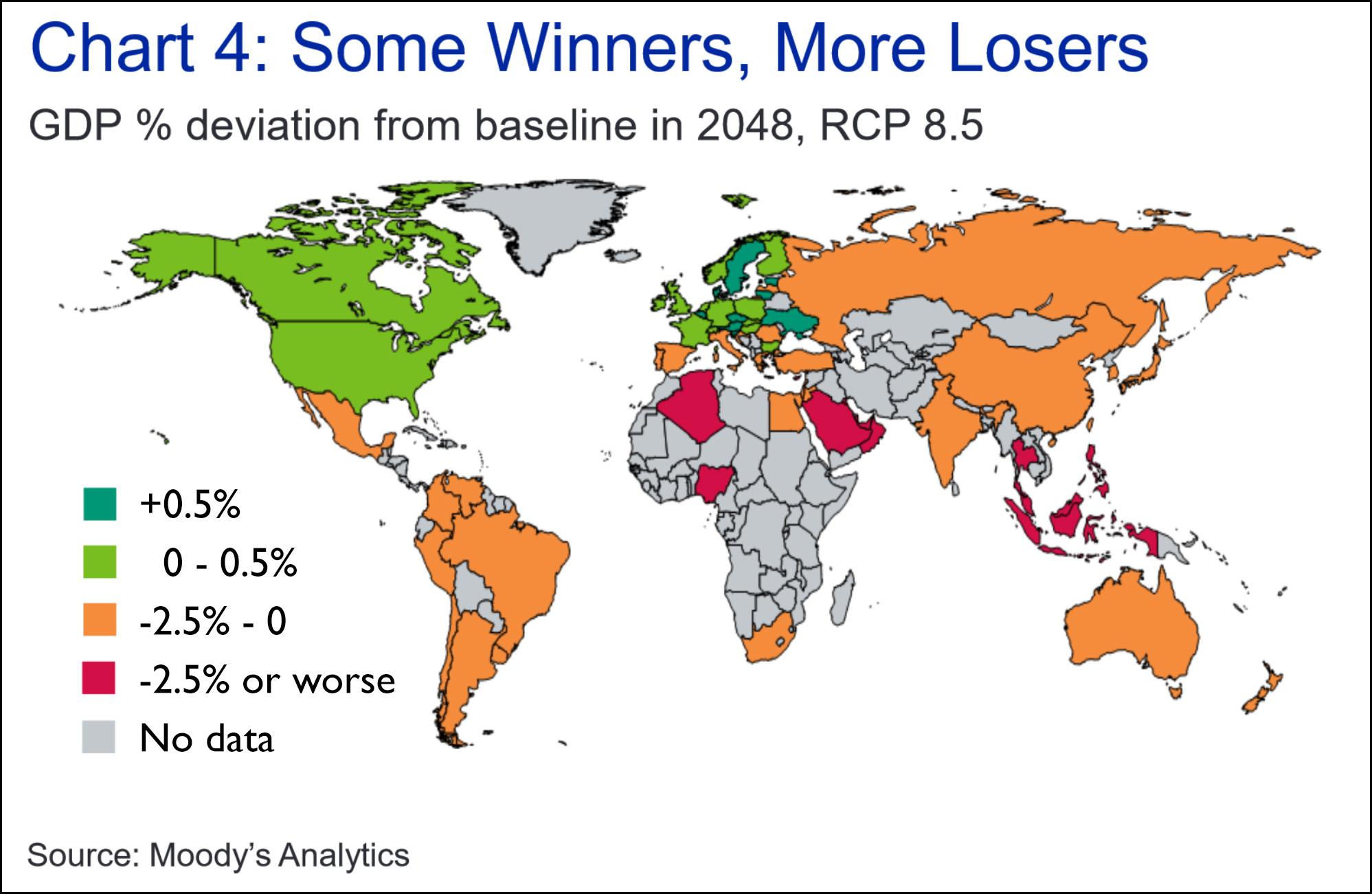
    Moody’s Analytics recently released a climate change report that’s a useful corrective to some of the skeptics who say that global warming isn’t really all that dangerous. Taken in isolation, the point they make is roughly correct: in economic terms, the effect of climate change on the United States isn’t likely to be too horrible. Most assessments put it at less than 1 percent of GDP by 2100.

    But that misses an important point: the global north will suffer the least from climate change and has the most economic resources to deal with it best. Moody’s estimates go only through 2048, but here are their country-by-country estimates in map form:

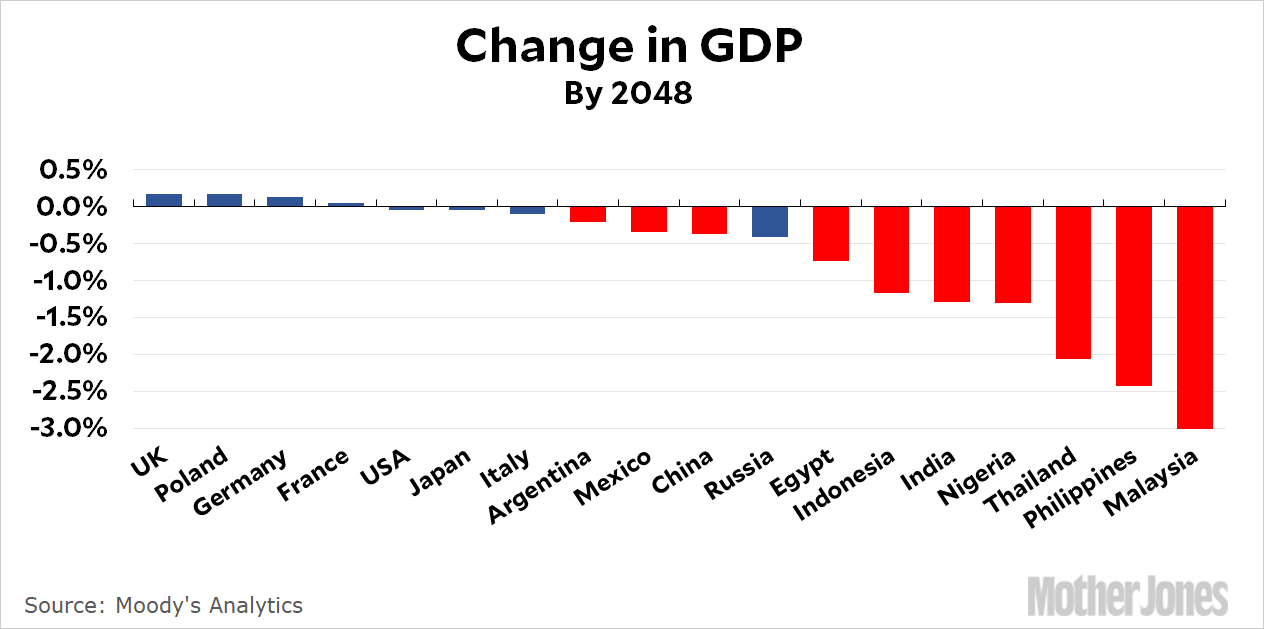
    And here are the effects on the largest populations of the world:

    The countries in blue are in the global north. The countries in red are in the global south. And this is only through 2048. By 2100 these effects will double or triple if we don’t seriously address rising temperatures.

    If you’re anything close to a decent human being, you want to do something about this. The global north is responsible for the bulk of global warming but it’s the global south that will pay the biggest price. This is, obviously, not right.

    But even if you’re a hyper-nationalist who just doesn’t care about India or the Philippines, these numbers should still scare you. The effect of climate change on the global south will be severe enough to cause droughts, wars, and massive migrations that will inevitably affect us too. There’s just no way to seal ourselves off from this. Even the (relatively) minor mass migration from Syria a few years ago was enough to send Europe into a panic and move its politics in a noticeably authoritarian direction. And that was nothing compared to what’s coming.

    In other words, even if you’re not a decent human being, you really ought to take climate change seriously. You may not be interested in climate change, but it’s very definitely interested in you.

  • Friday Cat Blogging – 5 July 2019

    My parents both went to USC, so naturally I’ve been a USC fan all my life. But I wonder if I should change loyalties? When I was roaming around the UCLA campus last weekend I discovered that there’s a UCLA cat. He apparently belongs to the Department of World Arts and Culture, which provides him with a food bowl and a note to please not overfeed the cat. Perhaps one of my readers happens to know someone who knows someone who knows the cat’s name?

    Anyway, it was a very calm and friendly cat, and it certainly says good things about UCLA that they have a little mascot like this around. Does USC have a cat?

    UPDATE: Apparently this cat used to hang out at the Powell Library and is known as Powell Cat. Fan club is here. But why did his loyalties change to the World Arts building?

    And for you dog lovers, I also have a UCLA dog. This guy had just finished doing his business on the lawn, and as you can see, he was pretty pleased with himself. I photoshopped out his leash in order to provide the illusion of total freedom for this fine-looking canine.

  • Trees Will Not Save Us From Climate Change

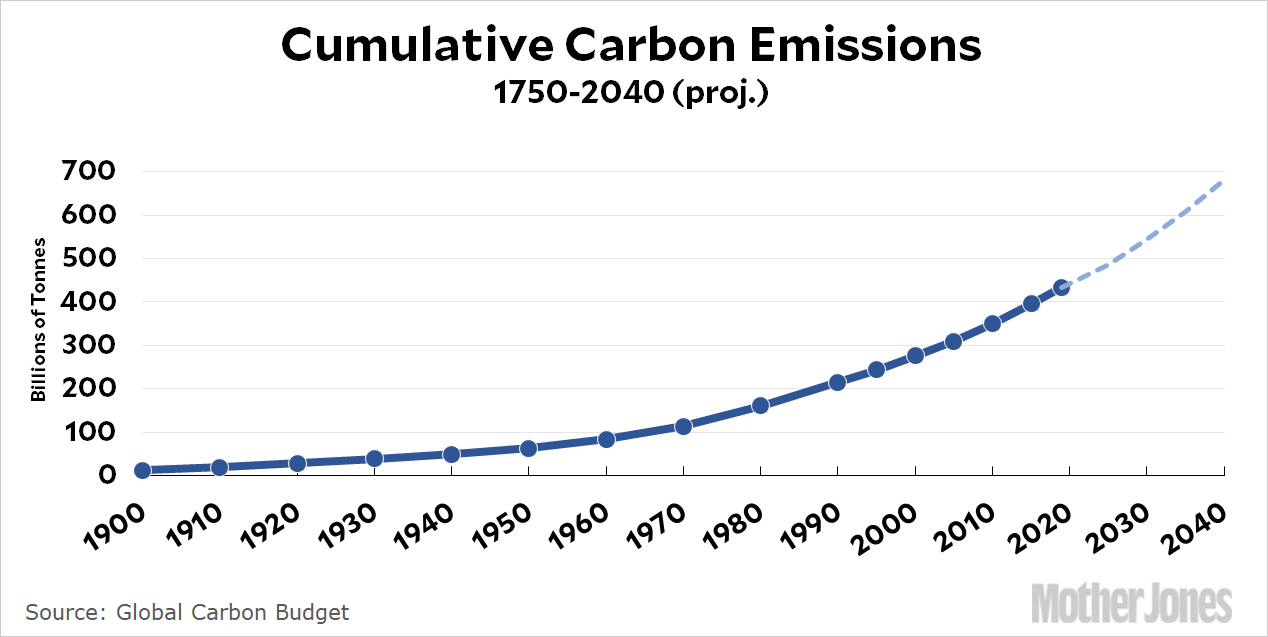
    A new paper is getting a lot of attention for its claim that the earth has about 2 billion acres of land that are currently unused and could support the planting of 500 billion trees. Once the trees were grown, they’d capture about 205 gigatonnes of carbon. That sounds great, but let’s give it some context:

    We have emitted about 450 gigatonnes of carbon since the start of the Industrial Revolution. At our current rate, we’ll add another 205 gigatonnes in less than 20 years.

    If we could really get all the countries of the world to plant trees on currently unused land that’s suitable for reforestation, that would be great. But even if we went all out and got 100 percent cooperation, it would take 50 or 60 years for these forests to grow to maturity. Unless we do something about actual emissions, we will have added at least 500 gigatonnes of additional carbon by then, bringing us to total emissions of about a billion gigatonnes of carbon. The trees would make only a small difference.

    By all means, we should take this seriously and plant lots of trees. Even 50 or 100 gigatonnes of carbon capture would be a lot. But don’t fool yourself into thinking this is any kind of free ticket. We still have to figure out a way to reduce actual emissions by a huge amount if we want to avoid planetary catastrophe.

  • Trump Says Citizenship Question Needed for “Many Reasons,” None of Which He Can Explain

    Shutterstock

    Here is the head of the executive branch of government explaining why we need a citizenship question on the census:

    I guess I don’t need to point out that we don’t need a citizenship question for any of these reasons. Trump’s problem—and the Justice Department’s—is that it’s hard to think of any reason you need a citizenship question on the census.

    Except for the real one, of course, which is that it’s a transparent attempt to reduce the count of undocumented workers, which would mostly reduce the population of blue states relative to red states and cost them a few seats in Congress. Sadly for Trump, although the Supreme Court is fine with a nakedly partisan motivation like this, it’s not OK with deliberately sabotaging the census. Too bad.

  • Trump Explains George Washington’s Air Superiority Strategy

    An exhausted George Washington leads his troops after their historic victory at Trenton Airport.Edward Percy Moran (c. 1914)

    Our commander-in-chief said yesterday that the Continental Army “suffered the bitter winter of Valley Forge, found glory across the waters of the Delaware, and seized victory from Cornwallis of Yorktown.” Fine. But then he said that they also manned the ramparts and “took over the airports.” Today he explains:

    Roger that.

  • Bikini Hut Loses Landmark First Amendment Appeal for Female Empowerment

    This is Raquel Welch as Loana in the classic 1966 remake of One Million BC. I am including it purely for illustrative purposes to show what a barista wearing a bikini might look like.20th Century Fox

    Up in Everett, Washington, an establishment called Bikini Hut employs baristas who, um, wear bikinis. The city was unamused and passed an ordinance telling them to cover up. Naturally they sued, making the claim that their choice of apparel had nothing to do with sex:

    Plaintiffs’ First Amendment free expression claim asserts that the baristas convey messages such as “female empowerment,” “confiden[ce],” and “fearless body acceptance” by wearing bikinis while working. In support of their motion for a preliminary injunction, plaintiffs submitted declarations from several baristas explaining their views that “a bikini is not a sexual message, [it’s] more a message of empowerment,” “we are empowered to be comfortable in our bodies,” “[t]he bikini sends the message that I am approachable,” “the message I send is freedom[,]” and “my employees expose messages through tattoos and scars.”

    Perhaps unfortunately for Bikini Hut, on appeal to the Ninth Circuit they drew an all-woman panel of judges who knew bullshit when they heard it. Here is Judge Morgan Christen writing for a unanimous panel:

    Context is everything when deciding whether others will likely understand an intended message conveyed through expressive conduct. To decide whether the public is likely to understand the baristas’ intended messages related to empowerment and confidence, we consider “the surrounding circumstances[.]”

    ….The baristas’ act of wearing pasties and g-strings in close proximity to paying customers creates a high likelihood that the message sent by the baristas’ nearly nonexistent outfits vastly diverges from those described in plaintiffs’ declarations. The commercial setting and close proximity to the baristas’ customers makes the difference. Because plaintiffs have not demonstrated a “great likelihood” that their intended messages related to empowerment and confidence will be understood by those who view them, we conclude that the mode of dress at issue in this case is not sufficiently communicative to merit First Amendment protection.

    And there you have it.

  • Chart of the Day: Net New Jobs in June

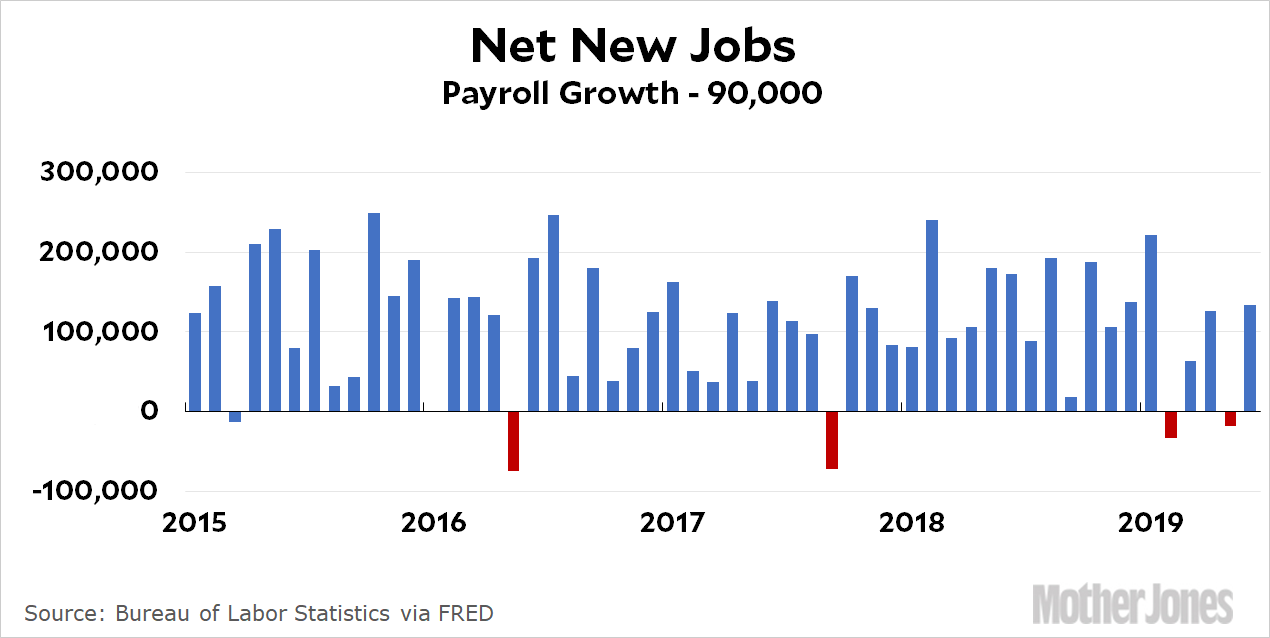
    The American economy gained 224,000 jobs last month. We need 90,000 new jobs just to keep up with population growth, which means that net job growth clocked in at a fairly strong 134,000 jobs. Here’s how things broke down generally, using data from the household survey:

    That’s very healthy. The labor force grew faster than population growth, which means people are coming in off the sidelines to look for jobs. Of these new entries, however, many didn’t find jobs and were counted as unemployed (as opposed to not even looking), which is why the headline unemployment rate ticked up slightly to 3.7 percent.

    On the earnings side, the news wasn’t as good. Wages of production and nonsupervisory workers increased at an annualized rate of about 2.1 percent. Adjusted for inflation, that’s nearly zero.