• Kids Are Becoming Less Violent. Adults Not So Much.


    The lead-crime hypothesis is simple: lead poisoning in childhood affects the brain in ways that produce more violent crime later in life. If it’s true, then cohorts born after about 1980, when leaded gasoline started being phased out, will have a lower rate of violent crime. The flip side, unfortunately, is that cohorts born before 1980 are ruined for life. The brain damage is permanent and there’s no cure. So they’ll have a higher propensity for violence their entire lives.

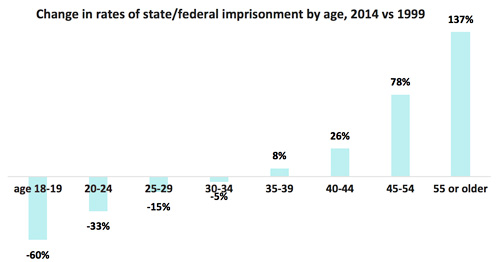
    In more concrete terms, the low-violence cohort is currently age 35 and under. The high-violence cohort is over age 35. Now, it turns out that cohort-level trends aren’t easy to sort out because the data on crime rates over time don’t include the age of the offender. But there are a few proxies that can give us a clue about whether different age cohorts are truly acting differently. Over at the Washington Monthly, Mike Males, a researcher at the Center on Juvenile and Criminal Justice, has one:

    Males comments on the stunning nature of these trends:

    These generational trends in imprisonment have occurred among non-Hispanic whites, blacks, and Hispanics alike….The massive declines in imprisonment of teenagers and young adults parallel large declines in juvenile arrests and incarcerations.

    ….The size of these generational trends is staggering. In 1994, criminal arrests of Americans under age 25 peaked at 6.7 million. Since then, their arrests have plummeted by 3.1 million through 2014 even as the teen and young-adult population increased by nine million. Meanwhile, arrests rose among Americans ages 25-39 (up 1.7 million) and 40 and older (up 600,000).

    For those offenses most likely to lead to imprisonment — major (Part I) property, violent, and drug crimes — the generational shift intensifies. Since 1994, annual arrests for these offenses among Americans under age 25 fell by nearly 800,000, and also declined among ages 25-39 (down 260,000). But annual arrests for these Part I and drug offenses rose by 270,000 among ages 40 and older.

    There is pretty much nothing that will ever definitively prove the lead-crime theory. The data we’d need just doesn’t exist. But the cohort effect that Males highlights here is very consistent with it. Younger cohorts are becoming less and less violent, which is what you’d expect as lead poisoning has steadily dropped since 1980. Meanwhile, older cohorts have remained violent and have accounted for an increasing share of state and federal incarceration.

    The good news is that people generally become less violent with age, so a large percentage increase in imprisonment of 55-year-olds doesn’t represent a lot of crime. And of course, time marches on. Today the cutoff age is about 35. By 2036 the cutoff age will be 55, which means that essentially the entire population will be free of serious lead poisoning and will likely be significantly less violent than today.

    You may thank the EPA for this.

  • Republicans Tonight: Let’s Invade Iraq All Over Again


    At tonight’s debate, Hugh Hewitt asked the candidates if they’d be willing to commit a substantial number of ground troops to fight ISIS, even though it means getting in the middle of a Sunni-Shia civil war. Here’s what they said:

    CRUZ: We need to do whatever is necessary to utterly defeat ISIS….We’re not using our overwhelming air power. We’re not arming the Kurds. Those need to be the first steps. And then we need to put whatever ground power is needed to carry it out.

    KASICH: You have to be in the air and you have to be on the ground. And you bring all the force you need. It has got to be “shock and awe” in the military-speak. Then once it gets done, and we will wipe them out, once it gets done, it settles down, we come home and let the regional powers redraw the map if that’s what it takes.

    TRUMP: We really have no choice….I would listen to the generals, but I’m hearing numbers of 20,000 to 30,000. We have to knock them out fast. And we have to get back home. And we have to rebuild our country which is falling apart.

    There are some minor nuances here, but basically all three of them said they’d be willing to send a big ground force to Iraq. (Rubio didn’t get a chance to answer the question.) I don’t know if this is precisely a new position for any of them, but it’s sure the most explicit they’ve been about it on a debate stage. In previous debates, they’ve mostly focused on everything except ground troops. Now, suddenly, they all sound like they’re gung-ho on sending over a couple of divisions. It’s 2003 all over again.

    And just to make it even more 2003-esque, you have Kasich and Trump insisting that we could get in and out lickety split. That’s exactly what George Bush told us too, but even with 100,000 troops it turned out to be a little harder than he thought. It sure sounds like history is starting to repeat itself, and not in a good way.

  • Did Bernie Sanders Oppose the Auto Rescue?


    Did Bernie Sanders vote against the auto industry rescue, as Hillary Clinton says? This morning on Twitter I called the question “fair game,” and a couple of friends suggested I was being an insufferable Hillary shill for saying this. Maybe so! But in an effort to cement my insufferable shillosity, let’s take a look at this in more detail. I have two or three points to make.

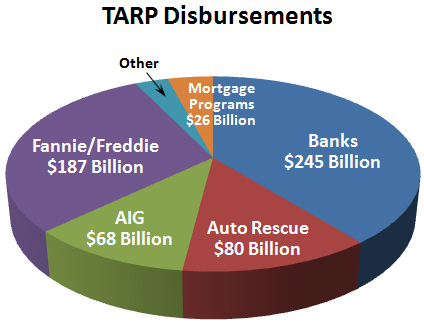
    Before we get to that, a brief bit of background. On December 11, 2008, the Senate took up a standalone auto rescue bill. Bernie Sanders and Hillary Clinton both voted for it, but it was killed by Republicans. The next day President Bush announced that he would fund a small, interim auto rescue himself. “Given the current weakened state of the U.S. economy,” his press secretary said, “we will consider other options if necessary including use of the TARP program to prevent a collapse of troubled automakers.” A week later Bush used money from the first $350 billion tranche of the TARP bank bailout to do just that. In January, president-elect Obama asked Bush to request a release of the second TARP tranche, which he did. This came to a vote in the Senate on January 15, 2009. Clinton voted yes and Sanders voted no. Several months later, Obama used money from this second tranche of TARP to fund his final auto rescue plan.
    Those are the facts. Now let’s get to the messier arena of interpretation and compromise.

    First: TARP was primarily a bank bailout. Everyone agrees about that. But did senators also know that it might be used to fund an auto rescue? Michigan senator Debbie Stabenow claims that this was common knowledge: “A lot of folks said we shouldn’t do it because somehow it was helping the banks,” she said a few days ago. “It was the auto bailout we were talking about. I was very clear with colleagues that we had to do this.”

    But Stabenow is a Clinton supporter, so she might be stretching things a bit. Let’s take a look at contemporaneous reporting:

    January 13: “We had a sense, based on the representations that were made at the time, that it [the first TARP tranche] was about saving the financial system,” [Mitch] McConnell said. “The outgoing administration then ended up using it for an automobile bailout. And I think I’m safe in saying that that diminished significantly the enthusiasm among Republicans for the second tranche of the TARP.”

    January 14: On the other side of the aisle, many Republicans who voted for the first tranche of the TARP were leery about this second vote, because at least $23.4 billion of the initial outlay has been used, over their objections, to bail out the auto industry.

    January 15: Some conservatives…also maintain that the enormous bailout plan has illegally grown beyond its original focus on the financial services industry to include a bailout of the auto industry and more.

    January 15, letter from Larry Summers to Congress urging release of TARP II: “Firms in the auto industry, which were provided assistance under the EESA, will only receive additional assistance in the context of a comprehensive restructuring designed to achieve long-term viability.”

    It’s pretty clear that the auto rescue was a live subject at the time, and there was widespread concern that TARP funds might be used for the auto industry. TARP was unquestionably a bank bailout bill, but it’s hard to sustain an argument that no one at the time envisioned it being used to rescue the auto industry too.

    Second: Hillary Clinton’s attack on Bernie Sanders is so common it’s practically a cliche. She’s pointing to a huge bill with a thousand provisions and then criticizing Bernie for voting against one of them—even though it was really the other 999 he opposed. It’s not especially admirable for Hillary to stoop to this, but on a campaign smear scale it rates about a 3 out of 10. It’s practically a sport in Congress to introduce bills whose only real purpose is to force your opponents to cast a vote that can later be denounced.

    Third: Beyond the tedious campaign attacks and the semantics of the auto rescue, there really is an important issue here. Bernie took a look at a big, complicated TARP bill and decided that its good points weren’t enough to justify bailing out a bunch of Wall Street zillionaires. Hillary made the opposite judgment. Since resolving this kind of dilemma is a pretty common state of affairs in congressional legislation, it tells us something important about how they view the legislative process and the world in general.

    As it happens, I supported TARP. Even with all its faults, I thought it was vitally important to pass something that demonstrated a commitment by the federal government to keeping the financial system afloat. There are plenty of others who disagree, including a number of economists I respect. But no matter how much it rankles, the banks needed to be rescued—and in my view, they needed to be rescued in a very dramatic, very public, very deep-pocketed way. I just wasn’t willing to risk the economy on anything less, even if that meant giving the president almost unfettered discretion to use the money as he saw fit.

    If you agree, then Hillary’s pragmatic willingness to compromise looks pretty responsible and Bernie’s intransigence looks pretty reckless. But if you think TARP was a blank-check travesty that did little more than give a bunch of free money to big banksters and the shaft to ordinary homeowners—and you’re willing to bet the ranch that it wasn’t really necessary anyway—then Hillary looks like a lackey of Wall Street and Bernie looks prescient.

    That’s a genuine argument. It’s not the argument we’re having, of course, because presidential campaigns don’t really lend themselves to abstract governance issues like this. But it’s probably the best way of viewing it. Was TARP, in the end, a pretty good deal? Or should we have risked holding out for better oversight and more restrictions on how the money was used? Generally speaking, Hillary is the candidate of the former and Bernie is the candidate of the latter. Make your choice.

  • Free College for Everyone!


    Matt Yglesias says that Bernie Sanders has convinced him on the merits of free college. After all, we provide free K-12 education to everyone, even Donald Trump’s kids if they choose to attend a public school (they didn’t), so why not college too? The way to make rich people pay is to tax them, not to means-test a college education. Plus this:

    The most decisive reason to like Sanders’s goal of free college, however, didn’t become clear until the campaign itself began. The great thing about free college is that people know what it means and some people are excited about it.

    …I’m not sold on the implementation details of Sanders’s plan, and most people feeling the Bern seem to have no idea what those details are. If Sanders were to actually become president, the idea would need a lot more work. But Clinton’s plan seems like it was written by higher education wonks for an audience of higher education wonks.

    …Free college financed by higher taxes is clean, simple, and easy to understand, and makes for a totally coherent goal to organize around over a period of years or even decades. If Democrats want to expend more public funds to make college cheaper, which it seems like they do, they ought to focus their efforts around Sanders’s banner.
    My take on free tuition at public universities is a lot simpler: Back when I went to college, tuition was basically free at California’s public universities. And as near as I can tell, it worked fine. Was the state subsidizing privileged kids who would then go on to make lots of money? I guess so. But low-income families pay little or nothing in state income taxes, so it was mostly the middle class and the rich subsidizing their own kids. Overall, the system seemed simple, fair, and affordable.

    But Yglesias puts his finger directly on two problems with this. First: my free tuition came from a California university. This is not a subtle, wonkish point. If you want free college tuition, states are the ones who have to be committed to it. Bernie’s plan needs “a lot of work” because it’s desperately trying to figure out a way to motivate states to eliminate tuition in a way that won’t allow them to game a system of federal subsidies. Good luck with that.

    Second, what’s the purpose of a presidential campaign? Is it merely to declare your goals? Or is it to demonstrate that you have some notion of how to govern in a way that accomplishes your goals? Sanders and Donald Trump have certainly shown that the former is both easier and more popular. But is it better?

    That’s a genuine question. There’s a lot to be said for choosing a president solely on the basis of their worldview, regardless of how realistic that worldview is. At the very least, it gives you confidence that when decisions and compromises have to be made, your candidate will likely make the right ones.

    And yet…I find that I can’t go all the way there. Before long you end up with some guy claiming he’ll build a wall and Mexico will pay for it. Being president is a real-life job, and dealing with the legislative and diplomatic realities of the world is part of it. Applause lines are great—and they do give movements something to rally around—but I’ll continue to want a little more than that. I guess I’m old-fashioned, but I still want to know that anyone jonesing for the Oval Office has at least some idea of just what they’re up against if they want to lead the way to real change.

  • Our Long-Awaited Solar Power Future Is Finally Here


    Shorter Dave Roberts: solar power is for real.

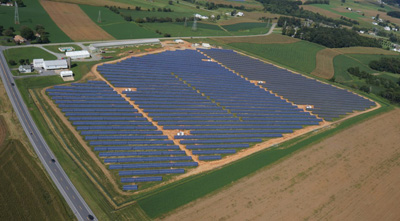
    Not the panels you put on your roof. Those are doing fine, but the real action is in medium-size solar arrays installed by utilities. The big news, Roberts says, is that utilities are starting to build solar plants even when state mandates don’t require it. They’re doing it because solar has finally gotten to the point where it’s cost effective all on its own:
    The installed cost of big solar has fallen 50 percent since 2009, from $6.30/W to around $3.10/W at the end of 2014. Some projects were down as low as $2/W….The stretch goal of the Department of Energy’s 2011 Sunshot Initiative is to drive installation costs down to $1/W, which it says “would make solar without additional subsidies competitive with the wholesale rate of electricity, nearly everywhere in the US.”

    The CEO of First Solar recently said that “by 2017, we’ll be under $1.00 per watt fully installed on a tracker in the western United States.” It appears costs are falling faster than almost anyone predicted.

    Roberts points out two other benefits of solar. One is predictability: you don’t have to worry about volatile coal or gas prices. With solar, you know the capital and operating costs going forward for decades, and that makes planning a lot easier.

    The second is political. In the same way that defense contractors like to make sure that every state gets a piece of big contracts, it helps when every state is seeing solar take off: “The more states where large-scale solar is a business interest, the more respect and assistance it will get from state politicians. As Jack Fitzpatrick notes in Morning Consult, ‘The number of U.S. House Republicans representing districts where there are utility-scale solar facilities increased from a measly 12 in 2008 to 88 in 2016.’ There are now as many Republicans as Democrats with solar power plants in their districts.”

    Solar is not a panacea all by itself. To state the obvious, it only works when the sun is shining. But in combination with better storage technologies, other clean sources of electricity (wind, geo, etc.), and nuclear for baseload operation, a green electric grid is no longer a pipe dream. By 2020 solar will probably be the cheapest electric source around, and by 2040 I wouldn’t be surprised if fossil fuel electric generation is basically dead in the US. Welcome to the future.

  • Hillary Clinton’s Honesty Problem Is Not What You Think It Is


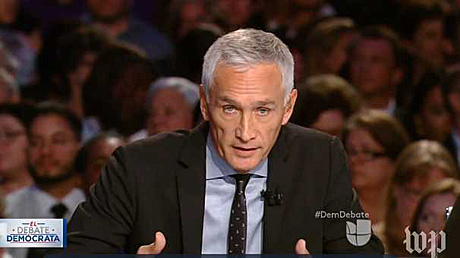
    Last night’s debate sure illustrated Hillary Clinton’s big problem running against a guy like Bernie Sanders. Here’s Jorge Ramos—who’s obviously obsessed with his reputation for asking “tough” questions—badgering her about the deportation of children and immigrants without criminal records:
    RAMOS: Secretary Clinton, the last time we talked in January, in Iowa, I asked you if you could be the next deporting chief. And you told me, no, that you wouldn’t be the next deporter-in-chief. However, you refused two times to say you would not deport children…Can you promise that you won’t deport immigrants who don’t have a criminal record?

    CLINTON: Blah blah blah.

    RAMOS: But will you deport children?

    CLINTON: Blah blah blah.

    RAMOS: Could I get a yes or no answer?

    CLINTON: Blah blah blah.

    RAMOS: But again, yes or no, can you promise tonight that you won’t deport children, children who are already here?

    CLINTON: I will not deport children…

    RAMOS: Okay. So I want to be very specific. So you are telling us tonight that if you become president you won’t deport children who are already here?

    CLINTON: I will not.

    RAMOS: And that you won’t deport immigrants who don’t have a criminal record?

    CLINTON: That’s what I’m telling you…

    RAMOS: So you will stop those deportations?

    CLINTON: Yes.

    It’s pretty obvious that Hillary is doing her best to tap dance around this. If you were watching, you could almost hear the gears grinding in her head. She desperately doesn’t want to give a yes-or-no answer—probably because she knows perfectly well that this isn’t a yes-or-no question—but it’s obvious Ramos isn’t going to give up. So she’s making calculations in real time about whether she can afford to provide an ambiguous answer in front of a Latino crowd on national TV, or if she should just cave in and make a Shermanesque statement.

    Part of this calculation, of course, is that Bernie Sanders is standing right next to her, and she knows that Bernie will have no trouble with a Shermanesque statement. He thrives on them. And that will appeal to Latino voters. Grind, grind, grind. So eventually she gives in and flatly promises never to deport anyone without a criminal record.

    Which, as we all know, is almost certainly an impossible promise to keep. And Hillary hates that. She knows what the legal and political realities are, and she hates having to pretend they don’t exist. But this year, we’re running an election where reality doesn’t matter. A big chunk of both Democratic and Republicans voters flatly don’t care if policies are realistic. They just want to know what a candidate feels.

    This is what I meant last night when I said Hillary tends to be honest to a fault when discussing policy. It’s ironic, given her reputation. In this case, I doubt that she wants to deport children. Her intentions are every bit as good as Bernie’s. But she can’t stand to pretend that that’s all there is to it. Unfortunately, this is not the year for policy honesty. If Hillary wins, it will be in spite of her honesty, not because of it.

  • ECB Announces Last-Ditch Effort to Revive Europe’s Economy


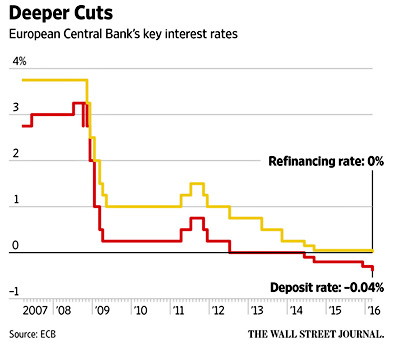
    The European Central Bank has decided to take one last crack at getting Europe’s economy back on track, announcing a multi-pronged program to boost both inflation and demand. “This has all the hallmarks of the ECB having thrown the kitchen sink at the problem,” said Aberdeen Asset Management Investment Manager Patrick O’Donnell. The Wall Street Journal has the details:
    The ECB announced six steps….It cut the level it charges on excess deposits by 0.1 percentage point to minus 0.4%. This means that banks have to pay even more now to leave excess funds with the central bank overnight. It also cut its main interest rate, the rate it charges on regular bank loans, to an all-time low of zero percent from 0.05% where it was previously.

    The ECB said Thursday that it would up the monthly volume of its bond buying program to €80 billion ($87 billion), from €60 billion previously.

    It also decided to add investment-grade euro-denominated bonds issued by nonbank firms established in the euro area to the list of eligible assets that it can buy….The ECB also decided to extend its program of targeted loans to banks, designed to encourage banks to lend to the real economy….The ECB also cut its interest rate on its overnight lending facility by 0.05 percentage point to 0.25%.

    There’s probably less here than meets the eye, but the ECB just didn’t have that many arrows left in its monetary quiver. Still, they had to do something. Their own economists had lowered their growth forecast for 2016 to 1.4 percent and lowered their inflation forecast to 0.1 percent. I can’t say that I’m optimistic that the ECB’s kitchen sink is big enough to do the job on its own, and Europe’s large countries continue to be unwilling to spend their way out of their slump. It’s going to be a long slog.

  • Hillary Clinton’s Trust Gap Is Killing Her With Millennials


    Earlier today I was musing over a tweet from a guy who said his daughter’s friends all loathed Hillary Clinton. Just really, really couldn’t stand her. This is obviously a fairly common sentiment. Bernie Sanders didn’t win 80 percent of the millennial vote in Michigan just because he’s an idealistic liberal. The only way you get to a number like that is against an opponent who’s pretty seriously disliked.

    But why? The most obvious reason millennials dislike Hillary so strongly is that they think she’s too slippery. “I feel like Clinton lies a lot,” a college student told PBS a few weeks ago. “She changes her views for every group she speaks to. I can’t trust her.” Quotes like that litter the internet, and in tonight’s debate Karen Tumulty asked about it yet again. “Is there anything in your own actions and the decisions that you yourself have made that would foster this kind of mistrust?”
    People of my age find all this a little peculiar. After all, we’re the ones who experienced the full storm of the ’90s. There was a new Hillary “scandal” on practically a monthly basis back then, and even if you later learned there was virtually nothing to any of them, that kind of nonstop mudslinging leaves a mark. It’s hard to hear this stuff over and over and not think that maybe there’s something there. Smoke and fire, you know. But millennials went through none of that. So why do they distrust her?

    Unfortunately, Hillary has fostered a lot of this mistrust herself. I’m going to be wildly unfair here and cherry-pick a bunch of quotes from Hillary and Bernie Sanders. First up, here’s Bernie:

    • On whether he supports fracking: “My answer is a lot shorter. No, I do not support fracking.”
    • On reforming Wall Street: “If a bank is too big to fail, it is too big to exist…Within one year, my administration will break these institutions up so that they no longer pose a grave threat to the economy.”
    • On whether there’s even a “single circumstance” in which abortion should be illegal: “That is a decision to be made by the woman, her physician, and her family. That’s my view.”
    • On prison reform: “I promise at the end of my first term we won’t have more people in jail than in any other country.”

    There’s no nuance here, no shading. Bernie has simple, crowd-pleasing answers to every question. He’s for X, full stop. He’s against Y, end of story.

    At this point I should compare these answers with the more gray-shaded responses Hillary gives on policy questions. But I’m not being fair, so instead you get this:

    • On whether she lied to the Benghazi families (from tonight’s debate): “You know, look, I feel a great deal of sympathy for the families of the four brave Americans that we lost at Benghazi…”
    • On releasing transcripts of her speeches: “Let everybody who’s ever given a speech to any private group under any circumstances release them—we’ll all release them at the same time.”
    • On her private email server: “Everything I did was permitted. There was no law. There was no regulation. There was nothing that did not give me the full authority to decide how I was going to communicate.”
    • On getting money from big Wall Street donors: “I represented New York on 9/11 when we were attacked. Where were we attacked? We were attacked in downtown Manhattan where Wall Street is. I did spend a whole lot of time and effort helping them rebuild. That was good for New York. It was good for the economy and it was a way to rebuke the terrorists who had attacked our country.”
    • On her super-PAC: “You’re referring to a super-PAC that we don’t coordinate with…It’s not my PAC.”

    These are terrible answers. Tonight, Jorge Ramos brought up allegations by the Benghazi families that Hillary had deceived them, and asked, “Secretary Clinton, did you lie to them?” The only answer to this question is “of course not.” But Hillary started by expressing her sympathy for the Benghazi families and only then said of her accuser, “She’s wrong.” Maybe this seems like nitpicking, but it’s not. Unless the very first words out of her mouth are “of course not,” she’s going to leave an immediate impression that she’s about to tap dance around the whole thing. I like Hillary, and even I sighed when she began delivering that answer.

    The other quotes are similar. It doesn’t even matter if they’re the truth. They don’t sound like the truth. People my age might forgive Hillary a bit of this lawyerlyness because we remember the ’90s and understand the damage that even a slightly misplaced word can cause. But millennials don’t. They just see another tired establishment pol who never gives a straight answer about anything.

    Life isn’t fair. Politics isn’t fair. I think Hillary Clinton is careful, a little bit paranoid, and, ironically, congenitally honest on policy issues. She just can’t bring herself to give simple-minded answers when she knows perfectly well the truth is more complicated. But especially this year, when her competition is a guy like Bernie Sanders, this just makes her look evasive and insincere.

    After 40 years in the public eye, I don’t know why Hillary is still so bad at this. But she is. For a long time, liberals mostly forgave her wary speaking style because they were keenly aware of the Republican smear campaign that birthed it. Now, for the first time, there’s a generation of liberals who don’t care about any of that. And an awful lot of them loathe her.

  • Donald Trump Admits He Sues People Just to Harass Them


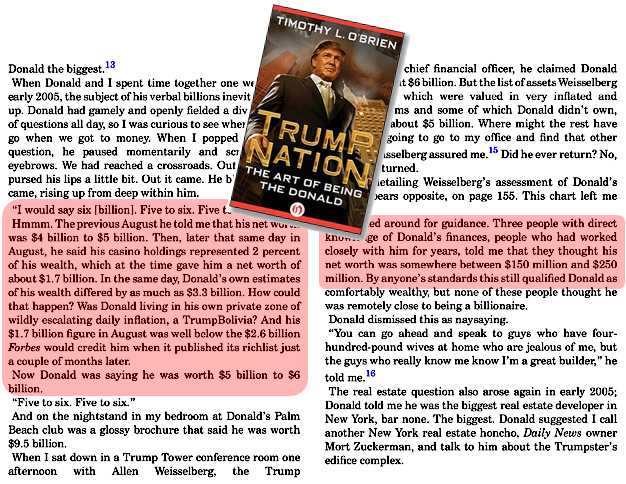
    Ten years ago Donald Trump sued author Timothy O’Brien for having the gall to doubt Trump’s wealth. After considerable research for his book TrumpNation, O’Brien concluded that Trump had massively overstated his assets and understated his liabilities: he was actually worth $150-250 million, not $5-6 billion. Naturally, Trump sued.

    And lost. It took five years, but he was basically thrown out of court. Paul Farhi of the Washington Post asked Trump about this recently:

    Trump said in an interview that he knew he couldn’t win the suit but brought it anyway to make a point. “I spent a couple of bucks on legal fees, and they spent a whole lot more. I did it to make his life miserable, which I’m happy about.”

    I’m no lawyer, but even at this late date, wouldn’t an admission like that open up Trump to a suit for frivolous litigation? And wouldn’t it also hurt him in future lawsuits? Or is this more complicated than I think?