• Please Read My Summary of the Comey Investigation

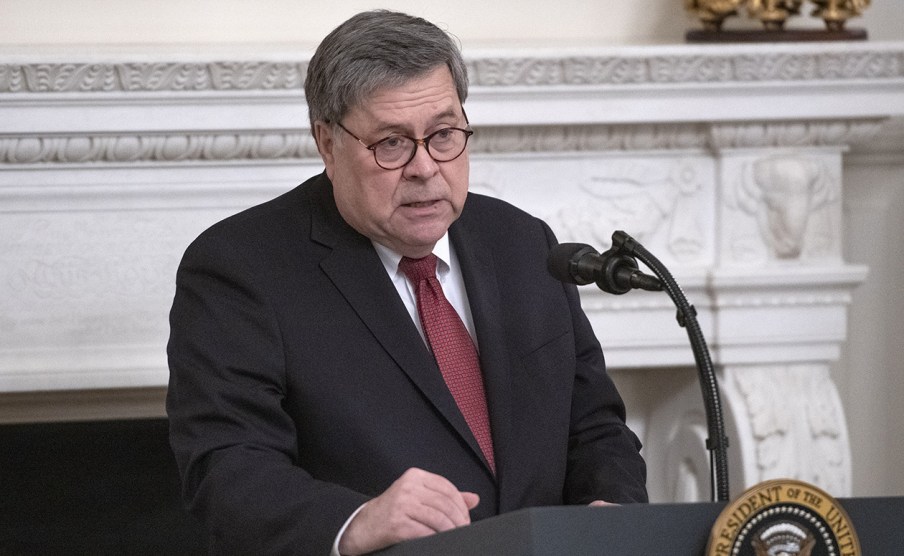
    Attorney General William Barr.Ron Sachs/CNP via ZUMA

    I’ll get tired of this eventually, but this is my daily reminder that we have no idea what’s really in the Mueller report. All we know is the little that Attorney General Barr decided to share with us. In case you’re wondering just how misleading Barr’s summary might be, while staying entirely truthful, I’ve written my own brief summary of the statement James Comey made at the end of the Hillary Clinton email investigation. Here it is:

    As part of this investigation, the FBI gathered over 30,000 emails sent and received by Secretary Clinton using her private server. A “very small number” were marked classified at the time they were sent, all at low levels of classification. However, new agency reviews undertaken specifically for this investigation suggest that, in retrospect, an additional hundred of those 30,000 should have been considered classified at various levels at the time they were sent. FBI Director Comey determined that Secretary Clinton and her staff should not have transmitted those emails over an unclassified system and that they were careless to do so.

    Director Comey’s report says it is possible that Secretary Clinton’s email server was hacked, but they found no evidence that this happened. Additionally, although the investigation uncovered some emails that had not been turned over to the State Department by Secretary Clinton, “we found no evidence that any of the additional work-related e-mails were intentionally deleted in an effort to conceal them.”

    Director Comey said the FBI did not believe that Secretary Clinton or her staff intended to violate any classification laws. Director Comey recommended that no charges be filed, a judgment with which I concur. His report concludes that “no reasonable prosecutor would bring such a case.”

    Comey’s full statement is here. Go ahead and compare. My summary is accurate and truthful, but it conspicuously omits some of the sentences that were most damaging to Clinton. For example:

    • “From the group of 30,000 e-mails returned to the State Department, 110 e-mails in 52 e-mail chains have been determined by the owning agency to contain classified information at the time they were sent or received. Eight of those chains contained information that was Top Secret at the time they were sent.”
    • “There is evidence that [Clinton and her colleagues] were extremely careless in their handling of very sensitive, highly classified information.”
    • “For example, seven e-mail chains concern matters that were classified at the Top Secret/Special Access Program level when they were sent and received….There is evidence to support a conclusion that any reasonable person in Secretary Clinton’s position, or in the position of those government employees with whom she was corresponding about these matters, should have known that an unclassified system was no place for that conversation.”
    • “To be clear, this is not to suggest that in similar circumstances, a person who engaged in this activity would face no consequences. To the contrary, those individuals are often subject to security or administrative sanctions.”

    I wrote this summary quickly, but I think it’s the kind of thing that could be defended as fair even as it emphasizes the good news and downplays the most damaging news. Likewise, my guess is that if and when we ever see the actual Mueller report, we’ll find plenty of statements that are extremely damaging to President Trump but that never found their way into Barr’s summary.

    At this point, though, it’s looking like we’ll never see Mueller’s actual words. That’s bad for you and me, but good for Trump.

  • Today’s Brexit Vote: Everybody Hates Everything, But Maybe There’s Light at the End of the Tunnel

    British members of parliament don’t care much for Theresa May’s Brexit deal, but they also don’t like the idea of crashing out of the EU with no deal. That’s led to a deadlock, so last week the rabble seized control of the whole process from May and invited everyone to come up with alternate deals to vote on. Today they voted:

    So that’s that. There isn’t a majority in favor of anything—though it’s worth noting that a customs union lost by only 8 votes and a second referendum lost by only 27 votes. Both are fairly close, which suggests that with some tweaking it might be possible to pass one of them before the April 12 deadline. So as chaotic as the whole thing seems, perhaps there’s actually some hope for a resolution soon.

  • Money Talks, and It Says Climate Change Is Real

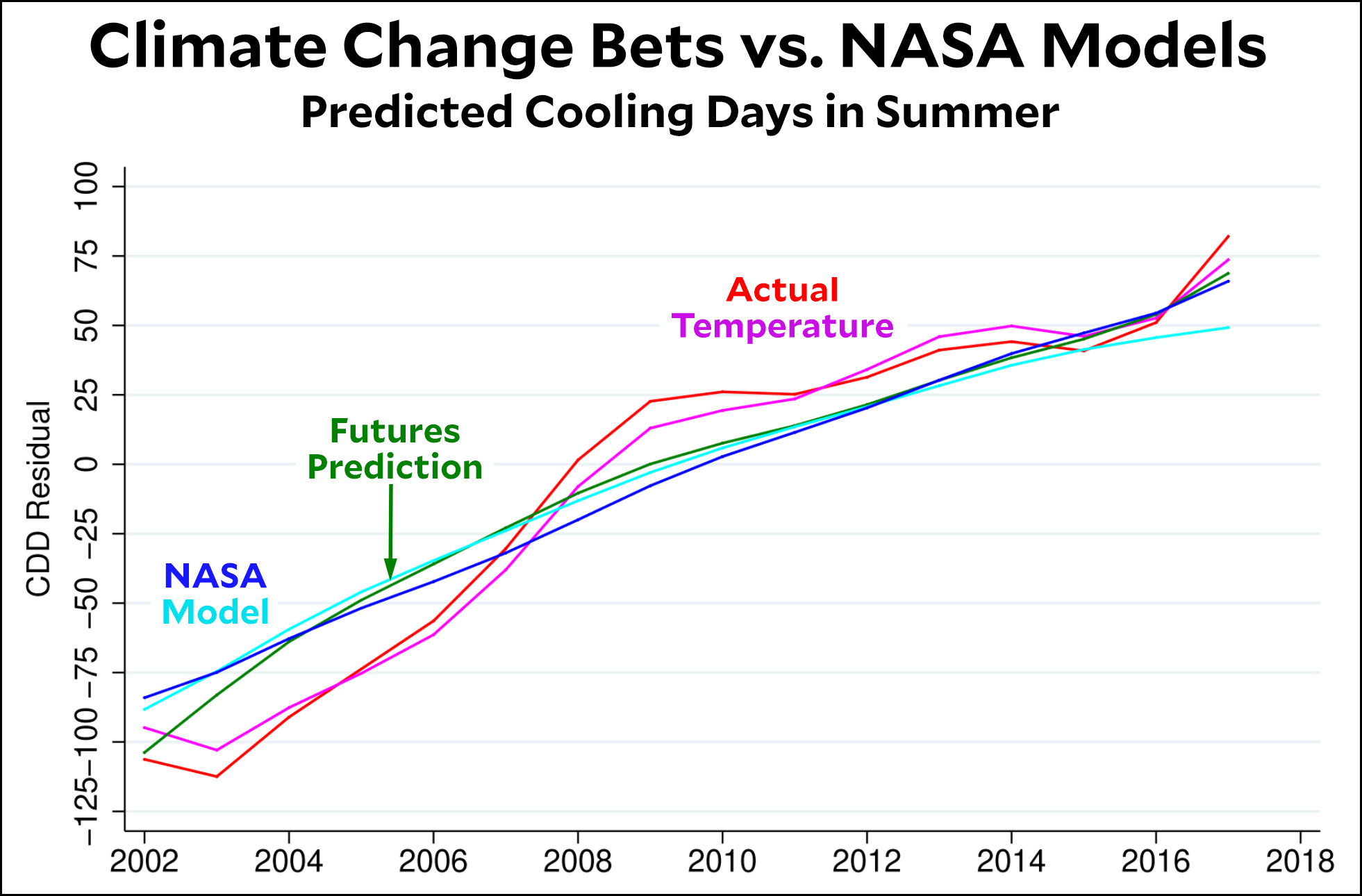
    Here’s an interesting chart from a research paper flagged by a reader. It turns out there’s a Chicago futures market for weather, mostly used by utilities and growers to hedge against the possibility of unusually high or low temperatures. However, since weather forecasts are nearly useless more than ten days out, futures contracts purchased earlier than that are based almost entirely on broad climate forecasts.

    Climate scientists, of course, have been predicting global warming trends for quite a while. So how do their models compare to the predictions made by people who have to put their money where their mouths are? Pretty closely, it turns out. Here, for example, is the predicted number of “cooling days” (i.e., hot days that will require cooling) during the summer for the past couple of decades:

    The light and dark blue lines are the two most widely used NASA climate models. The green line shows the equivalent projection based on the futures market. Guess what? When money folks have to hedge the weather, it turns out they listen to climate scientists. Their projections closely match the predictions made by climate models.

    When Republican senators make fools of themselves pretending that climate change is fake, they know there are no consequences for being wrong.¹ Traders don’t have that luxury. What they care about is accurately hedging risk, and the only way to do that is to listen to climate scientists and make their bets based on the real world. So regardless of whether they’re personally liberal or conservative, that’s what they do.

    ¹No short-term personal consequences, anyway. The possibility of broiling the earth 50 years from now is a whole different thing, but it doesn’t affect their reelection chances so they don’t care.

  • Lunchtime Photo

    Continuing our water theme for the week, these are the lovely green hills of Irvine right now. In the background is Saddleback Mountain rising out of the mist. The little orange dot at center left is the Great Park balloon. For locals, this picture was taken early in the morning from my favorite Saddleback viewing spot near the top of Turtle Rock.

    TOMORROW: Silverado Creek.

    March 24, 2019 — Irvine, California
  • Who’s Being Pandered To This Year?

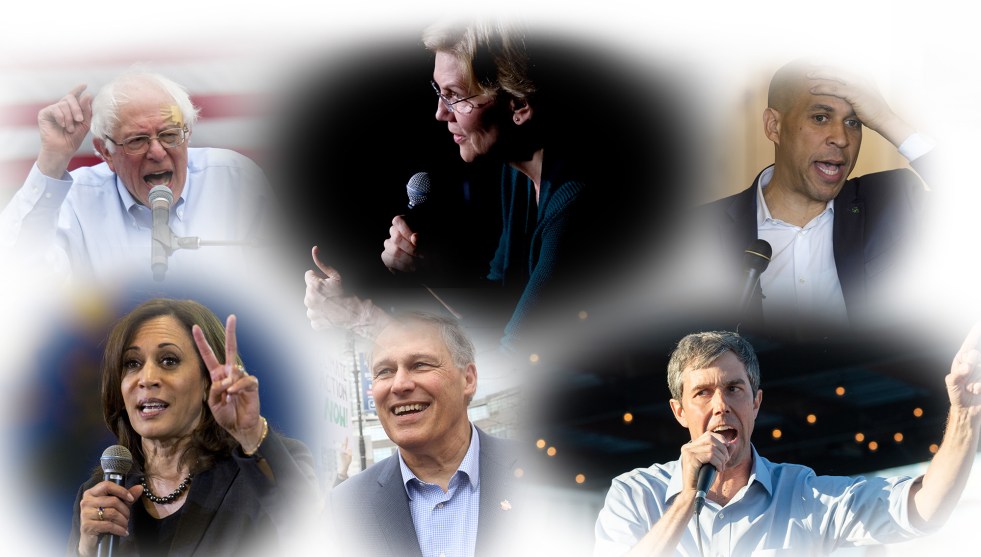
    Photo credits, clockwise from top left: Ringo Chiu, Preston Ehrler, Brian Cahn, Richard Ellis, Nancy Kaszerman, Brian Cahn, all via ZUMA

    I am deliberately not paying too much attention to the Democratic candidates for president. It’s just too early. It won’t be until late in the year that we start to get a serious idea of their complete agendas, their staying power, their speaking ability, their media savviness, etc.

    Still, I’ve been thinking about their proposals so far and what they say about how Democrats are thinking these days. Some of the stuff is unsurprising: everyone supports Medicare for All, for example, but with different ideas about how far to take it and how best to implement it. This breaks down along fairly ordinary ideological lines, with the progressives supporting full-on free health care for all and moderates supporting a more limited version that includes copays and premiums and a role for private insurance companies.

    But then you’ve got the policies that candidates are using to truly distinguish themselves. Here are a few examples:

    • Kamala Harris has introduced a proposal to raise teacher pay.
    • Elizabeth Warren wants to break up big agribusiness.
    • Bernie Sanders is calling for a 77 percent estate tax on billionaires.
    • Beto O’Rourke is rather ostentatiously not talking about policy at all.
    • Jay Inslee is all climate change all the time.
    • Cory Booker’s signature policy is means-tested baby bonds. By age 18, the bonds would be worth about $10,000 for middle-class kids and nearly $50,000 for kids in the most poverty-stricken families.

    So who are these candidates trying to appeal to? Everyone, of course, but specific policies like the ones above are more about appealing to specific groups than they are about ever becoming law. They’re all pretty unlikely to go anywhere in the short term, after all. I’d say it breaks down roughly like this:

    • Harris is appealing to teachers, a major Democratic constituency.
    • Warren is trying to make inroads in Iowa.
    • Sanders wants to get the old progressive band together.
    • O’Rourke is appealing to moderates.
    • Inslee isn’t really trying to win. He’s just trying to draw attention to climate change.
    • Booker wants to sew up the black vote.

    I don’t have a sharp point to make here. I’m just observing that there’s a lot of garden-variety practical politics at play here, and this is probably the best lens to judge the candidates by right now. That may change in the future, but right now they’re all jostling to pick up support from specific groups by offering them something the others aren’t. Harris is doing this the most obviously, but she’s hardly alone.

  • Why Are Generations So Short These Days?

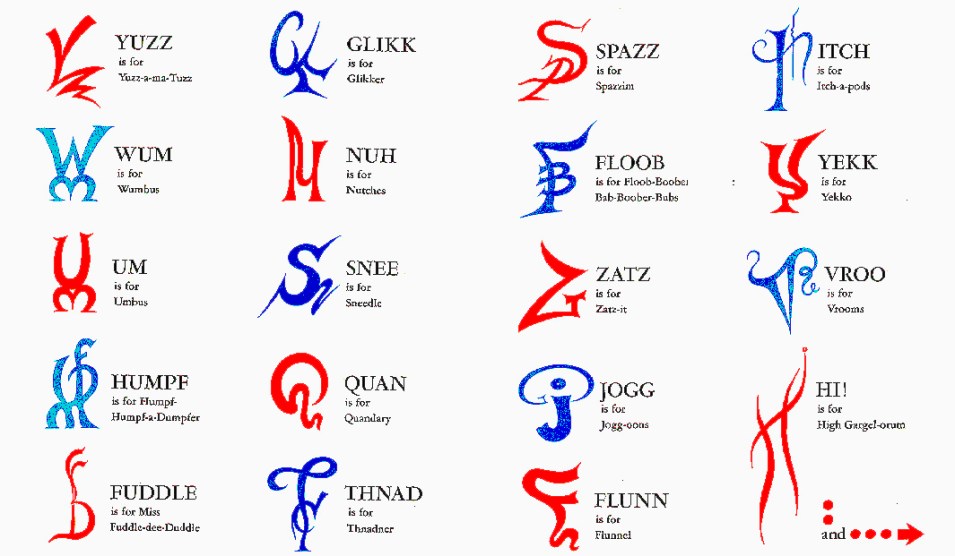
    The alphabet beyond Z, according to Dr. Seuss."On Beyond Zebra"

    Hmmm:

    If this is right, the two oldest generations span about 18 years each. The next three generations span only 15 years. Is this really the case? Do we consider 15 years an entire generation these days? Even 18 years seems a little thin to me, so this strikes me as odd.

    Also: I don’t approve of Generation Alpha. It should, of course, be Generation Yuzz.

  • Republicans Screwed Up Their Tax Cut and Big Companies Are Unhappy

    Richard B. Levine/Levine Roberts via ZUMA

    The Wall Street Journal reports that the great Republican tax cut is turning out to be not so great for some companies. Take Procter & Gamble:

    P&G pays about 18% to 19% of its non-U.S. income in foreign taxes. That is high enough that executives thought they would avoid paying a new U.S. minimum tax designed to prevent companies from shifting profits to low-tax countries. Instead, P&G now expects to pay the U.S. $100 million annually because of that minimum tax, raising its tax rate on foreign profits to 21%.

    ….“It’s kind of dawning on everybody at about the same time that this is going to be an issue,” Jon Moeller, P&G’s chief financial officer, said in an interview. “On the margin, it disincents local job creation.”

    Republicans just don’t know how to do policy, do they? Even when they’re trying to give their business pals a big tax cut, they screw it up. Luckily, though, the Treasury Department is here to help:

    Treasury officials have expressed openness to adjustments as they implement the law. They have already proposed some regulations that soften the law by limiting how much interest expenses get allocated to foreign income.

    Of course Treasury officials are open to adjustments! That’s because these adjustments would help big corporations. It’s only when it comes to things like health care for the poor that Republicans are dead set against adjustments.

  • Grindr Users Are the Unhappiest People

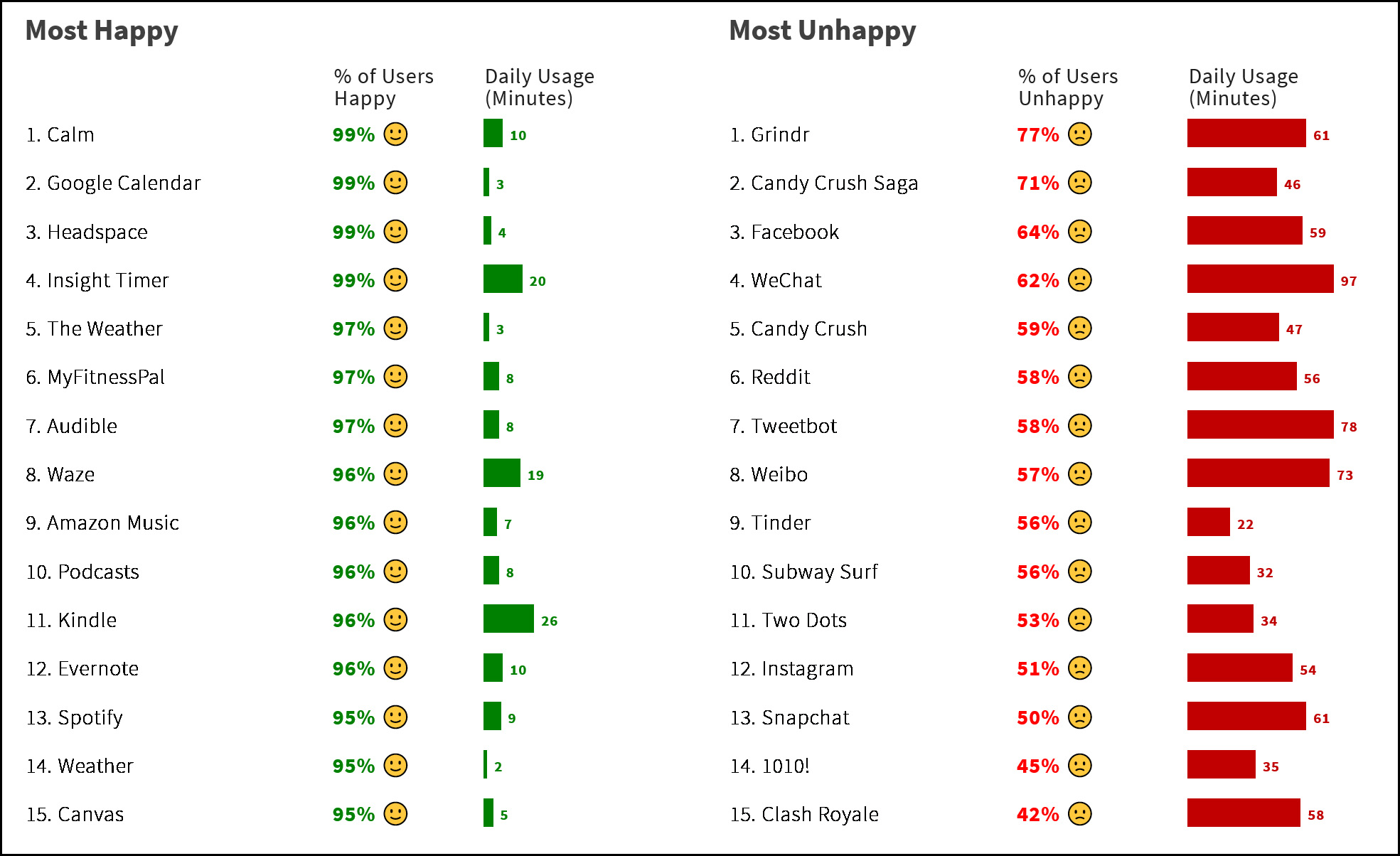
    The Center for Humane Technology says our society is being hijacked by technology. “What began as a race to monetize our attention is now eroding the pillars of our society: mental health, democracy, social relationships, and our children.” But which apps are doing the hijacking? Here’s their list of which app users are happiest and unhappiest:

    Huh. The happiest folks use Google Calendar. I use Google Calendar too! I also check the weather now and then, listen to music, and read books on Kindle. On the unhappy side of things, I don’t use any of the listed apps except Facebook (rarely) and Twitter (frequently). So I guess I’m doing OK.

    But what’s up with Candy Crush? Why is that such a favorite of unhappy people? It’s just a game, right?

  • The Earth Is Melting

    Climate change is just a hoax. Nothing to see here. Move along, please.

  • Donald Trump’s Schedule to Release the Mueller Report Is Never

    Michael Reynolds/CNP via ZUMA

    This is my daily reminder that we still have no idea what’s actually in the Mueller report. All we have so far is a short memo that was written and approved by President Trump’s attorney general and released to a credulous press as a supposedly full and fair summary. So when will we see the actual report?

    Mr. Mueller’s full report has yet to be released, and it remained unclear if it ever would be. House Democrats have demanded that it be sent to them by next Tuesday, but the Justice Department outlined a longer schedule, saying that it will have its own summary ready to send to lawmakers within weeks, though not months.

    Wait. What was that again?

    The Justice Department outlined a longer schedule, saying that it will have its own summary ready to send to lawmakers within weeks, though not months.

    So the answer is “never”? The most that William Barr plans to make available is his own carefully curated version of the Mueller report? And even that will take several weeks? This is epic hubris, the exercise of raw power just because nobody can stop him. It’s very hard not to conclude from this that Mueller’s report has some pretty damaging details in it that will never see the light of day if Trump has his way.

    This should be an outrage to everyone, regardless of party, but instead it looks like it will just fly under the radar. Trump says the Mueller report is a complete exoneration, and that’s the story they’re sticking with. Nobody will ever be allowed to know anything different.