The United States Treasury has taken in MANY billions of dollars from the Tariffs we are charging China and other countries that have not treated us fairly. In the meantime we are doing well in various Trade Negotiations currently going on. At some point this had to be done!
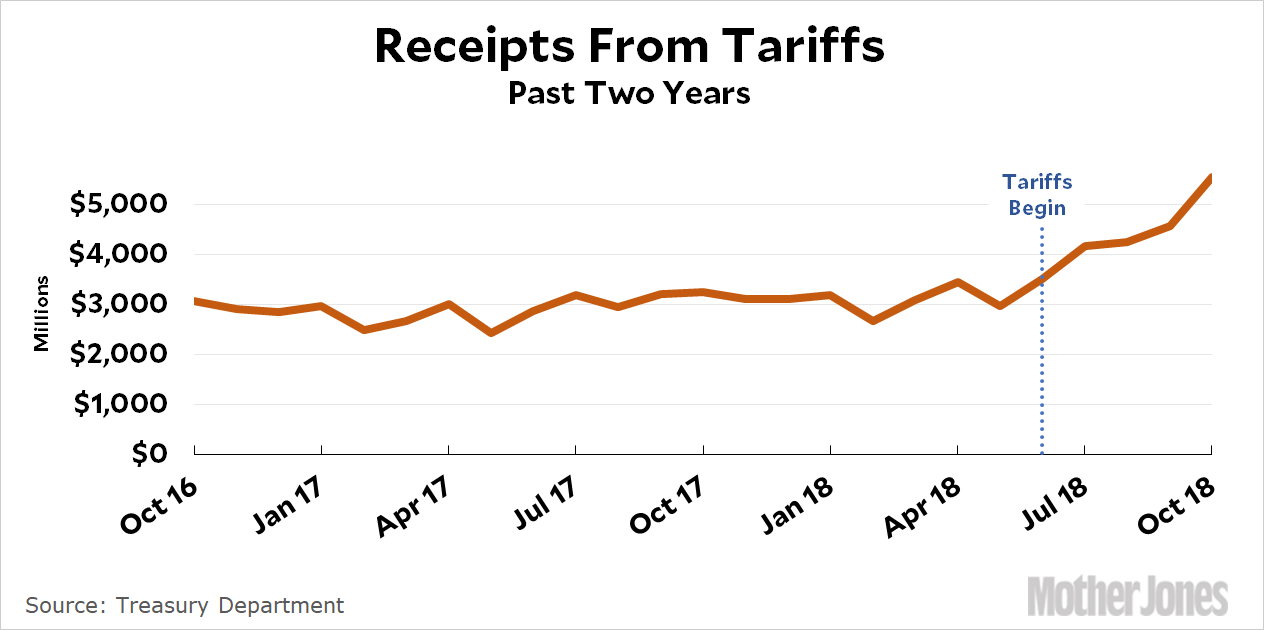
How much money are we taking in from increased tariffs? Here’s the answer:
There you have it. We appear to be taking in an extra $1-2 billion per month, and it’s going up. This is gross tariffs, of course, and doesn’t count the amount that other countries are taking in from their retaliatory tariffs.
Anyway, tariffs are paid by domestic firms who import stuff, so this is ultimately all a tax on consumer goods. Over the course of the year it will probably amount to a tax increase of about $200-300 per family—maybe more. I hope everyone enjoys paying their share in order to show Canada who’s boss.
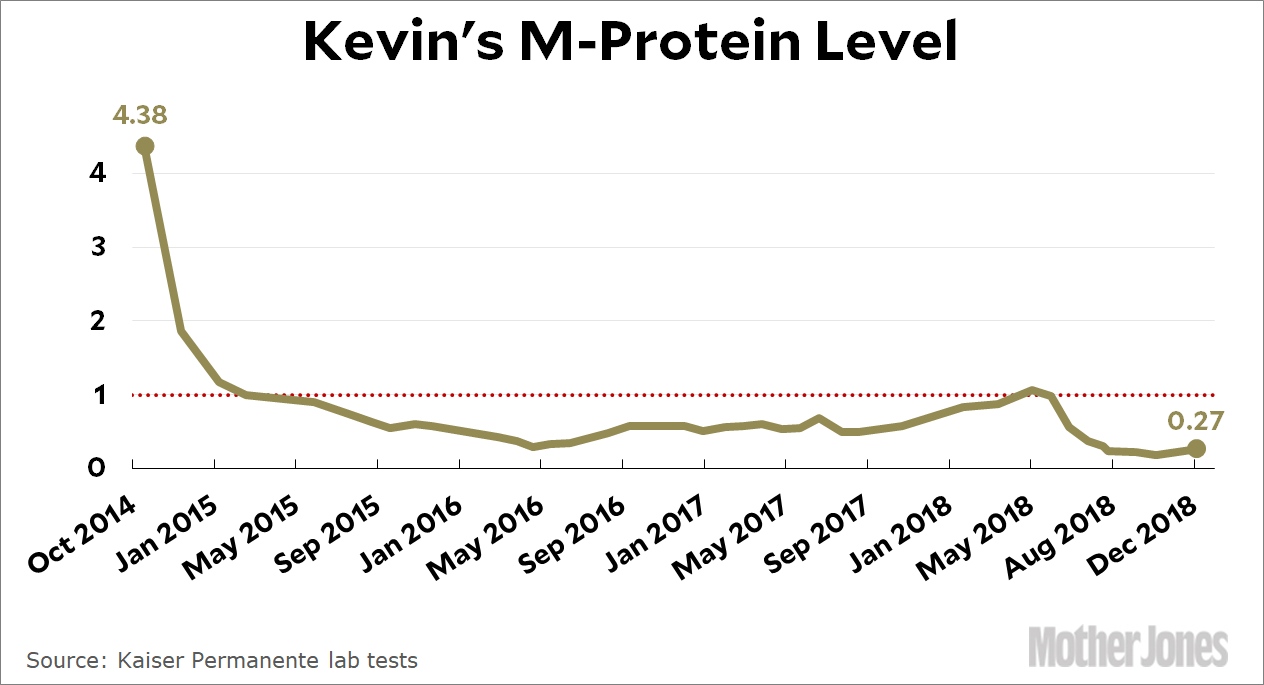
I did not set a new personal record for my M-protein level last month:
These numbers bounce around a bit when they’re low, so this uptick isn’t really meaningful. In fact, it might even be good news. I skipped a week of the Evil Dex about two weeks before this test, and it’s possible that this is why the number rose slightly. If that’s the case, I’d be a happy camper. I want to quit the dex entirely, and if my M-protein level stays at around 0.3 or so without it—which is still lower than it ever was on the previous maintenance regimen—then I’ll ditch it without a second thought. The primary chemo drug I’m taking (Darzalex) has very few side effects, and if I can get off the dex I’ll feel way better. Just about everything bad happening right now (fatigue, napping, neuropathy, mouth fuzziness, etc.) is solely due to the dex.
I’ll see my oncologist at the end of the month and ask about this. I already know he won’t want to stop the dex, but I’ve been on it for eight months now. Enough’s enough.
Let’s have one last fall picture before winter takes over completely. This is a mumble-mumble tree at the LA Arboretum taken a few weeks ago while the late afternoon sun was shining directly through the leaves as they were turning color.
Even here in Southern California, though, this was the last of it. By the end of the year, all was brown and lifeless. Except for the evergreens, of course. And the palm trees. And the flowers, which are still blooming. And the native plants. Really, it’s still pretty colorful here, and the weather is crisp and snow-free. Sounds nice, doesn’t it?
December 9, 2018 — LA County Arboretum, Arcadia, California
Liberal revolt threatens to derail House Democrats on their first day in charge
House Democratic leaders faced the prospect of a liberal rebellion on their first day in charge after prominent Democrats said they would oppose a package of rules changes endorsed by Nancy Pelosi, the incoming speaker.
Holy cow! A liberal rebellion. What’s going on?
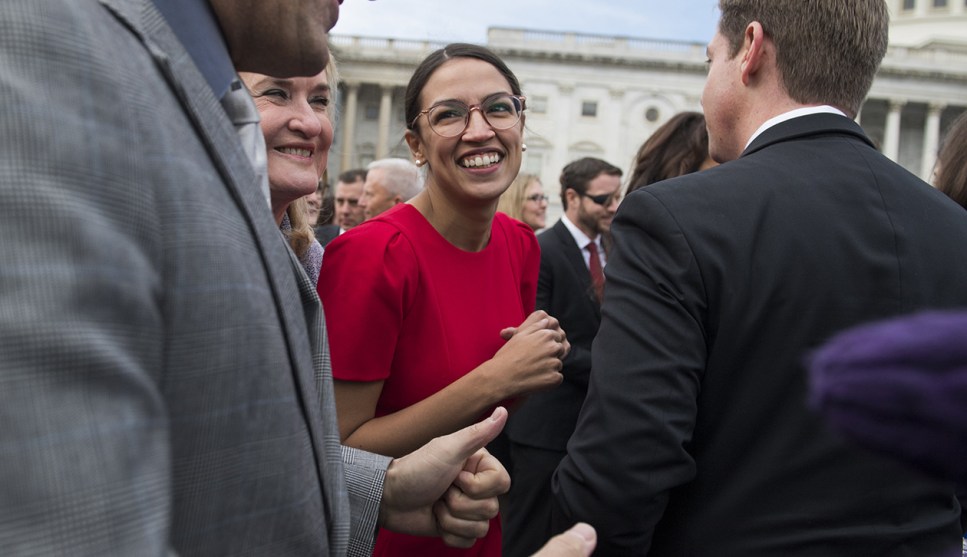
Rep. Ro Khanna (Calif.) and Rep.-elect Alexandria Ocasio-Cortez (N.Y.) said they would vote against the rules changes on Thursday — in the second vote Democrats will take in the majority, after electing Pelosi (D-Calif.) — because of the inclusion of a fiscal measure known as “pay as you go,” or PAYGO….Beyond Khanna and Ocasio-Cortez, however, opposition to the proposal appeared muted Wednesday. Several high-profile freshman Democrats — Reps.-elect Rashida Tlaib (Mich.), Ilhan Omar (Minn.) and Ayanna Pressley (Mass.) — have not taken a public position….The co-chairs of the Congressional Progressive Caucus, Reps. Mark Pocan (D-Wis.) and Pramila Jayapal (D-Wash.), said they would support the overall rules package despite their opposition to PAYGO, citing a commitment from House leaders that the provision “will not be an impediment to advancing key progressive priorities” in the new Congress.
So…two Democrats have announced they’ll vote against the rules package. Is that it? It’s not much of a rebellion, is it? Especially since it’s a purely symbolic vote that has no effect on the actual statute that implements PAYGO.
Just for the record, I’m all in favor of ditching PAYGO. Republicans ignore it every time they want to pass a tax cut for the rich, so the hell with it. It’s nothing but a one-way straitjacket at this point.
POSTSCRIPT: I do want to add one thing: this story demonstrates that Ocasio-Cortez and other progressives like Khanna are very good at getting attention. I mean this in an entirely positive way. Getting attention is a big part of politics, and they’re doing it. They just need to be careful not to overdo it at this point. If they end up picking lots of fights and then losing them all, they’ll squander their ability to keep the media’s attention.
The governor-elect will propose a $750-million boost to kindergarten funding, aimed at expanding facilities to allow full-day programs. A number of school districts offer only part-day programs, leaving many low-income families to skip enrolling their children due to kindergarten classes that end in the middle of the workday….Close behind in total cost is a budget proposal by Newsom to help train child-care workers and expand local facilities already subsidized by the state, as well as those serving parents who attend state colleges and universities.
….An expansion of prekindergarten programs would be phased in over three years at a cost of $125 million in the first year. The multiyear rollout would, according to the budget overview, “ensure the system can plan for the increase in capacity.”…Another $200 million of the proposal would be earmarked for programs that provide home visits to expectant parents from limited-income families and programs that provide healthcare screenings for young children.
Good for him. But the tough part is coming next. California’s finances are in good shape, and we have a big reserve fund thanks to the relatively tight-fisted spending policies of Jerry Brown over the past eight years. Needless to say, there’s huge pressure to spend the money in this reserve fund, and it probably makes sense to do a bit of that. But not a lot. It is, after all, a reserve fund, designed to help us weather a couple of years of recession without huge cutbacks. That recession is coming sometime in the next year or two, and we’ll need the money then.
But if we’re going to spend a bit of it, early childhood programs should be near the top of our list. Low-income families have a pretty miserable time in the California educational system, and they need a break. Full-day kindergarten is the absolute minimum we should offer everyone, and a year of pre-K is close behind. This is a good start for 2019.
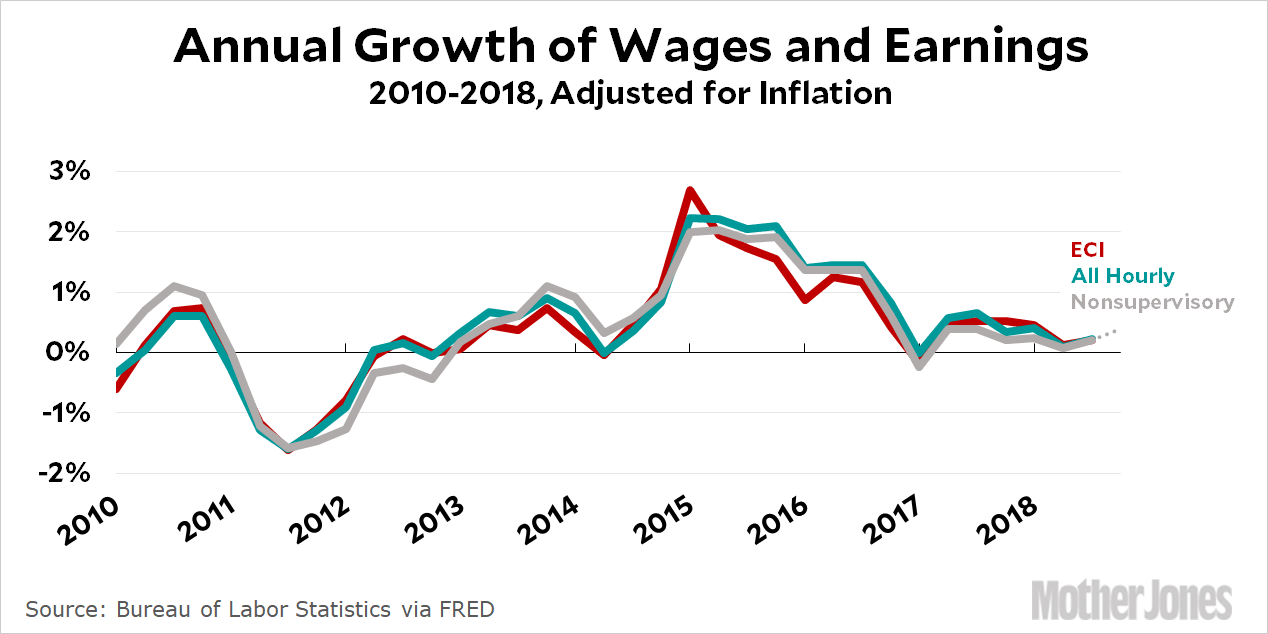
Wages are growing. The most recent data on wages (more specifically, average hourly earnings) finds that they are up over 3 percent relative to one year prior. And the pace of wage growth accelerated throughout 2018. The early months of 2018 saw wages growing at about 2.6 percent, noticeably slower than the 3+ percent growth workers have recently enjoyed.
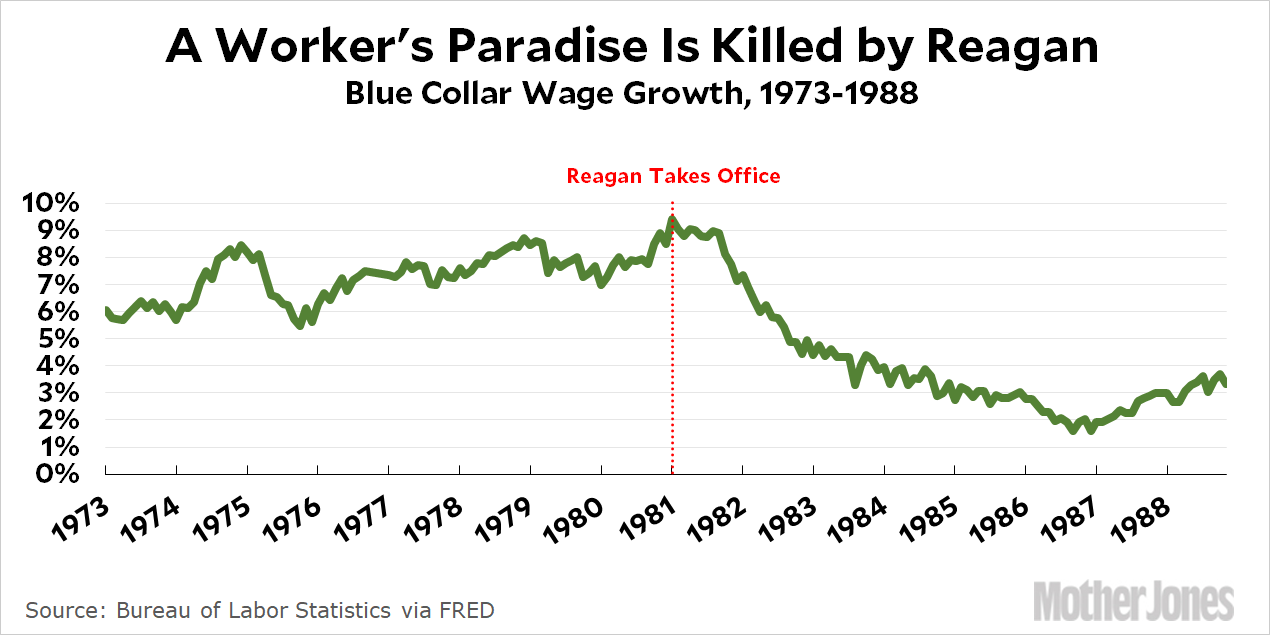
Has everyone lost their mind? Over and over I keep hearing that wages are up “over 3 percent” compared to last year. And I guess that’s true. By the same measure, though, I’d like to present to you the greatest era of economic progress in the history of the United States. Behold:
Unbelievable! Workers were making wage gains 6, 7, even 8 percent per year under Ford and Carter, and then Ronald Reagan took office. Within a few years that was down to 2 percent. What a terrible president! I’m sure Strain agrees that we should rip his portrait down from the White House walls.
Now, if you’re of a certain age, you may be thinking that you don’t recall the 1970s being quite so incredible. There’s something missing from my chart. What could it be?
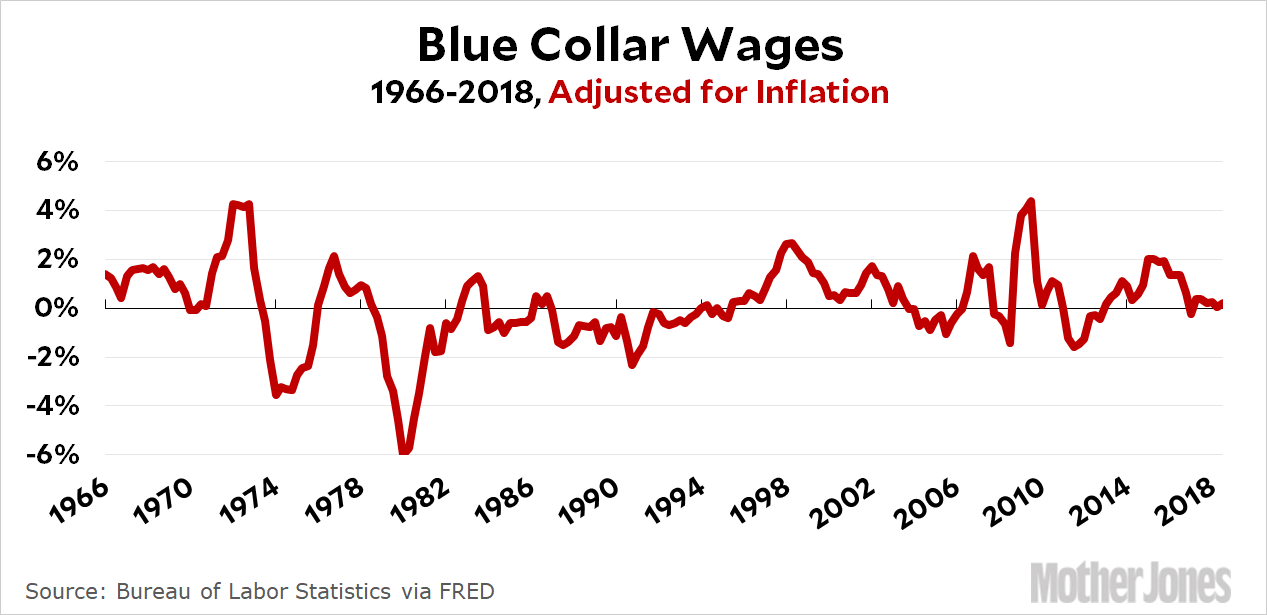
Oh yes: inflation. Let’s take a look at blue-collar wages adjusted for inflation:
The 1970s were an era of high inflation, and wages didn’t keep up. From 1973 through the end of 1980 blue-collar wages declined 12 percent when you adjust for inflation. As it happens, blue-collar wage growth stayed stagnant during the Reagan era, but at least it wasn’t quite as disastrous as the previous eight years.
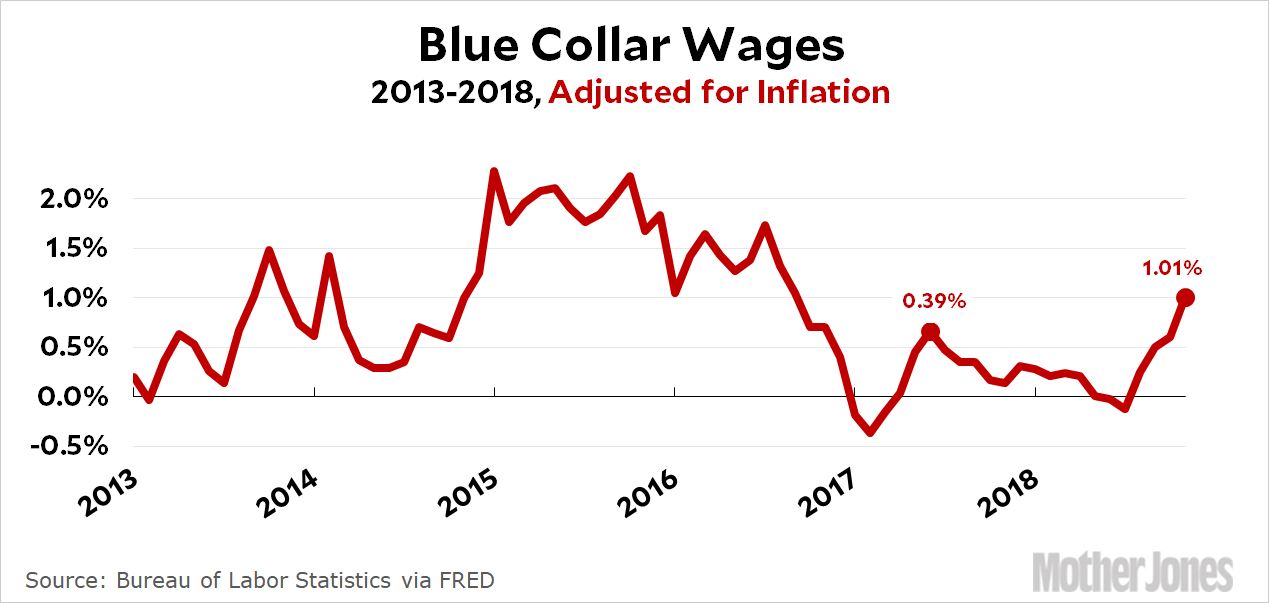
If you want to look at wage growth, you have to adjust for inflation. Period. There are only a very few specialized instances where you want to look at nominal wages, and those are unlikely to come up in ordinary conversation. So for the last time, here is real wage growth for blue-collar workers over the past five years:
There’s a nice spike in the final few months of 2018, but that’s all there is—and that spike is around 1 percent, not 3 percent. It’s good news, but it’s hardly record shattering and it hasn’t lasted long enough to know if it’s for real, or just an artifact of a temporary drop in the inflation rate.
I should note that this all starts with the mainstream media. By reporting nominal wage growth first, and only later (maybe) adjusting it for inflation, they encourage people to use the nominal number. Anyone who skims an article will assume that wages really are growing 3 percent, as will anyone who wants to be deliberately deceptive about it. And they’ll all be able to point to the first paragraph of a Wall Street Journal article to back up their point.
Of course there’s still a lunchtime photo today. Why wouldn’t there be? This is a picture of a demoiselle crane at the Prospect Park Zoo. Taken from behind, it looks like a creature from a Dr. Seuss book. But if you want to know what it looks like from the front, I’ve got you covered there too.
September 14, 2018 — Prospect Park Zoo, BrooklynSeptember 14, 2018 — Prospect Park Zoo, Brooklyn
And we respect that! But maybe you’re of a mind to support our work directly instead? We have until December 31 to raise the last $400,000 we need to keep our nonprofit newsroom running at full strength into 2026. Will you make a gift today?
We noticed you have an ad blocker on. Can you pitch in a few bucks to help fund Mother Jones' investigative journalism?
Billionaires own the media,
but they don’t own us.
At Mother Jones we know these aren’t conventional times, and they require unconventional coverage. That’s what deliver every day: fierce, independent journalism you can’t find elsewhere. Perhaps never in the history of our country has that been more necessary than now. But we can’t do it without reader support—your support. Please chip in today.
Billionaires own the media,
but they don’t own us.
At Mother Jones we know these aren’t conventional times, and they require unconventional coverage. That’s what deliver every day: fierce, independent journalism you can’t find elsewhere. Perhaps never in the history of our country has that been more necessary than now. But we can’t do it without reader support—your support. Please chip in today.