• Enjoy the Holidays Like My Grandma Would: Talk Shit About Strangers

    On Thanksgiving I think of my grandmother—a loud, kind, pugnacious woman who dyed her hair fiery red almost until the end. When she finally let her hair go white, I knew we were approaching a cliff. She died in early 2019.

    Her absence makes the general loneliness of this pandemic Thanksgiving a bit easier. I think this year’s holiday would have always felt empty without her, as my family adjusts. On my dad’s side, she was our locus. The turkey dinner was less important than her ersatz Jewish brunch; Panera bagels were deemed good enough, lox was average at best, pimento cheese was added (which, I thought, until visiting New York City, was Jewish, not Southern, because we always had it as an optional schmear). It is not really because of food though or because of her warm embrace that I will miss her this season.

    It is because my grandma, like me, basically enjoyed, above all, one activity: talking shit.

    I will really miss talking shit with my grandma this year.

    She was so ruthless, and funny, and biting. I loved it. She was an older Jewish woman glued to her chair or creeping along slowly in her walker around her home, constantly yelling insults about strangers—absolutely eviscerating people she’d heard about on TV.

    She talked shit about everyone and everything. She watched CNN with the glee of gossip and without moral qualms. The point was entertainment. I don’t think she ever pretended to be some “citizen” interested in democracy or the nation. She liked Anderson Cooper because he was attractive, not a good journalist. And she liked cable news because it tore away the pretense of “policy” and got right into the bullshit. My father joked that if a horror was ongoing in the world somewhere, she’d wake up early and diligently turn on cable news like it was a job. The Trump era, obviously, treated her well.

    Thanksgiving brought her prowess at this to a peak. Each year, we played a simple game: Who will be the Time Person of the Year? None of us really read the news deeply, except my dad, but mainly to write jokes; I don’t think anyone in my family subscribed to a print newspaper. This was all us just recklessly talking out of our asses. We’d yell and fight and laugh. This was a great way to be, and still is my preferred method of communication. I learned love is haranguing a family member for a slip of the tongue and a slightly bad take.

    So, in her honor, and perhaps this will be of help to you too, I highly recommend doing as she would do. Talk some shit. If you’re doing pandemic Thanksgiving, no uptight family will grouse or condemn about your meanness. Lean in and talk some shit about someone. Just pile on for no reason! It’s fun.

    And, yes, you can be thankful for all the good people in your life too, I guess.

  • “In a Sentimental Mood” When You’re Not in a Sentimental Mood

    The most memorable description I’ve read of the Trump era’s time-warp effect and destabilizing impact was written in late 2016—before his presidency. The president-elect was doing a victory lap. The news media was looking inward, or trying to, for lessons learned. Fusion’s editor-in-chief was the brilliant Alexis Madrigal, now an Atlantic staff writer and co-founder of the COVID Tracking Project, who found just the words to close out the year: “Each hour and each tweet and each celebrity sighting at Trump Tower can blot out the millions of other stories simultaneously in motion, backwards and forwards in time. How can anyone make a proper critique” of “the ‘moment,’ our name for any number of myths…if its basis—even the set of facts that occasioned it—has been forgotten in an instant? It’s like we’re living inside the memory hole, shards and pieces of what used to be structured into history floating around us like confetti.”

    My porous memory can’t shake that idea, the swirl of news and noise and the distinction between them; the durability of facts; the shards and structures of memory itself. What we remember and don’t. What we choose to forget but can’t. Whether it’s Mother Jones giving shape to the pandemic or Alexis chronicling its path, I’m brought back to those year-end words: “Maybe the hero of 2016 is every other year that has come before it, and their contents. Stay anchored. Do the work.”

    Thanksgiving will float by like a shard, and workers will stay anchored, seen or unseen. You don’t need sentimentalism to hear it, and don’t need to be in a sentimental mood to hear “In a Sentimental Mood,” recorded on this day 13 years ago by Sonny Rollins, now 90. Ellington’s original is here. Rollins’ is here. Madrigal is here. Recharge is at recharge@motherjones.com. Happy almost Thanksgiving.

  • Charlie Brown’s Thanksgiving Special Returns to Air After a Very, Very Close Call

    “Now that’s good news,” a co-worker sighed in relief after a colleague shared with us a breaking news headline: “Charlie Brown Specials to Air on TV, After All, in PBS Deal.” Count yourself lucky if you didn’t know that Charlie, Linus, and Lucy were temporarily off of network TV. They’re back to their historic PBS home after Apple TV+ had gained exclusive rights. An outcry grew with petitions gathering more than 263,000 signatures, and Apple backed down. PBS scored the victory, but Apple didn’t lose either. The platforms teamed up to air the specials in partnership “ad-free!” my co-worker boasted.

    The broadcast aired yesterday on PBS and streams for free this week on Apple TV+. If you don’t know Charlie Brown or Peanuts, start with the piano soundtrack. A key theme is anti-commercialism, or striking a better balance of consumption and the meanings found beyond products and services. It’s echoed elsewhere in surprising ways during the pandemic, as more big-box retailers revert to staying closed around Thanksgiving Day for safety rather than fueling elbow-jabbing crowds.

    The Black Fridayification of Thanksgiving was summed up in a 2015 Mother Jones article that rings ever truer, and a 2017 academic essay by Williams College student Will Abersek, with footnotes and all, that doesn’t fail to mention at the end, “I have written this essay in the style of David Foster Wallace.” Not sure that helps, Will, but your essay is remarkably good. And support for a less-commercial future of Thanksgiving, after the pandemic, is growing.

    Share thoughts on Thanksgiving and opinionated takes on Charlie Brown at recharge@motherjones.com, and if you need a boost, the daily blog is here for you.

  • From Our Archives, the Beginning of the Obama Presidency

    Ah, 2009. For the past week or so, I’ve lived in a time vortex propelling me back to that year. Then, as now, a Democratic president was about to take the White House; there was much chatter about Barack Obama’s legacy; and Gucci Mane’s music was of utmost importance.

    Yet it would have been impossible then to imagine each becoming so relevant now: Joe Biden’s election as president, a Verzuz battle amid the pandemic, and Obama’s memoir all smashing together. The world is acting like a poorly performed “10 years later” article.

    So, what can 2009 tell us about now?

    Looking back at our January+February 2009 issue, it’s surprising to see the number of echoes of the present. There were discussions about race versus class, whether to lock up Cheney for war crimes, and pushes for broad plans to fundamentally change the economy.

    One, from David Cay Johnston, that ran as our cover story, is an interesting document. He lays out a few ways to substantially change the tax code instead of “tinkering around the edges.” You might recognize a few of the ideas: fix student debt (Biden is talking about doing that), tax the rich (Democrats are talking about doing that).

    There’s more to dig into there, from a takedown of stimulus spending to an examination of welfare’s means testing.

  • Decades After Bombing Its Own Residents, Philadelphia Issues Its First Official Apology

    Thirty-five years later, a first public apology. On the night of May 13, 1985, police dropped a demolition device, typically used in war, on Philadelphia’s own people, killing 11 residents, including five children. The satchel bomb destroyed 61 homes and left more than 250 people homeless, lodging in local memory and parts of national memory an example of just how cruel, corrupt, demonstrably racist, and capable states are of atrocity with impunity. The target was the Black liberation group Move, known for protesting war and police violence. The city had wanted to evict Move from its West Philadelphia residence.

    The apology comes after the City Council passed a resolution following the measure’s introduction on the 35th anniversary. Only a handful of times in US history have governments—local, state, or federal—apologized for anything. Whether the apology can meaningfully advance a process of reconciliation, if not restorative justice, or is chiefly symbolic is fiercely debated, says Howard University political science professor Niambi Carter. But the acknowledgment does expand focus on a tool democracies have available and rarely use: apology. “I don’t know that an apology is going to be enough to really address the emotional toll that those events took on those communities,” Carter says.

    “To evolve and progress towards a more equal and just society,” the resolution says, “we must confront, reflect upon, and learn from heinous government actions of the past.” The apology also establishes a remembrance day to observe the history.

    “I know that it’s symbolic, but I also hope that it can be the start of the real listening and conversation and relationship building that we need to happen in the city,” says Councilmember Jamie Gauthier, who sponsored the measure.

    Learn more about the legacy and share memories and thoughts about the bombing—and the reaches and limits of state apology, as well as what should come next—at recharge@motherjones.com.

  • Barack Obama Drops a Playlist of 20 Memorable Songs From His Presidency

    On the eve of his memoir’s publication, Barack Obama tweetedplaylist of “memorable songs from my administration” yesterday. “Hope you enjoy it.” The 44th president of the United States hopes you enjoy it. But no sooner did he publish his picks than millions of people got busy debating his list, checking it twice, criticizing his taste, praising his taste, and running a battery of political tests for partisan and bipartisan implications.

    “Great list, but kinda mellow,” tweeted the novelist Stephen King. “I like your style, Mr. President, and I miss you and your family so much,” wrote a fan. “Wish you were still President,” beamed a music critic. “So the soundtrack for his 8 years in office is Starbucks elevator music. Haha,” hissed a scholar. “A real Hyde Parker wouldn’t have picked the second track off Kind of Blue because the first track was too obvious—they’d have picked the third track!” wrote a discerning investigative editor at a competing newsroom.

    Obama has some good ones, but decide for yourselves: Aretha Franklin’s “The Weight,” BB King’s “The Thrill Is Gone,” Beyoncé’s “Halo” and “At Last,” Bob Dylan’s “The Times They Are a-Changin’,” Brooks and Dunn’s “Only in America,” Bruce Springsteen’s “The Rising,” Eminem’s “Lose Yourself,” Frank Sinatra’s “Luck Be a Lady,” Gloria Estefan’s “Always Tomorrow,” Fleetwood Mac’s “Rhiannon,” Jay-Z’s “My 1st Song,” John Coltrane’s “My Favorite Things,” Miles Davis’ “Freddie Freeloader,” Phillip Phillip’s “Home,” the Beatles’ “Michelle,” Sade’s “Cherish the Day,” Stevie Wonder’s “Signed, Sealed, Delivered I’m Yours” and “Sir Duke,” and U2’s “Beautiful Day.”

    “Music has always played an important role in my life—and that was especially true during my presidency,” Obama tweeted. His new book, A Promised Land, is fast becoming one of the top-selling political memoirs in history.

    “There’s not a liberal America and a conservative America. There’s the United States of America,” he said years earlier. Tell it to the raging chorus of music critics and polarizers on Twitter. At least he included the Beatles’ “Michelle.”

    Listen to his playlist and weigh in on the former president’s picks at recharge@motherjones.com.

  • The Pandemic Has Shuttered Dance Studios, But the Stage Keeps Expanding

    There are many dancers for whom dance is their profession and near-singular concentration, who train for hours every day to become world-class athletes, classical artists, or iconoclasts in renowned companies. But there are many more for whom dance is a private and personal form of expression, who will never desire the fame or attain the status of a New York City Ballet prima ballerina, but who find in dance an integral and special part of their lives. They dance for self-exploration and cultivation of local community. And they have unique insight into the cloistered world of professional dance, owing to their access to it.

    I’m a dancer of the second kind, and though I’ve practiced jazz, modern, and many other styles, ballet makes my heart sing. Before the pandemic, I’d finish my day’s work at Mother Jones, change into my leotard, tights, and warmups, and hurriedly bike to the studio, arriving just in time for the first plié. I did this three or four times a week, staying for up to three hours each day. Dance was my all-in-one workout, church, therapy, art, and craft—in a different order each time.

    My last class was March 13, two days after the pandemic was declared, at Alonzo King’s Lines Ballet Dance Center in San Francisco. I’m sure many dancers remember their last pre-quarantine class vividly, set in memory by the void that followed.

    The Bay Area was quick to implement shelter-in-place and strict health protocols, and many studios closed, but they got creative: They tirelessly supported and received support from dancers by offering virtual classes for the first time, made recordings free to stream, held online events—whatever to stay afloat. Eight months later, studios that could survive financially are still adapting. Wherever you live, I guarantee your local studios and companies have found creative solutions.

    Until recently, I lived in a tiny one-room apartment with no space to dance, let alone do anything requiring a more-than-2-foot radius. I supported dance studios by buying passes for future classes and found workarounds to compensate for the abrupt drop of my spiritual center. Many groups have pivoted to digital offerings—Alvin Ailey posts prerecorded performances—and for others, the stage itself has moved. It’s no longer confined to a theater, the locations are limitless, and everyone gets the best seat in the house.

    Top companies are transcending traditional restraints, as in this San Francisco Ballet performance filmed at outdoor locations with more than 150 tracks recorded remotely by 60-plus musicians. Or in these five works by the New York City Ballet filmed throughout the city. One of them, Water Rite, turns the inside of the Hearst Plaza fountain into a stage. Or in this Paris Opera Ballet offering with a breathtaking view of the city.

    If you’re new to ballet or prefer classical story ballets over contemporary works, the full-length recording of the Kirov Ballet’s Swan Lake is magical. It’s a 1990 production, but it doesn’t age (or it ages well) and the caliber of Russian companies is exquisite. Giselle, Don Quixote, and Romeo and Juliet are all online too. And if you love ballet through the music, my top pick is the Mariinsky Orchestra’s version of Swan Lake under the direction of Valery Gergiev—jump to track 13, “Song of the Swans,” or listen to the masterpiece in its entirety.

    Beyond ballet, the range of contemporary and hip-hop offerings is expansive. A good place to start is Galen Hooks, who effortlessly plays with contemporary, lyrical, musical theater, and hip-hop themes to create a style of her own. Both Kida the Great and Robert Green are phenomenal (you’ll recognize them from So You Think You Can Dance), and Zoi Tatopoulos’ choreography is unclassifiable.

    When the pandemic is over, and lockdowns are loosened, I hope (and plan) to continue watching, listening to, and supporting dance in each new way.

    —Cathy Asmus is Mother Jones membership initiatives manager. Share your dance stories with her at recharge@motherjones.com.

  • Don’t Fear Friday the 13th or Steve Buscemi

    Andrew Toth/Getty

    Looming disaster and imminent peril get all the love, but there’s a stack of good news in today’s archives: It was Friday the 13th when Thelonious Monk and Sonny Rollins recorded “Friday the 13th” in 1953. An eerie start: Rollins was delayed by a car accident, and trumpeter Ray Copeland fell sick, so Julius Watkins filled in. The 10-minute jam was written on the spot, and it was one of Rollins’ most fulfilling collaborations. Full track here; Monk’s solo here.

    It was Friday the 13th when Evelyn Brier became the first woman to receive an airplane instructor’s license. And Friday the 13th when President Lyndon Johnson signed an executive order banning gender discrimination in federal employment.

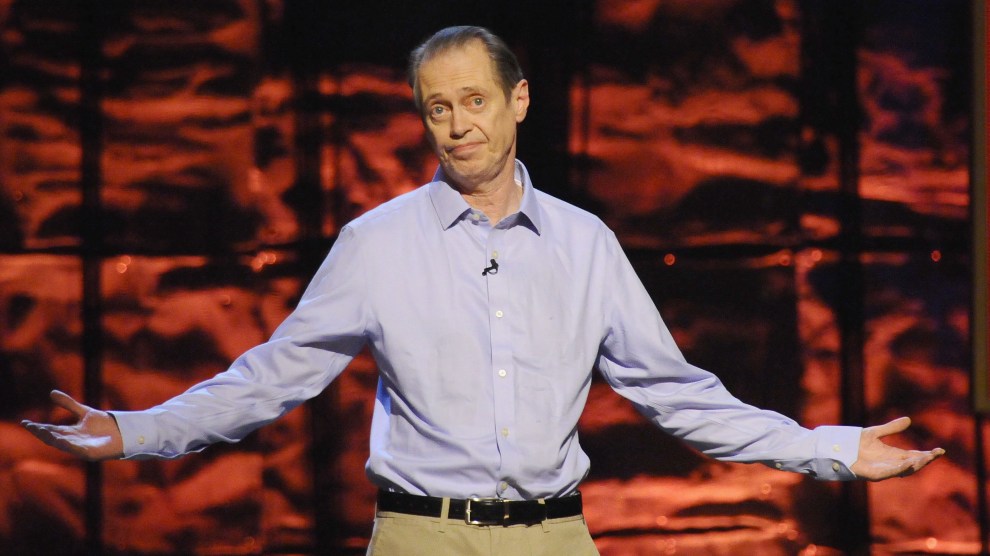
    And Friday the 13th when Super Mario Bros. entered the world, and Steve Buscemi entered the world. Beyond bloodbaths FargoReservoir Dogs, and The Sopranos, Steve’s good! He was a firefighter in New York City in the ’80s. One day after 9/11, he volunteered with his old firehouse to work 12-hour shifts digging through rubble in search of missing firefighters. “Very few photographs and no interviews exist because he declined them. He wasn’t there for the publicity,” a firefighter community wrote in solidarity. Ten years later, he joined protests against firehouse closures under Mayor Bloomberg and has supported labor rights on a firefighters’ advisory board.

    The first dinosaur eggs were discovered on Friday the 13th.

    NASA announced water on the moon on Friday the 13th.

    World Kindness Day was Friday the 13th last year.

    Share a word about kindness shown to you or by you at recharge@motherjones.com. And if today bellies up and Steve Buscemi knocks at your door, there’s always Saturday the 14th, unless you answer that door.

  • Today Is National Happy Hour Day. You Get One Hour to Be Happy. Spend It Like This.

    The origin story of “happy hour” is contested and blurry, but most historians and etymologists circle 1599, when Shakespeare’s Henry V proclaims, “Omit no happy hour that may give furtherance to our expedition.” It wasn’t until the 1910s that the US Navy held Happy Hour Social three nights a week aboard the USS Arkansas, when, instead of drinks, it was boxing, dancing, singalongs, and picture shows. Today is National Happy Hour Day, and after a few drinks, the origin story is whatever you say it is. If you’re going by the archives, consider the 1959 Saturday Evening Post article that popularized the phrase. Shortly after, a 1961 Providence Journal article dove into detail.

    The saying was heard in California cities near naval bases in the early ’50s, and the tradition began at least as early as Prohibition. But nothing prohibits remaking the hour in your vision, if you can. Here are some suggestions:

    1. Spend an hour however you want or need (conditions permitting). You don’t even have to tell us what it is at recharge@motherjones.com.

    2. Wave across the internet, or the room, to someone you’ve been meaning to. Don’t exceed 60 minutes of this.

    3. In under an hour, read our Mother Jones column “What Are You Hoping For?”—with or without a beverage in hand—and let us know how you’re processing the election, the pandemic, the media’s coverage, and the personal and political roads ahead.

    4. See number one: Do something you want or need.

    I don’t want to hear from any horologist that “Hour Day” makes no sense. I’m far fussier than you could ever be about contradictions in terms, but this is fine. We can have an entire day for an hour. But only that. Happy NHHD.

  • Happy Diwali! And Don’t Forget to Wear Masks.

    Getty

    Over the next few days, you will undoubtedly read about the Hindu festival of Diwali, which signifies the victory of good over evil, light over darkness, and knowledge over ignorance. The myth has different characters depending on where in India, or the world, you’re from: Rama, Sita, and Lakshman vs. the demon Ravana; Lord Krishna vs. the demon Narakasura; Lord Vishnu vs. the demon King Bali.

    Democracy vs. Donald Trump and complicit members of the Republican Party. Admittedly, this battle is still being fought, and even if democracy wins this time, and light pushes out the darkness, battles for good are fought over and over again. In lore and in life, good edges out evil, and then evil edges out good. The lines get blurry. And the battle begins again.

    We celebrate Diwali every year because there is no final triumph. Good cannot eliminate evil, only transform or temper it, because neither good nor evil—light nor darkness—exists without the other. Every year we’re reminded to use our most precious resources—time, energy, concentration, and love—to transform suffering in ourselves, our families, our communities, and our country.

    We are, each of us, the light and the darkness, and our greatest battle is not with the demons outside but with the demons within. Much of Hindu mythology is about transforming our own ignorance. If we remake the Ravana within, we can shine more light for ourselves and even our political opponents. We do not need to demonize each other to fight demons.

    We need a little Diwali year-round. There are daily decisions that can bring more light: showing gratitude and showering people with your own brand of blessings; bringing righteous anger and commitment to justice in a given moment (instead of impotent rage); making space for BIPOC voices in our lives and workplaces; supporting our country by supporting women of color. And dancing with joy—and laughing—even when you feel like lying down in silence.

    The diyas that led the exiled son, Rama, to his rightful throne in Ayodhya stretched far from the city and could be seen from high above. Every flame upon a wick of cotton in an oil lamp helped pierce the darkness and allowed Rama to find his way home.

    You may not have a throne, and you may not run a city, state, or country, but you may run something—like the Recharge column at Mother Jones, and like my colleague who does, you are going to fight to protect that diya and illuminate the path forward no matter what comes. And you do. And the transformation toward good continues. Thank you, Daniel King.

    Happy Diwali to you all. May you find the light in your lives, and may you be a source of light to others.

    —Venu Gupta is Mother Jones’ Midwest regional development director. Share your stories of Diwali with her at recharge@motherjones.com.

  • The Healing Potential of Handwritten Letters

    In the far periphery of presidential politics and the surging pandemic, there’s a small, simple story that caught my attention from New York City. On a street corner in Brooklyn, a teacher named Brandon Woolf set up a folding chair and a typewriter alongside a mailbox and a handwritten sign offering “Free Letters for Friends Feeling Blue.”

    It’s a familiar sight in some cities. His instrument is analog. And there’s nothing particularly new about consolation letters. But as isolation stretches on, the sheer tactility of letter-writing takes on heightened potential for healing for passers-by who pulled up. For hours on end, Woolf would type for anyone who asked, with masks, hand sanitizer, and distance in place. “Whatever type of experience you would like to have, I’m happy to provide letters, envelopes, stamps,” he told reporter Anna Quinn. “What’s a better experience than getting a piece of mail…from somebody you didn’t expect to hear from?”

    Hard to disagree. With credit to Woolf and anyone who’s done it before, here’s an idea (what would Recharge be if not an amplifier?): For any reader who’d like a handwritten letter from our international Recharge desk, request away at recharge@motherjones.com. It won’t be typed, won’t be lengthy, and won’t be poetic; it’ll just be a postcard with a short message, and it won’t mention the 45th president of the United States.

  • Massive Street Parties Underway as Relief and Joy Wash Over Cities and Towns

    Eruptions of joy continued into the afternoon as sprawling street parties picked up from Brooklyn’s Fort Greene to Oakland’s Lakeshore, filmed by @ghostlychloe and shared by my colleague Jayo Miko Macasaquit, and another in Fairfax, California, posted by @sherlavars and shared by my colleague Steve Katz.

    From Oakland:

    In Fairfax:

    Steve, with Rachelle Averbach, describes “a beautiful fall morning” and “no surprise that downtown Fairfax was filled with mountain and road bikers” (Fairfax is the birthplace of mountain biking) plus “coffee-slugging brunch mavens…About 50 of us locals headed downtown to catch Biden’s and Harris’ victory party. It was an unexpectedly emotional moment for so many people—a release, a relief, even though we know how hard the time ahead will be.”

    In Brooklyn, my colleague Molly Schwartz synthesized the clanging pans, honking horns, and shouts of catharsis as “ambient jubilance [that] erupted into a full-fledged open-air dance party”:

    Outdoors and indoors, it all continues; if you have Recharges and videos of your own, share them at recharge@motherjones.com.

  • Change Has Come to Mother Jones’ Style Guide: Biden-Harris in, Trump-Pence Out

    It’s not every day, or year, or four years, that I’m booting a president from our newsroom’s style guide. On Saturday, after multiple news organizations declared Biden-Harris the winning ticket of the presidential election, what choice did I have but to open our style guide, click “edit,” and enshrine the people’s will?

    Before:

    Capitalize formal titles only when they precede a person’s name: President Trump, Prime Minister Boris Johnson. Lowercase informal titles (e.g., special counsel Robert Mueller).

    After:

    Capitalize formal titles only when they precede a person’s name: President-elect Biden, Prime Minister Boris Johnson. Lowercase informal titles (e.g., special counsel Robert Mueller).

    Before:

    airstrike
    a.m., p.m.
    American Dream
    “Amtrak Joe” Biden
    antifa
    Arafat, Yasser
    archaeologist

    After:

    airstrike
    a.m., p.m.
    American Dream
    “Amtrak Joe” Biden, President-elect Biden
    antifa
    Arafat, Yasser
    archaeologist

    Plus:

    • President-elect Biden (lowercase “elect”) in running copy; President-Elect Biden in headlines
    • Vice President–elect Harris (en dash, option+hyphen); Vice President–Elect Harris in headlines
    • Lowercase titles when not preceding names: The president-elect tweeted. If a spoken quote has “Madam Vice President,” Madam not Madame.

    Had to be done. Trump is still president for the next 10 weeks, so bear in mind that “lame-duck” gets hyphenated as an adjective, and stays open as a noun. And these things matter, like when Fox News told its anchors not to call Biden “president-elect” when it called the race, according to two internal memos, before the network changed its tune in the face of overwhelming facts. Read our style guide, and send suggestions, here.

  • From Our Archives, When Bush Left

    “The Bush legacy—where to begin?” this magazine’s staff wondered in our 2008 September+October issue. It was hard to sum up the unrelenting damage done by the “Worst. Administration. Ever.” The obvious place to start was the horror of the Iraq War, which we’d reported on extensively, including a timeline of lie after lie that led to it. But there was more, much more to how Bush tore the government apart.

    A great deal of what happened has been flushed out of collective memory—or at least less likely to be mentioned—with the more robustly obvious incivility (if no less evil) ascendent in the tea party and in turn President Trump. Yet disconnecting those strains of Republicanism and teasing out any real change on the right is a bit harder to see when you look back to 2008. At the very least, it’s not worth pretending Bush didn’t set up Trump, and it is harder to pretend Trump is a complete aberration.

    Go check out our timeline of Bush’s “reign of error.” Look back at what David Cole said in 2008, with grave concern over the powers of an unchecked executive. And, of course, the lack of calling out a president’s blustering lying surely didn’t help us deal with Trump. All the seeds are there. Comparisons of “who caused this” or “who is worse” likely miss the point—Bush set up Trump more than we’ve probably talked about. In 2008, we wrote a whole issue grappling with how to fix the Bush era. I’m rereading to see what we still have left to do.

  • A Day of Firsts for LGBTQ Candidates, and the Anniversary of “Georgia on My Mind”

    Eighty-nine years ago today, Louis Armstrong recorded “Georgia on My Mind.” Counting in Georgia continues as I write this, and a listener asks, “What date did Louis record ‘I’ve Got My Fingers Crossed’?” Answer: November 21, two weeks from now. I heard last night on the radio a back-to-back set of “Happiness Is a Thing Called Joe” by Ella Fitzgerald, “Good for Nothin’ Joe” by Lena Horn, and “Hold ’Em Joe” by Harry Belafonte. “Hey Joe” by Jimi Hendrix was missing. I don’t endorse candidates or radio stations, but I endorse music and justice; while we wait, Armstrong is here, Fitzgerald here, Horn here, Belafonte here, Hendrix here, and good news here:

    Earth’s people. Nevada voted to require half of all energy to come from renewable sources in 10 years. The state is also the first to repeal a same-sex marriage ban in its constitution.

    Path to power. Ohio welcomes its first woman and LGBTQ person as sheriff in the history of Hamilton County. “My role,” Charmaine McGuffey said, “is to be an example of what you can accomplish as an LGBT person because there’s a lot of discrimination out there.” 28-year-old Adrian Tam becomes Hawaii’s only declared LGBTQ elected official in the statehouse, beating a leader of the Proud Boys, the violent far-right group that includes white supremacists. And in Oklahoma, 27-year-old Mauree Turner becomes the country’s highest-ranking nonbinary lawmaker.

    Naming rights. Rhode Island has removed the word “Plantations” from its official name. Rhode Island and Providence Plantations is now just Rhode Island. When the name was adopted in the 17th century, the word didn’t refer specifically to a place where people were enslaved locally, but 53 percent of voters approved the switch, recognizing the role the state played in the transatlantic trade.

    Moons ago. If the planet is wearing you down, remember that NASA announced last week the discovery of water on the moon’s sunlit surface. When safe travel returns, Recharge party on the moon, your treat. Mother Jones is reader-supported; if you can, support us and I’ll look into a 2021 moon Recharge. Until then, keep Georgia on your mind, and keep ideas coming at recharge@motherjones.com.

  • The Biggest Battle Isn’t Over, But 7 Causes for Celebration Couldn’t Be Clearer

    Whatever happens tomorrow, these day-after boosts are right here:

    Florida gets a raise. The Sunshine State became the first in the South to pass a $15 minimum wage, nearly doubling its current minimum in a milestone for the livable-wage movement supported by labor groups like Fight for 15. My colleague Hannah Levintova contextualizes it. 

    Medicine that works. Five states have made safe medicine more available—Arizona, Montana, Mississippi, New Jersey, and South Dakota—in cannabis changes that our science reporter Jackie Flynn Mogensen rolls right up for you.

    Bag it. New Jersey is the latest state to reduce its reliance on single-use plastic, seeing the stakes (and acting on them) as a climate imperative.

    Native voices. Six Native Americans are heading to Congress in a historic wave that gives the House a record number of Native members. Indian Country Today reporter Dalton Walker has more.

    Rising representation. New Mexico is the first state to elect all women of color to a House delegation: Deb Haaland was already one of the first Native women in Congress, and she’s joined by Teresa Leger Fernandez and Yvette Herrell, a member of the Cherokee Nation.

    A hot dog is not a sandwich. As I write this, 128 of you voted “no” and 117 “yes” in yesterday’s Mother Jones poll asking, “Is a hot dog a sandwich?” Look, it’s not my fault that National Sandwich Day lands on the last day of presidential voting any more than it’s your fault. Team No is pulling ahead; polls are still open, but I’m projecting a winner.

    Try not to nail-bite. A lot of “nail-biter” uses in headlines this morning. New York Times: “nail-biter.” CNN: “nail-biter.” NBC: “nail-biter.” Politico: “nail-biter.” CNBC: “nail-biter.” FiveThirtyEight: “nail-biter.” Chicago Tribune: “nail-biter.” Talking Points Memo: “nail-biter.” Mail Tribune: “nail-biter.” CNN again: “nail-biter.” Times again: “nail-biter.” I don’t endorse nail-biting but I endorse the phrase for drawing attention to behavior that needs consideration. Nails get bitten and chewed and gnawed and spit out like day-old pizza crust and unpaid interns at oppressive offices that exploit free labor. But the phrase is good. Think about it: all this free publicity about the health of your nails, smuggled through metaphor. “Learn to resist the urge” to bite, says Tara S. Peris, professor of psychiatry and biobehavioral sciences at the University of California, Los Angeles, in a piece titled “How to Stop Biting Your Nails.” In high-stress times, it’s understandable. Biting should be taken seriously as a sometimes compulsive or impulsive expression. Take Peris’ advice, if you can, to limit it. And take my advice, if you can, to keep using the phrase.

  • A Florida Mother of 4 Recounts Her First Time Voting in 12 Years

    As the race tightened into the night and early morning, sources of good news began to emerge beyond the results themselves. Among them is the story of 39-year-old LaToya Moreland, a mother of four, and her rocky journey to her first time voting in 12 years. The Florida resident overcame obstacle after obstacle on her way to the polls. Read her incredible story in her own words, and take your recharge where you can. We’ll be back with more good news after some short rest.

  • Today Is the Most Important National Sandwich Day of Our Lives

    Paul Fuller/Getty

    They say that every year, but this year it’s true. As you squint at the election results, and the ticktock wears on, bear in mind the day’s dual significance. While gambling hundreds of years ago, John Montagu, 4th Earl of Sandwich, ordered a slab of animal between two slices of bread for ease of consumption. The origin story is murkier than the naming, but what’s clear is that the ensuing dustup over what constitutes a sandwich, who gets to adjudicate it, and what mechanisms exist for redressing grievances over authoritarian claims on “sandwich” status continues.

    In 2017, University of Oregon sandwich scholar Nicole Gonzalez stirred debate when she asked her students a seemingly simple question: Is a hot dog a sandwich? Merriam-Webster has weighed in and votes yes, but how do you? Cast your ballot:

    From 6 feet away, take your hoagie, hero, grinder, subway, sammy, or sammich and watch the presidential results roll in at MotherJones.com. Lettuce meat out some justice in this down-ballot race too, unless you’re chik’n. Have your vote counted on National Sandwich Day. Results will be shared in our daily newsletter. Sign up at motherjones.com/newsletters.

  • One Day Away. Here Are 30 Boosts to Brace for Impact.

    There’s enough tension and anticipation to edge out of view the countless stories of strength and stamina (and some justice) today, but whatever happens, each will be here long after the results. Here are 30 boosts to cross the finish line. Thanks to many readers who sent tips:

    1. A California man donated 25,000 baseball cards to a 9-year-old who’d lost her collection in a wildfire. Kevin Ashford had planned to sell online but donated after news of her loss. “It’s just one thing after another during 2020,” he said. “I just want to make it a little easier for these kids.”

    2. Winners of the 2020 disability-reporting awards will be celebrated tonight. Watch live, and congratulations to Lakeidra Chavis, Jodi S. Cohen, and Jennifer Smith Richards for scoring top honors from the National Center on Disability and Journalism.

    3. When a DC gym found out that a 90-year-old woman was watching classes from her window all day, the gym staff painted her a mural. She’s a former dancer who’d performed 70 years ago with a renowned dance company.

    4. Someone give 7-year-old Cavanaugh Bell anything he wants. He’s been donating trucks full of pandemic supplies to a South Dakota reservation, the most poverty-stricken in the country, through his nonprofit, Cool & Dope, which aims to reduce bullying across the map.

    5. A 12-year-old discovered the bones of a 69-million-year-old dinosaur. Let me repeat that: A 12-year-old discovered the bones of a 69-million-year-old dinosaur. What have you found? I discovered old unsweetened almond milk in my fridge.

    6. In memory of her 13-year-old son, who was hit by a car in 2011 while he was trick-or-treating, Crystal Conover’s neighbors banded together this Halloween to decorate her lawn on Jayden’s favorite holiday, after her exhaustion had set in. She welcomed the support.

    7. Hikaru Nakamura raised almost $10,000 for Doctors Without Borders by playing 77 charity chess matches simultaneously. He’s the US champion and the world’s fastest. I could take him.

    8. All ages welcome to the Sesame Street jam session at Jazz at Lincoln Center with Big Bird, Elmo, all the jazz greats. Preview here, full show here.

    9. She the People, a voter-turnout group, has ramped up efforts in battleground states to mobilize more voters, with strong results.

    10. A painting, missing for decades, by Jacob Lawrence, part of his renowned Struggle series, has been discovered and given a prominent spot in public view. It was last seen in 1960.

    11. Sarah Haider—an engine of brilliance in media criticism, moral philosophy, secular humanism, and human rights—has launched a newsletter. She’s an outstanding writer who shreds fallacies, improves public dialogue, and does it rigorously and constructively, without any of the venom and vilification so encouraged on social media. Hat-tip to Haider. She threads a crucial needle, focusing on hard, necessary criticism of ideas and institutions wherever her interests take us. Intro here, subscribe here, Twitter here.

    12. Jazz singer Cécile McLorin Salvant landed a MacArthur Foundation fellowship. She’s the only musician in this year’s group of “genius grant” winners.

    13. One of the most inventive and thrilling pianists on earth, Vijay Iyer, has shared a playlist of most of his albums of the past 25 years: “Listen on shuffle if you feel like it. It’s only 17 1/2 hours long.”

    14. Saxophonist David S. Ware’s birthday would have been this Saturday. Revisit my 2003 interview in his New Jersey home (and meet his pups Bibi and Mikuro).

    15. The New York band Stern has a new pandemic song, his third quarantine blues, as original and transporting as his first. “It’s an angular little ditty about the unstable world we live in and the insistence on recalling more pleasant memories in the face of depression, encroaching fascism, plague, and poverty,” he tells me. You’ll drift into it—a surreal soundscape of impending armageddon or absolute glory—or run screaming for the hills.

    16. Congratulations to Geeta Anand on becoming dean of UC-Berkeley’s journalism school: “I am thrilled to be the first woman of color—indeed, the first woman—to serve as dean of Berkeley Journalism.” Read her full letter.

    17. California beaches offer wheelchairs with enhanced wheels that roll over sand. “[My mother] will turn 91 in September. She has Alzheimer’s and is in hospice,” wrote a beachgoer. “She asked to go close to the water…We saw dolphins and all sorts of birds, and enjoyed a beautiful sunny day. The beach wheelchair made getting around very easy and it was comfortable for her. Thank you!” Reserve here.

    18. The newly launched Black Music Library has digital books, articles, documentaries, and podcasts, created by Jenzia Burgos: “I’ve been working on this project for the last few months and it’s finally ready to share!”

    19. In response to Dan Rather’s tweet “I just want to live in an America where I can give my grandson a hug,” a reader replied, “I have a neuromuscular disability and it hasn’t been safe for me to venture out in public since February. I just wish people would value my life as much as they value their own.” Dear ElizabetteUnplugged: I read your note. Your writing is good. People should read more of it. Say hello at recharge@motherjones.com.

    20. The World Food Program scored the Nobel Peace Prize for hunger-relief efforts during the pandemic, focusing on countries torn by war.

    21. 2020 is for the birds: A bunch of birds have been crashing into skyscrapers, but New Yorkers are rescuing them in record numbers. NatGeo’s Natasha Daly has the inspiring story, with Jeffery Jones’ moving photos and David Beard’s newsletter lift.

    22. The Robert E. Lee High School in Fairfax, Virginia, has been renamed the John R. Lewis High School after the civil rights leader, who eked out Barack Obama and Cesar Chavez for naming honors. 

    23. There’s a ton of goodness coming from reporter Julia Métreaux, who writes movingly and expertly on pop culture, activism, chronic illness, disability, and so much more, including today’s powerful piece on Troy Kotsur, the Deaf actor who helped create Tusken Sign Language in The Mandalorian. Follow Métreaux wherever her writing and interests take us.

    24. Nursing-home isolation is one of the (un)hidden perils of the pandemic, but a class of elementary students found a workaround, holding a Halloween party and waving through windows. “The residents are so excited,” said the center’s director. “They love to see the children in costumes and their smiling faces, and they’ve been talking about it for the better part of a week now.”

    25. Recharge readers know that I never resort to animal videos. Here’s a shameless animal video.

    26. Happy birthday today to a human: this writer’s father. Zoom party coming up.

    27. Reader John Jeffrey Linderman of Michigan writes, “Yes, I have hope. In spite of the daily evidence of dysfunction in the US, I still believe that the majority of Americans are good, decent, and thoughtful. Yes, we have many bad actors…My dreams of healing would include surviving the election with a minimum of violence throughout the nation. We must be laser-focused on providing assistance to individuals suffering—first responders, health care workers, families, small businesses enduring devastation. Recovering from misery takes a long time and much courage. Our first priority must be addressing the pandemic, but just as importantly, many of our relationships, including longtime friendships, need healing…In spite of my deep fears about the state of our nation, I’m confident we will not only survive but become stronger.”

    28. Vote.

    29. Spin the full Recharge blog anytime.

    30. Open call: recharge@motherjones.com.
  • 3 Songs to Celebrate Clifford Brown’s 90th Birthday

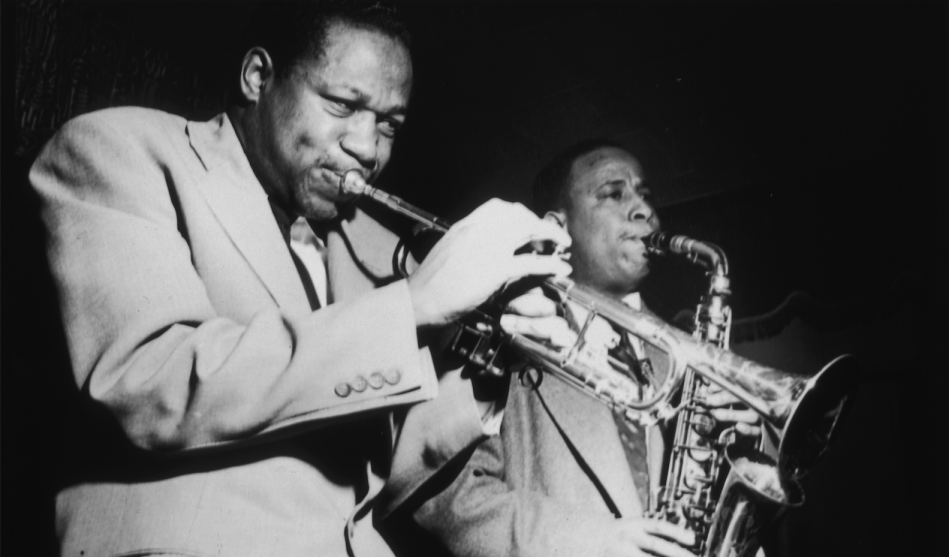
    Trumpeter Clifford Brown and saxophonist Lou Donaldson in 1955Metronome/Getty

    It’s hard to believe that Clifford Brown lived just 25 years. In his short run, he remade American music more times, and more lastingly, than almost all trumpeters of any genre or generation, and he made possible the hard-bop legacies of Lee Morgan and Freddie Hubbard. Before his fatal car crash in 1956, Brown was in another car accident that sidelined him for a year, injuring his shoulder but not dampening his music. Dizzy Gillespie visited him in the hospital to encourage his recovery. “He had it all,” Sonny Rollins said.

    Today would’ve been Brown’s 90th birthday. The Clifford Brown Jazz Festival is expanding online from his birthplace of Delaware. His only known footage is a two-song appearance on a variety show hosted by Soupy Sales. Brown blazed the registers with ripping speed, textural bite, and arpeggiated flourishes, but he never felt the need to substitute virtuosity for voice. He could say more in three notes than many could in 30. His quintet with Max Roach ended with the highway crash that killed Brown, pianist Richie Powell, and Powell’s wife, Nancy, who lost control of the wheel while they slept between gigs. Hours earlier, Brown had played his final note at a Philadelphia jam session.

    “There may be no sadder tale in modern music than that of Clifford Brown,” the Washington Post lamented, but alongside his loss runs a story of growth and recovery. By 1955 he’d become the most celebrated young player in jazz, equaling or topping Miles Davis. “When he was killed, there was an uncommon rush of sentiment in the jazz world,” Whitney Balliett wrote. “The tenor saxophonist and composer Benny Golson wrote a resonant dirge-ballad called ‘I Remember Clifford.’”

    Today is the Friday before Election Day. It’s also Halloween eve. The world is madness. Take three songs and call me in the morning at recharge@motherjones.com: “I Don’t Stand a Ghost of a Chance With You,” “Joy Spring,” and “Daahoud,” lined up here.